

Moving Beyond Spec Sheet Illusions
In today’s smartphone and computing landscape, performance is one of the most aggressively marketed features. Terms such as “Octa-core processor” and “3.2GHz speed” are frequently presented as proof of superiority, yet for most users, these figures do not translate into a clear understanding of real-world performance. This gap between specification and experience is where poor purchasing decisions often occur.
At JuaTech Africa, the purpose of JuaTech Decoded is to close that gap with clarity, accuracy, and contextual relevance, particularly for African consumers navigating a market that includes both genuine innovation and misleading claims. Understanding the difference between clock speed and core count is not merely technical knowledge. It is a practical tool that enables better decisions, stronger value assessment, and long-term satisfaction.

This article provides a structured, evidence-based explanation of how processors work, how these metrics interact, and what ultimately determines performance in real-world usage.
Understanding Clock Speed: The Pace of Execution
Clock speed, measured in gigahertz (GHz), refers to the number of cycles a processor can execute per second. One gigahertz equals one billion cycles per second, meaning a 3.0 GHz processor can perform 3 billion cycles per second under ideal conditions. However, interpreting this figure requires a deeper understanding, because not all cycles deliver the same amount of work.
Clock speed is the rate at which a processor executes individual instructions. A higher clock speed allows a processor to execute tasks more quickly when those tasks rely on sequential processing. This makes clock speed particularly important for operations that depend on single-threaded performance, including application launch times, interface responsiveness, and certain aspects of gaming performance.
However, clock speed should not be interpreted in isolation. Modern processors are designed with architectural efficiencies that determine how much work is completed in each cycle. This means that a processor with a lower clock speed but a superior architecture can outperform one with a higher clock speed but a less efficient design. For this reason, comparing GHz values across different chip generations or manufacturers without context can lead to incorrect conclusions.
In real-world use, clock speed directly affects perceived speed. Devices with higher-performing cores and well-managed clock speeds tend to feel faster, more responsive, and more stable during everyday interactions. This is often what users interpret as performance, even when other specifications suggest otherwise.
Understanding Core Count: The Capacity for Parallel Processing
Core count refers to the number of independent processing units within a single processor. Each core is capable of executing its own set of instructions, allowing multiple tasks to be processed simultaneously. This capability is essential for multitasking and for handling workloads that can be divided into parallel operations.
A processor with more cores can distribute tasks across these cores, improving efficiency when running multiple applications or performing complex operations. This is particularly beneficial in scenarios such as video editing, rendering, background processing, and multitasking environments where multiple processes are active simultaneously.
In modern smartphones, most processors are described as octa-core. However, this classification does not mean that all cores are identical in performance. Most contemporary chipsets use a hybrid architecture known as big.LITTLE design, which combines high-performance cores with energy-efficient cores. High-performance cores are designed for demanding tasks, while efficiency cores handle lighter workloads to conserve power and extend battery life.
This design ensures that devices can deliver strong performance when required while maintaining efficiency during routine usage. It also highlights an important point. Core count alone does not define performance. The type, capability, and coordination of those cores are equally important.
Clock Speed and Core Count in Context
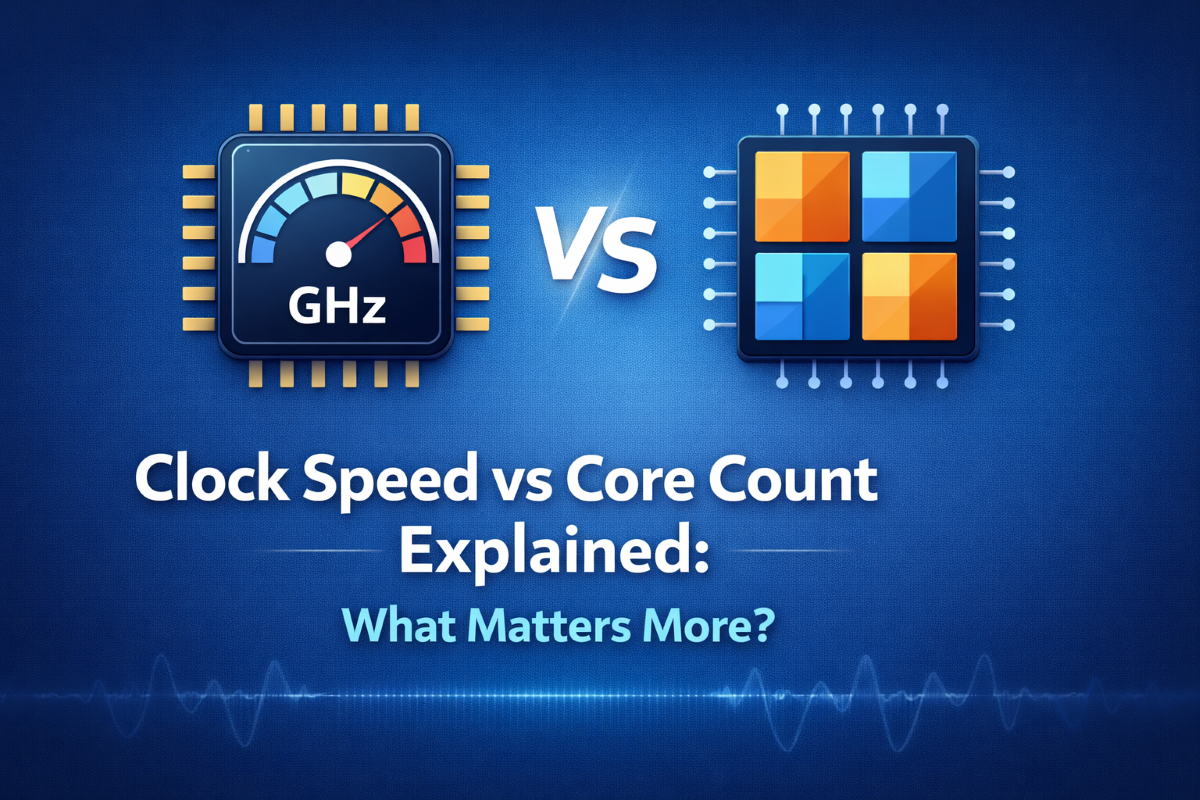
Clock speed and core count are often presented as competing specifications, but in reality, they are complementary components of processor performance. The effectiveness of a processor depends on how well these elements are balanced within its architecture.
Single-threaded performance relies heavily on clock speed and the efficiency of individual cores. Tasks that cannot be divided across multiple cores benefit from faster execution at the core level. This is why devices with fewer but more powerful cores often deliver better responsiveness in everyday use.
Multi-threaded performance, on the other hand, benefits from higher core counts. Applications that are designed to distribute workloads across multiple threads can take advantage of additional cores to improve efficiency and reduce processing time. However, the extent of this benefit depends on software optimization. Many mobile applications are not fully optimized to utilize all available cores, which means that the theoretical advantage of higher core counts is not always realized in practice.
This relationship underscores the importance of balance. A processor with strong cores and an appropriate number of cores will outperform one that prioritizes quantity over quality or speed without efficiency.
Why Raw Specifications Can Be Misleading
One of the most common challenges in the technology market is the overemphasis on raw specifications. Marketing often highlights core count and clock speed as indicators of performance, but these figures do not provide a complete picture.
An octa-core processor with low-performance cores can deliver weaker performance than a processor with fewer but significantly more capable cores. Similarly, a processor with a higher clock speed but an outdated architecture may perform worse than a newer processor with a lower clock speed but improved efficiency.
Thermal management also plays a critical role. Processors generate heat during operation, and sustained performance depends on how effectively this heat is managed. A processor that advertises high clock speeds may not be able to maintain those speeds under prolonged use if thermal constraints force it to reduce performance. This results in inconsistent performance, particularly during demanding tasks such as gaming or video recording.
These factors highlight the importance of evaluating processors holistically rather than relying on isolated specifications.
Real-World Performance: Translating Specs into Experience
From a user perspective, performance is defined by experience rather than specifications. It is reflected in how quickly applications open, how smoothly the interface operates, how well the device handles multiple tasks, and how consistently it performs over time.
In everyday scenarios such as browsing, messaging, and social media, strong single-core performance is crucial. These tasks rely on quick, responsive execution rather than extensive parallel processing, which makes clock speed and core efficiency particularly important.
In more demanding scenarios such as gaming, content creation, and multitasking, a balanced processor becomes essential. The ability to distribute workloads across multiple cores while maintaining strong per-core performance ensures a stable and efficient experience.
For users in markets such as Kenya, where value for money and device longevity are key considerations, understanding this balance is critical. A well-optimized processor with modern architecture often delivers better long-term performance than a device that relies on impressive but misleading specifications.
The Role of Chipset Architecture and Generation
Clock speed and core count are only part of the performance equation. Chipset architecture and generation have a significant impact on how these elements translate into real-world performance.
Modern processors benefit from advancements in fabrication processes, instruction handling, and power efficiency. These improvements allow newer chipsets to perform more work per cycle, manage power more effectively, and deliver better sustained performance.
As a result, a newer-generation processor can outperform an older processor even if it has fewer cores or lower clock speeds. This is a critical consideration when evaluating devices, underscoring the importance of staying within current or recent chipset generations.
At JuaTech Africa, this is why chipset analysis is central to our reviews and recommendations. Understanding a processor’s lineage and capabilities provides a far more accurate assessment of performance than focusing on isolated numbers.
Practical Buying Guidance
When selecting a smartphone or computing device, the objective should be to identify a processor that offers balanced performance, efficiency, and reliability. This requires moving beyond marketing claims and focusing on factors that have a measurable impact on user experience.
For general users, prioritizing devices with strong single-core performance and modern chipsets ensures smooth, responsive performance. Devices that feature a combination of high-performance cores and efficient cores are well-suited for everyday use.
For power users, including gamers and content creators, it is important to consider processors that offer both strong cores and sufficient core count, along with effective thermal management. These factors ensure consistent performance during demanding tasks.
Software optimization should also be considered. A well-optimized operating system enhances performance by ensuring that hardware resources are used efficiently.
In the Kenyan market, where counterfeit devices and misleading specifications can be a concern, verifying chipset details and relying on credible sources becomes essential. Understanding the fundamentals of clock speed and core count equips buyers with the knowledge needed to make informed decisions.
Final Verdict: What Matters More?
Clock speed and core count are both important, but neither should be considered in isolation. Clock speed determines how quickly individual tasks are executed, while core count determines how many tasks can be handled simultaneously.
The true measure of performance lies in the balance between these factors, supported by efficient architecture, effective thermal management, and strong software optimization.
For most users, the quality and performance of individual cores have a greater impact on everyday experience than the total number of cores. A processor with fewer, more powerful cores often delivers better responsiveness and overall performance than one with more, weaker cores.
JuaTech Africa Perspective: Clarity, Trust, and Informed Decisions
JuaTech Decoded is built on the principle that technology should be understood, not just consumed. Clock speed and core count are often presented as simple metrics, but their true meaning lies in how they interact within a broader system.
By breaking down these concepts with depth and accuracy, JuaTech Africa positions itself as a trusted source of technology intelligence. The goal is not only to inform but also to equip users with the knowledge required to make confident decisions in a complex, evolving market.
Understanding these fundamentals changes how users evaluate devices. It shifts the focus from marketing claims to real value, ensuring that every purchase is guided by insight rather than assumption.