


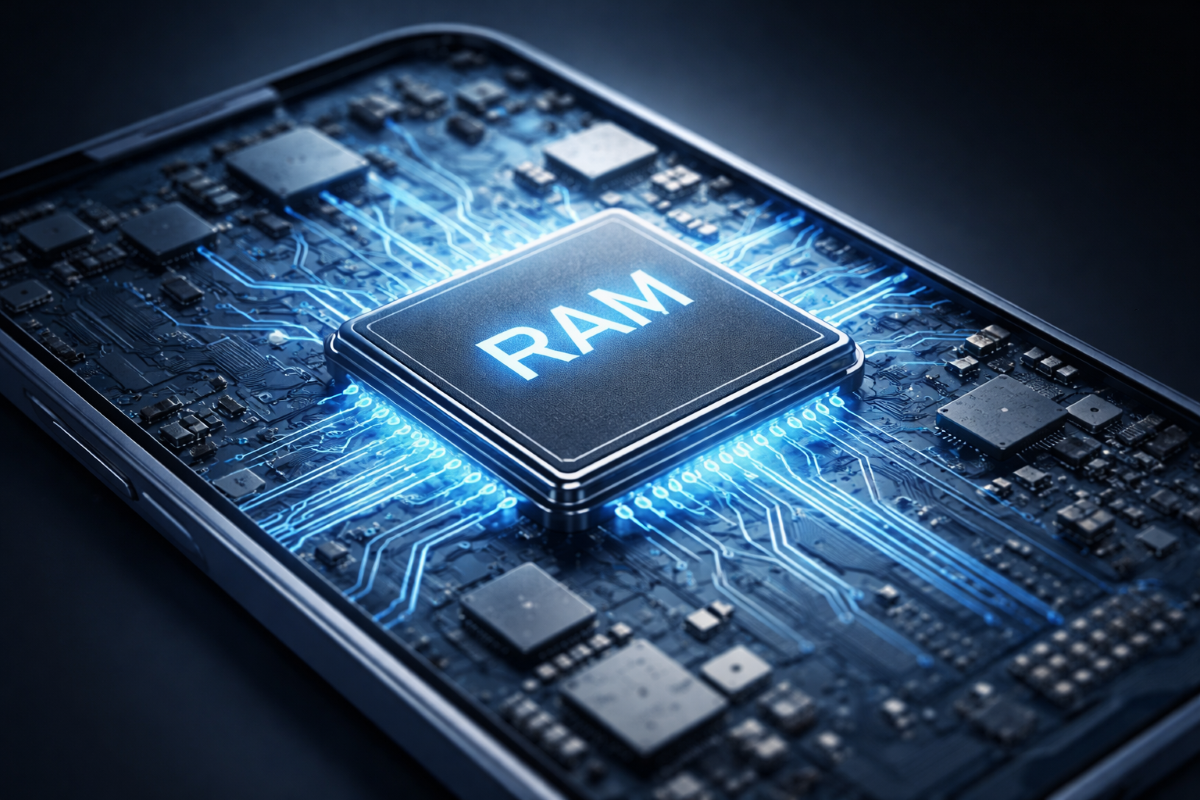
Every time you unlock your phone, open WhatsApp, switch to the camera, or browse the internet, your smartphone must access and process information instantly. The speed and smoothness of this experience depend heavily on RAM.
RAM determines how efficiently your phone can handle active tasks. It affects how fast apps open, how smoothly you switch between them, and how responsive your device feels overall.

When a phone has enough RAM, it feels fast and effortless. When RAM is limited, apps reload, multitasking becomes frustrating, and performance suffers.
Understanding RAM helps you interpret smartphone specifications correctly. It also helps you choose devices that remain fast, reliable, and usable over time.
Understand the difference between Processor and Chipset, avoid confusion, and be well-informed when choosing your next device.
What Is RAM?
RAM stands for Random Access Memory. It is your phone’s temporary working memory.
RAM stores data that your device is actively using. This allows the processor to access that data instantly.
Unlike internal storage, RAM does not permanently store data. It only holds data while your phone is powered on and actively using apps.
For example, when you open Instagram, your phone loads the app into RAM. This allows the app to run smoothly. When you switch to YouTube, that app also loads into RAM.
RAM keeps your phone’s apps ready for immediate use. Without it, your phone would need to reload apps completely every time you open them. This would make your phone run slowly and inefficiently.
Essentially, RAM exists to make your phone fast and responsive during active use.
How RAM Works in Everyday Use
To understand RAM clearly, consider this example. Imagine your phone’s internal storage is a bookshelf. It stores all your books permanently.
RAM is like the desk where you place the books you are currently reading. You can access books on your desk instantly. But accessing books from the bookshelf takes longer.
Similarly, your phone loads active apps from storage into RAM so they can run quickly.
For example:
When you open WhatsApp, it loads into RAM.
When you switch to Chrome, Chrome loads into RAM.
When you return to WhatsApp, it opens instantly because it is still in RAM.
If RAM is insufficient, the phone removes WhatsApp from RAM. When you return, the app must reload from storage. This causes delays.
RAM prevents this delay.
Why RAM Matters for Smartphone Performance
RAM directly affects how smooth and responsive your phone feels. Its impact is visible in several key areas.
Multitasking
RAM allows your phone to keep multiple apps open at the same time. For example, you may use WhatsApp, YouTube, Chrome, and Spotify simultaneously. With enough RAM, these apps remain ready. You can switch between them instantly.
With limited RAM, the phone closes background apps. When you return, they reload. This causes delays.
Simply put, more RAM improves multitasking.
App Speed and Responsiveness
RAM keeps apps ready for immediate use. This reduces loading times. Apps open faster. Switching between apps feels smoother. This improves overall user experience.
System Stability
Phones with sufficient RAM operate more reliably. Devices with insufficient RAM slow down faster as apps and system demands increase. Adequate RAM ensures stable performance over time.
RAM vs Internal Storage: Understanding the Difference
Many users confuse RAM with storage. They serve different roles.
RAM is temporary working memory.
Storage is permanent memory. Storage holds:
- Apps
- Photos
- Videos
- Files
RAM holds:
- Active apps
- Active system processes
For example:
When you install an app, it is stored in internal storage.
When you open the app, it runs from RAM.
Storage determines how much you can store.
RAM determines how smoothly your phone runs.
Both are important, but RAM directly affects performance.
Understanding LPDDR RAM: Why RAM Type Matters
Modern smartphones use advanced RAM types such as LPDDR4X and LPDDR5.
LPDDR stands for Low Power Double Data Rate. LPDDR RAM is designed specifically for mobile devices. It offers high performance with low power consumption.
Newer LPDDR versions offer:
- Faster performance
- Better efficiency
- Lower battery consumption
For example:
LPDDR5 is faster and more efficient than LPDDR4X. This improves multitasking, gaming performance, and battery life.
RAM type affects performance, not just RAM size.
Understanding ROM: Why It Is Different from RAM
ROM stands for Read-Only Memory, but in smartphones it commonly refers to internal storage.
ROM stores data permanently.
RAM stores data temporarily.
ROM includes:
- Internal storage such as UFS storage
- System files
- Installed apps
RAM and ROM work together. ROM stores apps. RAM runs apps. Both are essential.
Understanding UFS Storage and Its Relationship with RAM
Modern smartphones use storage technologies such as UFS (Universal Flash Storage). UFS storage is faster than older storage types such as eMMC. Faster storage speeds up app loading into RAM. This improves overall responsiveness.
For example:
Phones with UFS storage load apps into RAM faster.
This improves performance.
Storage speed supports RAM performance.
Understanding Virtual RAM and RAM Expansion
Some smartphones offer virtual RAM or RAM expansion. This feature uses internal storage to simulate additional RAM. It helps the phone handle more background tasks.
However, virtual RAM is slower than real RAM. It improves multitasking slightly but does not replace physical RAM.
Physical RAM remains more important. Virtual RAM is a support feature, not a substitute.
Understanding microSD and Its Limitations
microSD cards expand storage capacity. They do not increase RAM.
microSD cards allow you to store more files, photos, and videos. They do not improve performance or multitasking.
Only RAM improves active performance. Storage expansion improves capacity, not speed.
How Much RAM Do You Need?
RAM requirements depend on your usage.
For basic use: 4GB RAM is sufficient for calls, messaging, and light apps.
For moderate use, 6GB to 8GB RAM provides smoother multitasking and better performance.
For heavy use: 8GB to 12GB RAM supports gaming, multitasking, and long-term reliability.
Higher RAM improves long-term usability.
RAM and Long-Term Smartphone Reliability
Apps and operating systems become more demanding over time. Phones with more RAM remain usable longer. Phones with insufficient RAM slow down sooner.
Choosing sufficient RAM improves device lifespan. It ensures consistent performance over time.
How RAM Works Together with the Chipset and Processor
RAM does not work alone.
The chipset coordinates system operations.
The processor executes instructions.
RAM provides fast access to active data.
Together, these components deliver performance.
RAM supports the processor by providing instant access to data.
This improves speed and responsiveness.
Why Understanding RAM Helps You Make Better Decisions
Understanding RAM helps you evaluate smartphones correctly.
It helps you:
- Understand performance capability
- Interpret specifications accurately
- Avoid misleading marketing claims
- Choose devices suited to your needs
- Ensure long-term reliability
RAM directly affects your everyday experience. Understanding it helps you use technology confidently.
Understanding Your Smartphone’s Active Working Memory
RAM is your smartphone’s active working memory. It allows your device to run apps smoothly, handle multitasking efficiently, and remain responsive during everyday use.
It ensures that apps open quickly and remain ready when you need them.
While storage determines how much you can store, RAM determines how smoothly your phone operates.
Understanding RAM helps you understand your smartphone’s performance and reliability. It gives you clarity and confidence when choosing and using technology.
Because when you understand RAM, you understand what keeps your smartphone fast, responsive, and dependable.


















I’m extremely impressed with your writing skills as well as with the
layout on your blog. Is this a paid theme or did you customize it yourself?
Anyway keep up the nice quality writing, it is rare to see a nice blog like this one these days.