


In 2018, Akon, the Senegalese-American artist and entrepreneur, announced one of the most ambitious urban technology projects ever proposed on the African continent. He would build a futuristic city on the Atlantic coast of Senegal. Named Akon City, the project was envisioned as a fully integrated smart city powered by renewable energy, enabled by advanced digital infrastructure, and anchored by its own digital currency, Akoin. It was presented not simply as a real estate development, but as a foundation for a new technological and economic future. The ambition was unmistakable. Akon City sought to demonstrate that Africa could design, finance, and build innovation ecosystems capable of competing globally.
The announcement immediately captured continental and international attention. Governments, investors, technology observers, and media institutions viewed the project as a bold declaration of technological intent. Its architectural concepts, characterized by futuristic design and cultural symbolism, evoked comparisons to Wakanda, the fictional African nation portrayed as technologically advanced, economically independent, and structurally self-sufficient. For many, Akon City represented more than infrastructure. It represented possibility. It suggested that Africa could move beyond its historical position as a consumer of imported technology and begin to build environments where innovation could originate, scale, and sustain itself.

The timing reinforced its symbolic importance. Africa’s digital economy was entering a period of accelerated growth. Mobile connectivity was expanding rapidly. Startups were attracting increasing global investment. Governments were articulating national digital transformation strategies. Within this broader momentum, Akon City appeared to offer a physical manifestation of Africa’s technological aspirations. It promised infrastructure designed for innovation, an environment capable of attracting talent and capital, and a platform for long-term economic transformation.
Yet in the years that followed, the distance between vision and execution became increasingly visible. Akon City raises a fundamental question whose relevance extends far beyond a single project or individual ambition. What does Akon City reveal about the structural realities, sequencing, and institutional requirements necessary to build a functioning technology ecosystem in Africa?
The Vision Behind Akon City
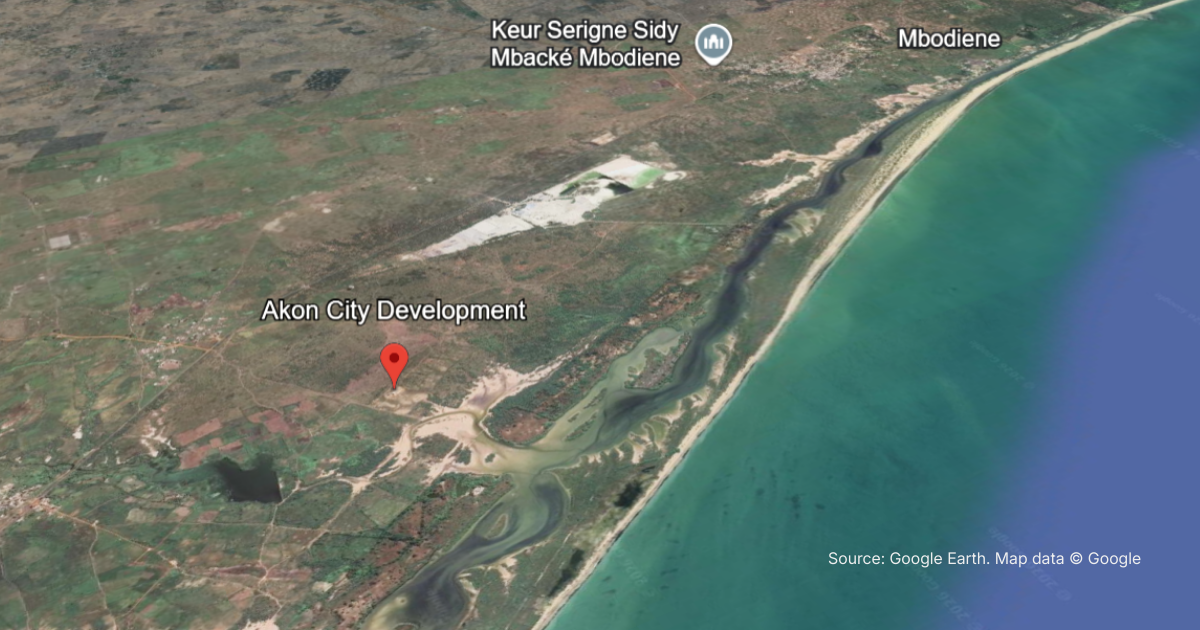
When Akon City, Senegal, was announced in 2018, it was presented as more than a construction project. It was positioned as a long-term effort to build a technology-driven urban ecosystem capable of accelerating Senegal’s participation in the digital economy. The proposed site, located along Senegal’s Atlantic coastline near Mbodiène, offered both geographic and symbolic significance. With the support of the Senegalese government, which allocated land for its development, Akon City emerged as a privately led initiative with national and continental implications.
From the outset, the vision was deliberately bold. Akon City was inspired by Wakanda, the fictional African nation portrayed as technologically advanced, economically independent, and structurally self-sufficient. This influence shaped the project’s architectural concepts and its broader narrative. Futuristic building designs, renewable energy integration, and digitally connected infrastructure reflected an ambition to create an environment designed for innovation. The goal was not simply to build a modern city, but to establish a technology ecosystem capable of attracting global attention, investment, and talent.
Technology integration was central to this vision. Akon introduced Akoin, a cryptocurrency intended to serve as the city’s primary financial infrastructure. Through Akoin, residents and businesses would be able to conduct transactions digitally within a decentralized system designed to support commerce, services, and economic activity. This approach aligns with Africa’s broader shift toward digital finance, in which mobile money and alternative financial systems have expanded access to economic participation. Akon City aimed to extend this transformation further by embedding digital financial infrastructure at its core.
At the same time, the project was framed as a catalyst for economic transformation. It promised to create employment, attract international investment, and stimulate entrepreneurship. By establishing a purpose-built environment designed to support innovation, Akon City sought to position Senegal as a regional center for technology and digital enterprise. It reflected a broader ambition to demonstrate that Africa could build and sustain its own technology ecosystems.
At its core, Akon City represented an attempt to move beyond aspiration and create a functioning ecosystem designed to support Africa’s technological future.
Strategic Importance for Senegal and Africa
Beyond its architectural ambition, Akon City in Senegal was positioned as an attempt to establish a new technology ecosystem in West Africa. At a time when Africa’s digital economy was expanding rapidly through mobile adoption, startup formation, and increased investor interest, the project proposed a fundamentally different model. Rather than relying on the gradual evolution of innovation clusters within existing cities, Akon City sought to create an ecosystem deliberately and from first principles. It aimed to combine infrastructure, digital financial systems, and institutional support within a single, purpose-built environment designed to attract technology companies, entrepreneurs, and global investment.
For Senegal, the project carried clear strategic implications. The country had already demonstrated growing momentum in digital development, supported by improvements in telecommunications infrastructure, expanding internet access, and increasing entrepreneurial activity. Dakar had begun to establish itself as an emerging center for innovation within the region. Akon City offered the potential to accelerate this trajectory. By creating a dedicated technology-driven urban environment, the project aimed to strengthen Senegal’s position as a regional hub capable of attracting capital, enabling startup growth, and supporting long-term digital economic expansion.
At a continental level, the significance of Akon City, Senegal, extended beyond national development. Africa’s technology ecosystem has historically emerged through adaptive use of existing urban environments. Cities such as Nairobi, Lagos, Cape Town, and Kigali developed their innovation capacity gradually, supported by entrepreneurs, universities, telecommunications expansion, and investment networks. Akon City represented a departure from this pattern. It proposed intentionally building an ecosystem rather than allowing one to evolve organically. This approach reflected a growing belief that infrastructure-led ecosystem development could accelerate technological capability and economic transformation.
At the same time, the project carried symbolic importance. It represented an African-led vision for technological independence and economic modernization. It suggested that ecosystem development did not need to depend exclusively on external technology centers or foreign institutional frameworks. Instead, it proposed that Africa could build its own environments designed to support innovation, entrepreneurship, and digital commerce.
In this context, Akon City was not simply an infrastructure initiative. It was an attempt to influence how technology ecosystems could be conceived and built within Africa. Its ambition reflected broader questions about how ecosystems form, what conditions enable their success, and whether they can be created through deliberate planning rather than gradual evolution.
Execution Reality and Project Stagnation
Following its announcement, the execution of Akon City in Senegal has fallen noticeably behind the scale and pace envisioned in its original plan. While the project had attracted global attention and strong symbolic support, physical development on the designated site near Mbodiène remained limited. The land allocated for the project, spanning approximately 2,000 acres along Senegal’s Atlantic coast, showed little evidence of the foundational infrastructure required to support a functioning urban and technology ecosystem. Apart from a ceremonial welcome center intended to mark the project’s presence, large-scale construction activity did not progress in line with the project’s early expectations.
This slow pace of development underscored the structural complexity of building a technology ecosystem from the ground up. Smart cities and innovation-driven urban environments depend on the sequential deployment of infrastructure. Roads, energy systems, water supply, telecommunications networks, and operational facilities must be established before residential, commercial, and entrepreneurial activity can emerge. Without this foundational infrastructure, the broader ecosystem envisioned in architectural renderings and strategic plans cannot be realized in practice. In the case of Akon City, this foundational phase did not advance sufficiently to support subsequent stages of ecosystem formation.
Funding continuity also emerged as a critical constraint. Large-scale urban technology projects require sustained capital deployment over extended periods. While Akon City was initially presented with ambitious financial backing projections, the mechanisms required to mobilize capital at the necessary scale remained uncertain. Infrastructure-led ecosystem development requires not only initial investment but consistent funding capable of supporting multi-phase construction, operational readiness, and long-term economic viability. In the absence of visible infrastructure progress, investor confidence and capital momentum become difficult to sustain.
The integration of Akoin, a cryptocurrency intended to serve as the financial backbone of Akon City in Senegal, introduced an additional layer of complexity. The project envisioned Akoin as a digital financial infrastructure capable of supporting transactions, commerce, and economic activity within the city. However, the adoption of a new cryptocurrency within a national economic and regulatory framework requires institutional alignment, regulatory clarity, and widespread user adoption. These conditions develop gradually and depend on both market confidence and structural integration with existing financial systems. Without operational infrastructure and an active economic environment, Akoin’s role remained conceptual rather than functional.
At the same time, ecosystem development requires coordination among multiple institutional actors. Governments provide regulatory support and align national infrastructure. Investors provide financial capital. Developers execute construction and operational planning. Businesses and entrepreneurs generate economic activity. In the case of Akon City, aligning these actors around a synchronized development timeline proved challenging. The project’s reliance on private leadership, combined with its scale and technological ambition, increased the complexity of coordination required to move from announcement to execution.
As time progressed, the absence of visible infrastructure development limited the project’s ability to attract businesses, residents, and sustained investment. Ecosystems require physical, financial, and institutional foundations before they can support innovation-driven economic activity. Without these prerequisites in place, the transformation of Akon City from conceptual vision to operational ecosystem remained incomplete.
This execution reality revealed an important structural truth. Ecosystem development is defined not by announcement or ambition, but by sustained infrastructure deployment, institutional alignment, and long-term capital continuity. Akon City in Senegal demonstrated the scale of ambition possible. It also demonstrated the structural requirements for translating ecosystem vision into operational reality.
Structural Analysis: Why Technology Ecosystems Cannot Be Announced Into Existence
The experience of Akon City in Senegal underscores a defining reality of technology ecosystem development. Ecosystems do not emerge through vision alone. They take shape through the gradual alignment of infrastructure, capital, institutions, and human activity. While announcements can signal intent and ambition, ecosystems become real only when structural foundations are built and sustained.
Infrastructure represents the first and most essential layer. Telecommunications networks, energy systems, transportation access, and operational facilities must be in place before meaningful economic activity can take root. These elements enable businesses to operate, employees to work, and services to function reliably. Without this physical and operational backbone, an ecosystem remains conceptual. In established technology centers worldwide, infrastructure was not an afterthought. It was the starting point that enabled everything else to follow.
Institutional alignment plays an equally critical role. Technology ecosystems depend on regulatory clarity, governance continuity, and financial system integration. Governments establish the policy frameworks that enable investment and innovation. Financial institutions support capital movement and economic activity. Private sector participants provide operational execution and entrepreneurial momentum. When these actors operate within coordinated and predictable environments, ecosystems become more stable, and investor confidence strengthens. Without institutional continuity, ecosystem development becomes difficult to sustain.
Capital continuity reinforces this process. Ecosystems require sustained investment, not only at the announcement stage, but throughout their development lifecycle. Infrastructure construction, business formation, and economic expansion all depend on capital availability. Investors respond to visible progress, operational readiness, and structural credibility. As infrastructure develops and economic activity increases, capital flows strengthen. This relationship is reciprocal. Infrastructure attracts capital, and capital accelerates ecosystem growth.
Human activity ultimately determines whether an ecosystem becomes viable. Entrepreneurs, engineers, developers, and businesses transform infrastructure into economic output. They create products, services, and companies that give ecosystems functional purpose. Talent gravitates toward environments characterized by opportunity, stability, and infrastructure. Over time, this concentration of human activity strengthens ecosystem resilience and expands innovation capacity.
Ecosystem development follows a sequence. Infrastructure enables participation. Participation attracts investment. Investment supports business formation. Business activity reinforces ecosystem maturity. This progression cannot be compressed into a single announcement or accelerated beyond the point of structural readiness. It unfolds through sustained effort, coordination, and execution.
Akon City in Senegal articulated a powerful and ambitious vision. However, its experience demonstrates that ambition alone cannot substitute for structural development. Ecosystems are not defined by conceptual design, but by operational reality. They emerge where infrastructure is built, institutions are aligned, capital is sustained, and human activity can flourish. Understanding this distinction provides essential context for evaluating ecosystem initiatives across Africa and beyond.
Comparative Context: How Successful Ecosystems Actually Emerge
The trajectory of Akon City, Senegal, becomes clearer when viewed alongside the development patterns of successful technology ecosystems elsewhere. Across the world, ecosystems that achieved sustained impact did not begin as fully formed cities. They evolved gradually, shaped by infrastructure readiness, institutional support, capital access, and the steady accumulation of human and economic activity. Their growth reflected sequence, continuity, and structural alignment rather than immediate transformation.
Silicon Valley, widely regarded as the most influential technology ecosystem in modern history, did not begin as a designated technology city. Its origins can be traced to decades of institutional investment, particularly through Stanford University, government-supported research programs, and early semiconductor companies. Infrastructure, education, and research capability created the initial conditions. Entrepreneurs and investors responded to those conditions over time. Venture capital networks emerged to support startup growth. Talent concentration reinforced innovation capacity. What eventually became Silicon Valley was not announced into existence. It evolved through sustained structural development across multiple decades.
A similar pattern can be observed in Shenzhen, China. Before it emerged as a global technology manufacturing center, Shenzhen was a modest urban area with limited international visibility. Its transformation began with deliberate investment in infrastructure, policy reform, and industrial expansion. The Chinese government designated Shenzhen as a Special Economic Zone, enabling regulatory flexibility and encouraging investment. Manufacturing activity attracted talent, capital, and entrepreneurial activity. Over time, Shenzhen developed into a global hub for electronics production, hardware innovation, and technology entrepreneurship. Its ecosystem emerged through phased infrastructure development, institutional support, and sustained economic activity.
Within Africa, ecosystem growth has followed comparable structural patterns. Nairobi’s emergence as a technology hub did not begin with the construction of a new city. It developed through the expansion of telecommunications infrastructure, the success of mobile financial platforms such as M-Pesa, and the steady formation of startup communities. Innovation hubs, venture capital firms, and international technology companies gradually established a presence. Talent networks expanded. Investment increased. Nairobi’s ecosystem emerged from accumulated activity, supported by infrastructure and institutional continuity.
Kigali, Rwanda, has also pursued ecosystem development through structured and phased investment. Government-led initiatives focused on digital infrastructure, education, and regulatory clarity created favorable conditions for technology investment. Rwanda Innovation City, currently under development, reflects lessons learned from global ecosystem models. Its progress has been shaped by infrastructure readiness, institutional alignment, and integration with existing economic systems rather than immediate large-scale urban deployment.
These examples illustrate a consistent pattern. Successful ecosystems emerge where infrastructure, institutions, capital, and talent align over time. They are built through sustained coordination and sequential development. They are reinforced by economic activity and strengthened through institutional continuity.
Akon City, Senegal, attempted to initiate ecosystem formation by introducing an advanced conceptual model at the outset. Its ambition reflected a desire to accelerate ecosystem development beyond traditional timelines. However, global and regional examples demonstrate that ecosystem maturity depends on structural readiness. It emerges through sustained development rather than singular announcements.
This comparative context does not diminish the importance of ambition. Instead, it clarifies the conditions required for ecosystem success. It reinforces the understanding that ecosystems are not constructed instantly. They are cultivated through infrastructure, institutional support, capital continuity, and human participation over time.
Lessons for Africa’s Ecosystem Development
The experience of Akon City, Senegal, offers lessons that reach far beyond a single project or location. It brings into focus the structural realities that determine whether technology ecosystems can emerge, mature, and sustain themselves over time. More importantly, it clarifies the distinction between ambition and execution and the roles each plays in shaping Africa’s digital future. As countries across the continent pursue innovation-led economic growth, these lessons provide essential context for what ecosystem development truly requires.
The first lesson is clear. Vision must be matched by sustained execution. Ambitious projects play an important role in shaping perception and attracting attention. They signal intent, mobilize interest, and challenge assumptions about what is possible. However, ecosystems are not built through announcements alone. They are built through consistent infrastructure development, coordinated institutional support, and long-term operational commitment. Execution establishes credibility. Without visible progress and structural continuity, ecosystem momentum becomes difficult to sustain.
Infrastructure sequencing also plays a decisive role. Technology ecosystems require foundational infrastructure before economic activity can scale. Reliable connectivity, energy systems, transportation access, and operational facilities create the conditions that enable businesses and entrepreneurs to function. These elements provide the environment within which innovation can occur. When infrastructure is developed sequentially, it enables participation. Participation attracts investment. Investment strengthens ecosystem capacity. This progression forms the structural pathway through which ecosystems mature.
Institutional alignment further strengthens ecosystem stability. Governments, financial institutions, private sector actors, and developers must operate within coordinated and predictable frameworks. Regulatory clarity encourages investment by reducing uncertainty. Governance continuity enables long-term planning. Institutional confidence strengthens ecosystem credibility and encourages participation from both domestic and international stakeholders. Ecosystems grow where institutional environments provide stability and direction.
Capital continuity reinforces this process. Ecosystem development requires sustained investment across multiple phases. Infrastructure construction must be supported by capital sufficient to enable business formation, operational growth, and economic expansion. Investors respond to structural credibility. Visible infrastructure progress, regulatory stability, and operational readiness strengthen investor confidence and attract sustained capital flows. This continuity allows ecosystems to evolve beyond early development stages.
Human participation ultimately defines ecosystem success. Entrepreneurs, engineers, developers, and businesses transform infrastructure into economic activity. They create products, services, and companies that give ecosystems functional purpose. Talent gravitates toward environments characterized by opportunity, stability, and infrastructure. As talent concentration increases, ecosystems become more resilient and more innovative.
Akon City, Senegal, reflects both the scale of Africa’s technological ambition and the structural discipline required to realize it. Its experience reinforces a fundamental reality. Ecosystems are not built through vision alone. They emerge where infrastructure is established, institutions are aligned, capital is sustained, and human activity can flourish. These lessons will shape how future ecosystem initiatives are conceived, evaluated, and executed across Africa’s evolving technology landscape.
Akon City and the Reality of Ecosystem Development
Akon City, Senegal, began as one of the most ambitious technology infrastructure visions ever proposed on the African continent. It was conceived at a time when Africa’s digital economy was gaining momentum, mobile connectivity was expanding rapidly, and the continent’s startup ecosystems were beginning to attract global investment. The project captured attention because it aligned with a deeper aspiration. It suggested that Africa could design and build its own innovation environments, rather than relying solely on ecosystems developed elsewhere.
In its ambition, Akon City represented more than a physical development. It represented a shift in perception. It challenged the assumption that technology ecosystems must evolve only through incremental change. It proposed that ecosystem infrastructure, financial systems, and digital capabilities could be deliberately established to accelerate technological and economic transformation.
At the same time, the experience of Akon City in Senegal reinforces a structural reality that applies universally. Ecosystems are not defined by vision alone. They are shaped by infrastructure deployment, institutional continuity, sustained capital investment, and human participation. These elements create the conditions under which innovation becomes operational and economic activity becomes sustainable. Without them, ecosystem potential remains conceptual rather than functional.
This distinction is critical as Africa continues to invest in its technological future. Across the continent, governments, institutions, and private-sector leaders are pursuing infrastructure initiatives to strengthen ecosystem capacity. These efforts reflect a long-term commitment to digital economic growth. Their success will depend not only on ambition but on execution, coordination, and sustained structural development.
Akon City remains an important reference point within this broader evolution. It reflects both the scale of Africa’s technological ambition and the structural discipline required to realize it. Its story clarifies the realities of ecosystem development. More importantly, it reinforces an enduring principle. Sustainable technology ecosystems are built through sustained infrastructure, aligned institutions, continuous investment, and the participation of people who transform possibility into reality.














I blog often and I truly appreciate your content.
This great article has really peaked my interest. I’m going
to take a note of your website and keep checking for new
information about once a week. I opted in for your Feed as well.
Thank you!