
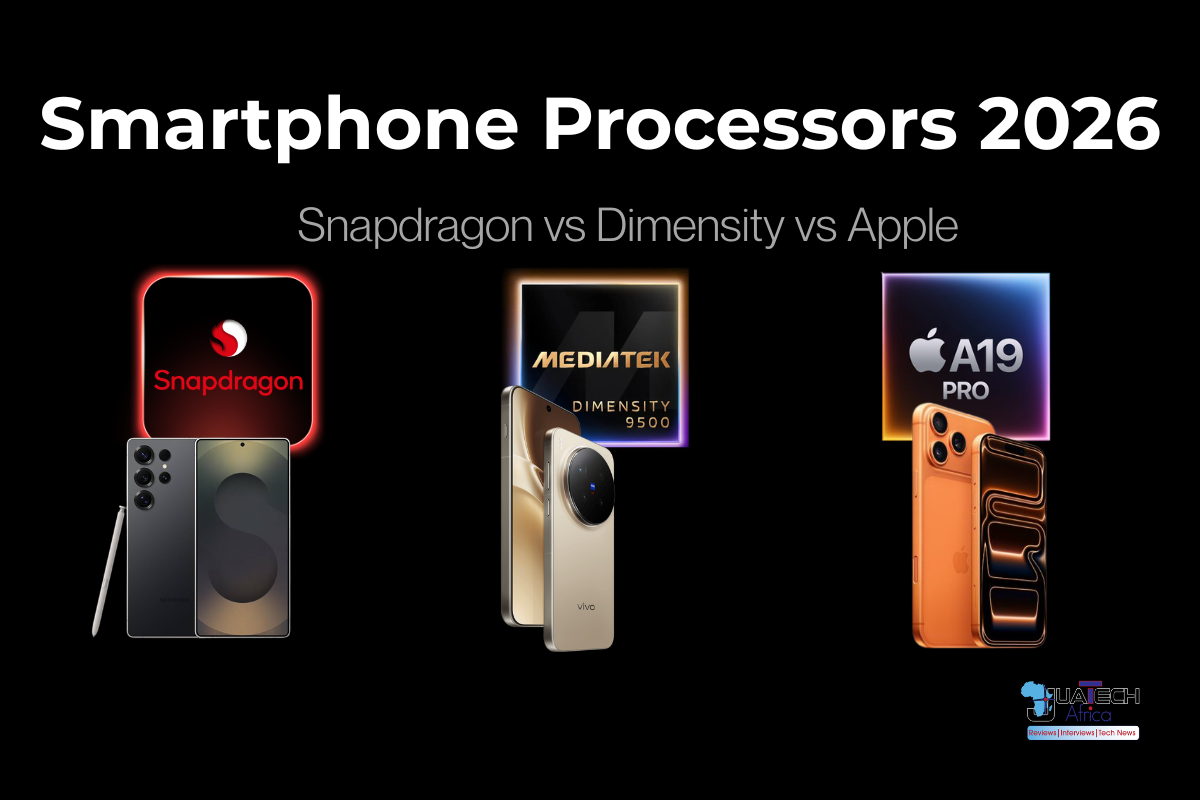
The truth about smartphone performance in 2026. Compare Snapdragon, Dimensity, and Apple chips in real-world use, and discover which processor delivers the best experience for your needs, budget, and long-term value.
Choosing a smartphone used to be simple. More power meant better performance, and the fastest processor was the obvious choice. If it topped benchmark charts, it was considered the best. In 2026, that thinking no longer works.

Today, the best smartphone processor is not defined solely by peak speed. It is defined by how your phone performs in real life. That includes how smoothly apps run, how stable games remain over time, how efficiently the battery is used, and how well the device handles heat under pressure. A chip can look powerful on paper and still fall short in everyday use.
This shift is being driven by how modern processors are built. Companies like Qualcomm, MediaTek, and Apple are focusing less on raw speed and more on efficiency, sustained performance, and on-device AI. These changes directly affect how your phone feels and performs over time.
At the same time, midrange processors have become significantly more capable. Many now deliver performance close to older flagship chips, making it easier to get a fast, reliable phone without overspending.
So, the real question is not which processor is the most powerful. It is:
Which processor gives you the best experience for how you actually use your phone?
In this guide, we break down Snapdragon, Dimensity, and Apple in practical terms so you can choose the right processor for your needs with clarity and confidence.
How to Use This Guide
This guide is designed to help you make the right decision as quickly or as deeply as you need.
If you want a quick answer, go straight to the decision section, where we break down which processor fits your needs. If you want to fully understand how smartphone processors differ and what actually matters, read from the beginning for complete context. If you are comparing options or narrowing down your choices, check the final ranking for a clear overview.
You do not need to read everything. Focus on the sections that match your goal, and use this guide to move from confusion to a confident decision.
The 2026 Shift: Why Smartphone Processors Matter Differently Now
If you are searching for the best smartphone processor 2026, it is easy to focus on speed, benchmark scores, and which chip ranks highest. That approach worked in the past. In 2026, it can easily lead you to overpay for performance you may never fully use.
Smartphone processors are no longer built solely around raw power. Companies like Qualcomm, MediaTek, and Apple are designing chips that prioritize efficiency, sustained performance, and on-device AI. Google’s approach to chipsets is equally ambitious and unique, to meet a need mostly overlooked. This means your phone is not just fast for a few seconds. It stays smooth, responsive, and reliable throughout the day, even under pressure. Features like photography, voice processing, and background optimization now depend more on intelligence than raw speed.
At the same time, the gap between flagship and midrange processors has narrowed significantly. Many mid-range chipsets now deliver performance close to older flagship devices, making them more than capable for everyday use, multitasking, and even gaming. For most users, this changes the equation completely. You no longer need the most powerful chip to get a fast and reliable experience.
Benchmarks also tell only part of the story. High scores measure peak performance, but they do not reflect how a phone handles heat, battery drain, or long-term use. In real-world conditions, a well-optimized and efficient processor often feels faster than a more powerful one that cannot sustain its performance.
This is the shift you need to understand. The best smartphone processor in 2026 is not the one with the highest score. It is the one that delivers consistent performance, manages power efficiently, and fits how you actually use your phone.
Snapdragon vs Dimensity vs Apple: Explained Simply
When comparing the best smartphone processors in 2026, most people get overwhelmed by names, numbers, and benchmark scores. Snapdragon, Dimensity, and Apple chips are often treated as direct competitors, but they are built with different priorities in mind. Understanding how each one performs in real devices is what turns confusion into clarity.
Snapdragon (Balanced Performance and Gaming Focus)
Qualcomm processors are known for delivering a strong balance of performance, efficiency, and compatibility. This makes Snapdragon chips the most widely used across flagship Android devices.
In 2026, you will find these processors in premium devices from brands like Samsung, Xiaomi, OnePlus, and ASUS. Phones in this category are typically designed for users who demand strong gaming performance, smooth multitasking, and consistent reliability across apps.
For users, this translates to stable gaming, strong day-to-day performance, and wide app compatibility. Snapdragon chips are also well-optimized globally, reducing the likelihood of performance issues over time.
Simply put, Snapdragon is the safest all-around choice if you want consistent performance across everything you do.
Dimensity (Efficiency and Value Performance)
MediaTek processors have evolved rapidly and now compete closely with flagship chips, especially in performance-per-price.
These chips are commonly found in upper midrange and performance-focused devices from brands like Oppo, Motorola, Honor, Redmi, iQOO, Tecno, and Infinix. Many of these phones deliver near-flagship performance at a more accessible price point.
In real-world use, Dimensity processors tend to run efficiently, offering strong battery life and solid sustained performance. This makes them especially appealing for users who want a fast phone without stretching their budget.
In simple terms, Dimensity gives you the most performance for your money, with a strong focus on efficiency.
Apple Silicon (Optimization and Longevity)
Apple’s processors follow a different approach. Apple designs both the hardware and software, allowing for deep optimization that is difficult to replicate.
In 2026, these chips power the latest iPhone lineup, delivering industry-leading single-core performance and long-term stability.
For users, this means smoother everyday interactions, optimized apps, and devices that remain fast and responsive even after years of use. Apple chips are also particularly strong in video processing, camera performance, and overall efficiency.
Put simply, Apple delivers the most refined and long-lasting performance experience.
Quick Comparison
| Feature | Snapdragon | Dimensity | Apple |
| Performance Balance | Excellent | Very Good | Excellent |
| Gaming | Excellent | Very Good | Good |
| Efficiency | Very Good | Excellent | Excellent |
| AI & Optimization | Strong | Strong | Industry-leading |
| Longevity | High | High | Very High |
What This Means for You
If you want a phone that performs well in every situation, especially gaming and multitasking, Snapdragon is the most reliable choice. If your priority is getting the best performance for your budget, Dimensity offers exceptional value without major compromises. If you want a device that stays smooth, efficient, and reliable for years, Apple leads in long-term experience.
The key is not choosing the most powerful processor on paper. It is choosing the one that matches how you actually use your phone, day in and day out.
Flagship vs Midrange: Do You Really Need That Power?
When choosing the best smartphone processor in 2026, many buyers assume that flagship chips automatically deliver a better experience. While that may be true on paper, real-world usage tells a different story.
Flagship processors like the Snapdragon 8 series from Qualcomm and high-end Dimensity chips from MediaTek are built for maximum performance. Devices such as the OnePlus 15, powered by the Snapdragon 8 Elite Gen 5, and the Vivo X300 Pro, running the Dimensity 9500, represent the cutting edge of mobile performance. These phones are designed for demanding workloads such as high-end gaming, 4K video editing, and heavy multitasking, without compromise.
But here is the key reality. Most users do not consistently push their phones to that level.
Midrange processors have evolved significantly and now deliver performance that feels fast, smooth, and reliable in everyday use. The POCO X7 Pro, powered by the Dimensity 8400 Ultra, and the Redmi Note 15 Pro with the Dimensity 7400 Ultra are strong examples of how far midrange chips have come. Even more accessible devices like the Motorola G56, running the Dimensity 7025, handle social media, streaming, and daily multitasking with ease. On the upper midrange side, devices like the Oppo Reno15 Pro with the Dimensity 8450 show how close midrange is getting to flagship performance.
In practical terms, this means your daily experience, scrolling, messaging, watching content, and switching between apps, will feel smooth across both flagship and midrange devices. The difference only becomes noticeable under sustained heavy workloads, such as long gaming sessions, advanced content creation, or pushing the device to its limits.
This is where the value conversation shifts. Flagship chips deliver higher peak performance, but midrange chips often offer better efficiency, lower heat output, and longer battery life under normal use. For many users, that balance translates into a more consistent and enjoyable experience.
What This Means for You
If you are a heavy gamer, a power user, or someone who regularly pushes your phone with demanding tasks, a flagship processor like the Snapdragon 8 Elite Gen 5 or Dimensity 9500 is worth it. But if your usage revolves around everyday apps, content consumption, and moderate multitasking, devices like the POCO X7 Pro or the Redmi Note 15 Pro will deliver more than enough performance at a better price.
Our Verdict
Most people do not need a flagship processor in 2026. A modern midrange chip delivers the performance you actually use, with better efficiency, lower heat, and stronger overall value.
However, if you are investing in a flagship device, it should be a deliberate decision. Flagship processors like the Snapdragon 8 Elite Gen 5 or Dimensity 9500 are designed for users who demand maximum performance, long-term headroom, and the ability to handle intensive tasks without compromise.
In simple terms, choose midrange for value. Choose the flagship only if you know you will fully utilize its power.
Benchmarks vs Real-Life Performance
When searching for the best smartphone processor 2026, it is easy to focus on benchmark scores like AnTuTu. Higher numbers look impressive and often influence buying decisions. But benchmarks only tell part of the story, and relying on them alone can lead to the wrong choice.
Popular tests like AnTuTu are designed to measure peak performance under controlled conditions. They push a processor to its limits for a short burst and generate a score based on that maximum output. While this is useful for comparison, it does not reflect how a phone performs during everyday use.
In real life, performance is defined by sustained usage. Tasks like extended gaming, video recording, multitasking, and prolonged social media use generate heat. When this happens, processors reduce their speed to manage temperature, a process known as thermal throttling. A chip that ranks highly in benchmarks can still slow down after a few minutes of heavy use, especially in warmer environments.
This is where efficiency becomes critical. Processors from Qualcomm, MediaTek, and Apple are increasingly designed to balance power with thermal control, ensuring stable performance over time. A slightly lower-scoring chip that runs cooler and uses power efficiently will often feel faster and smoother in daily use.
What This Means for You
Do not choose a smartphone based solely on benchmark scores. Focus on processors that deliver efficiency, thermal stability, and consistent real-world performance.
The best smartphone processor is not the one that peaks the highest. It is the one that performs consistently when it matters most.
The Rise of AI in Smartphone Processors
If you are evaluating the best smartphone processor 2026, there is one shift you cannot ignore. Performance is no longer just about speed. It is about intelligence.
Modern chips are designed to run on-device AI, meaning tasks are processed directly on your phone rather than relying on the cloud. A dedicated component powers this, called the NPU (Neural Processing Unit). The NPU is specifically designed to handle AI workloads, such as image recognition, voice processing, and real-time decision-making, faster and more efficiently than the CPU or GPU.
In practical terms, this is already changing how smartphones work. Processors from Qualcomm, MediaTek, and Apple now rely heavily on AI to enhance everyday experiences. For example, a device powered by the Google Tensor G5 uses AI to improve real-time voice recognition, image processing, and contextual responses, all running directly on the device.
This translates into meaningful benefits. Your camera can automatically detect scenes and adjust settings instantly. Voice assistants respond faster and more accurately. Real-time translation, call noise reduction, and intelligent battery optimization all happen seamlessly in the background.
This is where chipset differences become more important. A processor with strong AI capabilities does not just complete tasks faster; it also learns from experience. It makes your phone feel smarter, more responsive, and better aligned with how you use it every day.
What This Means for You
When choosing a smartphone processor, look beyond raw speed. Prioritize chips that deliver strong AI performance, because these features directly improve how your phone works in real life.
In 2026, the best smartphone processor is not just the fastest. It is the one that understands, adapts, and improves your experience in real time.
The Future: AI, Memory, and Next-Gen Processing
If you are evaluating the best smartphone processor 2026, it is not just about what chips can do today. It is about where the industry is heading and how that will shape your next device.
As AI becomes central to the smartphone experience, memory is becoming just as important as raw processing power. Running advanced features like real-time translation, intelligent assistants, and AI-powered photography requires more RAM and significantly higher memory bandwidth. This allows data to move quickly between the CPU, GPU, and NPU, enabling faster, smoother, and more responsive performance.
Chipmakers like Qualcomm, MediaTek, and Apple are already designing processors to handle more complex AI models directly on the device. This shift toward on-device AI reduces reliance on the cloud, improves speed, and enhances privacy. It also enables smarter features such as real-time content generation, contextual assistance, and systems that adapt to your usage over time.
At the same time, the broader computing industry is influencing this direction. Companies like NVIDIA are advancing AI processing through high-bandwidth memory and accelerated computing architectures. While these technologies are more prominent in data centers and high-performance systems today, the principles are shaping how mobile chipsets evolve, especially in how they handle AI workloads efficiently.
In practical terms, future smartphones will not just respond to commands. They will anticipate needs, process complex tasks instantly, and deliver more personalized experiences without constant internet access.
What This Means for You
When choosing a smartphone, look beyond the processor name. Pay attention to how well memory, AI capabilities, and overall system efficiency support it. These factors will determine how your device performs over time.
The future of smartphone performance is not just faster processors. It is intelligent systems powered by AI, faster memory, and architectures designed to improve with use.
Exynos & Tensor: The Alternative Approach
When discussing the best smartphone processor 2026, most comparisons focus on Snapdragon, Dimensity, and Apple. That is only part of the picture. Exynos and Tensor take a different approach, and understanding them brings clarity to your decision.
Exynos (Efficiency and System Balance)
Samsung Electronics’ processors shifted direction in 2026. Instead of chasing peak benchmark performance, newer Exynos chips prioritize efficiency, thermal stability, and tighter integration with Galaxy devices. This is evident across Samsung’s A-series evolution from the Galaxy A36 to the A57, where upgrades focus on smoother everyday use, better battery life, and more consistent performance over time. Chips like the Exynos 1680 stand out for maintaining stable performance under load rather than delivering short bursts of speed that quickly drop off. In practical terms, this means a more reliable day-to-day experience, especially in areas like battery longevity and heat management.
Tensor (AI-First, Experience-Driven)
Processors like the Google Tensor G5 represent a different shift. Tensor G5, used in the Pixel 10 series, moves to a more advanced 3nm process, improving efficiency and thermal performance compared to earlier generations. More importantly, it is designed for on-device AI at scale. This enables faster voice processing, real-time translation, smarter contextual responses, and improved computational photography, all handled directly on the device without heavy reliance on the cloud.
Key Takeaway
Not all processors compete the same way. Snapdragon and Dimensity focus on performance, Apple focuses on optimization, Exynos is evolving toward efficiency, and Tensor is built around AI. The best smartphone processor is the one designed for how you actually use your phone.
Common Mistakes When Choosing a Smartphone Processor
Choosing the best smartphone processor 2026 is not just about specs. Most mistakes happen when buyers focus on the wrong signals instead of how a phone performs in real life.
First, overpaying for flagship chips. Many assume that more power automatically means a better experience. In reality, for everyday tasks like social media, streaming, and messaging, modern midrange processors already deliver smooth and reliable performance. Paying extra for power you will not use adds cost without a meaningful benefit.
Second, trusting benchmarks unquestioningly. Scores from tests like AnTuTu measure peak performance under short bursts, not sustained usage. A device can rank highly and still struggle with heat, battery drain, and performance drops during extended gaming or multitasking.
Third, ignoring efficiency and thermal performance. A processor that runs cooler and uses power efficiently often delivers a smoother, more stable experience than one focused purely on peak speed.
Takeaway
When choosing a smartphone processor, prioritize real-world performance, efficiency, and long-term consistency. The best processor is not the most powerful on paper. It is the one that performs reliably when you use your phone every day.
Longevity & Future-Proofing
When choosing the best smartphone processor 2026, one question matters more than most: will this phone still perform well two or three years from now? This is where longevity and future-proofing become critical.
First, software support plays a major role. Processors from companies like Apple, Qualcomm, and MediaTek are increasingly paired with longer update cycles, keeping devices secure, compatible with new apps, and optimized over time. In cases where companies control both hardware and software, such as Google and Samsung Electronics, devices can benefit from deeper optimization and more consistent long-term performance.
Second, efficiency over time is what keeps a phone feeling fast. A processor that runs cooler and uses power efficiently will maintain stable performance longer than one that constantly pushes high speeds. This directly impacts battery health, thermal stability, and overall reliability as the device ages.
Third, AI capability is now a key factor in long-term relevance. As more features rely on on-device AI, processors with stronger AI engines will continue to support newer capabilities, smarter apps, and system improvements that older chips may struggle to handle.
Performance That Lasts: Why Consistency Matters More Than Peak Power
Choose a processor that is not just powerful today, but efficient, well-supported, and capable of handling future demands. The real value of a smartphone processor is not how high it peaks on day one, but how consistently it performs over time, long after the device is no longer new.
Which Smartphone Processor Should You Choose?
Choosing the best smartphone processor 2026 is not about chasing the highest benchmark score. It is about picking the right chipset plus device class for how you actually use your phone. In 2026, what matters is sustained performance, efficiency, thermal control, and AI capability. Different brands, such as Samsung Electronics, Xiaomi, OPPO, Vivo, Realme, Motorola, Tecno Mobile, Infinix Mobile, and Itel Mobile, package these processors differently to serve specific users. The clarity comes from matching the processor tier to your use case, not the logo on the box.
Typical Users (Calls, Social Media, Streaming)
For everyday use, performance is about smoothness over time. Apps should open quickly, scrolling should stay fluid, and the phone should neither heat up nor drain quickly. This is where efficient midrange processors excel. They are tuned for stability and battery life rather than peak speed.
- What to look for: Snapdragon 7 series from Qualcomm or Dimensity 7000 and 8000 series from MediaTek
- What it delivers: Consistent performance, cooler operation, longer battery life
- Where you see it: Samsung Galaxy A5x series, Redmi Note series, Realme Number series, Motorola Edge Neo class
Recommendation:
Buy a strong midrange device. Flagship chips will not meaningfully improve daily tasks but will increase cost.
Gamers (High FPS, Sustained Performance)
Gaming exposes a processor’s true capabilities. The key is not how fast it starts, but how long it can sustain performance under heat. This depends on both the chipset and the cooling system around it.
- What to look for: Snapdragon 8 class or Dimensity 9000 series
- What it delivers: Stable frame rates, stronger GPU performance, reduced throttling
- Where you see it: ASUS ROG Phone, RedMagic, POCO F series, iQOO performance models
Recommendation:
Choose a flagship processor in a gaming-oriented device. Without proper cooling, even a powerful chip will throttle.
Creators (Camera, Video, Editing)
For photography and video, the processor’s image signal processor and AI engine define output quality. This is how brands differentiate camera phones.
- What to look for: Flagship Snapdragon, Apple silicon, or upper-tier Dimensity
- What it delivers: Better HDR, cleaner night shots, stable video, faster processing
- Where you see it: OPPO Reno series, Vivo V series, Xiaomi and Redmi Pro camera models, iPhone Pro
Recommendation:
Choose a processor with strong imaging and AI capability. This is where the difference is visible, not just measurable.
Budget Buyers (Basic Use Only)
At the entry level, the focus shifts to affordability and basic reliability. These devices use cost-efficient processors designed for essential tasks.
- What to look for: Unisoc or lower-tier Dimensity processors
- What it delivers: Calls, messaging, light apps
- Where you see it: itel A series, Tecno Pop and Spark entry models, Infinix Smart series
Recommendation:
Buy for basic use. Do not expect smooth multitasking, gaming, or long-term performance.
Long-Term Users (2 to 4 Years and Beyond)
If you plan to keep your phone, the processor must remain efficient, supported, and capable of handling future features. This includes AI capability and software support.
- What to look for: Flagship or strong upper midrange processors with proven efficiency
- What it delivers: Better aging, stable performance, compatibility with future apps
- Where you see it: Galaxy S series, Pixel devices powered by Google Tensor G5, iPhone Pro models, Xiaomi flagship series
Recommendation:
Choose a well-optimized flagship or upper midrange processor. Efficiency and updates matter more than raw speed.
Final Takeaway
A smartphone is not just a processor. It is a complete system where the chipset, cooling, software, and camera are tuned for a specific user.
If you choose based on how you actually use your phone, you cut through the noise, avoid overspending, and get a device that performs consistently over time.
The smartest smartphone choice is not the one with the most powerful processor. It is the one that delivers exactly what you need, consistently, every day.
Top Smartphones by Processor Tier (2026)
This table links the chipset to the actual device value, with a focus on how these phones perform in Kenya and other African conditions.
Top 20 Smartphones (By Processor Tier)
| Tier | Device | Processor | Why It Stands Out |
| Luxury Foldables | Samsung Galaxy Z Fold7 | Snapdragon 8 Elite Gen 5 | Multi-tasking powerhouse, optimized for large-screen productivity |
| OPPO Find N6 | Snapdragon 8 Elite Gen 5 | Compact foldable with strong thermal control | |
| Flagship | Samsung Galaxy S26 Ultra | Snapdragon 8 Elite Gen 5 | Peak performance, long-term reliability |
| iPhone 17 Pro Max | Apple A19 Pro | Industry-leading video and efficiency | |
| Vivo X300 Pro | Dimensity 9500 | Camera + performance balance | |
| Xiaomi 17 Ultra | Snapdragon 8 Elite Gen 5 | Aggressive tuning for power users | |
| Pixel 10 Pro XL | Google Tensor G5 | AI-first smart experience | |
| Premium Mid | OnePlus 15 | Snapdragon 8 Gen 5 | Flagship performance at lower cost |
| OPPO Reno15 Pro | Dimensity 8450 | Camera-focused optimization | |
| Vivo V70 | Snapdragon 7 Gen 4 (4nm) | Camera + efficiency | |
| Xiaomi 15T Pro | Dimensity 9400+ | Gaming + value balance | |
| Realme GT series | Snapdragon 8s Gen 4 | Performance-centric mid flagship | |
| Samsung Galaxy S25 FE | Exynos 2400 | Balanced flagship features | |
| Midrange | POCO X7 Pro | Dimensity 8400 Ultra | Strong gaming midrange |
| Redmi Note 15 Pro | Dimensity 7400 Ultra | Everyday balance | |
| Samsung Galaxy A57 | Exynos 1680 | Efficiency + battery | |
| Motorola Edge Neo | Snapdragon 7400 | Clean UI + stability | |
| Budget | Infinix Note Edge | Dimensity 7020 | Affordable performance |
| Tecno Spark 40 Pro 4G | MediaTek Helio G100 Ultimate (6nm) | Battery + Efficiency at budget price | |
| itel Super S26 Ultra | Unisoc T7300 | Ultra-budget accessibility |
Chipset Reality in Africa (What Actually Dominates and Why)
MediaTek Leads the Market
MediaTek has become the dominant chipset player across Africa because its strategy aligns directly with how most users buy and use smartphones. The focus is not on peak performance, but on delivering reliable, efficient, and affordable performance at scale. This makes MediaTek chips a natural fit for brands like Tecno Mobile, Infinix Mobile, Xiaomi, and OPPO, which prioritize value-driven devices.
In real-world use, chipsets like the Helio G99 and G100 power dependable 4G midrange phones with strong battery efficiency, while the Dimensity 7000 and 8000 series bring modern performance to affordable smartphones. Entry-level Dimensity 6000 and 7000 chips also enable accessible 5G without pushing prices too high.
Importantly, this means MediaTek wins because it delivers the right balance of cost, efficiency, and everyday performance that fits the needs of the African market.
Unisoc Powers the Entry Market (Affordable Access First)
Unisoc dominates the ultra-budget segment by enabling manufacturers to deliver smartphones at the lowest possible cost. These chipsets are designed for essential functionality rather than performance, making them a natural fit for entry-level devices from brands like itel Mobile, Tecno Mobile, and Infinix Mobile.
Processors such as the T7250 (12nm) and similar T-series chips handle basic tasks reliably, including calls, messaging, and light apps like WhatsApp or web browsing. However, they are not built for heavy multitasking, gaming, or long-term performance.
Essentially, Unisoc wins on affordability and accessibility, but the trade-off is limited performance. It is the right choice for basic use, not demanding workloads.
The Curious Case of Itel and Unisoc
The Itel Super S26 Ultra is positioned as an ultra-budget device, and its processor choice reflects that strategy. It is listed with a Unisoc T7300 chipset built on a 6nm process, which, on paper, suggests improved efficiency and performance compared to older entry-level chips. However, such specifications should be viewed with caution, as listings for devices in this segment are not always fully verified across all markets.
A shift to a MediaTek processor, such as the Helio G-series, could have delivered stronger GPU performance, smoother multitasking, and a better gaming experience. However, that would significantly increase production costs and, ultimately, the device’s retail price.
itel Mobile has consistently partnered with Unisoc to maintain aggressive pricing and serve its core market. This strategy prioritizes affordability, battery life, and accessibility over peak performance.
Choosing a higher-tier chipset would shift the device out of its target segment and fundamentally alter its value proposition. In this context, the chipset choice is not a limitation but a deliberate decision aligned with its audience’s needs and expectations.
Qualcomm Owns Premium and Gaming
Qualcomm dominates the premium and gaming segment because its Snapdragon 8-class platforms are built for sustained performance, advanced graphics, and reliable connectivity. Unlike midrange chips that prioritize efficiency, these processors are designed to handle heavy workloads consistently, which is critical for gaming and high-performance use.
In real-world scenarios, this translates to smoother gameplay at higher frame rates, faster app rendering, and more stable performance during extended sessions. Devices from Samsung Electronics, Xiaomi, and gaming-focused brands like ASUS (ROG) and ZTE (RedMagic) rely on Snapdragon chips because they pair well with advanced cooling systems and performance tuning.
- Where it dominates: Flagship devices and gaming phones
- Core strengths:
- GPU performance for smooth, high FPS gaming
- Stable thermals for sustained performance
- Strong modem efficiency for reliable connectivity
Note, Snapdragon processors remain the top choice for users who demand peak performance, especially in gaming, multitasking, and long-term heavy use.
Samsung Exynos (Controlled Ecosystem Play)
Samsung Electronics uses a tiered chipset strategy across the Galaxy A lineup, combining Exynos and Snapdragon to balance cost, efficiency, and user experience at each level. This approach allows Samsung to optimize performance based on pricing and target audience rather than relying on a single chipset platform.
The Galaxy A26 is associated with the Exynos 1380 (5nm), delivering reliable midrange performance with strong efficiency for everyday tasks. The Galaxy A36 shifts direction with the Snapdragon 6 Gen 3 (4nm) from Qualcomm, offering improved thermal stability and consistent connectivity. The Galaxy A37 returns to Exynos with the Exynos 1480 (4nm), bringing enhanced GPU performance and smoother multitasking.
At the upper midrange, the Galaxy A56 and A57 step into more advanced territory with the Exynos 1580 and Exynos 1680, respectively, focusing on improved efficiency, stronger thermal control, and enhanced AI-driven performance.
Here, Samsung’s chipset strategy is deliberate. Performance scales across the lineup, but real-world experience depends on how well each device is optimized, not just the chipset it carries.
Apple and Google (Premium Niche, Different Philosophy)
Apple and Google operate differently from most Android brands in the African market. Their processors are not built to compete on raw benchmark scores alone, but to deliver a tightly integrated, experience-first ecosystem.
Apple’s approach is full-stack optimization. Its A-series chips are designed alongside iOS, allowing deep control over performance, power efficiency, and long-term stability. This is why iPhones remain fast and responsive for years, even with smaller batteries or less RAM on paper. In real use, this translates to consistent app performance, industry-leading video recording, and long software support cycles that extend device lifespan. In markets like Kenya, this also supports strong resale value, which offsets the high initial cost.
Google’s approach is AI-first computing. With chips like the Google Tensor G5, the focus shifts from raw speed to on-device intelligence. Features such as live translation, voice transcription, smart photo processing, and contextual assistance run directly on the device. This creates a more adaptive experience, especially in communication, photography, and everyday productivity.
However, both brands remain limited in the African market. Their higher pricing puts them out of reach for most buyers, availability is more limited, and repair or replacement costs can be significantly higher. While core apps run well, ecosystem advantages such as seamless service integration are not always fully realized compared to regions where these devices are officially supported at scale.
Simply put, Apple and Google devices are best suited for users who value long-term reliability, refined software experience, strong resale value, and advanced AI features. They are not the most cost-effective choice, but they deliver consistency and longevity that few other platforms match.
Why Brands Stick to Certain Chips (Strategy, Not Chance)
Smartphone brands do not choose processors randomly. Each decision reflects a clear balance among cost, performance targets, and the audience it serves. Once you understand this, it becomes easier to predict how a phone will behave before even using it.
Brands like Tecno Mobile, Infinix Mobile, and itel Mobile consistently rely on chipsets from MediaTek and Unisoc. This is a deliberate move to keep prices low while delivering acceptable performance for everyday use. These brands dominate the African market because they align closely with affordability, battery life, and accessibility.
Samsung Electronics takes a dual approach, using both Exynos and Snapdragon processors. Exynos helps control costs in the Galaxy A series, while Snapdragon powers many flagship Galaxy S devices for maximum performance. This allows Samsung to cover entry-level to premium users without losing control of pricing or supply.
Xiaomi, along with its sub-brands POCO and Redmi, mixes MediaTek and Snapdragon aggressively. This flexibility allows them to push performance at competitive prices, especially in midrange and premium midrange devices where value matters most.
OPPO and Vivo also balance between MediaTek and Snapdragon, but with a stronger focus on camera performance, efficiency, and user experience rather than raw speed.
Gaming-focused brands such as Asus and performance-driven models lean heavily on Snapdragon processors for their stronger GPU performance, better sustained thermals, and more mature optimization for high-frame-rate gaming.
Insight
In the African market, the best smartphone processor is not the most powerful on paper. It is the one that performs reliably under real conditions.
- Handles heat efficiently in everyday environments
- Maintains stable network connectivity across varying coverage
- Delivers consistent performance at the right price point
The smartest choice is not the most powerful device. It is the one that works best for your reality, every single day.
Kenya’s and the African Market Reality
Choosing the best smartphone processor 2026 in Kenya and across Africa requires a practical lens. Real-world conditions such as heat, network variability, regional variants, and even the market origin of devices directly shape how a phone performs beyond the spec sheet.
First, heat directly impacts performance. In places like Nairobi traffic, Mombasa afternoons, or long commutes using navigation and mobile data, phones heat up quickly. When this happens, the processor reduces speed to manage temperature. You experience this as frame drops during gaming, slower app switching, camera interruptions during video recording, and faster battery drain. Efficient chipsets from Qualcomm and MediaTek, and well-optimized silicon from Apple, tend to deliver more stable performance because they are designed to balance power with heat management.
Second, network efficiency is critical in real Kenyan usage. Many users run dual-SIM setups with Safaricom and Airtel Kenya, switching between networks based on coverage and cost. In areas with weak signals or during transitions between 4G and 5G, the modem in the processor determines connection stability and battery drain. Efficient modems deliver better call quality, faster data recovery, and longer battery life.
Third, regional variants and market origins can completely change the experience. Samsung Electronics devices may ship with Snapdragon or Exynos processors, depending on the market. In addition, some devices available in Kenya and across Africa are originally designed for markets like India or China. While they may offer attractive pricing and specifications, they are not always optimized for local network bands, thermal conditions, or usage patterns. This can lead to inconsistent connectivity, higher battery drain, or performance instability under local conditions, creating challenges for both users and vendors.
Why This Matters
In Kenya and across Africa, the best smartphone processor is not the one with the highest score. It is the one that stays stable in heat, handles local networks efficiently, and delivers consistent performance in the conditions you actually use your phone every day.
Ranked: Most Powerful Smartphone Processors 2026
This ranking reflects the best smartphone processors of 2026, based on a combination of verified benchmark performance, sustained real-world performance, and AI capabilities. It prioritizes CPU, GPU, efficiency, and on-device intelligence, not just peak scores.
Tier 1: Ultra Flagship (Maximum Performance, No Compromise)
These are the most powerful mobile processors available in 2026. They deliver top-tier performance across gaming, AI workloads, and heavy multitasking.
- Snapdragon 8 Elite Gen 5 from Qualcomm
- Dimensity 9600 Pro* from MediaTek (to be released officially).
- Apple A19 Pro from Apple
Best for: Power users, gamers, creators, and long-term usage
Tier 2: High-End / Emerging (Balanced Power and Efficiency)
These processors deliver near-flagship performance with better efficiency or wider availability across devices.
- Dimensity 9500 and 9500s from MediaTek
- Snapdragon 8 Gen 5 from Qualcomm
- Exynos 2600 from Samsung Electronics
- Apple A19
- Tensor G6* (To be released on Pixel 11 Series in Aug 2026).
Best for: High-performance users who want a balance between power, efficiency, and price
Tier 3: Best Value (Performance Meets Practical Use)
These processors deliver strong real-world performance and excellent value, especially in well-optimized devices.
- Snapdragon 8 Elite (Gen 4) and Snapdragon 8s Gen 4 from Qualcomm
- Dimensity 9400 and 9400+ from MediaTek
- Tensor G5 from Google (AI-first, experience-focused)
- Exynos 1680
Best for: Users who want strong performance, AI features, and value without paying top-tier prices
Disclaimer
This ranking combines verified benchmark data, real-world performance testing, and credible 2026 industry projections. Actual performance varies by device due to differences in cooling systems, software optimization, and regional configurations.
Why This Matters
This ranking gives you a clear reference point in a crowded market. Instead of relying on marketing claims or raw numbers, you can quickly understand where each processor stands and choose based on your actual needs.
The most powerful processor is not always the best choice.
The right processor is the one that delivers the performance you need, consistently, in real-world use.
Final Verdict
Choosing the best smartphone processor 2026 is not about chasing benchmark scores or reacting to marketing headlines. It is about understanding how a processor performs in real-world conditions and how well it aligns with how you actually use your phone. Performance today is defined by sustained speed, efficiency, thermal control, and AI capability. When these elements come together, the experience feels fast, stable, and reliable over time.
Across the market, companies like Qualcomm, MediaTek, Apple, and Samsung Electronics are solving different problems. Some prioritize raw power for gaming and heavy workloads, others focus on efficiency and battery life, while others push deeper into AI-driven experiences or tightly integrated ecosystems. The difference is not just in performance metrics, but in how each processor shapes the overall user experience.
For users in Kenya and across Africa, the smartest choice goes beyond specifications. It is about selecting a processor that can consistently handle heat, maintain stable network performance across varying conditions, and deliver reliable performance without unnecessary battery drain. These are the factors that determine whether a device remains usable and enjoyable long after the first few weeks of ownership.
The best smartphone processor is not the most powerful. It is the one that works for you, in your reality, every single day.
Choose with clarity, guided by how you use your device, and you will not only avoid costly mistakes but also get lasting value from your smartphone.
Make the Right Choice, Right Now
You now understand what actually matters when choosing the best smartphone processor 2026. The next step is simple. Apply it.
If you are ready to buy, use this guide to compare devices by processor tier and choose the one that best fits how you use your phone. Do not rely on specs alone. Focus on real performance, efficiency, and long-term value.
If you are unsure which device is right for you, get clarity before you spend.
Message JuaTech Africa on WhatsApp for a personalized recommendation based on your budget, usage, and priorities.
(Get a direct answer. No guesswork. No regret.)
The difference between a good phone and the right phone is clarity.