

The Hidden Engine Behind Your Smartphone
Two smartphones can have the same RAM, similar storage, and even identical camera specifications, yet deliver completely different experiences. One feels fast, fluid, and reliable. The other stutters, heats up, and drains battery quickly.
The difference is not random. It is the chipset.

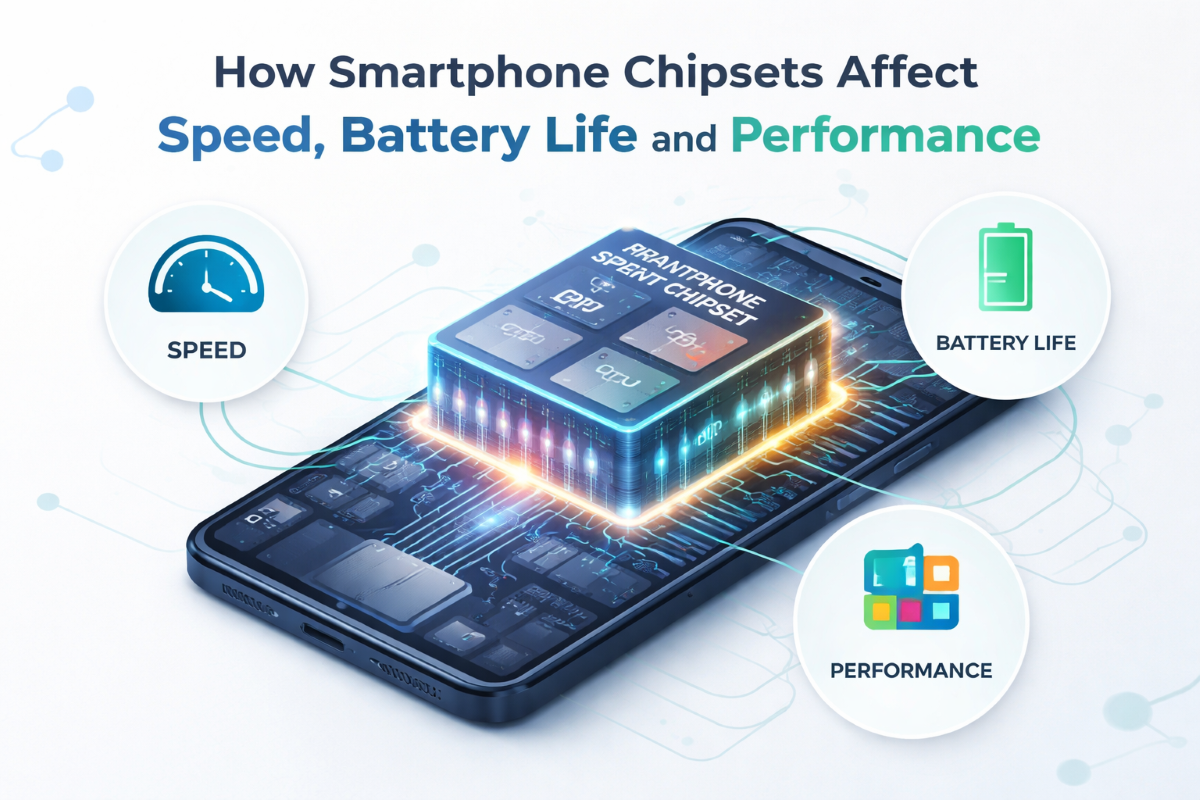
Most users focus on visible specifications such as RAM or camera megapixels. However, the chipset is the central engine that determines how efficiently all components work together. It controls how fast apps open, how smoothly games run, how long the battery lasts, and how stable the device remains over time.
At JuaTech Africa, understanding the chipset is fundamental to decoding real smartphone performance. This guide explains how chipsets influence speed, battery life, and overall experience, and why they matter more than any single specification.
What Does a Smartphone Chipset Actually Do?
A smartphone chipset controls how fast your device runs, how efficiently it uses power, and how well it handles tasks such as gaming, multitasking, and photography.
It acts as the central system that coordinates the CPU, GPU, AI engine, memory, and other components to deliver a unified performance experience. Every interaction on your phone, from opening an app to capturing a photo, is processed through the chipset.
This makes the chipset the most important determinant of real-world performance.
What Is a Smartphone Chipset?
A smartphone chipset, or System-on-Chip (SoC), is an integrated circuit that combines multiple processing units into a single, compact system.
Key components include:
- CPU (Central Processing Unit) for general tasks
- GPU (Graphics Processing Unit) for graphics and gaming
- NPU (Neural Processing Unit) for AI and machine learning
- ISP (Image Signal Processor) for camera processing
The chipset is not just about power. It is about coordination. How efficiently these components work together determines the overall experience.
How Chipsets Affect Speed
Speed is not a single number. It is the result of multiple layers of processing working in sync.
CPU Performance: The Core Driver
The CPU determines how quickly a device processes instructions. Its performance depends on:
- Clock speed
- Core configuration
- Architectural efficiency
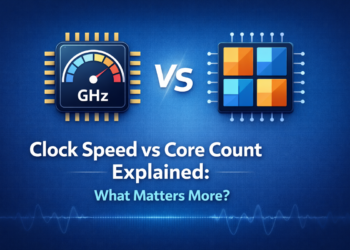
Modern processors improve performance not just by increasing speed, but by increasing efficiency per cycle. As explained in our Clock Speed vs Core Count Explained guide, raw numbers alone do not define performance. Architecture and optimization play a greater role.
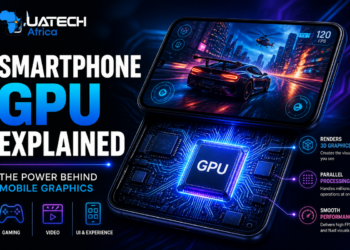
GPU Performance: Visual Smoothness and Gaming
The GPU controls how well a device handles visual tasks.
A capable GPU ensures:
- Smooth animations
- Stable gaming frame rates
- High-quality video playback
However, performance must be sustained. A GPU that overheats will reduce output, leading to inconsistent performance.
Software Optimization: The Multiplier Effect
Hardware performance is only as effective as the software managing it.
Optimized systems:
- Allocate resources efficiently
- Reduce unnecessary background load
- Improve responsiveness
This is why two devices with similar chipsets can perform differently in real-world use.
How Chipsets Affect Battery Life
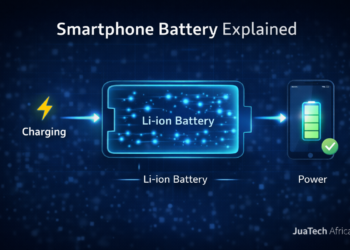
Battery life is directly tied to chipset efficiency.
Manufacturing Process: Smaller Means Smarter
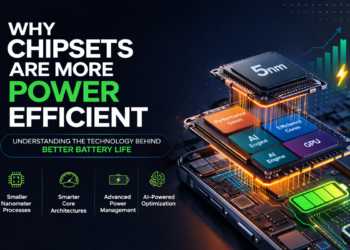
Modern chipsets are built using smaller semiconductor processes, such as 5nm or 4nm.
Smaller transistors:
- Consume less power
- Generate less heat
- Improve efficiency
This is why newer chipsets often deliver better battery life even with similar battery sizes.
Efficiency vs Performance Cores
Modern chipsets use hybrid architectures with:
- Performance cores for demanding tasks
- Efficiency cores for lighter tasks
This ensures that energy is used intelligently. As explained in our Why Chipsets Are More Power Efficient guide, this balance is key to modern smartphone efficiency.
Intelligent Power Management
Advanced chipsets dynamically adjust performance based on workload.
They:
- Scale clock speeds
- Disable unused cores
- Optimize background processes
This reduces unnecessary energy consumption while maintaining performance.
How Chipsets Affect Overall Performance
Overall performance is defined by consistency, not peak output.
A strong chipset ensures:
- Fast and consistent app launches
- Stable multitasking
- Smooth transitions between tasks
- Sustained performance under load
Sustained vs Burst Performance
Many devices perform well in short bursts but struggle over time due to heat and power constraints. A well-designed chipset maintains performance over extended usage, which is what users actually experience.
Stability Over Time
Performance is not just about speed. It is about maintaining that speed without drops, stutters, or overheating.
The Role of AI (NPU) in Modern Performance
Modern chipsets include NPUs that enable intelligent processing.
They power:
- Real-time image enhancement
- Voice recognition
- Adaptive battery optimization
- Predictive system behavior
As explained in our What Is an NPU in Smartphones guide, AI is now central to performance, not an optional feature.
Why Chipsets Matter More Than Ever
Smartphones have evolved beyond simple computing devices. They now rely on real-time intelligence, efficient multitasking, and sustained performance.
The chipset is responsible for:
- AI-driven features
- Performance consistency
- Battery efficiency
- Thermal stability
As technology advances, the chipset becomes the defining factor of the overall user experience.
Why Newer Chipsets Feel Faster
Newer chipsets improve performance through:
- Better architecture
- Higher instruction efficiency
- Improved scheduling
- Enhanced power management
Even without dramatic increases in clock speed, these improvements result in smoother, faster, and more efficient devices.
Common Misconceptions About Chipsets
More cores mean better performance
Core quality and efficiency matter more than quantity.
Higher GHz means faster speed
Clock speed alone does not define performance.
A bigger battery means longer battery life
Efficiency determines how long a battery lasts.
Understanding these misconceptions prevents poor buying decisions.
Real-World Impact: What Users Actually Experience
The chipset defines how a smartphone behaves in everyday use.
A well-optimized chipset delivers:
- Smooth navigation
- Stable gaming performance
- Minimal heat buildup
- Longer battery life
These factors determine satisfaction more than specifications alone.
Practical Buying Insight: What Should You Look For?
When choosing a smartphone, prioritize:
- Chipset generation
- Efficiency and balance
- Software optimization
- Sustained performance
Avoid focusing solely on marketing numbers. Real performance comes from balance, not extremes.
Final Verdict: Performance Is More Than Speed
A smartphone chipset defines not just how fast a device runs, but how well it performs over time.
Speed, battery life, and stability are interconnected. A powerful chipset without efficiency will fail in real-world use. A balanced chipset delivers consistent, reliable performance.
A chipset determines not just how fast your phone runs, but how well it performs over time.
JuaTech Africa Perspective: Decoding What Matters
At JuaTech Africa, the goal is to move beyond specifications and focus on real-world impact. A chipset is not just a technical component. It is the foundation of the smartphone experience.
The highest specs do not define the best smartphones, but by how intelligently their chipsets turn those specs into a consistent, reliable experience.