

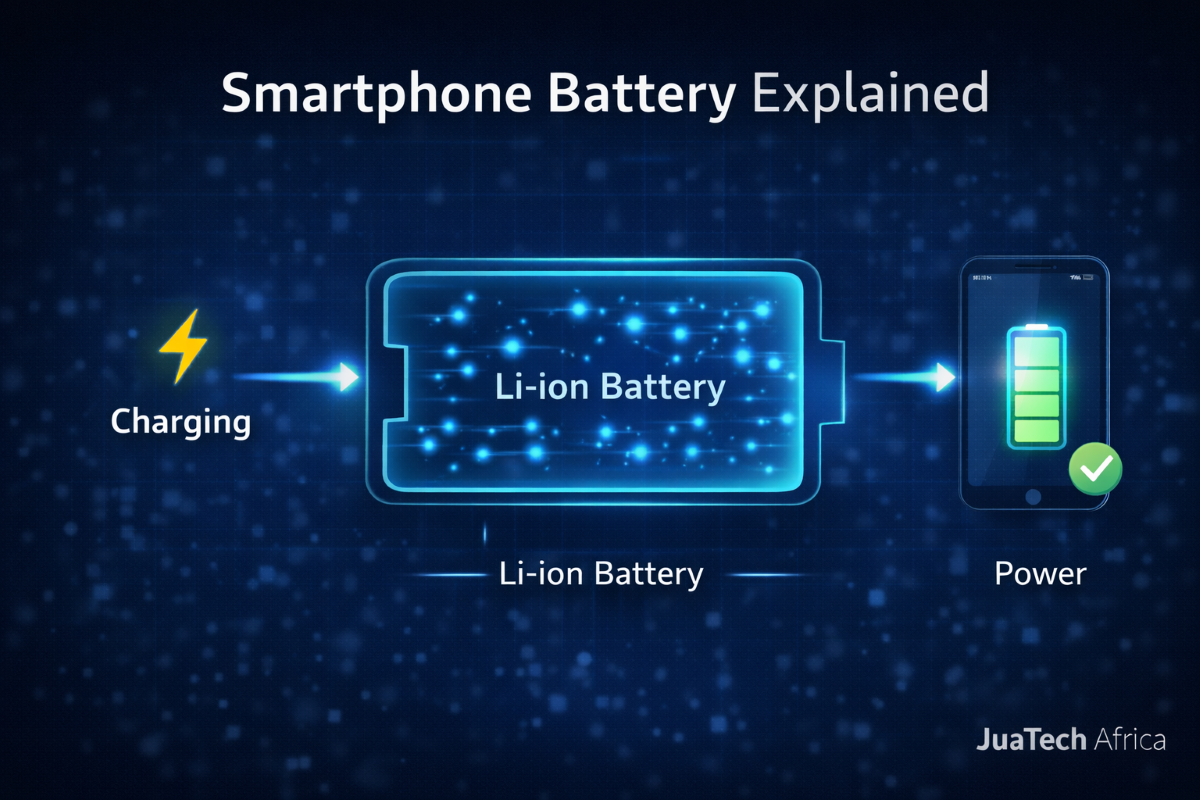
Smartphone batteries are the foundation of modern mobile technology. Every task—from making calls and browsing the web to gaming, photography, and artificial intelligence processing – depends on reliable battery performance. Battery capacity, charging speed, and lifespan determine how long a device lasts each day and how well it performs over several years.
Modern smartphones use advanced lithium-based battery technology designed to deliver high energy density, fast charging, and safe operation in compact devices. However, real-world battery performance depends on a combination of battery chemistry, chipset efficiency, display technology, charging systems, and user behavior.

Understanding how smartphone batteries work provides essential insight into device performance, longevity, and buying decisions. It also helps users adopt practices that extend battery lifespan and maintain reliable performance over time.
This guide explains smartphone battery capacity, charging technology, efficiency, degradation, and lifespan in depth, providing a complete technical and practical understanding of modern battery systems.
What Is a Smartphone Battery?
A smartphone battery is a rechargeable energy storage device that supplies electrical power to all components of the phone. Modern smartphones use lithium-ion (Li-ion) or lithium-polymer (Li-Po) batteries due to their high energy density, reliability, and rechargeability.
These batteries store energy chemically and release it as electrical power when the phone is in use.
The battery powers all major components, including:
- The chipset (CPU, GPU, and AI processor)
- The display
- Cameras
- Wireless connectivity (Wi-Fi, Bluetooth, and cellular)
- Storage and memory
- Operating system and applications
Without a functioning battery, the smartphone cannot operate.
Modern lithium batteries are designed to deliver consistent voltage, efficient energy delivery, and safe operation within compact form factors.
Lithium-Ion vs Lithium-Polymer Batteries Explained
Most smartphones use either lithium-ion or lithium-polymer batteries. Both technologies use lithium chemistry but differ in internal design and packaging.
Lithium-Ion Batteries
Lithium-ion batteries use a liquid electrolyte to facilitate the movement of lithium ions between electrodes. Advantages od Li-Ion include:
- High energy density
- Reliable performance
- Lower manufacturing cost
These tyoe of batteries are widely used across consumer electronics.
Lithium-Polymer Batteries
Lithium-polymer batteries use a gel-like electrolyte rather than a liquid one.
Advantages include:
- Greater design flexibility
- Improved safety characteristics
- Thinner and lighter battery construction
Lithium-polymer batteries are commonly used in premium smartphones due to their flexibility and efficiency.
Lithium-Ion vs Lithium-Polymer Comparison
| Feature | Lithium-Ion | Lithium-Polymer |
| Electrolyte | Liquid | Gel |
| Flexibility | Lower | Higher |
| Thickness | Slightly thicker | Thinner |
| Safety | Very safe | Extremely safe |
| Cost | Lower | Higher |
| Common usage | Most devices | Premium devices |
Both technologies deliver excellent performance and lifespan.
What Battery Capacity (mAh) Means
Battery capacity is measured in milliampere-hours (mAh), which represents how much electrical energy the battery can store.
A higher mAh value means the battery can store more energy.
For example:
- 3,000 mAh battery: smaller capacity
- 5,000 mAh battery: larger capacity
- 6,000 mAh battery: very large capacity
Higher-capacity batteries generally provide longer usage time.
However, battery life depends on multiple factors beyond capacity, including:
- Chipset efficiency
- Display technology
- Software optimization
- User behavior.
A 5,000 mAh battery in an efficient smartphone may last longer than a 6,000 mAh battery in an inefficient device.
Modern smartphones typically range between:
- 4,000 mAh and 6,000 mAh
This range provides full-day battery life under normal usage conditions.
How Smartphone Batteries Store and Deliver Energy
Smartphone batteries operate through electrochemical reactions involving lithium ions. The battery contains three key components:
- Anode (negative electrode): Stores lithium ions during charging.
- Cathode (positive electrode): Receives lithium ions during discharge.
- Electrolyte: Allows lithium ions to move between electrodes.
During charging:
- Lithium ions move from the cathode to the anode
- Energy is stored chemically
During use:
- Lithium ions move back to the cathode
- Stored energy converts into electrical power
This process supplies continuous power to smartphone components.
This charge-discharge cycle repeats throughout the battery’s lifespan.
How Fast Charging Works
Fast charging technology allows smartphones to recharge significantly faster than traditional charging methods.
Charging speed is measured in watts (W), which represents power delivery. Common charging speeds include:
- 10W: standard charging
- 18W: fast charging
- 30W: faster charging
- 45W: very fast charging
- 65W and above: ultra-fast charging
Fast charging increases power delivery during the early charging phase. Modern charging systems include advanced power management to protect battery health.
Charging occurs in three phases:
Phase 1: Constant Current Phase
The battery charges rapidly when the charge level is low.
Phase 2: Constant Voltage Phase
Charging speed slows as the battery approaches full capacity.
Phase 3: Trickle Charging Phase
Charging slows significantly near full capacity to prevent damage.
This protects battery longevity and safety.
Charging Cycles and Battery Lifespan Explained
Battery lifespan is measured in charging cycles. One charging cycle equals using 100% of battery capacity, regardless of how many charging sessions it takes.
For example:
- Two 50% discharges equal one cycle
- Four 25% discharges equal one cycle
Modern smartphone batteries typically last:
- 500 to 800 charging cycles
This equals approximately:
- 2 to 4 years of normal usage
Over time, battery capacity gradually decreases. This process is known as battery degradation. It is a natural and unavoidable characteristic of lithium batteries.
What Causes Battery Degradation
Battery degradation occurs due to chemical aging and usage patterns. Major factors include:
Heat
Heat is the primary cause of battery degradation. High temperatures accelerate chemical aging. Common heat sources include:
- Gaming
- Fast charging
- Hot environments.
Reducing heat improves battery lifespan.
Charging Behavior
Frequent full discharge and constant full charging accelerate degradation. Moderate charging improves battery health.
Charging Speed
Fast charging generates more heat than slower charging. Modern charging systems minimize damage through regulation.
Age
Battery performance naturally declines over time. This is normal.
How Chipsets Affect Battery Efficiency
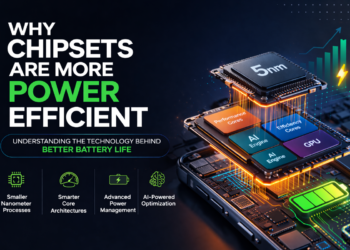
The smartphone chipset plays a critical role in battery efficiency. Efficient chipsets use less power to perform tasks.
Modern chipsets are manufactured using advanced semiconductor processes, which improve efficiency.
Efficient chipsets provide:
- Longer battery life
- Lower heat generation
- Improved performance efficiency
This explains why newer smartphones often have better battery life even with similar battery capacity.
How Display Technology Affects Battery Life
The display is one of the largest power-consuming components. Display type significantly affects battery efficiency.
OLED and AMOLED displays are more efficient than LCDs because individual pixels turn off when displaying black.
LCDs use constant backlighting, which consumes more power.
Higher refresh rates also increase power consumption.
Display efficiency is a major factor in overall battery performance.
Real-World Factors That Affect Battery Life
Battery life varies depending on real-world usage. Major factors include:
Screen Brightness: Higher brightness increases power consumption.
Gaming and Heavy Applications: Gaming uses CPU, GPU, and display heavily. This increases power usage.
Network Connectivity: Weak network signal increases power consumption. 5G consumes more power than Wi-Fi.
Background Processes: Apps running in the background consume battery power.
Software optimization improves efficiency.
Battery Management Systems and Safety
Smartphones include battery management systems to ensure safe operation. These systems monitor:
- Temperature
- Charging speed
- Voltage levels
They prevent overheating, overcharging, and damage.
Battery management systems improve safety and extend battery life.
How to Extend Smartphone Battery Lifespan
Users can extend battery lifespan through proper usage habits.
Recommended practices include:
- Avoid excessive heat
- Avoid constant full discharge
- Use certified chargers
- Avoid prolonged extreme temperatures
These practices improve battery longevity.
Future of Smartphone Battery Technology
Battery technology continues to evolve.
Advancements focus on:
- Higher energy density
- Faster charging speeds
- Improved efficiency
- Longer lifespan
These improvements will enhance smartphone performance.
Final Verdict: Smartphone Batteries Are Critical to Device Performance
Smartphone batteries power every aspect of device operation. Battery capacity, charging technology, and efficiency determine daily usability and long-term performance.
Modern lithium batteries provide excellent performance, safety, and efficiency.
Understanding battery technology helps users make informed decisions and maintain device performance over time.
Battery technology remains fundamental to smartphone innovation.