

The Shift Toward Smarter Performance
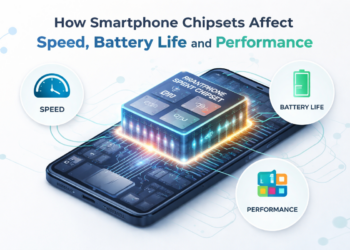
Modern smartphones are faster, thinner, and more powerful than ever, yet they last longer on a single charge than devices from just a few years ago. This is not accidental. It reflects a fundamental shift in how chipsets are designed and optimized. Performance today is no longer defined solely by raw power. It is defined by how efficiently that power is used.
For most users, battery life remains one of the most important factors when choosing a smartphone. Questions such as why some phones last longer despite similar battery sizes, or why newer devices feel faster yet consume less power, are increasingly common. The answer lies within the chipset.

At JuaTech Africa, JuaTech Decoded exists to provide clarity on such questions by translating complex technology into practical understanding. This article explains why modern chipsets are more power efficient, the technologies driving this improvement, and how it directly affects your everyday smartphone experience.
Why Are Chipsets More Power-Efficient Today?
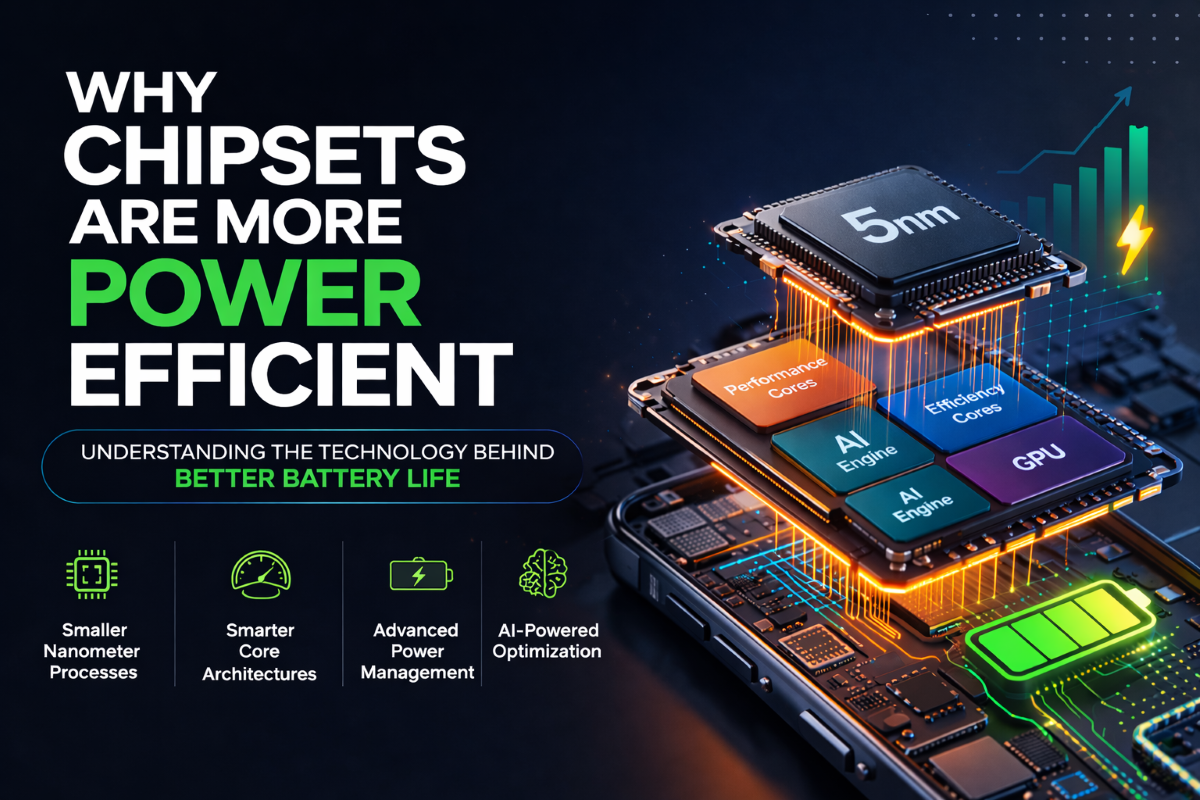
Modern chipsets are more power-efficient because they combine smaller manufacturing processes, advanced core architectures, intelligent power management systems, and specialized processing units. These innovations allow processors to perform more work while consuming less energy, reducing heat generation and improving battery life without compromising performance.
Understanding Power Efficiency in Chipsets
Power efficiency refers to the ability of a processor to deliver performance while minimizing energy consumption. It is not simply about using less power. It is about maximizing the amount of work done per unit of energy.
An efficient chipset can complete tasks faster, reduce unnecessary background activity, and maintain stable performance over extended periods. This leads to longer battery life, cooler operation, and a more consistent user experience.
In practical terms, power efficiency determines how long your phone lasts during daily use, how well it handles demanding applications, and how reliably it performs over time.
The Impact of Smaller Nanometer Processes
One of the most significant drivers of power efficiency is the transition to smaller semiconductor manufacturing processes, measured in nanometers. The nanometer value represents the size of the transistors within a chip.
As chipsets evolve from larger nodes such as 10nm to smaller nodes like 5nm and 4nm, transistors become smaller, faster, and more efficient. Smaller transistors require less energy to switch on and off, thereby reducing power consumption. At the same time, more transistors can fit into the same physical space, enabling improved performance without increasing energy consumption.
This advancement also reduces heat generation, which is critical for maintaining consistent performance. Lower heat output means the processor can sustain higher performance levels without throttling, resulting in a smoother and more reliable user experience.
Hybrid Architecture: Balancing Power and Efficiency
Modern chipsets rely on hybrid architectures, commonly known as big.LITTLE design. This approach combines high-performance cores with energy-efficient cores within a single processor.
High-performance cores are designed to handle demanding tasks such as gaming, video editing, and intensive multitasking. These cores deliver strong performance but consume more power. Efficiency cores, on the other hand, handle lighter tasks such as messaging, browsing, and background processes while consuming significantly less energy.
The chipset dynamically assigns tasks to the appropriate cores based on workload. This ensures that high-power resources are used only when necessary, while everyday tasks are handled by low-power cores. This intelligent task allocation is one of the key reasons modern smartphones achieve better battery life without sacrificing performance.
Advanced Power Management and Scheduling
Power efficiency is not determined by hardware alone. Software plays an equally important role. Modern chipsets are equipped with advanced power management systems that monitor usage patterns and adjust performance in real time.
These systems regulate clock speeds, activate or deactivate cores based on demand, and optimize background processes to minimize unnecessary energy consumption. For example, when a user is scrolling through social media, the chipset reduces performance to conserve power. When launching a game or editing video, it increases performance to meet the demand.
Operating systems such as Android are designed to work closely with these chipsets, ensuring efficient resource allocation. This coordination between hardware and software allows devices to deliver smooth performance while maintaining energy efficiency.
Instruction Efficiency and Specialized Processing Units
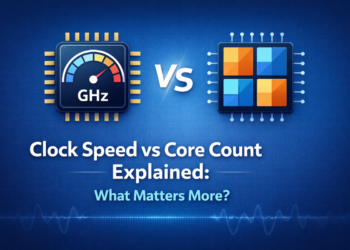
Modern chipsets are designed to perform more work per cycle, a concept known as improved instruction efficiency. This means that even at lower clock speeds, newer processors can complete tasks faster than older ones.
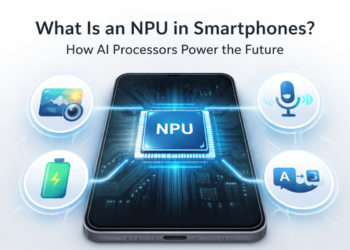
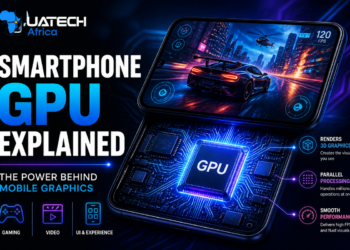
In addition, many chipsets now include specialized processing units such as AI engines, image signal processors, and neural processing units. These components are optimized for specific tasks, allowing them to execute operations more efficiently than general-purpose CPU cores.
For example, image processing tasks such as HDR photography or video stabilization are handled by dedicated units that consume less power than the CPU would for the same task. Similarly, AI-driven features such as voice recognition and predictive behavior are processed more efficiently through specialized hardware.
By offloading these tasks from the main CPU, the chipset reduces overall power consumption and improves efficiency.
Thermal Efficiency and Sustained Performance
Power efficiency and thermal performance are closely linked. When a processor consumes excessive power, it generates heat. If this heat is not managed effectively, the device reduces performance to prevent damage, a process known as thermal throttling.
Efficient chipsets generate less heat, enabling consistent performance over longer periods. This is particularly important for tasks such as gaming, video recording, and extended usage sessions.
Improved thermal efficiency not only enhances user experience but also contributes to device longevity. Components that operate at lower temperatures are less prone to wear and degradation over time.
Real-World Impact: What Users Actually Experience
For users, the benefits of power-efficient chipsets are immediately noticeable. Devices last longer on a single charge, remain cooler during use, and deliver consistent performance throughout the day.
In practical terms, this translates to longer screen-on time, smoother multitasking, and reduced performance drops during demanding tasks. Applications open quickly, games run more smoothly, and background processes do not unnecessarily drain the battery.
For users in regions where access to reliable power may not always be guaranteed, power efficiency becomes even more valuable. A device that can sustain longer usage without frequent charging offers a clear and practical advantage.
Common Misconceptions About Power Efficiency
Many users assume that battery capacity alone determines how long a smartphone will last. While battery size is important, it is only one part of the equation. A poorly optimized chipset can drain even a large battery quickly, while an efficient processor can extend usage on a smaller battery.
Another common misconception is that older flagship processors are always better than newer mid-range chipsets. In reality, newer processors often offer improved efficiency, delivering better battery life and more consistent performance.
It is also widely believed that higher performance automatically leads to higher power consumption. While this was true in earlier generations, modern chipsets are designed to balance performance and efficiency, delivering both without significant compromise.
Practical Buying Guidance: What Should You Look For?
When choosing a smartphone, power efficiency should be a key consideration alongside performance and features. A device with a modern, well-optimized chipset will typically deliver better battery life and more consistent performance.
Users should prioritize devices with recent chipset generations, efficient architectures, and proven optimization. It is also important to consider real-world reviews and usage patterns rather than relying solely on specifications.
Understanding how chipsets manage power allows users to make more informed decisions, ensuring that their devices meet both performance and battery life expectations.
Final Verdict: Efficiency Defines Modern Performance
Power efficiency has become a defining characteristic of modern chipsets. It reflects a shift from raw performance to intelligent performance, where devices are designed to deliver the best possible experience with minimal energy consumption.
The most efficient chipsets are not necessarily the fastest on paper, but they provide the best balance between speed, battery life, and thermal stability.
JuaTech Africa Perspective: Clarity That Drives Better Decisions
At JuaTech Africa, the goal of JuaTech Decoded is to empower users with knowledge that goes beyond specifications. Understanding why chipsets are more power efficient enables users to evaluate devices based on real value rather than marketing claims.
True performance is no longer defined by how fast a device can run, but by how intelligently it uses power to sustain that performance over time.