
JuaTech Africa
TRENDING
No Result
View All Result
  • Explore
    • Buying Guides
      • Smartphones
      • Tablets & Productivity
      • Wearables
      • Audio
      • Accessories
    • Creator Hub
      • Creator Phones
      • Creator Audio
      • Creatives Growth Strategy
      • Creator Business
    • About Us
      • Founder’s Letter: The Vision Behind JuaTech Africa
      • Mission & Vision | JuaTech Africa
      • Editorial Policy
      • Advisory
      • Work with Us
      • Contact Us
  • Intelligence
    • JuaTech Africa Intelligence
    • Brand Intelligence
    • Market Intelligence
    • Mobile Imaging Intelligence
    • Industry Intelligence
    • Market Signals
    • Analytica
    • Artificial Intelligence
    • Digital Assets Intelligence
  • Reviews
    • Smartphones
    • Tablets
    • Audio
    • Wearables
    • Accessories
  • Tech Decoded
    • Core Technology
    • Device Hardware
    • Software & Platforms
    • Connectivity & Networks
    • AI & Emerging Technology
    • Buying, Safety & Integrity
    • Tech Guides & How-To
    • Product Strategy & Value Analysis
  • Ecosystems
    • Mobile Ecosystems
    • African Tech Ecosystem
    • Company Ecosystems
    • Platform Ecosystems
SUBSCRIBE
  • Explore
    • Buying Guides
      • Smartphones
      • Tablets & Productivity
      • Wearables
      • Audio
      • Accessories
    • Creator Hub
      • Creator Phones
      • Creator Audio
      • Creatives Growth Strategy
      • Creator Business
    • About Us
      • Founder’s Letter: The Vision Behind JuaTech Africa
      • Mission & Vision | JuaTech Africa
      • Editorial Policy
      • Advisory
      • Work with Us
      • Contact Us
  • Intelligence
    • JuaTech Africa Intelligence
    • Brand Intelligence
    • Market Intelligence
    • Mobile Imaging Intelligence
    • Industry Intelligence
    • Market Signals
    • Analytica
    • Artificial Intelligence
    • Digital Assets Intelligence
  • Reviews
    • Smartphones
    • Tablets
    • Audio
    • Wearables
    • Accessories
  • Tech Decoded
    • Core Technology
    • Device Hardware
    • Software & Platforms
    • Connectivity & Networks
    • AI & Emerging Technology
    • Buying, Safety & Integrity
    • Tech Guides & How-To
    • Product Strategy & Value Analysis
  • Ecosystems
    • Mobile Ecosystems
    • African Tech Ecosystem
    • Company Ecosystems
    • Platform Ecosystems
No Result
View All Result
JuaTech Africa
No Result
View All Result
Home Tech Decoded Device Hardware

OLED vs LCD vs AMOLED Explained: Which Smartphone Display Is Best in 2026?

Lewis Wafula by Lewis Wafula
March 2, 2026
in Device Hardware
Reading Time: 5 mins read
0
0
SHARES
122
VIEWS
Share on FacebookShare on Twitter

Smartphone display technology is one of the most important factors determining user experience. Every interaction, from reading text and watching videos to gaming and productivity, depends on display quality, efficiency, and responsiveness. Today, modern smartphones use three primary display technologies: LCD, OLED, and AMOLED.

Each technology differs in how it produces light, manages power, and delivers image quality. These differences directly affect battery life, device thickness, outdoor visibility, and visual clarity.

Strategic Marketing by Alpha Brands Consulting

Understanding how LCD, OLED, and AMOLED displays work helps you make informed decisions when buying a smartphone and explains why flagship devices increasingly rely on AMOLED technology.

This guide provides a complete, expert explanation of LCD, OLED, and AMOLED displays, their differences, advantages, limitations, and which display technology is best in modern smartphones.

Jump Ahead

Toggle
  • What Is LCD (Liquid Crystal Display)?
  • Advantages of LCD Displays
  • Disadvantages of LCD Displays
  • Where LCD Is Used Today
  • What Is OLED (Organic Light-Emitting Diode)?
    • Advantages of OLED Displays
    • Disadvantages of OLED Displays
  • Where OLED Is Used Today
  • What Is AMOLED (Active Matrix Organic Light-Emitting Diode)?
    • Advantages of AMOLED Displays
    • Disadvantages of AMOLED Displays
  • What Is LTPO AMOLED and Why It Matters
  • OLED vs LCD vs AMOLED: Core Technology Differences
  • Battery Efficiency Comparison
  • Refresh Rate and Performance Differences
  • Real-World Smartphone Examples
  • Real-World User Experience Differences
  • Why AMOLED Is the Industry Standard
  • Future of Smartphone Display Technology
  • Which Display Should You Choose?
  • Final Verdict: AMOLED Is the Best Smartphone Display Technology

What Is LCD (Liquid Crystal Display)?

LCD, or Liquid Crystal Display, is a mature and widely used display technology. It uses a separate backlight panel that shines through liquid crystals to create images.

The liquid crystals do not emit light themselves. Instead, they act as filters that control how much light passes through from the backlight to form colors and images on the screen.

Because LCD relies on a continuous backlight, the entire display remains illuminated regardless of what is being shown.

Advantages of LCD Displays

Lower manufacturing cost:

LCD panels are cheaper to produce, making them common in budget and entry-level smartphones.

Good brightness levels:

LCDs can achieve high brightness, allowing decent outdoor visibility.

Long lifespan with minimal burn-in risk:

LCD technology does not suffer from burn-in, making it reliable for long-term use.

Disadvantages of LCD Displays

Lower contrast ratio: Because the backlight remains on, the LCD cannot produce true black. Dark areas appear gray.

Higher power consumption with dark content: The backlight consumes power continuously, even when displaying black pixels.

Thicker display structure: The backlight layer increases display thickness, limiting ultra-thin designs.

Where LCD Is Used Today

LCDs are primarily found in:

  • Budget smartphones
  • Entry-level tablets
  • Affordable laptops

Many entry-level devices still use LCD due to its lower cost.

What Is OLED (Organic Light-Emitting Diode)?

OLED is a newer and more advanced display technology. Unlike LCD, OLED pixels produce their own light individually. This eliminates the need for a backlight.

Each pixel can turn completely off when displaying black, creating perfect black levels and significantly improving contrast and efficiency.

This self-emitting design makes OLED displays thinner, more efficient, and visually superior.

Advantages of OLED Displays

True black levels
Pixels turn off completely, producing perfect blacks and infinite contrast.

Better battery efficiency
Power is used only for active pixels. Black pixels consume zero power.

Thinner display panels
No backlight is required, enabling slimmer phone designs.

Superior image quality
OLED displays deliver richer colors and better visual depth.

Disadvantages of OLED Displays

Higher production cost
OLED displays are more expensive than LCDs.

Burn-in risk (minimal in modern devices)
Modern OLED displays include protection technologies, making burn-in extremely rare in normal use.

Where OLED Is Used Today

OLED displays are used in:

  • Premium smartphones
  • Midrange smartphones
  • Flagship smartphones

OLED has largely replaced LCD in higher-tier devices.

What Is AMOLED (Active Matrix Organic Light-Emitting Diode)?

AMOLED is an advanced form of OLED display technology. It uses an active matrix of thin-film transistors to control each pixel individually with greater speed and precision.

This allows faster refresh rates, improved efficiency, and support for advanced smartphone features.

AMOLED is currently the dominant display technology in flagship smartphones.

Advantages of AMOLED Displays

Best overall image quality
AMOLED delivers exceptional contrast, vibrant colors, and perfect blacks.

Excellent power efficiency
Individual pixel control reduces power consumption.

Supports high refresh rates (120Hz and beyond)
AMOLED enables smoother scrolling and better gaming performance.

Enables advanced smartphone features

Including:

  • Always-On Display
  • In-display fingerprint sensors
  • Ultra-thin device designs

Disadvantages of AMOLED Displays

Higher cost

This contributes to higher smartphone prices.

Potential burn-in risk

Modern AMOLED panels include mitigation systems, making burn-in rare.

What Is LTPO AMOLED and Why It Matters

LTPO AMOLED is an advanced version of AMOLED technology used in modern flagship smartphones.

LTPO stands for Low-Temperature Polycrystalline Oxide. It allows the display to adjust its refresh rate dynamically based on usage.

For example:

  • 1Hz when displaying static content
  • 120Hz during scrolling or gaming

This significantly improves battery efficiency.

LTPO AMOLED is used in premium devices because it delivers the best balance of performance and power efficiency.

OLED vs LCD vs AMOLED: Core Technology Differences

Feature LCD OLED AMOLED
Light source Backlight required Self-emitting pixels Self-emitting pixels with an active matrix
Black levels Grayish blacks True blacks Perfect blacks
Contrast ratio Lower Very high Highest
Battery efficiency Lower Higher Highest
Thickness Thicker Thinner Thinnest
Image quality Good Excellent Best
Premium features Limited Supported Fully supported

Battery Efficiency Comparison

Battery efficiency is one of the most important advantages of OLED and AMOLED displays.

LCDs consume constant power because the backlight is always on.

OLED and AMOLED displays consume power only when pixels are active. Black pixels consume no power.

This significantly improves battery life, especially when using dark mode.

AMOLED displays with LTPO technology provide the best efficiency.

Refresh Rate and Performance Differences

AMOLED displays support higher refresh rates, such as:

  • 90Hz
  • 120Hz
  • 144Hz

Higher refresh rates improve:

  • Smooth scrolling
  • Gaming responsiveness
  • Overall user experience

LCDs can support high refresh rates but are less efficient when doing so.

AMOLED remains the preferred choice for high-performance devices.

Real-World Smartphone Examples

Modern flagship smartphones use AMOLED, or LTPO AMOLED displays for their superior performance.

Examples include:

Flagship devices

  • Samsung Galaxy S series: LTPO AMOLED
  • Premium Android flagships: AMOLED

Midrange smartphones

  • Many modern midrange devices: OLED or AMOLED

Budget smartphones

  • Entry-level phones: LCD

This reflects industry-wide adoption of AMOLED as the premium standard.

Real-World User Experience Differences

Users upgrading from LCD to AMOLED typically notice:

  • Deeper blacks
  • Better contrast
  • More vibrant colors
  • Improved battery life
  • Better outdoor visibility
  • Smoother scrolling

These improvements significantly enhance the overall smartphone experience.

Why AMOLED Is the Industry Standard

AMOLED enables modern smartphone features that LCD cannot support effectively, including:

  • Always-On Display
  • Thin device designs
  • Efficient high refresh rates
  • Better battery optimization

This is why flagship smartphones universally use AMOLED displays.

Future of Smartphone Display Technology

AMOLED continues to evolve with improvements in efficiency and brightness.

LTPO AMOLED improves adaptive refresh rates and battery efficiency.

Future display technologies, such as MicroLED, are in development but are not yet widely available in smartphones.

For now, AMOLED remains the best display technology available.

Which Display Should You Choose?

Choose AMOLED if:

  • You want the best display quality
  • You are buying a flagship or midrange smartphone
  • You want better battery efficiency
  • You use your phone for gaming or video

Choose OLED if:

  • You want excellent display quality
  • You are buying a midrange or premium device

Choose LCD if:

  • You are buying a budget smartphone
  • Your priority is affordability

Final Verdict: AMOLED Is the Best Smartphone Display Technology

AMOLED is the most advanced display technology available in modern smartphones. It delivers superior contrast, true blacks, better battery efficiency, thinner designs, and support for advanced features.

OLED also offers excellent performance and remains a strong option in midrange and premium smartphones.

LCD remains useful in budget devices, but cannot match the efficiency and visual quality of OLED and AMOLED.

For the best smartphone experience in 2026, AMOLED is the clear leader.

Tags: AMOLEDAMOLED vs LCDdisplay comparisondisplay typesLCDLTPO AMOLEDOLEDOLED explainedsmartphone display technologysmartphone screen guide
ShareTweet
Strategic marketing and positioning by Alpha Brands Consulting Strategic marketing and positioning by Alpha Brands Consulting Strategic marketing and positioning by Alpha Brands Consulting
Previous Post

What Is a Smartphone GPU and Why It Matters for Gaming and Performance

Next Post

The Commoditization of Excellence: Why Mid-Range Smartphones Are Overtaking Flagships

Lewis Wafula

Lewis Wafula

Tech Analyst | Reviewer | Founder of JuaTech Africa Tech analyst and founder of JuaTech Africa, delivering practical smartphone reviews, mobile tech insights, and digital solutions for professionals and businesses in Africa. Explore the latest insights on JuaTech Africa or get in touch for collaboration and consulting. Connect with Lewis.

Related Posts

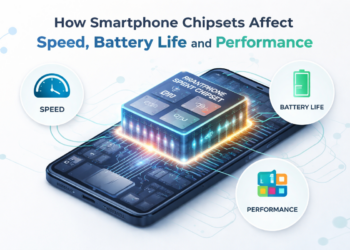
Illustration of a smartphone chipset showing CPU, GPU, and AI components connected to speed, battery life, and performance indicators
Device Hardware

How Smartphone Chipsets Affect Speed, Battery Life, and Overall Performance

March 21, 2026
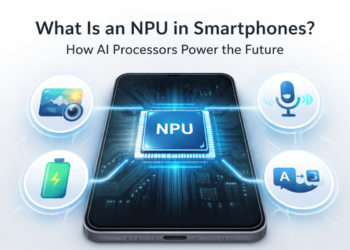
Illustration showing a smartphone chipset with a neural processing unit handling AI tasks such as image processing and voice recognition
Device Hardware

What is an NPU, and why is it the Future of Smartphones?

March 21, 2026
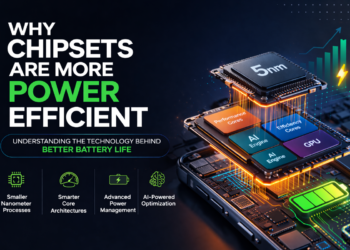
Illustration of a modern smartphone chipset showing power efficiency through smaller nanometer process, performance cores, efficiency cores, and battery optimization
Device Hardware

Why Chipsets Are More Power Efficient: Understanding the Technology Behind Better Battery Life

March 21, 2026
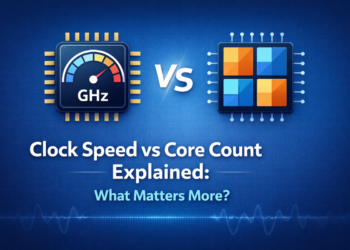
Illustration comparing CPU clock speed in GHz and core count in a smartphone processor to explain performance differences
Device Hardware

Clock Speed vs Core Count Explained: What Matters More?

March 21, 2026
What Is a Smartphone GPU? Powering Gaming, Video & Performance
Device Hardware

What Is a Smartphone GPU and Why It Matters for Gaming and Performance

May 1, 2026
Smartphone lithium ion battery diagram showing energy flow and charging process.
Device Hardware

How Smartphone Batteries Work: Capacity, Charging, and Lifespan Explained

March 7, 2026
Next Post
Mid-range smartphone performance convergence semiconductor intelligence report JuaTech Africa

The Commoditization of Excellence: Why Mid-Range Smartphones Are Overtaking Flagships

Leave a Reply Cancel reply

Your email address will not be published. Required fields are marked *

About the Founder

Lewis Wafula, Founder of JuaTech Africa

Lewis Wafula

Founder, JuaTech Africa

Helping Africans make smarter technology decisions through trusted reviews, buying guides, creator technology insights, and market intelligence.

Connect on LinkedIn

JuaTech Africa Intelligence

Independent research and market intelligence exploring the trends, technologies, and market forces shaping Africa's digital future.

📊 Flagship Research
  • 2025 Brand Performance Report
  • Q1 2026 Market Report
🧠 Research Areas
  • Analytica
  • Market Intelligence
  • AI Intelligence
Explore Intelligence

Join the JuaTech Intelligence Circle

Signal over noise. Get trusted reviews, market intelligence, buying guidance, and emerging technology insights shaping Africa's digital future.

Get Free Access

Essential Buyer Guides

Ultimate Smartphone Buying Guide Kenya 2025

The Ultimate Smartphone Buying Guide for Kenya (2026): How to Choose the Right Phone with Confidence

June 9, 2026
Best phones under KES 30,000 in Kenya 2026 including Samsung Galaxy A26, POCO M6 Pro, Tecno Camon 50, Infinix Note 40 and Oppo A60

Best Phones Under KES 30,000 in Kenya (2026): Smart Picks That Deliver Real Value

June 22, 2026
Best phones under 60000 Kenya 2026 including Samsung Galaxy A57, OnePlus Nord 6, Google Pixel 10a and Nothing Phone 4a comparison

Best Phone Under KES 60,000 (2026): 7 Phones That Actually Deliver Value Before You Spend Your Money

June 23, 2026
Battery Kings for power outages in Africa – editorial smartphone battery guide

Battery Kings: Best Smartphones for Power Outages, Value, and Daily Life in Africa

May 25, 2026
Best premium midrange smartphones in Kenya 2026 comparison featuring Samsung Galaxy A57, Vivo V70, Xiaomi Note 15 Pro Plus, Oppo Reno15 Pro and Nothing Phone 4a Pro

Best Premium Midrange Smartphones in Kenya (2026): Samsung, Redmi, HONOR, Pixel and More

May 25, 2026
Samsung Galaxy Z Fold8, Galaxy Z Fold8 Ultra and the Samsung Galaxy Z Fold8 Series showcased in JuaTech Africa's in-depth product review.

Samsung Galaxy Z Fold8 Review: Is This the Most Complete Foldable Smartphone Yet?

July 28, 2026

Tech Decoded

Beyond specifications and marketing claims. Deep analysis of the technologies, strategies, and emerging trends shaping how we build, buy, and use technology.

⚙️ Technology Explained

Breaking down complex technologies, specifications, and concepts into practical understanding.

💡 Product Strategy & Value Analysis

Understanding why products exist, how they are positioned, and the value they deliver.

🤖 AI & Emerging Technology

Exploring the technologies reshaping devices, industries, and digital experiences.

Explore Tech Decoded

Editor's Pick

Smartphone processors 2026 comparison showing Snapdragon, MediaTek Dimensity 9500 and Apple A19 Pro chips with flagship phones

Best Smartphone Processor 2026: Snapdragon vs Dimensity vs Apple What Actually Matters

April 24, 2026
MediaTek Dimensity 9500

Dimensity 9500 Unleashed: MediaTek’s 3nm Powerhouse Redefines Flagship Performance in 2025

June 19, 2026
HONOR smartphone naming explained showing X Series, Number Series and Magic Series lineup hierarchy for Kenyan buyers

HONOR Smartphone Naming Explained (2026 Kenya Master Guide)

Infinix Note Edge vs Samsung Galaxy A36 5G

Infinix Note Edge vs Samsung Galaxy A36 5G: Which Makes More Sense for Daily Use?

February 22, 2026

Work With JuaTech Africa

Reach technology consumers, creators, and decision-makers through trusted reviews, market intelligence, sponsored campaigns, and strategic partnerships.

Explore Opportunities

Helping You Choose Right

Insight | Clarity | Better Tech Decisions

  • JuaTech Africa Intelligence
  • Tech Reviews
  • Ecosystems Intelligence Hub
  • About Us

Connect With Us

  • About Us
  • Editorial Policy
  • Disclaimer
  • Our Services
  • Advertise
  • Newsletter
  • Contact Us
  • Media Kit

© 2026 JuaTech Africa. All rights reserved. Built for tech intelligence in Africa.

No Result
View All Result
  • Explore
    • Buying Guides
      • Smartphones
      • Tablets & Productivity
      • Wearables
      • Audio
      • Accessories
    • Creator Hub
      • Creator Phones
      • Creator Audio
      • Creatives Growth Strategy
      • Creator Business
    • About Us
      • Founder’s Letter: The Vision Behind JuaTech Africa
      • Mission & Vision | JuaTech Africa
      • Editorial Policy
      • Advisory
      • Work with Us
      • Contact Us
  • Intelligence
    • JuaTech Africa Intelligence
    • Brand Intelligence
    • Market Intelligence
    • Mobile Imaging Intelligence
    • Industry Intelligence
    • Market Signals
    • Analytica
    • Artificial Intelligence
    • Digital Assets Intelligence
  • Reviews
    • Smartphones
    • Tablets
    • Audio
    • Wearables
    • Accessories
  • Tech Decoded
    • Core Technology
    • Device Hardware
    • Software & Platforms
    • Connectivity & Networks
    • AI & Emerging Technology
    • Buying, Safety & Integrity
    • Tech Guides & How-To
    • Product Strategy & Value Analysis
  • Ecosystems
    • Mobile Ecosystems
    • African Tech Ecosystem
    • Company Ecosystems
    • Platform Ecosystems

© 2026 JuaTech Africa. All rights reserved. Built for tech intelligence in Africa.

JuaTech Africa

Typically replies within minutes

Any questions related to OLED vs LCD vs AMOLED Explained: Which Smartphone Display Is Best in 2026??

WhatsApp Us

Online | Privacy policy

WhatsApp us