

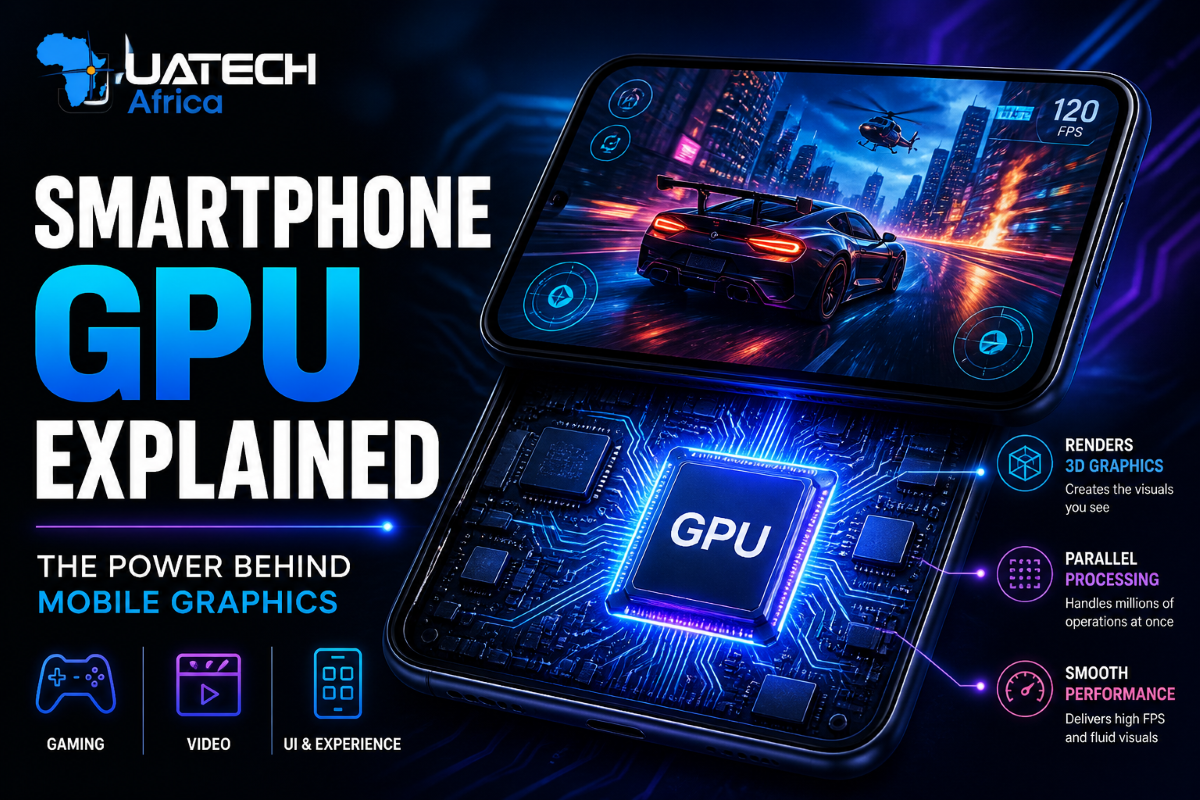
Modern smartphones deliver console-level gaming, ultra-high-definition video playback, and smooth, responsive user interfaces. Behind this visual performance is a critical component known as the GPU, or Graphics Processing Unit.
The smartphone GPU is responsible for rendering everything you see on your display—from game environments and character models to animations, videos, and interface transitions. While the CPU handles general system operations, the GPU specializes in visual processing, enabling fast, efficient rendering of images and motion.

As mobile gaming, high-refresh-rate displays, and AI-enhanced graphics become standard, GPU performance has become one of the most important factors determining a smartphone’s overall capability, gaming experience, and long-term performance.
Understanding what the smartphone GPU is, how it works, and why it matters helps users choose devices that deliver smooth gaming, better efficiency, and superior visual performance.
What Is a Smartphone GPU?
A GPU, or Graphics Processing Unit, is a specialized processor designed to render images, video, and animations. It processes graphical data and converts it into the visual output displayed on your smartphone screen.
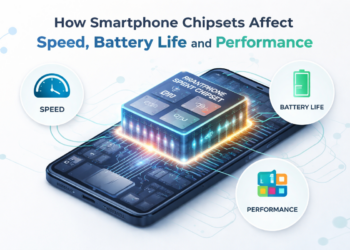
In smartphones, the GPU is integrated into the chipset, also known as the System on Chip (SoC). This integration allows the GPU to work closely with the CPU, memory, and other components.
The GPU is responsible for rendering:
- Game graphics
- Video playback
- User interface animations
- Visual effects
- Camera preview and rendering
Unlike the CPU, which handles sequential tasks, the GPU performs parallel processing. This means it can process many graphical calculations simultaneously, making it far more efficient at rendering images and video.
This capability is essential for modern gaming and high-resolution displays.
Where the GPU Exists Inside a Smartphone Chipset
In modern smartphones, the GPU is part of the chipset architecture. The chipset integrates multiple processors into a single compact system.
Key components inside a chipset include:
- CPU (Central Processing Unit)
- GPU (Graphics Processing Unit)
- NPU (Neural Processing Unit)
- ISP (Image Signal Processor)
- Modem (Connectivity processor)
Each processor performs a specific function.
The CPU handles system logic and instructions. The GPU handles visual rendering. The NPU accelerates artificial intelligence tasks. The ISP processes camera data.
Because the GPU is integrated into the chipset, its performance depends on the chipset’s design, efficiency, and architecture.
This is why flagship chipsets deliver significantly better gaming and graphical performance than budget chipsets.
How a Smartphone GPU Works
The GPU processes graphical instructions and converts them into visual output.
When you launch a game, the CPU sends graphical instructions to the GPU. These instructions include information about:
- Objects
- Characters
- Textures
- Lighting
- Motion
The GPU performs several critical tasks:
Geometry processing
Calculates object shapes and positions.
Texture mapping
Applies visual textures to surfaces.
Lighting and shading
Calculates light interaction, shadows, and reflections.
Frame rendering
Generates images and sends them to the display.
This process repeats continuously, often 60 to 120 times per second.
The faster and more efficient the GPU, the smoother the visual output.
Why the GPU Matters for Gaming Performance
The GPU is the most important component for gaming performance.
It directly affects:
Frame Rate
Frame rate refers to how many frames the GPU renders per second. Common frame rates include:
- 30 FPS: basic smoothness
- 60 FPS: smooth gameplay
- 120 FPS: ultra-smooth gaming
Higher frame rates improve responsiveness and gaming experience. Weak GPUs cannot maintain stable frame rates, causing lag and stuttering.
Graphics Quality
Powerful GPUs support higher graphical settings, including:
- High-resolution textures
- Realistic lighting
- Advanced visual effects
This improves visual realism.
Gaming Stability
Strong GPUs maintain stable performance without frame drops or performance throttling.
This ensures consistent gameplay.
GPU and Gaming Graphics Settings Explained
Modern games include graphics settings such as:
- Low
- Medium
- High
- Ultra
These settings control graphical detail.
Stronger GPUs can run games at high or ultra settings while maintaining smooth performance.
Weaker GPUs must reduce settings to maintain stability.
This is why GPU performance directly affects gaming quality.
GPU vs CPU: What’s the Difference?
The CPU and GPU perform different roles.
| CPU | GPU |
| Handles system logic | Handles graphical rendering |
| Processes instructions sequentially | Processes tasks in parallel |
| Controls apps and system | Enables gaming and visual performance |
The CPU manages operations, while the GPU renders visuals.
Both are essential, but GPU performance determines gaming capability.
Major Smartphone GPU Types (2026)
Smartphone GPUs are designed by specialized semiconductor companies and integrated into mobile chipsets. Each GPU architecture offers different levels of performance, efficiency, and graphical capability depending on its design and optimization.
The most widely used smartphone GPU types include Adreno, Mali, and Apple GPUs. Each plays a critical role in gaming performance, camera processing, and overall device responsiveness.
Adreno GPU (Qualcomm Snapdragon)
Adreno GPUs are developed by Qualcomm and integrated into Snapdragon chipsets. They are among the most powerful and efficient GPUs used in Android smartphones, particularly in flagship and premium devices.
Adreno GPUs offer:
-
Excellent gaming performance with high frame rate stability
-
Strong power efficiency, improving battery life
-
Wide compatibility with Android games and graphics engines
-
Support for advanced graphical technologies such as ray tracing
Modern Adreno GPUs, such as the Adreno 740 and newer generations, power many flagship smartphones and deliver smooth performance even in demanding games like Call of Duty Mobile, PUBG Mobile, and Genshin Impact.
Adreno GPUs are widely regarded as the benchmark for Android gaming performance and are commonly found in premium Snapdragon-powered devices.
Mali GPU (MediaTek and Samsung Exynos)
Mali GPUs are developed by ARM and used in chipsets from MediaTek and Samsung Exynos. Mali GPUs are widely adopted across flagship, midrange, and budget smartphones due to their scalability and efficiency.
Mali GPUs provide:
-
Strong overall graphical performance
-
Good power efficiency for balanced performance and battery life
-
Reliable support for modern applications and games
-
Scalable performance across different smartphone price categories
Recent Mali GPU architectures, including Mali-G610 and newer models, deliver significantly improved gaming performance and efficiency compared to earlier generations.
Mali GPUs are commonly found in MediaTek Dimensity and Samsung Exynos chipsets, powering a wide range of modern smartphones.
Apple GPU (Apple Silicon)
Apple designs custom GPUs integrated into its A-series chipsets, known as Apple Silicon. These GPUs are highly optimized for Apple’s hardware and software ecosystem, delivering exceptional performance and efficiency.
Apple GPUs deliver:
-
Industry-leading graphical performance
-
Excellent power efficiency and thermal management
-
Advanced features such as hardware-accelerated ray tracing
-
Optimized performance through deep integration with iOS
Apple’s GPU design enables smooth gaming, fast video editing, and highly responsive user interfaces across iPhone devices. This tight hardware and software integration ensures consistent and reliable performance over the long term.
Apple GPUs are widely recognized for delivering some of the best mobile graphics performance available.
Immortalis and Advanced ARM GPUs (Emerging Flagship GPUs)
ARM also develops Immortalis GPUs, which represent its most advanced GPU architecture. These GPUs are designed for flagship smartphones and support advanced graphical technologies.
Immortalis GPUs provide:
-
Flagship-level gaming performance
-
Support for hardware ray tracing
-
Improved efficiency and sustained performance
-
Enhanced support for modern gaming engines
Immortalis GPUs are used in advanced MediaTek Dimensity flagship chipsets and represent a major advancement in mobile graphics technology.
Why GPU Type Matters
The type of GPU in a smartphone directly affects:
-
Gaming performance and graphical quality
-
Camera processing speed
-
Video playback and editing capability
-
Interface smoothness and responsiveness
-
Long-term performance and future readiness
Modern smartphone GPUs have become essential components that determine overall device performance and user experience.
GPU and High Refresh Rate Displays
Modern smartphones increasingly support high-refresh-rate displays, including 90Hz, 120Hz, and 144Hz. The refresh rate refers to how many times the screen updates per second. Higher refresh rates improve visual smoothness, making scrolling, animations, and gaming appear more fluid and responsive.
High-refresh-rate displays place greater demand on the GPU. To maintain smooth performance, the GPU must render more frames per second. For example, a 120Hz display requires the GPU to render up to 120 frames per second, compared to 60 frames per second on a standard display.
A capable GPU ensures:
Smooth scrolling and system navigation
The GPU renders user interface animations and transitions. Strong GPU performance ensures fluid scrolling and responsive navigation across applications.
Consistent gaming performance
Games benefit significantly from higher refresh rates. A powerful GPU allows compatible games to run at higher frame rates, improving smoothness and responsiveness.
Stable visual performance
Efficient GPUs maintain consistent frame delivery, reducing frame drops, stuttering, and performance instability.
Weaker GPUs may struggle to sustain high frame rates, especially in demanding applications or games. This can result in inconsistent performance, reduced smoothness, and limited use of the display’s full refresh rate capability.
Modern GPU architectures, including Qualcomm Adreno, Apple GPU, and ARM Immortalis and Mali GPUs, are designed to efficiently support high-refresh-rate displays. This ensures smooth visual performance while balancing power consumption and thermal efficiency.
High-refresh-rate displays and capable GPUs work together to deliver smoother visuals, improved responsiveness, and a better overall smartphone experience.
GPU and Battery Efficiency
GPU efficiency plays a critical role in determining smartphone battery life, especially during gaming, video playback, and other graphics-intensive tasks. The GPU consumes power whenever it renders images, animations, or video, and inefficient GPUs can drain the battery quickly and generate excess heat.
An efficient GPU delivers strong graphical performance while using less power. This improves both battery life and sustained performance.
Efficient GPUs provide:
Better performance per watt
Modern GPUs are designed to deliver higher performance while consuming less power. This allows smartphones to run demanding games and applications smoothly without excessive battery drain.
Lower power consumption during daily use
Efficient GPUs reduce power usage when handling everyday tasks such as scrolling, video playback, and user interface animations. This helps extend overall battery life throughout the day.
Longer and more stable gaming sessions
Efficient GPUs generate less heat and consume less energy, allowing smartphones to maintain consistent performance during extended gaming sessions without rapid battery drain or thermal throttling.
Improved thermal efficiency
Lower power consumption reduces heat generation, helping maintain stable performance and protecting internal components over time.
Modern GPU architectures, such as Qualcomm Adreno, Apple GPU, and ARM Immortalis and Mali GPUs, are designed to balance performance and efficiency. This ensures smartphones deliver smooth graphical performance while preserving battery life.
As mobile applications and games become more demanding, GPU efficiency remains essential for delivering both strong performance and reliable battery endurance.
GPU and Thermal Performance
GPU workload generates heat whenever the smartphone processes graphics-intensive tasks such as gaming, video editing, or high-resolution video playback. Thermal performance refers to how efficiently the GPU manages heat while maintaining stable performance.
Efficient GPUs are designed to deliver strong graphical performance while minimizing heat generation. This allows smartphones to sustain performance for longer periods without slowing down.
Efficient GPU thermal performance provides:
Stable performance during demanding tasks
Efficient GPUs can maintain consistent frame rates during extended gaming sessions, ensuring smooth and uninterrupted performance.
Reduced heat generation
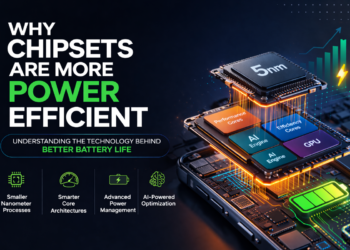
Modern GPU architectures use advanced fabrication processes and power management to reduce heat output, improving overall device stability and user comfort.
Improved sustained performance
When heat is properly managed, the GPU can continue operating at higher performance levels without performance drops.
Poor thermal efficiency leads to thermal throttling. Thermal throttling occurs when the smartphone automatically reduces GPU speed to lower heat levels and protect internal components. This results in reduced gaming performance, lower frame rates, and slower graphical processing.
Modern GPU designs, including Qualcomm Adreno, Apple GPU, and ARM Immortalis and Mali GPUs, are optimized for better thermal efficiency. Combined with improved smartphone cooling systems, these GPUs deliver more stable performance even during heavy workloads.
Thermal efficiency remains essential for maintaining consistent GPU performance, especially in gaming, content creation, and other graphics-intensive applications.
How GPU Affects Everyday Smartphone Use
The GPU plays a critical role in everyday smartphone performance. While often associated with gaming, the GPU is also responsible for rendering the user interface, processing video, and supporting camera features. A more capable GPU improves visual smoothness, responsiveness, and overall device performance.
GPU performance affects several key areas of daily smartphone use:
Gaming performance
The GPU determines how smoothly games run and how detailed the graphics appear. Stronger GPUs enable higher frame rates, better visual quality, and more stable gaming performance, especially in demanding modern games.
User interface smoothness
Every animation, transition, and scrolling action on a smartphone is rendered by the GPU. A powerful and efficient GPU ensures smooth scrolling, fluid animations, and responsive navigation throughout the system.
Video playback and streaming
The GPU helps decode and render high-resolution video, including Full HD, 4K, and HDR content. Efficient GPUs enable smooth video playback with lower power consumption, improving both viewing experience and battery life.
Camera processing and image rendering
Modern smartphones use the GPU to assist with image processing, real-time preview rendering, and computational photography features. This helps deliver faster camera performance, smoother preview, and better image quality.
Support for high refresh rate displays
Smartphones with 90Hz, 120Hz, or higher refresh rates rely on the GPU to render frames quickly and consistently. A stronger GPU ensures smoother motion and better visual responsiveness.
Why GPU Performance Matters for Everyday Use
A more powerful and efficient GPU improves overall smartphone usability by ensuring smooth performance across applications, multimedia, and system operations. It also helps devices remain fast and capable over a longer period.
As smartphone applications, games, and graphical features continue to evolve, GPU capability remains a key factor in delivering a smooth, responsive, and future-ready user experience.
How GPUs Work Together With CPU and NPU
The GPU works alongside the CPU and NPU.
- CPU manages system logic.
- GPU renders graphics.
- NPU accelerates AI processing.
Together, these processors determine smartphone performance. This integrated architecture enables modern smartphone capabilities.
GPU Performance Across Smartphone Categories (2026 Guide)
Smartphone GPU performance varies significantly across flagship, midrange, and budget devices. The GPU, or Graphics Processing Unit, is responsible for rendering images, animations, video playback, and game graphics. It directly affects gaming quality, interface smoothness, camera processing, and overall visual performance.
In 2026, GPU performance will have become even more important due to advanced mobile gaming, high-refresh-rate displays, AI-enhanced graphics, and increasingly demanding applications. Understanding GPU capability across smartphone categories helps explain real-world performance differences between devices.
Flagship Smartphones: Maximum GPU Power and Future-Ready Performance
Flagship smartphones feature the most advanced GPUs available, designed to deliver maximum graphical performance, efficiency, and long-term usability. These GPUs are built using advanced fabrication processes such as 3nm, allowing higher performance with improved power efficiency.
Flagship GPUs support:
-
High-end gaming at Ultra graphics settings
-
Hardware-accelerated ray tracing for realistic lighting and shadows
-
Stable performance during extended gaming sessions
-
Advanced camera processing, including real-time HDR and AI enhancements
-
High-resolution displays with 120Hz and higher refresh rates
Examples of modern flagship GPU architectures include:
-
Qualcomm Adreno 740, Adreno 750, and newer
-
Apple GPU in A17 Pro, A18, and newer chips
-
ARM Immortalis-G715, G720, and newer
-
Latest Mali-G series flagship GPUs
These GPUs enable console-level gaming experiences and ensure devices remain fast and capable for many years.
Midrange Smartphones: Balanced Performance and Efficiency
Midrange smartphones offer GPUs designed to balance performance, efficiency, and affordability. These GPUs provide smooth performance for most applications while maintaining excellent battery efficiency.
Midrange GPUs support:
-
Smooth gaming at medium to high graphics settings
-
Reliable performance for multitasking and productivity
-
Efficient power consumption for longer battery life
-
Support for modern app interfaces and high-refresh-rate displays
Common midrange GPU architectures include:
-
Qualcomm Adreno 620, 630, and newer midrange variants
-
ARM Mali-G57, G68, G610, and newer
-
ARM Immortalis GPUs in upper midrange chipsets
These GPUs provide excellent performance for everyday users, professionals, and moderate gamers.
Budget Smartphones: Basic GPU Performance for Everyday Use
Budget smartphones include entry-level GPUs optimized for efficiency and affordability. These GPUs are designed for basic graphical workloads rather than demanding gaming or heavy processing.
Budget GPUs support:
-
Smooth user interface performance
-
Video streaming and media playback
-
Social media and everyday applications
-
Casual and lightweight gaming
Common entry-level GPU architectures include:
-
ARM Mali-G52 and similar GPUs
-
Older Adreno GPU models
While capable of handling daily tasks efficiently, these GPUs have limited performance for demanding games and advanced graphical workloads.
Why GPU Category Matters in 2026
As smartphones continue to replace traditional computing devices for gaming, content creation, and professional use, GPU performance plays a critical role in determining overall device capability.
A more powerful GPU provides:
-
Better gaming performance
-
Smoother animations and interface responsiveness
-
Faster image and video processing
-
Improved long-term performance stability
-
Better support for future applications and technologies
Understanding GPU performance across smartphone categories helps users choose devices that match their performance needs, usage patterns, and long-term expectations.
Future of Smartphone GPU Technology
Smartphone GPU technology is advancing rapidly, driven by the growing demands of mobile gaming, AI processing, augmented reality, and high-resolution displays. Modern GPUs are no longer limited to rendering graphics. They now play a critical role in computational photography, AI acceleration, and real-time visual processing.
Future GPU advancements will focus on:
- Improved power efficiency: Next-generation GPUs built on smaller fabrication nodes such as 3nm and below will deliver higher performance while consuming less power, improving both battery life and sustained performance.
- Console-level graphics capabilities: Technologies such as hardware-accelerated ray tracing, variable rate shading, and advanced rendering pipelines will continue to bring console-class gaming experiences to smartphones.
- Stronger AI and machine learning acceleration: GPUs will increasingly support AI workloads, including image enhancement, video processing, and real-time scene optimization.
- Better thermal efficiency and sustained performance: Future GPU designs will maintain stable performance for longer periods without thermal throttling, improving gaming and professional workloads.
- Support for advanced displays: Higher refresh rates, increased resolutions, and more complex graphical interfaces will require more capable and efficient GPUs.
As mobile computing continues to evolve, GPU capability will remain central to overall smartphone performance.
Final Verdict: GPU Is Critical for Gaming, Visual Performance, and Long-Term Device Capability
The GPU is one of the most important components in modern smartphones. It determines gaming performance, visual smoothness, video playback efficiency, and overall graphical responsiveness.
A powerful GPU enables:
-
Smooth and stable gaming performance
-
Faster image and video processing
-
Responsive and fluid user interfaces
-
Support for advanced graphical features
-
Better long-term performance sustainability
As mobile gaming, AI, and visual workloads continue to grow, GPU capability will remain a key factor in determining smartphone performance and longevity.
Choosing a smartphone with a powerful, efficient GPU ensures better performance, a smoother user experience, and greater future readiness.