
A strategic analysis of Kigali’s ambitious push to engineer a world-class innovation ecosystem and what it means for founders, investors, and decision-makers building in Africa.
Across Africa, most tech ecosystems have not been designed. They have emerged. Lagos grew through the force of entrepreneurial energy. Nairobi earned its “Silicon Savannah” status through mobile innovation, startup resilience, and market-driven evolution. In contrast, Rwanda Innovation City, often referred to as Kigali Innovation City, represents something fundamentally different. It is a deliberate attempt to engineer an innovation ecosystem from the ground up, raising important questions about how Kigali is becoming a tech hub in Africa.

Situated in Kigali and anchored in a coordinated national strategy, Rwanda’s approach signals a shift in how African economies pursue technology-led growth. Instead of waiting for ecosystems to mature organically, the country is aligning policy, talent development, infrastructure, and global partnerships into a single, structured model. The ambition is not abstract. It is to position Kigali as a competitive node within the global innovation landscape, capable of attracting capital, nurturing talent, and scaling solutions across the African digital economy.
For founders, investors, and operators navigating innovation ecosystems in Africa, this reframes the conversation. The question is no longer just where innovation is happening, but where it is being intentionally built, and whether Rwanda Innovation City can demonstrate that structured ecosystems are better equipped to deliver sustained growth than their organic counterparts.
What Is Rwanda Innovation City?
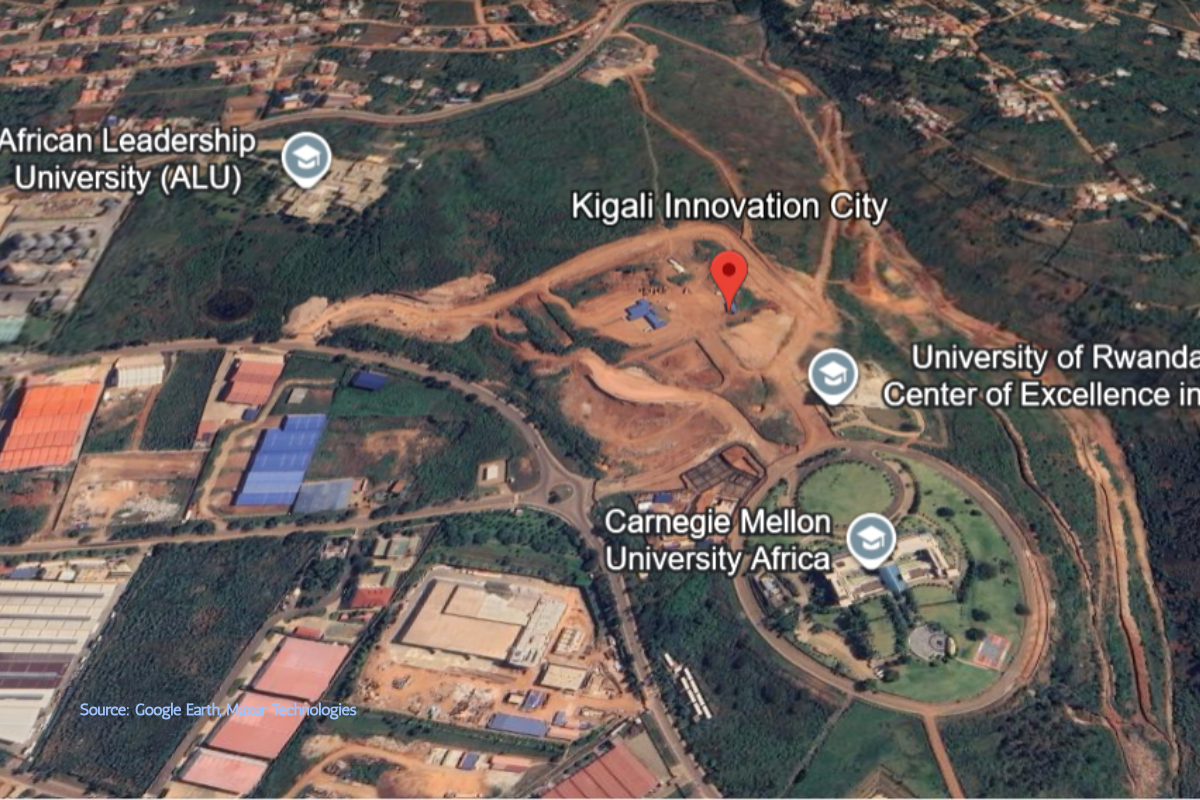
At its core, Rwanda Innovation City, also known as Kigali Innovation City, is a government-backed initiative designed to position Rwanda as a competitive hub in Africa’s evolving technology landscape. Located in Kigali and developed as part of the country’s long-term economic transformation strategy, the project brings together education, research, business, and infrastructure into a single, integrated environment.
Unlike traditional tech hubs that grow organically over time, Rwanda Innovation City is being built deliberately. The model is structured around creating proximity between key drivers of innovation. Universities, research institutions, startups, and global technology partners are positioned to operate within the same ecosystem, enabling faster knowledge transfer, collaboration, and commercialization of ideas. The presence of institutions such as Carnegie Mellon University Africa reflects a strong emphasis on developing high-level technical talent that can support both local and global markets.
From a policy and execution standpoint, the initiative is supported by the Rwanda Development Board, which plays a central role in attracting investment, shaping regulatory frameworks, and aligning public and private sector stakeholders. This level of coordination is what distinguishes Rwanda’s approach from many other tech hubs in Africa, where growth is often fragmented and less centrally guided.
Beyond infrastructure, Rwanda Innovation City is intended to function as a catalyst for the broader Rwanda tech ecosystem. It aims to attract startups, enable access to capital, and create an environment where innovation can move from concept to scalable solution with fewer structural barriers. In doing so, it strengthens Kigali’s position as a rising tech hub in Africa, increasingly recognized for its structured approach to ecosystem development.
This means Rwanda is not simply building a location for technology companies. It is constructing a coordinated system designed to accelerate how innovation is produced, refined, and scaled. In a continent where many ecosystems evolve through momentum, Rwanda is choosing to build with intention. That distinction may ultimately define its competitive edge.
The Ecosystem Breakdown: How Rwanda Is Structuring Innovation for Scale
To understand the real significance of Rwanda Innovation City, it is necessary to move beyond infrastructure and examine the system it is designed to activate. At its core, this is not a collection of buildings or institutions. It is a coordinated attempt to align talent, policy, and real-world application into a single, functioning engine of innovation.
What emerges is a tightly structured ecosystem in which each component reinforces the others. Talent feeds innovation. Policy enables execution. Deployment validates ideas in real-world conditions. The result is a feedback loop designed for efficiency, consistency, and scale.
Talent Engine: Building a High-Skill Foundation
At the center of any sustainable innovation ecosystem is talent. Rwanda’s strategy places this at the forefront by investing in institutions that produce globally competitive skills rather than locally sufficient ones. The presence of Carnegie Mellon University Africa within Kigali Innovation City is a deliberate move to anchor advanced engineering, artificial intelligence, and data science capabilities within the country.
This approach goes beyond education. It is about creating a pipeline of problem-solvers who can build, adapt, and scale technology within African contexts while remaining competitive on a global stage. By embedding such institutions within the ecosystem, Rwanda reduces the traditional gap between learning and application.
The implication is clear. Talent is not treated as a byproduct of growth. It is positioned as a primary driver of it.
Policy and Execution: Coordinating Growth at Scale
While many innovation ecosystems in Africa operate within fragmented policy environments, Rwanda’s model is defined by coordination. The Rwanda Development Board plays a central role in shaping this environment by aligning regulatory frameworks, investment incentives, and national priorities.
This level of central alignment allows Rwanda to move with a clarity that is often difficult to achieve in more decentralized systems. Investors encounter fewer ambiguities. Startups operate within a more predictable regulatory landscape. Public-private sector partnerships are easier to structure and execute.
In practical terms, policy is not reactive. It functions as an active enabler of ecosystem growth, reducing friction and accelerating execution.
Innovation and Deployment: Turning Ideas into Systems
An ecosystem proves its value when ideas move beyond theory into real-world application. Rwanda has demonstrated this through initiatives such as Zipline, whose drone delivery network has transformed access to medical supplies in remote areas.
This matters because it shows that Rwanda is not only capable of attracting innovation but also deploying it at scale within critical sectors. The ability to test, refine, and operationalize solutions in real environments creates a powerful validation loop that strengthens the entire ecosystem.
For startups and technology partners, this offers a distinct advantage—a market where innovation can be rapidly piloted, measured, and expanded without excessive structural delays.
The implication is that Rwanda Innovation City is not just a hub for ideas. It is a platform for execution, where innovation is expected to deliver measurable outcomes.
System Integration: From Isolated Efforts to a Growth Engine
Individually, talent, policy, and deployment are valuable. Together, they form a system. Rwanda’s advantage lies in how tightly these elements are integrated within Kigali Innovation City and the broader Rwanda tech ecosystem.
Talent feeds startups. Policy supports scaling. Real-world deployment validates and improves solutions. Each cycle strengthens the next. Over time, this creates a compounding effect that is difficult for less coordinated ecosystems to replicate.
This signals a fundamental shift. Rwanda is not building isolated success stories. It is constructing a repeatable model for innovation, one designed to sustain momentum and position Kigali among the most structured tech hubs in Africa.
Strategic Analysis: Can Structure Outperform Organic Growth in Africa’s Tech Ecosystems?
The defining question around Rwanda Innovation City is not whether it is ambitious. It is whether a deliberately structured ecosystem can outperform the organic models that have historically driven Africa’s tech growth.
Across the continent, leading ecosystems such as Lagos and Nairobi have evolved through momentum. Entrepreneurs identified gaps, built solutions, attracted capital, and over time created dense networks of startups, investors, and talent. This organic growth model has proven resilient, but it is often uneven. Infrastructure lags behind innovation. Policy reacts rather than leads. Access to capital and talent can be inconsistent.
Rwanda is not the first to challenge this model. Kenya’s Konza Technopolis represents one of Africa’s most ambitious attempts to anchor a technology-driven economy through a planned smart city. Similarly, Botswana Innovation Hub was established to transition Botswana toward a knowledge-based economy by centralizing research, incubation, and investment.
Yet both examples reveal a consistent pattern. Building innovation ecosystems through structure alone is complex. Botswana’s hub has made measurable progress in research and incubation, but its global influence remains limited. Konza Technopolis, despite its scale and long-term vision, has faced execution delays that highlight the gap between infrastructure development and ecosystem activation.
This is where Rwanda’s approach becomes more instructive. Through Kigali Innovation City, it is not simply replicating the concept of a planned ecosystem. It is refining it. The emphasis is less on scale and more on coordination. Rather than building infrastructure first and waiting for activity to follow, Rwanda is aligning talent, policy, and partnerships in parallel, compressing the time it takes for an ecosystem to become functional.
The distinction is critical. Organic ecosystems thrive on adaptability and entrepreneurial energy, but they can also be chaotic and inefficient. Structured ecosystems offer clarity, predictability, and coordination, but they depend heavily on execution and institutional discipline.
For Rwanda, the advantage lies in its ability to act with intent. Centralized policy direction, a clear national vision, and a willingness to invest in foundational systems give it a level of coordination that larger markets often struggle to achieve. This creates an environment where startups can operate with fewer structural barriers, and investors can gain greater certainty.
However, structure alone does not guarantee success. Innovation is not purely engineered. It depends on culture, risk appetite, and the presence of entrepreneurs willing to experiment and fail. Ecosystems that are too tightly controlled may struggle to generate the same level of dynamism seen in more organic markets.
This leads to a more grounded conclusion. Rwanda’s model is not inherently superior. It is more controlled, more intentional, and potentially more efficient if executed effectively. Its success will depend on how well it balances structure with flexibility, coordination with creativity, and policy direction with entrepreneurial freedom.
For founders, investors, and operators evaluating innovation ecosystems in Africa, this introduces a new layer of strategic thinking. The decision is no longer limited to areas where ecosystems already thrive. It extends to the deliberate building of ecosystems and to how early positioning within those environments can translate into long-term advantage.
The implication is clear. If Rwanda executes effectively, Rwanda Innovation City could redefine how emerging markets approach innovation by demonstrating that ecosystems can be deliberately designed to accelerate outcomes. If it struggles, it will still offer critical lessons on the limits of structure in environments where adaptability has traditionally driven success.
Either way, Rwanda is no longer just participating in Africa’s tech evolution. It is actively testing a model that could shape how future ecosystems across the continent are built.
Opportunities: Where Rwanda Innovation City Creates Strategic Advantage
If Rwanda Innovation City defines a new model for building ecosystems, then the real question is not whether it works. It is who understands it early enough to benefit from it. Structured environments do not reward randomness. They reward positioning.
Rwanda’s approach signals where policy alignment, capital, and infrastructure are being deliberately concentrated. For founders, investors, and operators navigating innovation ecosystems in Africa, this creates opportunities that are more predictable, more coordinated, and potentially faster to scale.
For Founders: Build Within a System, Not Around It
For early-stage and growth-stage founders, Rwanda offers a structural advantage that is often missing in emerging markets. Clarity. Regulatory predictability, access to coordinated support systems, and proximity to talent create an environment where execution takes priority over navigation.
Operating within Kigali Innovation City means building in a system designed to reduce friction. This is particularly relevant for sectors that depend on coordination, including fintech, healthtech, logistics, and AI-driven services.
The advantage is not convenience. It is speed. Founders can test, iterate, and scale solutions faster in an environment with fewer structural barriers.
For Investors: Early Positioning in a Coordinated Market
For investors, Rwanda presents a different kind of opportunity. It is not yet a volume-driven market like Nigeria or Kenya, but it offers something equally valuable. Structural clarity.
A coordinated ecosystem enables clearer risk assessment, more predictable regulatory frameworks, and stronger alignment between stakeholders. This reduces uncertainty and allows capital to be deployed with greater confidence.
Early positioning within Rwanda’s tech ecosystem creates long-term upside. As the ecosystem matures, first movers are better placed to capture value across sectors and partnerships that are still taking shape.
For Talent and Professionals: Access to a High-Value Network
For developers, engineers, and technology professionals, Rwanda Innovation City offers access to a growing network of high-value opportunities. The presence of institutions such as Carnegie Mellon University Africa and the increasing global participation create an environment where skills are not only developed but also deployed in real-world scenarios.
In a continent where talent often moves toward opportunity, Rwanda’s model reverses the equation. It brings opportunity closer to talent.
For Global Partners: A Controlled Entry Point into Africa
For international companies, Rwanda offers one of the most structured entry points into the African digital economy. Operating within a coordinated policy environment reduces the complexity typically associated with fragmented markets.
Kigali becomes a base for:
- Regional expansion
- Pilot programs
- Strategic partnerships
Rather than navigating multiple regulatory systems, companies can establish themselves within a controlled ecosystem and scale outward with greater confidence.
Positioning Defines Advantage
Across all segments, one principle stands out. In structured ecosystems, positioning defines advantage more than timing. Unlike organic ecosystems, where growth can be unpredictable, environments like Rwanda Innovation City reward those who align early with its development direction.
This is not just access to opportunity. It is aligned with how opportunity is being created.
Those who recognize this early do not just participate in the ecosystem; they become part of it. They shape their place within it.
Challenges and Risks: Where Rwanda’s Model Could Struggle
No innovation ecosystem succeeds on design alone. Execution determines whether vision translates into impact. While Rwanda Innovation City represents one of the most structured approaches to building a tech ecosystem in Africa, its long-term success will depend on how effectively it manages the underlying risks that have shaped outcomes in similar initiatives across the continent.
The strength of Rwanda’s model lies in coordination. The risk lies in over-reliance on that same coordination.
Execution Risk: Structure Requires Sustained Delivery
Planned ecosystems depend on consistent execution over time. Infrastructure must be delivered as promised. Policy must remain stable. Institutional alignment must be maintained across multiple phases of development.
Across Africa, projects such as Konza Technopolis illustrate how delays in execution can slow momentum and affect perception, even when the long-term vision remains intact. Similarly, Botswana Innovation Hub highlights how structured ecosystems can take longer to translate planning into global influence.
For Rwanda, the challenge is not ambition. It is consistency. A structured model creates expectations of efficiency. Any visible lag can quickly undermine confidence among investors, partners, and the broader ecosystem.
Talent Retention: Competing in a Global Market
Building talent is only part of the equation. Retaining it is equally critical. Rwanda’s investment in institutions such as Carnegie Mellon University Africa strengthens its position as a producer of high-level technical skills, but those skills remain globally mobile.
More mature ecosystems often offer higher compensation, deeper capital pools, and broader professional networks. Without sufficient local opportunities at scale, talent outflow becomes a structural risk.
This creates a clear requirement. Rwanda must not only develop talent but also ensure its ecosystem can absorb and sustain it through meaningful, high-value opportunities.
Capital Depth: Building a Sustainable Investment Base
Compared to larger markets such as Nigeria or Kenya, Rwanda’s startup ecosystem is still developing in terms of capital depth. Venture funding activity, private equity participation, and large-scale exits remain relatively limited.
While a structured ecosystem can attract external capital, long-term sustainability depends on building a more mature and locally anchored investment landscape. Without this, startups may still need to look beyond Rwanda for later-stage funding, reducing the compounding benefits of a localized ecosystem.
The implication is direct. Capital must scale alongside infrastructure and talent for the model to remain balanced.
Centralization Risk: Balancing Control and Flexibility
Rwanda’s coordinated approach is one of its defining strengths. It is also a potential constraint. Highly centralized systems can limit the level of experimentation and risk-taking that often drives breakthrough innovation.
Organic ecosystems tend to thrive on decentralization. Multiple actors move independently, creating diversity in ideas and approaches. In more structured environments, excessive control can slow this dynamism.
The challenge for Rwanda is balance. Coordination must coexist with flexibility. Policy direction must leave room for entrepreneurial freedom.
Market Size and Regional Integration
Rwanda’s domestic market is relatively small. For startups to scale meaningfully, expansion beyond national borders is essential. This underscores the importance of regional integration and cross-border connectivity.
The success of Rwanda Innovation City will depend not only on what happens within Kigali, but on how effectively it connects to broader African innovation hubs and regional markets. Without strong outward linkages, even well-structured ecosystems risk limiting their long-term impact.
Execution Will Define the Outcome
Taken together, these risks do not weaken Rwanda’s model. They define the conditions under which it must succeed.
A structured ecosystem amplifies both strengths and weaknesses. When execution is strong, progress accelerates. When gaps emerge, they become more visible and more consequential.
For Rwanda Innovation City, the path forward is not about eliminating risk. It is about managing it deliberately and consistently. The ecosystems that succeed in Africa’s next phase of technological growth will not be those without challenges, but those that can navigate them with clarity, consistency, and speed.
JuaTech Insight: Rwanda’s Model Signals a Shift in How Africa Builds Innovation
Rwanda Innovation City represents more than a national development project. It signals a shift in how innovation ecosystems in Africa are being deliberately designed rather than passively formed.
For years, the continent’s leading tech hubs have emerged through momentum. Entrepreneurs identified gaps, built solutions, and attracted capital, while policy and infrastructure adapted over time. This model has produced resilience and creativity, but it has also introduced fragmentation, inefficiency, and uneven scaling.
Rwanda is testing a different path. Through Kigali Innovation City, it is aligning the core drivers of innovation from the outset. Talent development, policy coordination, infrastructure, and global partnerships are being integrated into a single system designed to accelerate outcomes rather than wait for them to emerge.
The significance extends beyond Rwanda. It suggests that emerging markets can move from reactive ecosystem growth to intentional ecosystem design. In practical terms, this means reducing friction, improving coordination, and creating clearer pathways for innovation to scale.
At the same time, the model highlights a critical constraint. Structure can enable growth, but it cannot replace the cultural and entrepreneurial dynamics that drive breakthrough innovation. The ecosystems that succeed will be those that combine discipline with dynamism, coordination with experimentation, and long-term planning with real-time adaptability.
This means Rwanda is not simply building an ecosystem. It is testing a framework that could influence how future innovation ecosystems in Africa are conceived and executed.
Whether it succeeds or not, the outcome is significant. In both cases, Rwanda Innovation City is redefining the question. It is no longer where innovation happens in Africa, but how it is built, scaled, and sustained.
Positioning for What Comes Next
Rwanda Innovation City is not simply an infrastructure project. It is a deliberate attempt to engineer an innovation ecosystem where policy, talent, capital, and infrastructure move in coordination rather than in sequence.
Across Africa, many of the most successful tech ecosystems have grown through momentum. Rwanda is testing whether structure can accelerate that process without losing the dynamism that makes innovation thrive. That distinction defines both the opportunity and the risk.
For founders, investors, and operators, the implication is direct. The question is no longer limited to where innovation is already happening. It extends to where it is intentionally built and to how early positioning within those environments can translate into long-term advantage.
Rwanda may not yet be Africa’s dominant tech hub. But it is one of the clearest signals of where the continent’s innovation strategy is heading. A shift from emergence to design. From fragmentation to coordination. From reactive growth to deliberate construction.
The outcome will depend on execution. But the direction is already clear. The real question is not whether Rwanda Innovation City succeeds. It is whether you are positioned early enough to benefit if it does.
Work With JuaTech Africa
JuaTech Africa works with startups, brands, and institutions to navigate and position within Africa’s evolving tech ecosystems. From market entry strategy to brand visibility and growth positioning, we help you align with where opportunity is being created.
Get in touch to explore how you can position effectively within Africa’s next wave of innovation.