
JuaTech Africa
TRENDING
No Result
View All Result
  • Explore
    • Buying Guides
      • Smartphones
      • Tablets & Productivity
      • Wearables
      • Audio
      • Accessories
    • Creator Hub
      • Creator Phones
      • Creator Audio
      • Creatives Growth Strategy
      • Creator Business
    • About Us
      • Founder’s Letter: The Vision Behind JuaTech Africa
      • Mission & Vision | JuaTech Africa
      • Editorial Policy
      • Advisory
      • Work with Us
      • Contact Us
  • Intelligence
    • JuaTech Africa Intelligence
    • Brand Intelligence
    • Market Intelligence
    • Mobile Imaging Intelligence
    • Industry Intelligence
    • Market Signals
    • Analytica
    • Artificial Intelligence
    • Digital Assets Intelligence
  • Reviews
    • Smartphones
    • Tablets
    • Audio
    • Wearables
    • Accessories
  • Tech Decoded
    • Core Technology
    • Device Hardware
    • Software & Platforms
    • Connectivity & Networks
    • AI & Emerging Technology
    • Buying, Safety & Integrity
    • Tech Guides & How-To
    • Product Strategy & Value Analysis
  • Ecosystems
    • Mobile Ecosystems
    • African Tech Ecosystem
    • Company Ecosystems
    • Platform Ecosystems
SUBSCRIBE
  • Explore
    • Buying Guides
      • Smartphones
      • Tablets & Productivity
      • Wearables
      • Audio
      • Accessories
    • Creator Hub
      • Creator Phones
      • Creator Audio
      • Creatives Growth Strategy
      • Creator Business
    • About Us
      • Founder’s Letter: The Vision Behind JuaTech Africa
      • Mission & Vision | JuaTech Africa
      • Editorial Policy
      • Advisory
      • Work with Us
      • Contact Us
  • Intelligence
    • JuaTech Africa Intelligence
    • Brand Intelligence
    • Market Intelligence
    • Mobile Imaging Intelligence
    • Industry Intelligence
    • Market Signals
    • Analytica
    • Artificial Intelligence
    • Digital Assets Intelligence
  • Reviews
    • Smartphones
    • Tablets
    • Audio
    • Wearables
    • Accessories
  • Tech Decoded
    • Core Technology
    • Device Hardware
    • Software & Platforms
    • Connectivity & Networks
    • AI & Emerging Technology
    • Buying, Safety & Integrity
    • Tech Guides & How-To
    • Product Strategy & Value Analysis
  • Ecosystems
    • Mobile Ecosystems
    • African Tech Ecosystem
    • Company Ecosystems
    • Platform Ecosystems
No Result
View All Result
JuaTech Africa
No Result
View All Result
Home Tech Decoded AI & Emerging Technology

Apple Intelligence Explained: The Rise of the Personal AI Agent

How Apple is redefining artificial intelligence through on-device processing, privacy-first architecture, and a new generation of intelligent assistants

Lewis Wafula by Lewis Wafula
March 17, 2026
in AI & Emerging Technology
Reading Time: 5 mins read
0
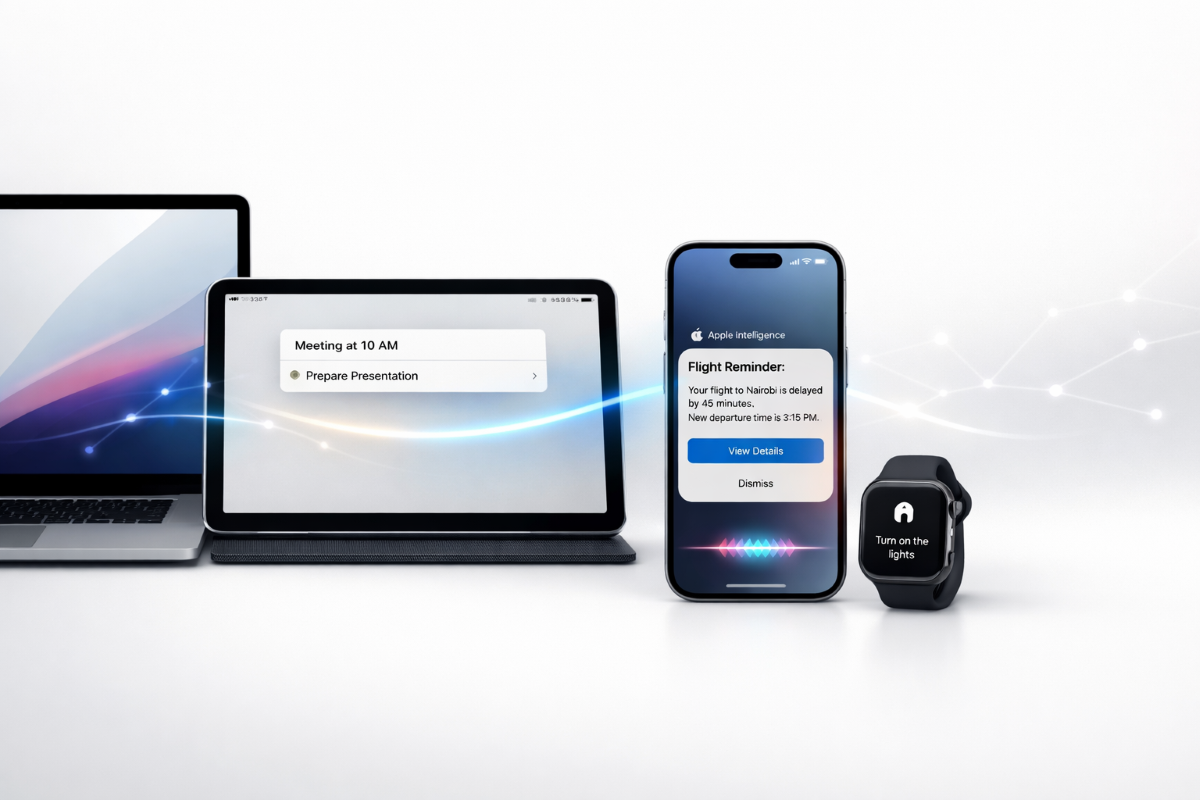
Apple Intelligence AI system integrated across iPhone, iPad and Mac

Apple Intelligence introduces a new AI layer across iPhone, iPad and Mac that combines on-device processing with privacy-first cloud computing.

0
SHARES
41
VIEWS
Share on FacebookShare on Twitter

Jump Ahead

Toggle
  • Artificial Intelligence Begins to Act
  • Apple’s AI Philosophy: Intelligence That Understands Personal Context
  • The Architecture Behind Apple Intelligence
    • On-Device Intelligence
    • Private Cloud Compute
    • Optional Integration With External AI Models
  • Siri’s Transformation Into a Digital Agent
  • Apple Silicon and the AI Advantage
  • Privacy as a Foundational Principle
  • Industry Implications
  • The Next Stage of Personal Computing

Artificial Intelligence Begins to Act

Artificial intelligence is entering a new phase. The first wave of modern AI captured attention by generating text, images, and code. These systems were impressive demonstrations of what large language models could produce. Yet most of them still behaved like tools waiting for instructions.

The next phase is different. Artificial intelligence is beginning to take action.

Strategic Marketing by Alpha Brands Consulting

This shift is often described as agentic AI, a class of systems capable of understanding goals, planning actions, and completing tasks across multiple applications. Instead of simply answering questions, these systems assist users by coordinating digital workflows.

With the introduction of Apple Intelligence, Apple Inc. is attempting to bring this idea directly into everyday devices.

Rather than releasing a standalone chatbot, Apple has embedded AI across its operating systems. Apple Intelligence operates within platforms such as iOS, iPadOS, and macOS.

The goal is to transform artificial intelligence from a separate application into an integrated capability that quietly assists users throughout the Apple ecosystem.

In practical terms, Apple is shifting computing from a traditional search and retrieve model toward a new predict and execute model.

Apple’s AI Philosophy: Intelligence That Understands Personal Context

Most modern AI platforms rely heavily on enormous cloud-based models trained on public internet data. These models are powerful when answering general questions about world knowledge, but they often lack awareness of the user’s personal context.

Apple’s strategy approaches AI from a different perspective.

Apple Intelligence is designed to understand information stored on the user’s device. Messages, calendar events, notes, photos, and documents provide contextual signals that allow the system to offer more relevant assistance.

By combining this personal context with advanced language models, Apple Intelligence can help users summarize long email threads, rewrite messages in different tones, identify important details within documents, and prioritize notifications.

This approach reflects Apple’s long-standing philosophy that technology should adapt to people rather than forcing people to adapt to technology.

Instead of presenting AI as a separate tool that demands attention, Apple aims to integrate intelligence directly into the everyday experience of using an iPhone, iPad, or Mac.

The Architecture Behind Apple Intelligence

A defining aspect of Apple Intelligence is its multi-layered processing architecture.

Apple combines on-device AI with secure cloud infrastructure in order to balance performance, responsiveness, and privacy.

On-Device Intelligence

Many Apple Intelligence features run directly on the user’s device.

Tasks such as writing assistance, text summarization, image search, and notification prioritization are processed locally using Apple’s Neural Engine. Modern Apple silicon chips include specialized hardware designed to accelerate machine learning tasks.

Running AI locally offers several advantages. It improves speed because responses do not depend on remote servers, and it enhances privacy because personal data remains on the device.

For users, the experience feels immediate. AI features respond quickly and remain available even when internet connectivity is limited.

Private Cloud Compute

Some AI tasks require more computational power than a mobile device can provide. In these situations Apple Intelligence uses Private Cloud Compute, a secure infrastructure designed to handle complex requests.

Private Cloud Compute allows Apple devices to send certain AI queries to servers powered by Apple silicon. These systems process the request and return the result without retaining the user’s personal data.

Apple has stated that Private Cloud Compute is designed to ensure that data used for processing is not stored or accessible after the task is completed. The architecture is also designed so that independent security researchers can verify how the system operates.

This hybrid model allows Apple Intelligence to deliver advanced AI capabilities while maintaining strong privacy protections.

Optional Integration With External AI Models

Apple Intelligence also allows optional integration with external AI services when broader knowledge is required.

Apple has partnered with OpenAI to integrate ChatGPT into its ecosystem. When users request information that requires external knowledge, the system can offer to send the query to ChatGPT.

Importantly, users must approve these requests before any information is shared with third-party services.

This layered architecture allows Apple Intelligence to combine personal context awareness with the extensive knowledge of large-scale AI models.

Siri’s Transformation Into a Digital Agent

One of the most visible changes introduced by Apple Intelligence is the evolution of Siri.

For many years Siri functioned primarily as a voice interface for simple commands such as setting reminders or checking the weather. Apple Intelligence expands Siri’s capabilities by enabling it to understand context and coordinate actions across applications.

A key improvement is on-screen awareness. Siri can recognize information displayed on a user’s screen and assist with related actions. For example, if a message includes an address, Siri can help create a calendar event or open navigation directions.

Another advancement is cross-app coordination. Apple Intelligence allows Siri to execute tasks that involve multiple applications.

For instance, a user might ask Siri to summarize a long email conversation, identify the most important decisions discussed in the thread, and schedule a follow-up meeting with the participants. Instead of opening several apps manually, the assistant coordinates these steps in the background.

This transformation shifts Siri from a simple voice interface into a more capable digital assistant that can help manage everyday workflows.

Apple Silicon and the AI Advantage

Apple’s AI strategy is closely connected to its hardware design.

Unlike many technology companies that depend on third-party processors, Apple designs its own chips for devices such as the iPhone and Mac. These processors include dedicated machine learning accelerators known as Neural Engines.

Modern Mac computers powered by Apple silicon such as the Apple M3 demonstrate how tightly integrated hardware and software can improve AI performance.

Because Apple controls both the processor architecture and the operating system, engineers can optimize how artificial intelligence features operate on the device. This integration reduces latency, improves efficiency, and enables more AI tasks to run locally.

The result is a computing environment where AI feels faster and more responsive.

Privacy as a Foundational Principle

Privacy has long been central to Apple’s product philosophy, and Apple Intelligence extends that commitment into the field of artificial intelligence.

Many AI platforms rely heavily on cloud infrastructure that processes large amounts of personal data on remote servers. Apple’s architecture attempts to reduce this dependency by keeping as many AI operations as possible on the device itself.

By minimizing the amount of personal data sent to external systems, Apple aims to provide users with greater control over how their information is used.

When cloud processing is required, Private Cloud Compute is designed to handle requests without storing personal data. This approach reflects Apple’s broader effort to balance powerful AI capabilities with strong privacy protections.

Industry Implications

Apple’s approach highlights an important shift in the AI industry.

Much of the current AI ecosystem relies on centralized cloud infrastructure and extremely large models trained on massive datasets. Apple’s strategy explores a different direction in which artificial intelligence operates directly on personal devices.

If successful, this model could influence how future AI systems are designed. Developers are already exploring new possibilities through Apple’s frameworks that allow applications to integrate Apple Intelligence features.

For regions where network connectivity may be inconsistent, on-device AI could offer additional advantages by enabling intelligent features to operate even in low-bandwidth environments.

The Next Stage of Personal Computing

Artificial intelligence is still evolving, and the transition from generative tools to autonomous digital assistants will likely continue in the coming years.

Apple Intelligence offers an early glimpse of this transformation. By combining personal context awareness, advanced silicon, and carefully designed privacy protections, Apple is attempting to reshape how AI interacts with users.

If this vision succeeds, people may spend less time navigating apps and searching for information. Instead, intelligent systems will coordinate tasks quietly in the background.

The most powerful technology in that future will not demand attention. It will simply work, anticipating needs and simplifying the digital routines of everyday life.

Tags: AI & Emerging TechnologyAI AssistantsAppleApple IntelligenceApple Siliconartificial intelligenceOn-Device AIPrivate Cloud ComputeSiriTech Decoded
ShareTweet
Strategic marketing and positioning by Alpha Brands Consulting Strategic marketing and positioning by Alpha Brands Consulting Strategic marketing and positioning by Alpha Brands Consulting
Previous Post

Apple User Interface Explained: The Design Philosophy Powering Apple’s Ecosystem

Next Post

What is 5G and How It Works: A Complete, In-Depth Guide

Lewis Wafula

Lewis Wafula

Tech Analyst | Reviewer | Founder of JuaTech Africa Tech analyst and founder of JuaTech Africa, delivering practical smartphone reviews, mobile tech insights, and digital solutions for professionals and businesses in Africa. Explore the latest insights on JuaTech Africa or get in touch for collaboration and consulting. Connect with Lewis.

Related Posts

Futuristic smartphone with a glowing 2nm AI chip and blue neural circuitry symbolizing the future of AI powered mobile computing.
AI & Emerging Technology

Your Next Smartphone Is About to Get a Massive, Invisible Upgrade

May 23, 2026
Illustration explaining Samsung Galaxy AI architecture including Gauss 2 AI model and Snapdragon 8 Elite Gen 5 powering the Galaxy S26.
AI & Emerging Technology

Galaxy AI Explained: The Rise of the Agentic Smartphone

March 15, 2026
Minimalist illustration representing Mistral AI’s open-weight architecture enabling sovereign artificial intelligence, local deployment, and multilingual AI capabilities.
AI & Emerging Technology

Mistral 3 Explained: The Architecture of Sovereign AI

March 17, 2026
Minimalist illustration of Grok AI by xAI showing real-time AI reasoning and integration with the X platform.
AI & Emerging Technology

Grok Explained: The Real-Time Reasoning Engine

March 11, 2026
Illustration explaining Claude 4.6 AI model showing constitutional AI framework and reasoning architecture used for software engineering, legal analysis and scientific research
AI & Emerging Technology

Claude 4.6 Explained: The Ethical Gold Standard for AI Reasoning

March 11, 2026
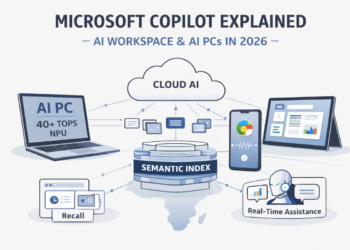
Microsoft Copilot AI workspace architecture connecting AI PCs smartphones and cloud intelligence
AI & Emerging Technology

Microsoft Copilot Explained: How the AI Workspace and AI PCs Are Reshaping Computing in 2026

March 10, 2026
Next Post
5G network explained showing telecom towers, spectrum signals, and connected smart city devices

What is 5G and How It Works: A Complete, In-Depth Guide

Leave a Reply Cancel reply

Your email address will not be published. Required fields are marked *

About the Founder

Lewis Wafula, Founder of JuaTech Africa

Lewis Wafula

Founder, JuaTech Africa

Helping Africans make smarter technology decisions through trusted reviews, buying guides, creator technology insights, and market intelligence.

Connect on LinkedIn

JuaTech Africa Intelligence

Independent research and market intelligence exploring the trends, technologies, and market forces shaping Africa's digital future.

📊 Flagship Research
  • 2025 Brand Performance Report
  • Q1 2026 Market Report
🧠 Research Areas
  • Analytica
  • Market Intelligence
  • AI Intelligence
Explore Intelligence

Join the JuaTech Intelligence Circle

Signal over noise. Get trusted reviews, market intelligence, buying guidance, and emerging technology insights shaping Africa's digital future.

Get Free Access

Essential Buyer Guides

Ultimate Smartphone Buying Guide Kenya 2025

The Ultimate Smartphone Buying Guide for Kenya (2026): How to Choose the Right Phone with Confidence

June 9, 2026
Best phones under KES 30,000 in Kenya 2026 including Samsung Galaxy A26, POCO M6 Pro, Tecno Camon 50, Infinix Note 40 and Oppo A60

Best Phones Under KES 30,000 in Kenya (2026): Smart Picks That Deliver Real Value

June 22, 2026
Best phones under 60000 Kenya 2026 including Samsung Galaxy A57, OnePlus Nord 6, Google Pixel 10a and Nothing Phone 4a comparison

Best Phone Under KES 60,000 (2026): 7 Phones That Actually Deliver Value Before You Spend Your Money

June 23, 2026
Battery Kings for power outages in Africa – editorial smartphone battery guide

Battery Kings: Best Smartphones for Power Outages, Value, and Daily Life in Africa

May 25, 2026
Best premium midrange smartphones in Kenya 2026 comparison featuring Samsung Galaxy A57, Vivo V70, Xiaomi Note 15 Pro Plus, Oppo Reno15 Pro and Nothing Phone 4a Pro

Best Premium Midrange Smartphones in Kenya (2026): Samsung, Redmi, HONOR, Pixel and More

May 25, 2026
Samsung Galaxy Z Fold8, Galaxy Z Fold8 Ultra and the Samsung Galaxy Z Fold8 Series showcased in JuaTech Africa's in-depth product review.

Samsung Galaxy Z Fold8 Review: Is This the Most Complete Foldable Smartphone Yet?

July 28, 2026

Tech Decoded

Beyond specifications and marketing claims. Deep analysis of the technologies, strategies, and emerging trends shaping how we build, buy, and use technology.

⚙️ Technology Explained

Breaking down complex technologies, specifications, and concepts into practical understanding.

💡 Product Strategy & Value Analysis

Understanding why products exist, how they are positioned, and the value they deliver.

🤖 AI & Emerging Technology

Exploring the technologies reshaping devices, industries, and digital experiences.

Explore Tech Decoded

Editor's Pick

Smartphone processors 2026 comparison showing Snapdragon, MediaTek Dimensity 9500 and Apple A19 Pro chips with flagship phones

Best Smartphone Processor 2026: Snapdragon vs Dimensity vs Apple What Actually Matters

April 24, 2026
MediaTek Dimensity 9500

Dimensity 9500 Unleashed: MediaTek’s 3nm Powerhouse Redefines Flagship Performance in 2025

June 19, 2026
HONOR smartphone naming explained showing X Series, Number Series and Magic Series lineup hierarchy for Kenyan buyers

HONOR Smartphone Naming Explained (2026 Kenya Master Guide)

Infinix Note Edge vs Samsung Galaxy A36 5G

Infinix Note Edge vs Samsung Galaxy A36 5G: Which Makes More Sense for Daily Use?

February 22, 2026

Work With JuaTech Africa

Reach technology consumers, creators, and decision-makers through trusted reviews, market intelligence, sponsored campaigns, and strategic partnerships.

Explore Opportunities

Helping You Choose Right

Insight | Clarity | Better Tech Decisions

  • JuaTech Africa Intelligence
  • Tech Reviews
  • Ecosystems Intelligence Hub
  • About Us

Connect With Us

  • About Us
  • Editorial Policy
  • Disclaimer
  • Our Services
  • Advertise
  • Newsletter
  • Contact Us
  • Media Kit

© 2026 JuaTech Africa. All rights reserved. Built for tech intelligence in Africa.

No Result
View All Result
  • Explore
    • Buying Guides
      • Smartphones
      • Tablets & Productivity
      • Wearables
      • Audio
      • Accessories
    • Creator Hub
      • Creator Phones
      • Creator Audio
      • Creatives Growth Strategy
      • Creator Business
    • About Us
      • Founder’s Letter: The Vision Behind JuaTech Africa
      • Mission & Vision | JuaTech Africa
      • Editorial Policy
      • Advisory
      • Work with Us
      • Contact Us
  • Intelligence
    • JuaTech Africa Intelligence
    • Brand Intelligence
    • Market Intelligence
    • Mobile Imaging Intelligence
    • Industry Intelligence
    • Market Signals
    • Analytica
    • Artificial Intelligence
    • Digital Assets Intelligence
  • Reviews
    • Smartphones
    • Tablets
    • Audio
    • Wearables
    • Accessories
  • Tech Decoded
    • Core Technology
    • Device Hardware
    • Software & Platforms
    • Connectivity & Networks
    • AI & Emerging Technology
    • Buying, Safety & Integrity
    • Tech Guides & How-To
    • Product Strategy & Value Analysis
  • Ecosystems
    • Mobile Ecosystems
    • African Tech Ecosystem
    • Company Ecosystems
    • Platform Ecosystems

© 2026 JuaTech Africa. All rights reserved. Built for tech intelligence in Africa.

JuaTech Africa

Typically replies within minutes

Any questions related to Apple Intelligence Explained: The Rise of the Personal AI Agent?

WhatsApp Us

Online | Privacy policy

WhatsApp us