


Apple, Qualcomm, MediaTek, and Samsung are locked in a high-stakes race to build ultra-powerful 2nm chips. Here is how it will completely transform your phone’s performance, battery, and AI.
For more than a decade, smartphone innovation has largely been defined by visible progress. Every new generation introduced features consumers could immediately recognize and compare. Cameras became sharper and more versatile. Displays grew brighter, smoother, and more immersive. Charging speeds improved dramatically, while smartphone designs became thinner, lighter, and more refined. The evolution was easy to understand because the improvements were physical, visual, and instantly noticeable in everyday use.

A different kind of transformation is now taking shape.
Apple, Qualcomm, MediaTek, and Samsung are entering a high-stakes race to develop ultra-powerful 2nm smartphone chips designed for a future increasingly shaped by artificial intelligence. Although semiconductor terminology rarely captures mainstream attention, the implications of this shift could become far more important than many of the smartphone upgrades consumers have grown accustomed to over the years.
The smartphone industry is no longer simply pursuing faster performance. It is moving toward a future where phones become significantly more intelligent, context-aware, adaptive, and capable of processing increasingly complex AI-driven tasks directly on the device. Smartphones are quietly evolving from communication tools into personal computing companions capable of understanding speech, enhancing creativity, assisting productivity, and responding more naturally to human behavior in real time.
Unlike previous smartphone upgrades that improved isolated features, this shift could reshape the entire mobile experience and fundamentally change how people interact with technology every day.
Smartphones Are Quietly Becoming AI Computers
The invisible upgrade reshaping the smartphone industry is not simply about speed, graphics, or benchmark performance. It is about intelligence. For more than a decade, smartphones largely functioned as reactive devices. Users opened apps, searched for information, typed commands, and manually controlled nearly every interaction. Even as processors became significantly more powerful, smartphones still depended heavily on cloud servers for demanding artificial intelligence tasks such as voice recognition, image processing, translation, and generative AI features.
That model is beginning to change fundamentally.
Apple, Qualcomm, MediaTek, and Samsung are now designing a new generation of smartphone chips built specifically for AI-driven mobile computing. The goal is no longer just to make smartphones faster. It is to make them significantly more context-aware, adaptive, and capable of processing increasingly complex intelligence directly on the device itself. This shift is one of the main reasons the race toward ultra-powerful 2nm smartphone chips has become so important across the industry.
The Rise of Real Time Intelligence
Modern smartphones are already beginning to demonstrate what this future looks like. AI powered photo editing can now remove distractions from images within seconds. Voice assistants are becoming more conversational and better at understanding natural language. Real-time transcription, live translation, intelligent search, and AI-assisted writing tools are steadily becoming integrated into everyday mobile experiences. Yet these capabilities still represent the early stages of a much larger transformation.
Future smartphones are expected to process far more AI tasks locally instead of constantly depending on remote cloud servers. This includes offline language translation, contextual voice assistance, AI generated summaries, intelligent scheduling, advanced computational photography, real time video enhancement, and personalized recommendations based on user behavior. As these systems become more sophisticated, smartphones may increasingly feel less like tools people manually operate and more like intelligent systems capable of assisting users proactively throughout the day.
Why On Device AI Changes Everything
This transition toward on device AI matters for several important reasons. Cloud dependent systems often introduce delays, privacy concerns, higher power consumption, and limitations in environments with unstable internet connectivity. More powerful smartphone chips combined with advanced memory technologies such as LPDDR5X allow devices to process larger AI workloads directly within the phone itself, creating experiences that feel faster, more responsive, and more personal.
The implications extend far beyond convenience. Smartphones are gradually evolving from communication tools into intelligent computing companions capable of assisting productivity, creativity, organization, and decision making in real time. Future devices may increasingly understand routines, organize information contextually, anticipate user needs, and respond more naturally to human behavior.
Smartphones Are Becoming Personal Computing Companions
Unlike previous smartphone upgrades that focused primarily on visible hardware improvements, this transformation is much deeper. The smartphone industry is entering an era in which the most important innovation may no longer be what users can physically see, but how intelligently their devices think, adapt, and assist behind the scenes.
Why The Chip Suddenly Matters
For years, smartphone processors improved quietly in the background. Most users rarely paid attention to the chip inside their device unless they were comparing benchmark scores or gaming performance. Cameras, displays, battery life, and design often dominated smartphone conversations because those upgrades were easier to see and immediately experience in daily use.
Artificial intelligence is completely changing that dynamic.
As smartphones become more dependent on real-time AI processing, the chip is once again becoming the most important part of the device. The industry’s aggressive push toward advanced 2nm smartphone chips is not simply about achieving faster performance. It is about building the computing foundation necessary for a new era of intelligent mobile experiences.
Why 2nm Matters
At its core, the transition toward 2nm chip manufacturing allows companies to place more transistors into smaller physical spaces. Transistors are the microscopic building blocks that process information in modern processors. The more efficiently they are packed and managed, the more capable a chip becomes.
This creates several major advantages for future smartphones:
- better power efficiency
- lower heat generation
- stronger AI processing capability
- faster multitasking
- improved graphics performance
- longer battery life
For users, these improvements may feel far more significant than previous smartphone upgrade cycles because they affect nearly every aspect of the mobile experience simultaneously.
The AI Era Demands More Powerful Chips
Modern AI workloads are dramatically more demanding than traditional smartphone tasks. Browsing social media, messaging, or streaming video requires relatively predictable processing power. Generative AI, real-time language translation, computational photography, and contextual AI assistants operate very differently because they constantly process enormous amounts of information in real time.
That level of intelligence requires far more advanced hardware architectures capable of simultaneously balancing performance, efficiency, memory bandwidth, and thermal management.
This is one reason why companies like Apple, Qualcomm, MediaTek, and Samsung are investing billions into next-generation semiconductor development. Future smartphones will increasingly need chips capable of handling AI-driven workloads continuously without overheating, aggressively draining battery life, or slowing down under pressure.
Unlike previous smartphone eras that focused mainly on visible hardware improvements, the next phase of innovation may depend largely on how intelligently the chip itself processes, adapts, and responds behind the scenes.
The New Chip War Is About More Than Performance
The battle unfolding between Apple, Qualcomm, MediaTek, and Samsung is often reduced to benchmark scores, gaming performance, or which smartphone launches with the fastest processor each year. Yet beneath the marketing competition lies something far more important. These companies are increasingly competing to define what the future of AI-powered mobile computing should look like.
At the center of this race is a fundamental shift in smartphone philosophy. The industry is moving beyond devices designed primarily to run apps efficiently toward smartphones capable of processing intelligence continuously in the background. This includes understanding context, assisting productivity, enhancing creativity, managing information, and adapting more naturally to user behavior in real time.
Apple Is Building Deep Ecosystem Intelligence
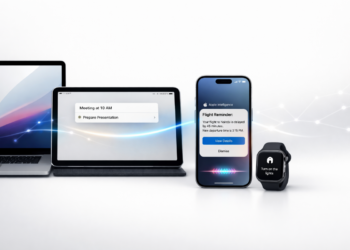
Apple’s strategy is centered around tight integration between hardware, software, and services. Its custom silicon approach allows the company to optimize AI capabilities across the iPhone, iPad, Mac, and broader ecosystem simultaneously. Rather than focusing only on raw performance, Apple increasingly emphasizes efficiency, privacy, thermal management, and seamless continuity between devices.
The arrival of the A19 and A19 Pro chips is expected to further reinforce that direction as the smartphone industry enters a more AI-driven era. Over recent chip generations, Apple has already demonstrated how tightly integrated silicon can improve computational photography, battery efficiency, machine learning, and on-device intelligence across its ecosystem.
As pressure surrounding AI performance, contextual computing, and persistent on-device intelligence intensifies, Apple is also expected to push future A-series silicon toward increasingly advanced 2nm architectures over the coming years. The company’s broader challenge is no longer simply building faster chips, but translating its ecosystem strengths into AI experiences that feel more intelligent, natural, and deeply integrated across connected devices.
This ecosystem advantage becomes increasingly important as AI integrates more deeply into everyday mobile experiences. Apple is positioning its devices to operate less as isolated products and more as connected, intelligent systems that share context, understand workflows, and deliver AI-powered experiences seamlessly across multiple devices.
Qualcomm And The Push Toward The AI Android Future
Qualcomm’s ambitions extend beyond powering premium Android smartphones. The company is positioning Snapdragon chips as the foundation for a broader AI ecosystem developing across smartphones, PCs, wearables, vehicles, and mixed reality platforms. Its aggressive investment in neural processing, AI acceleration, and on-device intelligence reflects a broader industry belief that future computing experiences will increasingly depend on real-time, local AI rather than constant reliance on the cloud.
Even today’s most advanced 3nm flagship processors have already demonstrated how rapidly smartphone computing is evolving. Chips such as Qualcomm’s Snapdragon 8 Elite generation are delivering AI performance, graphics capabilities, and computational efficiency that would have seemed unrealistic on smartphones only a few years ago. Tasks such as advanced generative AI processing, desktop-class gaming, cinematic video enhancement, and real-time computational photography are already pushing smartphones into entirely new computing territory.
MediaTek And The Democratization Of AI Smartphones
MediaTek’s rise represents one of the most important shifts in the modern smartphone market. Once viewed primarily as a budget chipset manufacturer, the company has steadily evolved into a serious flagship competitor while maintaining strong influence across more affordable smartphone segments.
Recent flagship platforms such as the Dimensity 9400 and 9500 series demonstrate how aggressively MediaTek is advancing in AI performance, efficiency, and premium mobile computing capabilities. The company is no longer simply competing on affordability. It is increasingly positioning itself as a major force shaping the future direction of high-performance Android smartphones.
That positioning could become increasingly important in the AI era. As advanced mobile intelligence becomes more central to the smartphone experience, MediaTek may play a critical role in making powerful AI features accessible beyond ultra-premium flagship devices, particularly across emerging and mobile-first markets where smartphones often serve as primary computing tools.
Samsung’s Vertical Integration Advantage
Samsung’s strategy extends far beyond smartphones themselves. Through Exynos development, semiconductor manufacturing, memory technology, displays, and the broader Galaxy ecosystem, the company remains one of the few brands capable of controlling multiple layers of the smartphone supply chain simultaneously.
As AI workloads become more demanding, this level of vertical integration could become strategically valuable. Samsung’s continued investment in Exynos across both midrange and flagship devices signals a broader ambition to strengthen ecosystem optimization, reduce reliance on external suppliers, and position Galaxy devices more competitively for the next era of AI-driven mobile computing.
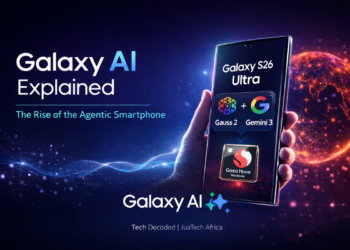
The emergence of the Exynos 2600 (2nm) in 2026 already signals how aggressively Samsung is positioning itself for the AI era. The years between 2027 and 2030 could become especially important for Samsung’s long-term efforts to more tightly unify AI capabilities, thermal efficiency, battery optimization, and ecosystem-level intelligence across the Galaxy experience.
Future smartphone competition may increasingly depend not only on processor speed but also on how effectively companies optimize chips, memory, thermal management, displays, and AI systems together as unified intelligent platforms. The companies shaping this transition are not simply competing to build faster processors. They are competing to define the next era of mobile computing itsel
What This Means For Real Users
For most people, semiconductor breakthroughs and smartphone chip architecture rarely feel personal. Consumers care about how long their phones last throughout the day, whether apps remain smooth after years of use, whether devices overheat during gaming or video recording, and whether cameras perform reliably in difficult lighting conditions. Yet the invisible transition happening inside modern smartphone chips could directly affect nearly every part of that everyday experience.
Everyday Smartphones Could Feel Smarter and less Frustrating
One of the biggest frustrations many users face today is that smartphones often become slower, hotter, and less efficient as software, apps, and AI features grow more demanding. Battery anxiety remains common, especially for people who rely heavily on their phones throughout the day for communication, entertainment, work, navigation, and mobile payments.
Future 2nm smartphone chips are being designed to solve many of these problems simultaneously. More efficient processors, combined with stronger AI acceleration, could significantly improve battery life while reducing heat generation during gaming, multitasking, video recording, and other demanding workloads. Smartphones may increasingly learn how people use their devices throughout the day, intelligently optimizing performance, background activity, notifications, and power consumption based on individual routines and habits.
The next era of smartphone innovation may therefore feel less about isolated hardware upgrades and more about devices that operate more naturally, efficiently, and intelligently in response to human behavior.
Creators are Entering a New Mobile Computing Era
For creators, the implications could become even more significant. Smartphones have already transformed photography, video production, and digital storytelling over the past decade, largely because of advances in computational photography and AI-assisted processing. Future AI-powered smartphone chips could dramatically accelerate that transformation.
Tasks that previously required laptops, expensive cameras, or desktop editing systems may increasingly happen directly on mobile devices. Real-time cinematic video enhancement, AI-assisted editing, automatic scene optimization, intelligent subject tracking, faster rendering, and advanced generative editing tools could push smartphones closer toward professional creative workflows.
This shift matters because a growing number of creators are building businesses, audiences, and careers entirely from their phones. Across platforms such as YouTube, TikTok, Instagram, and short-form video ecosystems, the smartphone is increasingly becoming the primary production studio for a new generation of storytellers, entrepreneurs, journalists, and mobile filmmakers.
Professionals Want Portable Intelligence
Modern work is becoming increasingly fragmented across meetings, emails, messaging platforms, cloud documents, calendars, and multiple devices. Many professionals spend large parts of their day switching between tasks, responding to notifications, organizing information, and managing digital overload.
Future AI-powered smartphones may increasingly help reduce that friction. Devices could summarize meetings automatically, organize schedules contextually, prioritize notifications intelligently, generate drafts, translate conversations in real time, and assist users proactively throughout the day. The result may not simply be faster smartphones, but devices designed to reduce everyday digital fatigue while improving productivity and responsiveness.
Why This Shift Matters So Much for Africa
In many African markets, smartphones are not secondary computing devices. They are the primary gateway to the digital economy. Millions of people rely on smartphones for education, entrepreneurship, remote work, mobile banking, communication, content creation, and business operations.
This makes the transition toward more powerful and efficient AI smartphones especially important. Better battery efficiency could matter enormously in regions where stable electricity access remains inconsistent. More capable device AI may also reduce dependence on constant internet connectivity, allowing intelligent features to function more reliably in mobile-first environments.
For Africa’s growing creator economy and digital workforce, increasingly powerful smartphones could continue to lower barriers to access professional tools, creative opportunities, and advanced computing experiences previously limited to expensive traditional hardware.
Why AI Smartphones Need More Than Just Faster Chips
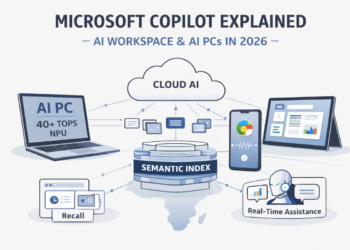
As smartphones become more deeply integrated with artificial intelligence, raw processor performance alone is no longer enough. Future AI-powered mobile experiences will depend just as heavily on memory infrastructure, bandwidth efficiency, and the intelligent management of enormous amounts of information in real time.
This is where technologies such as LPDDR5X memory become increasingly important.
Traditional smartphone tasks such as browsing social media, streaming video, or messaging place relatively predictable demands on hardware. AI workloads place fundamentally different demands on smartphone systems. Features such as generative AI assistants, real-time translation, contextual search, computational photography, and advanced voice processing constantly process and move large amounts of data simultaneously.
That requires significantly faster memory access, higher bandwidth, lower latency, and more intelligent resource allocation behind the scenes.
Future smartphones are also expected to handle more local AI inference directly on the device itself rather than constantly relying on cloud servers. This means smartphones must increasingly manage persistent AI systems that can understand context, process information continuously in the background, and respond more intelligently in real time, all while maintaining battery efficiency and smooth overall performance.
The practical implications for users could become increasingly noticeable in daily life. AI assistants may respond more naturally and contextually. Smartphones may become better at multitasking across demanding apps without slowing down. Real-time photo and video enhancement could happen faster and more seamlessly. Generative AI tools may feel smoother, smarter, and more responsive even without a constant internet connection.
This memory and AI infrastructure layer forms a major part of the invisible upgrade reshaping modern smartphones. The next era of mobile computing may depend not only on how powerful smartphone chips become, but also on how efficiently devices process, move, and manage intelligence behind the scenes.
The Risks & Limitations Still Matter
Despite the excitement surrounding next-generation smartphone chips and AI-powered mobile computing, the transition will not be without challenges. In many ways, the smartphone industry is entering a period where expectations around artificial intelligence are rising faster than the technology itself is fully maturing.
One of the biggest concerns is cost. Advanced semiconductor manufacturing processes, such as 2nm, are becoming significantly more expensive to develop and produce. As companies invest heavily in AI infrastructure, memory systems, and increasingly complex chip architectures, flagship smartphone prices could continue rising beyond the reach of many consumers.
There are also growing concerns surrounding privacy and data security. As smartphones become more context-aware and capable of processing larger amounts of personal information, questions around how AI systems collect, manage, and interpret user data are likely to intensify. The push toward more on-device AI may help reduce some of these concerns, but trust will remain a major issue as intelligent systems become more deeply integrated into everyday life.
Another challenge involves software optimization and practical usefulness. Powerful chips alone do not automatically guarantee meaningful experiences. Some AI features introduced today still feel experimental, inconsistent, or designed more for marketing headlines than genuine everyday utility. As competition intensifies, there is also a risk that companies may overload smartphones with AI features that sound impressive technically but offer limited real-world value to users.
There is also the broader question of diminishing returns. Modern flagship smartphones are already remarkably capable devices, and many consumers may increasingly question whether yearly hardware advancements are meaningfully improving daily life in ways they can genuinely feel.
Ultimately, the future of AI smartphones will not be defined solely by how powerful the technology becomes, but by how intelligently, responsibly, and meaningfully it improves the human experience behind the screen.
The Smartphone Is Becoming Something Else
For years, smartphone innovation was largely measured through visible improvements. Better cameras, brighter displays, faster charging, and thinner designs defined the industry’s rhythm. Consumers upgraded devices based on features they could immediately see, compare, and experience within minutes of holding a new phone.
The next phase of smartphone evolution may feel fundamentally different.
The transition toward powerful 2nm chips and AI-driven mobile computing is not simply about making smartphones faster. It signals a deeper shift toward devices capable of understanding context, assisting creativity, managing information, and responding more intelligently to human behavior in real time. The most important upgrades may no longer be physical features visible on the outside, but invisible systems quietly shaping how smartphones think, adapt, and interact behind the scenes.
Between now and the end of the decade, smartphones may increasingly evolve from communication tools into intelligent personal computing companions deeply integrated into everyday life. For creators, professionals, businesses, and mobile-first societies across regions such as Africa, that shift could reshape how people work, learn, create, communicate, and participate in the digital economy.
The companies competing to build the future of smartphone chips are no longer simply chasing performance leadership. They are helping define the next era of human interaction with technology itself.
And for the first time in years, the smartphone industry genuinely feels as though it is standing at the beginning of something new.