

Have you ever noticed that the same sunset, portrait, or night scene can look completely different when photographed using an iPhone, Samsung Galaxy, Google Pixel, Vivo, or Xiaomi smartphone? The reason goes far beyond megapixels and camera hardware. From color science and image processing to computational photography and brand philosophy, this article explores why modern smartphone cameras see the world differently.
The Same Scene, Different Reality
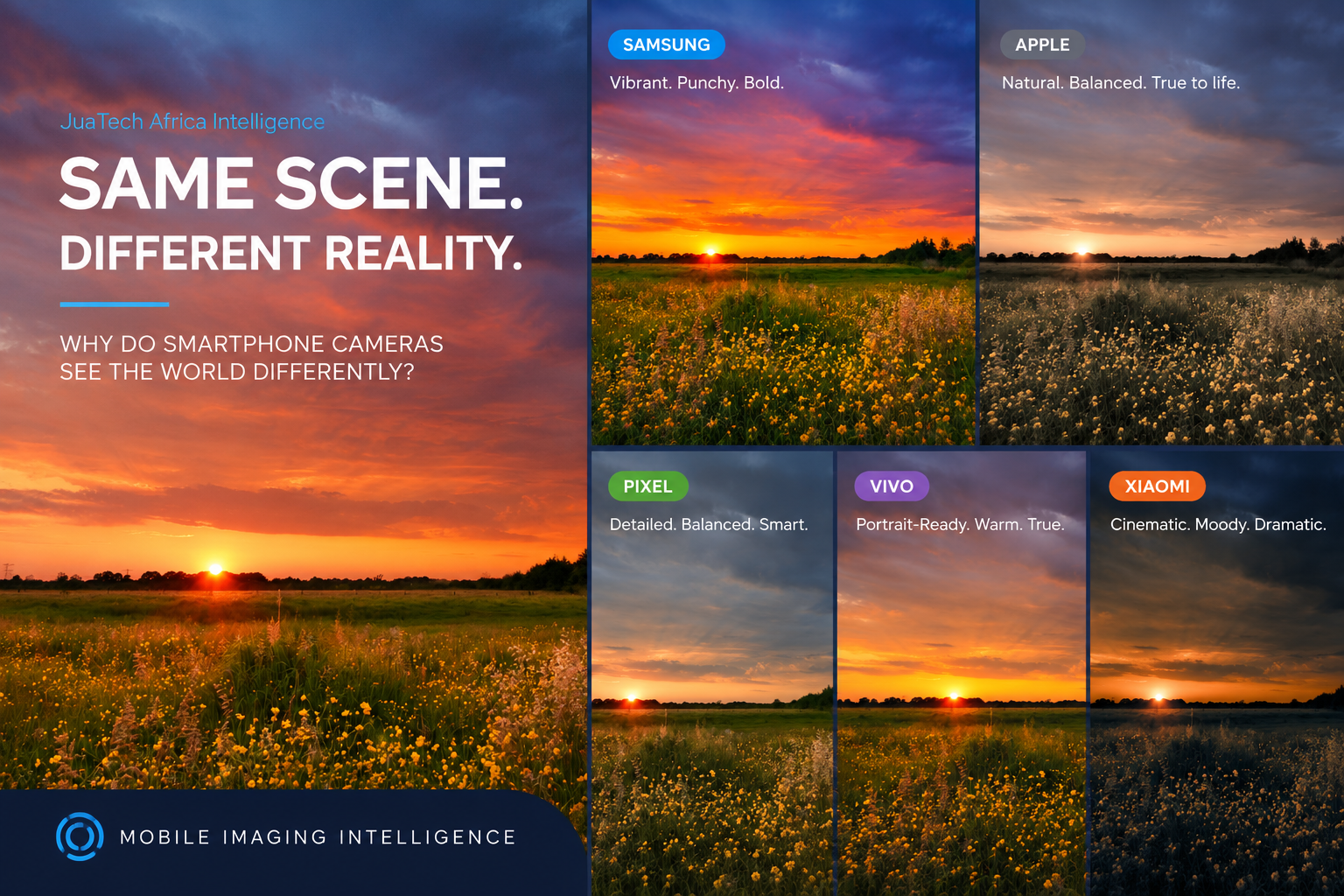
A group of friends gathers to watch a sunset. Everything is perfect, fom the weather to setfrom the weather to the ting. As the sky turns orange and gold, everyone reaches for their respective smartphones. One person uses an iPhone, another a Samsung Galaxy, while others pull out a Google Pixel, Vivo, or Xiaomi device. Moments later, they compare their photos. Surprisingly, the images look different. One appears warmer and more dramatic. Another looks brighter. One preserves more detail in the clouds, while another produces deeper colors and stronger contrast. Yet everyone photographed the same scene, under the same light, at the same time. The differences are significant enough to prompt an obvious question: which smartphone actually captured the sunset correctly?

Most people assume the answer lies in camera hardware. Bigger sensors, more megapixels, and more expensive smartphones should naturally produce better photos. Hardware certainly matters, but it tells only part of the story. Modern smartphone photography is no longer defined solely by what a camera captures. It is increasingly shaped by how a smartphone processes, interprets, and presents the world around it.
Understanding this distinction explains why smartphones with similar camera specifications can produce dramatically different images and why debates about the best camera phone rarely have a simple answer. In the age of computational photography and artificial intelligence, smartphone cameras are no longer just recording reality. Increasingly, they are interpreting it.
Why Do Smartphone Cameras Produce Different Photos?
The simple answer is that every smartphone photograph is the result of both hardware and software working together. While most people focus on visible specifications such as megapixels, camera sensors, and lenses, these components represent only part of the imaging process. Modern smartphones are also powerful computers that constantly analyze and process information before producing the final image.
When you tap the shutter button, the camera hardware captures light from a scene. The sensor records that information, while the lens helps direct and focus the light. At this stage, different smartphones using similar hardware may capture remarkably similar data. However, it is where the differences begin to emerge.
Every smartphone brand processes images differently. The software decides how bright a photo should appear, how vivid colors should look, how much detail to sharpen, and how aggressively shadows and highlights should be adjusted. Some brands aim for natural-looking images, while others prioritize vibrant colors and visual impact. Increasingly, artificial intelligence also plays a role by recognizing scenes, adjusting settings, and optimizing image quality in real time.
This is why two smartphones can photograph the same subject and produce noticeably different results. One may create a brighter and more colorful image, while another may appear more realistic and balanced. Modern smartphone photography is no longer just about capturing a scene. It is about how the device chooses to interpret it.
The Camera Captures. The Software Decides.
To understand why smartphone cameras produce different photos, it helps to think of smartphone photography as a partnership between hardware and software. Both play important roles, and neither can deliver great results on its own.
The hardware is responsible for capturing the raw information. This includes the camera sensor, which collects light, the lens, which focuses that light, and stabilization systems that help reduce blur during photography and video recording. Better hardware generally allows a smartphone to capture more detail, perform better in low light, and record smoother video. This is one reason flagship smartphones often have an advantage over more affordable devices.
Software takes over once the image has been captured. It decides how bright the photo should appear, how colors should be rendered, how much detail should be sharpened, and how shadows and highlights should be balanced. Technologies such as HDR, artificial intelligence, color processing, and image rendering work behind the scenes to shape the final photograph. In many cases, these decisions influence how a photo looks just as much as the hardware itself.
This explains why smartphones with similar camera specifications can produce very different results. One brand may prioritize natural colors, while another prefers vibrant tones and stronger contrast. Ultimately, asking whether hardware or software matters more misses the point. The best smartphone cameras combine excellent hardware with intelligent software, allowing them to capture more information and present it in a way that reflects the brand’s unique photographic vision.
Hardware vs Software
| Hardware | Software |
| Sensor | HDR |
| Lens | AI Processing |
| Stabilization | Color Science |
| Autofocus | Image Rendering |
The best smartphone cameras combine both.
Why Expensive Phones Usually Take Better Photo
One of the most common assumptions in smartphone photography is that a more expensive phone automatically takes better photos and videos. While that is often true, the relationship is not as straightforward as many people think. Higher prices usually reflect a combination of better camera hardware and more advanced image processing rather than a single breakthrough feature.
Flagship smartphones typically include larger image sensors that capture more light, helping produce clearer photos, improved dynamic range, and stronger low-light performance. They also tend to use higher-quality optics, allowing more light to reach the sensor while reducing distortion and improving overall image quality. Better stabilization systems further enhance the experience by helping photographers capture sharper images and smoother videos, particularly in challenging conditions.
Processing power also plays a significant role. Premium smartphones often feature more powerful chipsets capable of handling complex photography tasks such as HDR processing, artificial intelligence enhancements, noise reduction, and advanced video recording. These technologies work together to improve the final image before it reaches your gallery.
However, price alone does not guarantee better results. A well-optimized mid-range smartphone can sometimes outperform a more expensive device in specific situations. Image quality depends on how effectively the hardware and software work together. While flagship smartphones generally provide the best photography experience, the most expensive camera is not always the one that produces the image you prefer. Ultimately, great smartphone photography is about balance, not price alone.
Does Samsung Really Take The Best Photos?
Ask a group of smartphone users which brand produces the best photos, and Samsung will almost certainly appear in the conversation. Its flagship devices are known for bright images, vibrant colors, strong detail, and eye-catching results that look impressive on social media. However, does that automatically make Samsung the best smartphone camera?
Not necessarily.
The reality is that every major smartphone brand approaches photography differently. Apple generally prioritizes consistency, natural colors, and reliable video performance. Google Pixel devices are often praised for computational photography and detail preservation. Vivo has built a reputation around portrait photography and balanced image rendering, while Xiaomi’s partnership with Leica emphasizes photographic character, mood, and visual storytelling. Samsung, meanwhile, tends to favor images that appear vibrant, sharp, and immediately appealing.
This highlights an important reality about modern smartphone photography. The best camera is not always the one with the most advanced specifications or the highest price. In many cases, it is the one whose photographic style matches your personal preferences. Some people prefer realistic colors. Others enjoy richer contrast, brighter images, or more dramatic processing.
The smartphone industry often talks about image quality, but increasingly it is competing on photographic identity. Different brands are not simply capturing the same scene. They are presenting their own interpretation of it. That is why there is no universally best smartphone camera. There are different photographic philosophies, and the right choice often depends on what you like seeing when you press the shutter button.
One Scene, Five Interpretations
A modern smartphone camera does more than capture a scene. It processes, enhances, and interprets what it sees. As a result, the same moment can look remarkably different depending on the device used.
| Brand | Typical Imaging Style |
| Apple | Natural colors, balanced exposure, consistent results |
| Samsung | Vibrant colors, stronger contrast, social-media-ready images |
| Google Pixel | Detail-focused, computationally enhanced photography |
| Vivo | Portrait-oriented, balanced rendering, natural skin tones |
| Xiaomi | Character-driven photography with a cinematic aesthetic |
Insight: The goal of modern smartphone photography is no longer simply to record reality. Increasingly, smartphone brands are developing distinct photographic identities that influence how colors, contrast, detail, and mood appear in the final image. This is why two smartphones can photograph the same scene yet produce noticeably different results.
What Should You Look For In A Camera Phone?
Understanding why smartphone cameras produce different images is useful, but it also raises a practical question. If there is no universally best smartphone camera, how should you choose one?
For photography, pay attention to more than megapixels. Look for natural color accuracy, strong dynamic range, and reliable low-light performance. A good camera should preserve detail in both bright and dark areas of a scene while producing colors that look believable and consistent. These qualities often have a greater impact on image quality than headline specifications alone.
For video recording, stabilization is critical. Effective stabilization helps create smoother footage when walking or filming handheld. Reliable autofocus ensures subjects remain sharp, while good exposure control prevents distracting shifts in brightness as lighting conditions change. These factors often separate average smartphone video from truly professional-looking results.
For content creators, consistency may be the most important characteristic of all. A camera should produce predictable results across different environments and lighting conditions. Natural skin tones are particularly important for portraits, interviews, and social media content. Editing flexibility also matters because files that retain detail and accurate colors provide more room for adjustment during post-production.
Ultimately, the best camera phone is not necessarily the most expensive or the most popular. It is the one that consistently produces the photos and videos you enjoy creating and sharing. Understanding how a smartphone processes and interprets the world can help you choose a camera system that matches your needs, preferences, and creative style.
Cameras No Longer Capture The Same Reality
Return to the sunset scene from the beginning of this article. The same moment was photographed using different smartphones, yet the results looked remarkably different. One image appeared brighter, another more vibrant, while a third looked more natural and balanced. At first glance, it may seem as though one camera was simply better than the others.
The reality is more complex. Modern smartphone photography is shaped by far more than camera hardware alone. Sensors, lenses, image processing, computational photography, artificial intelligence, and brand philosophy all influence how a photograph ultimately appears. Every smartphone camera captures the same reality, but each interprets that reality in its own way.
This helps explain why debates about the best camera phone rarely produce a definitive winner. Different brands are optimizing for different outcomes, different users, and different photographic styles. The next time two smartphones produce different photos of the same scene, the difference may not be the camera hardware at all. It may be the way each device chooses to see the world.
Understanding that distinction is becoming increasingly important as smartphone cameras continue to evolve. The future of mobile imaging will not be defined solely by larger sensors or more powerful artificial intelligence. It will also be shaped by the choices brands make about how photographs should look, feel, and tell stories. In many ways, the most interesting question in smartphone photography is no longer what a camera can capture, but how it chooses to interpret the world around it.
Continue Exploring Mobile Imaging Intelligence
This article is part of Mobile Imaging Intelligence, a JuaTech Africa series exploring the technologies, partnerships, and philosophies shaping modern smartphone photography.
Continue reading:
- Why Sony Quietly Powers Many of the World’s Best Smartphone Cameras – Understanding the sensors behind modern smartphone photography.
- Leica Beyond the Red Dot: What Leica Really Brings to Smartphones – Exploring color science, image rendering, and photographic identity.
- Zeiss and Vivo: The Optics Behind Modern Smartphone Photography – Why light, lenses, and optical engineering still matter in the age of AI.
Together, these articles reveal why modern smartphone photography is no longer defined by a single component, but by the interaction of sensors, optics, software, artificial intelligence, and photographic philosophy.
Join the JuaTech Africa Community
Technology is evolving rapidly, but understanding it requires more than specifications and marketing claims. Join a growing community of readers, creators, professionals, and technology enthusiasts exploring the forces shaping mobile technology across Africa and beyond.
Receive smartphone insights, market intelligence, buying advice, creator-focused analysis, and emerging technology trends delivered directly to your inbox.
Share your experiences, ask questions, discuss smartphone photography, and connect with other readers interested in understanding technology beyond the headlines.