

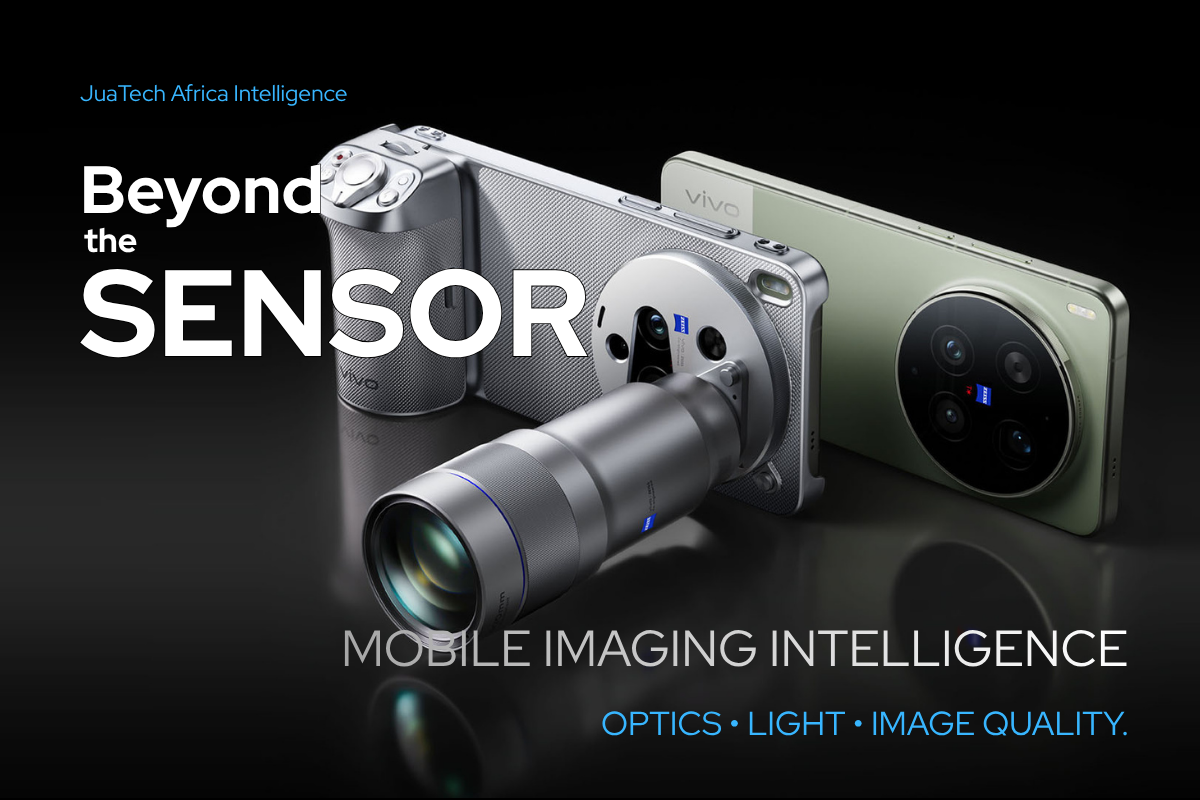
Zeiss smartphone cameras have become a defining part of Vivo’s flagship photography strategy, yet few users understand what the legendary optics company actually contributes. From lens design and optical coatings to image quality, flare control, and mobile videography, this deep dive explores how Zeiss helps shape the photos and videos captured by some of today’s most advanced camera phones.
Beyond the Sensor: Why Optics Still Matter
Over the past few years, Vivo has quietly established itself as one of the most ambitious players in smartphone photography. Its flagship devices are frequently praised for portrait photography, mobile videography, low-light performance, and camera innovation, often competing directly with the industry’s biggest names. Alongside that growing reputation, another name continues to appear on Vivo’s camera systems: Zeiss. For many smartphone users, creators, and photography enthusiasts, the partnership raises an important question. What exactly does Zeiss contribute to Vivo smartphones, and why does a company best known for optics continue to play a prominent role in an era increasingly defined by artificial intelligence and computational photography?

The question matters because modern smartphone cameras are often judged by the technologies consumers can easily see and compare. Manufacturers promote larger image sensors, higher megapixel counts, more powerful processors, and increasingly sophisticated AI features. While these innovations have transformed mobile photography, they tell only part of the story. Some smartphones consistently produce cleaner images, better flare control, more accurate colors, and a more refined visual experience despite competing within similar hardware categories. Understanding why requires looking beyond specifications and examining one of the most overlooked components of the imaging pipeline: optics.
Before a smartphone can process a photograph, enhance it with artificial intelligence, or transform it through computational photography, light must first pass through a lens system. The quality of that process influences everything that follows, from sharpness and contrast to color accuracy and image fidelity. This is where Zeiss enters the story. Long before smartphone cameras became a battleground for innovation, the company built its reputation mastering one of photography’s most fundamental challenges: capturing and controlling light with extraordinary precision. To understand why Zeiss matters in the smartphone era, we must first understand why optics still matter.
Before AI, Before Sensors, There Was Light
Most discussions about smartphone photography begin at the wrong point. Consumers compare megapixels, sensor sizes, image processors, and artificial intelligence features because those are the specifications most visible on product pages and marketing materials. Yet every photograph follows a sequence that starts much earlier. Before a sensor captures an image, before software enhances it, and before artificial intelligence analyzes it, light must first enter the camera system. Every smartphone photograph begins with a scene, but it is light that carries the information needed to reproduce that scene accurately.
The Journey of Every Smartphone Photograph
The process is remarkably simple in principle yet incredibly complex in execution. Light reflected from a subject enters the camera through a lens system, travels toward the image sensor, and is converted into digital information. That information is then processed by software before becoming the photograph users ultimately see on their screens. If the incoming light is distorted, scattered, poorly controlled, or partially lost during that journey, the entire imaging pipeline must work with compromised information. Even the most advanced sensor or AI system can only process the data it receives.
This reality helps explain why optics remain so important in modern smartphone photography. A useful comparison is professional filmmaking. Cinematographers invest heavily in high-quality lenses because they understand that image quality begins before footage reaches the camera sensor. Smartphone photography follows the same principle, even if the hardware is significantly smaller.
The Foundation of Every Image
The smartphone industry often celebrates sensors, processors, and artificial intelligence, but those technologies all depend on the quality of light entering the camera system. Better light provides more accurate information, preserves greater detail, improves contrast, and creates a stronger foundation for every stage of image processing that follows. This is why optics continue to matter, even as computational photography becomes increasingly sophisticated. It is also why companies such as Zeiss remain relevant in the smartphone era. While manufacturers compete through sensors and software, optics specialists focus on improving the quality of light before it reaches the sensor. Understanding that role is essential because every smartphone photograph, regardless of the device used, ultimately begins as a problem of light.
The Optics Company Behind Generations of Imaging Innovation
Understanding why Zeiss appears on modern Vivo smartphones requires looking beyond the smartphone industry itself. Long before mobile photography existed, Zeiss had already established a reputation in fields where optical precision was not simply desirable but essential. Scientists relied on Zeiss microscopes to study structures invisible to the human eye. Researchers used its optical systems to improve observation and measurement. Photographers trusted Zeiss lenses to capture images with exceptional sharpness, contrast, and clarity. Across industries where accuracy mattered, the company’s expertise was built around one fundamental objective: controlling light as precisely as possible.
Solving Problems Through Optical Engineering
What makes Zeiss unique is not the number of products it manufactures, but the consistency of the problem it has spent decades solving. Whether designing optics for scientific instruments, professional cameras, or advanced imaging systems, the challenge remains remarkably similar. Light must be guided, focused, transmitted, and preserved with minimal distortion. Achieving that goal requires expertise in lens design, optical materials, coatings, precision manufacturing, and image quality optimization.
The same principles apply in cinema. Professional filmmakers invest heavily in premium lenses because they understand that optics influence far more than sharpness alone. Lens quality affects contrast, color accuracy, flare control, depth, and the overall character of an image. The lens becomes part of the storytelling process itself, shaping how audiences experience a scene.
Why This Matters in the Smartphone Era
This heritage helps explain why Zeiss remains relevant today. Smartphone cameras may be dramatically smaller than professional camera systems, but they are still governed by the same laws of optics. Every image depends on how effectively light is collected, controlled, and delivered to the sensor. Long before smartphone brands began competing on computational photography and artificial intelligence, Zeiss was solving these challenges in fields where optical performance could not be compromised. That experience forms the foundation of its role in modern smartphone photography and helps explain why companies such as Vivo continue to value its expertise.
Why Smartphone Cameras Need More Than Bigger Sensors
For years, smartphone photography has been driven by a simple narrative: bigger sensors, more megapixels, and smarter software produce better images. There is truth in that argument. Modern image sensors capture more light than ever before, while computational photography and artificial intelligence have transformed what smartphones can achieve in challenging conditions. Yet this progress has also created a misconception. Many consumers now assume that software can compensate for almost any hardware limitation.
In reality, even the most advanced imaging systems depend on the quality of light entering the camera in the first place.
The Limits of Software
A useful analogy is recording a conversation in a noisy room. Software can reduce background noise and improve clarity, but it cannot perfectly reconstruct words that were never captured by the microphone. Smartphone photography faces a similar challenge. If incoming light is distorted before reaching the sensor, the entire imaging pipeline begins with compromised information.
Several optical issues illustrate this reality. Lens flare occurs when unwanted light reflects within a lens system, reducing contrast and washing out parts of an image. Distortion can alter the appearance of straight lines and objects, particularly around the edges of a frame. Poor light transmission limits the amount of information reaching the sensor, especially in difficult lighting conditions. Even sharpness, one of the most discussed aspects of image quality, is heavily influenced by optical performance before software processing begins.
Better Light, Better Data
This is why optics remain essential in the age of artificial intelligence. Computational photography excels at enhancing, correcting, and interpreting information, but it performs best when the underlying data is strong. Better optics help preserve detail, improve contrast, reduce unwanted artifacts, and deliver cleaner information to the sensor. The result is not simply a better photograph, but a stronger foundation for every stage of image processing that follows.
For creators, photographers, and mobile filmmakers, this distinction matters because image quality is ultimately cumulative. Strong optics, capable sensors, intelligent software, and advanced AI each contribute to the final result. The most successful smartphone camera systems do not rely on a single element. They combine all of them. This is precisely where companies such as Zeiss fit into the modern imaging pipeline, helping ensure that better light becomes better data long before software begins its work.
What Zeiss Actually Brings to Vivo Smartphones
By this point, a fundamental question remains. If Zeiss is not manufacturing Vivo smartphones, building image sensors, or developing smartphone processors, what exactly is it contributing to the camera experience? The answer lies in the optical foundation of the camera system itself. While Vivo develops the broader hardware and software ecosystem, Zeiss contributes decades of expertise in optics, image quality, lens engineering, and optical performance. Its role is not to replace Vivo’s imaging technology, but to strengthen the quality of information entering the imaging pipeline before software and artificial intelligence take over.
Lens Design and Optical Engineering
Every smartphone camera begins with a lens system. Before light reaches the image sensor, it must pass through multiple optical elements designed to focus, direct, and preserve visual information. Designing these components is far more complex than simply making a lens sharper. Engineers must balance sharpness, distortion control, light transmission, color accuracy, and physical size within an incredibly compact space.
This is one area where Zeiss brings considerable value. Drawing from decades of experience in photography, scientific optics, and precision engineering, the company collaborates with Vivo to refine lens design and optical performance. The objective is not simply to produce technically impressive images, but to ensure that light reaches the sensor as accurately and efficiently as possible.
T* Coating and Flare Control
One of Zeiss’s most recognizable contributions to Vivo smartphones is its T* optical coating technology. While it may sound like a minor technical detail, its real-world impact can be significant.
Anyone who has photographed a city skyline at night, filmed a concert, or captured a sunset directly facing a bright light source has likely encountered lens flare. Unwanted reflections within a lens system can reduce contrast, wash out details, create distracting artifacts, and diminish image quality. These issues become even more challenging in smartphone cameras because of the compact nature of their optical systems.
T* coatings help reduce internal reflections by improving how light passes through lens surfaces. The result is cleaner images, stronger contrast, and better control of flare and ghosting. For creators shooting night scenes, urban environments, vehicle headlights, stage lighting, or cinematic video content, these improvements can contribute to a more polished and professional result.
Image Quality and Optical Fidelity
Image quality is often discussed in terms of megapixels and sensor size, yet optical fidelity plays an equally important role. Optical fidelity refers to how accurately a camera reproduces a scene before software processing begins. This includes preserving detail, maintaining contrast, reducing unwanted distortions, and ensuring that visual information reaches the sensor with minimal degradation.
A useful comparison is looking through a clean window versus a scratched or fogged one. Both may reveal the same scene, but the quality of information reaching your eyes is different. Smartphone cameras operate in a similar way. Better optics do not create the scene, but they can preserve more of its original detail and character.
For photographers, mobile filmmakers, and content creators, this matters because every stage of image processing benefits from cleaner input. Strong optical performance creates a stronger foundation for computational photography, AI enhancement, portrait processing, and video capture.
Engineering Mobile Optics for the Smartphone Era
The partnership between Vivo and Zeiss reflects a broader reality within modern smartphone photography. Camera innovation is no longer driven by a single component. Sensors, optics, software, computational photography, and artificial intelligence all work together to create the final image.
Zeiss’s contribution is focused on one of the earliest and most important stages of that process: the management of light. By improving lens design, reducing flare, enhancing optical performance, and preserving image fidelity, the company helps strengthen the foundation upon which Vivo’s camera systems are built. In an industry increasingly focused on software and AI, that role remains remarkably important. After all, every algorithm, image processor, and artificial intelligence model ultimately depends on the quality of light entering the camera system in the first place.
Continue Exploring Mobile Imaging Intelligence
Understanding smartphone photography requires looking beyond the smartphone brands themselves. The Mobile Imaging Intelligence series explores the companies, technologies, and engineering decisions that shape how modern smartphone cameras capture, process, and present the world around us.
Continue your journey with:
- Why Sony Quietly Powers Many of the World’s Best Smartphone Cameras
- Leica and Smartphone Photography: What the Red Dot Really Means
- The Companies Behind Smartphone Cameras
- AI Imaging: Is Software Becoming More Important Than Hardware?
- How Smartphones Became Professional Video Cameras
- Zeiss and Vivo
Together, these articles reveal the often-overlooked technologies, partnerships, and innovations driving the evolution of mobile photography, mobile videography, and creator tools.
EDITORIAL INSIGHT
Optics vs Computational Photography
| Optics | Computational Photography |
| Controls incoming light | Processes captured light |
| Prevents optical problems | Corrects optical problems |
| Hardware foundation | Software enhancement |
| Influences image quality before capture | Influences image quality after capture |
| Zeiss expertise | AI and software expertise |
Insight:
The best smartphone cameras do not choose between optics and software. They combine both. Optics improve the quality of information entering the camera system, while computational photography enhances and interprets that information after capture.
Join the JuaTech Africa Community
Technology is evolving faster than ever, and understanding it requires more than product launches and specification sheets. Join a growing community of readers, creators, professionals, and technology enthusiasts exploring the ideas shaping the future of mobile technology across Africa and beyond.
Subscribe to the Newsletter
Receive in-depth analysis, smartphone market intelligence, creator-focused insights, buying advice, and emerging technology trends delivered directly to your inbox.
Join the WhatsApp Community
Connect with fellow smartphone enthusiasts, creators, entrepreneurs, and technology professionals. Participate in discussions, ask questions, share perspectives, and stay informed about the latest developments in mobile technology.
Follow JuaTech Africa on Facebook
Stay updated with the latest articles, industry insights, smartphone news, creator resources, and technology discussions from across the mobile ecosystem.
Thank you for reading Mobile Imaging Intelligence. More insights, investigations, and deep dives are coming soon.