

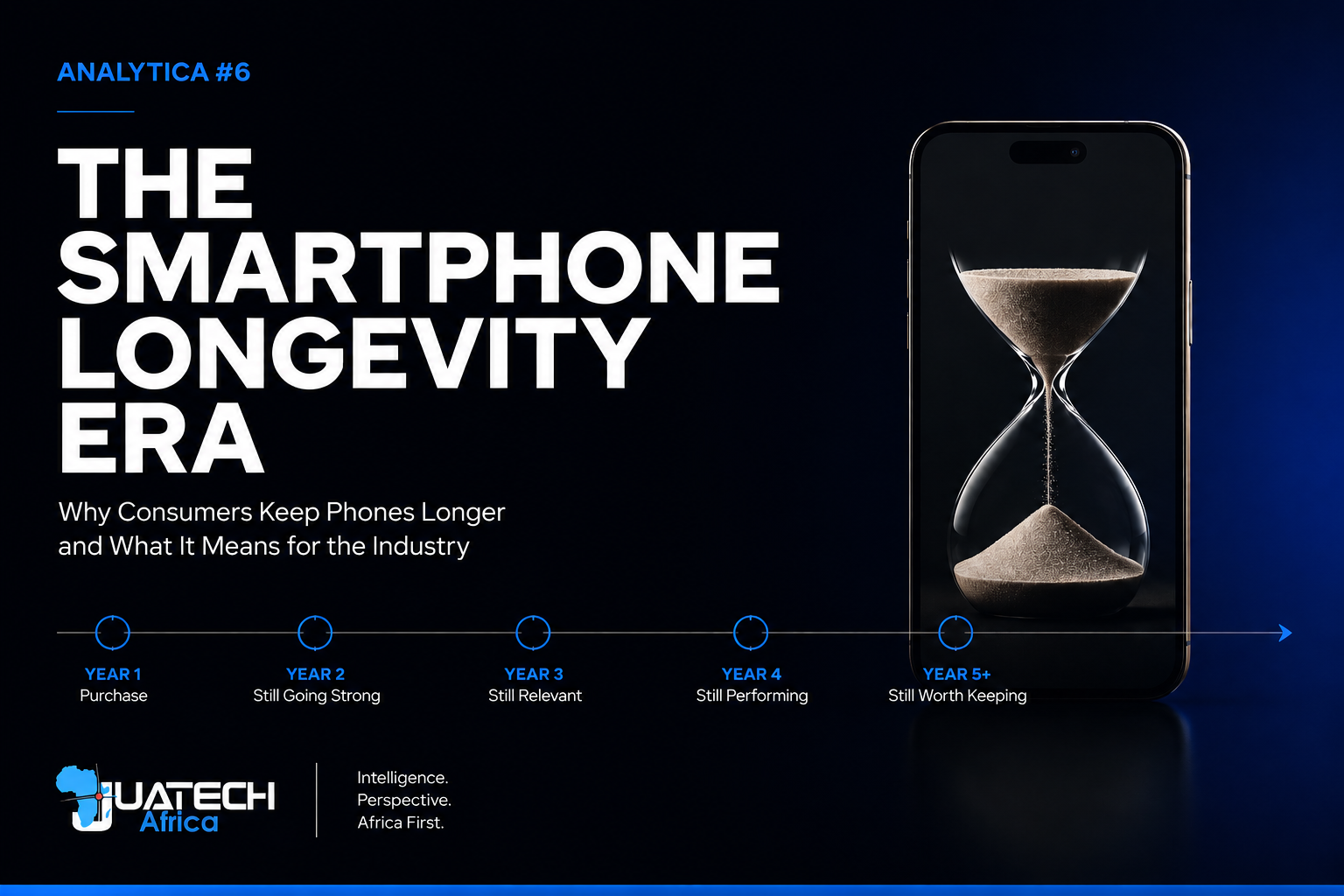
Smartphones have become so capable, durable, and expensive that consumers no longer feel compelled to upgrade. As ownership cycles stretch toward five years, the industry faces a fundamental question: how do brands grow when customers stop buying new phones?
Analytica Series Context

The Smartphone Longevity Era builds on themes explored across previous Analytica reports.
In Analytica Report #1, we examined why smartphone pricing in Kenya increasingly diverges from traditional global pricing assumptions. Analytica Report #2 explored a growing paradox: smartphones continue improving, yet many consumers no longer perceive upgrades as essential. The Analytica Report #3 analyzed the rise of mid-range smartphones and the narrowing gap between flagship and mainstream devices. Analytica Report #4 investigated why battery life has emerged as a more important purchasing factor than camera quality for many consumers. Most recently, Analytica Report #5 questioned whether the smartphone industry’s AI narrative is delivering meaningful productivity gains for everyday users.
Viewed individually, each report explored a specific market signal. Viewed together, they reveal a larger structural trend. Consumers are becoming increasingly selective about how, when, and why they upgrade their devices.
The Smartphone Longevity Era examines the consequences of that shift and what it means for smartphone brands, retailers, operators, investors, and technology ecosystems as they navigate a more mature market.
Executive Summary
The global smartphone industry is entering a period of structural transition. For more than a decade, growth was supported by a relatively predictable relationship between innovation and replacement demand. Better cameras, faster processors, improved displays, and new features encouraged consumers to upgrade regularly, creating a cycle that sustained hardware sales and market expansion. That relationship is becoming increasingly difficult to maintain.
Consumers are keeping smartphones longer than at any point in the modern smartphone era. Global replacement cycles have expanded toward four years in many markets, while manufacturers now provide software and security support that can extend device relevance to five, six, or even seven years. At the same time, economic pressures, rising smartphone prices, inflation, and increasingly disciplined consumer spending are encouraging users to maximize the value of existing devices before considering replacement.
This report argues that the industry has entered what Analytica defines as the Smartphone Longevity Era: a period in which longer ownership cycles become a defining characteristic of the market rather than a temporary response to economic conditions.
At the center of this shift is the Capability Plateau Theory, a framework developed for this report. The theory proposes that smartphone performance improvements now exceed the practical requirements of most users. Modern smartphones are more powerful than ever, yet the performance gap between what devices can do and what most consumers actually need continues to widen. As a result, improvements that once justified frequent upgrades are increasingly perceived as incremental rather than essential.
The consequences are already becoming visible across the industry. IDC reported a 4.1% year-on-year decline in global smartphone shipments during the first quarter of 2026, ending ten consecutive quarters of growth. At the same time, smartphone manufacturers are expanding ecosystem strategies, investing heavily in artificial intelligence, extending software support commitments, and developing new recurring revenue streams designed to generate value beyond device sales. These responses reflect a growing recognition that future growth may depend less on accelerating replacement cycles and more on strengthening long-term customer relationships.
The report further finds that software support has become one of the most significant drivers of smartphone longevity. Extended update commitments, longer security support windows, and continued feature enhancements are enabling consumers to use devices for substantially longer periods without compromising functionality, security, or user experience. In effect, longevity is no longer accidental. It is increasingly engineered.
The implications are particularly relevant in African markets. Smartphone penetration in Sub-Saharan Africa reached approximately 48% in 2024 and is projected to rise to 61% by 2030, while Kenya’s smartphone penetration surpassed 85% by late 2025. Across the continent, consumers have long practiced behaviors that are now becoming increasingly visible globally, including value maximization, extended ownership periods, repair culture, and participation in secondary device markets. Refurbished and used smartphone markets continue to expand as consumers seek affordable access to capable technology while extracting greater value from existing devices.
The central conclusion of this report is straightforward. The Smartphone Longevity Era does not signal the end of smartphone innovation or market growth. It signals a shift in how value is created, how growth is generated, and how consumers interact with technology. The industry’s future will not be determined solely by who sells the most devices. Increasingly, it will be shaped by who creates the most value between device purchases. The companies that adapt most effectively to this reality will be best positioned to define the next chapter of the smartphone industry.
Analytica Findings
1. Lengthening ownership cycles are reshaping the economics of the smartphone industry.
Consumers are keeping smartphones longer than at any point in the modern smartphone era, reducing replacement frequency and weakening the traditional relationship between innovation, upgrades, and hardware-led growth.
2. The Capability Plateau is reducing upgrade urgency across consumer segments.
Smartphone performance improvements increasingly exceed the practical requirements of most users, making many new hardware advancements feel incremental rather than essential and diminishing the need for frequent upgrades.
3. Economic realities are reinforcing smartphone longevity.
Rising smartphone prices, inflationary pressures, affordability constraints, and more disciplined consumer spending are encouraging users to maximize the value of existing devices before considering replacement.
4. Software support has become a competitive longevity strategy.
Extended operating system updates, longer security support commitments, and continuous feature enhancements are enabling devices to remain relevant for significantly longer periods. Longevity is no longer accidental. It is increasingly engineered.
5. Smartphone brands face a structural growth challenge.
As ownership cycles expand, replacement demand becomes less predictable, placing pressure on business models that rely heavily on frequent hardware refreshes to sustain growth.
6. Ecosystems are becoming more important than devices alone.
Manufacturers are increasingly investing in services, subscriptions, wearables, artificial intelligence, cloud platforms, and connected-device ecosystems to generate value beyond smartphone sales.
7. Secondary markets are becoming a permanent feature of the smartphone economy.
Refurbished devices, repair ecosystems, resale networks, and multi-owner device lifecycles are extending smartphone relevance, improving affordability, and creating new pathways to digital participation across emerging markets.
8. African markets offer an early view of the industry’s future.
Many of the behaviors now influencing global smartphone ownership patterns, including value maximization, extended ownership, affordability-driven purchasing decisions, and participation in secondary markets, have long been established across Africa.
9. Artificial intelligence represents the industry’s most important upgrade narrative, but its long-term impact remains uncertain.
AI is increasingly being positioned as a catalyst for renewed demand for replacements. However, its success will depend on whether it delivers measurable value that consumers consider worth paying for rather than simply introducing new features.
10. The Smartphone Longevity Era reflects market maturity, not market decline.
The industry’s challenge is no longer persuading consumers to upgrade more frequently. It is creating sustainable growth, stronger customer relationships, and recurring sources of value in a market where longer ownership is becoming the norm.
The Upgrade Crisis Nobody Notices
One of the most significant shifts in the smartphone industry is unfolding away from product launches, marketing campaigns, and annual technology announcements. Consumers are keeping smartphones longer. While the change has been gradual rather than dramatic, its implications are becoming increasingly difficult for manufacturers, retailers, operators, investors, and technology ecosystems to ignore. The smartphone replacement cycle that supported more than a decade of industry growth is beginning to evolve, creating new challenges for an industry built on recurring upgrade demand.
For years, the smartphone market benefited from a relatively predictable pattern of consumer behavior. Devices improved rapidly, consumers upgraded regularly, and every participant in the value chain could rely on replacement demand as a dependable source of growth. Annual product launches generated excitement, technological improvements justified new purchases, and consumers often replaced devices within two or three years. That model helped transform smartphones into one of the most successful consumer technology categories in modern history.
Today, that certainty is weakening. Consumers are extending ownership periods, delaying replacement decisions, and becoming increasingly selective about when and why they upgrade. What initially appeared to be a temporary response to economic pressures is increasingly revealing itself as a broader structural shift in consumer technology trends. Understanding whether this transition is real and why it matters is becoming essential for anyone seeking to grasp the future direction of the smartphone market.
The End of the Two-Year Upgrade Cycle
The traditional two-year smartphone upgrade cycle emerged during a period of rapid innovation. Successive generations delivered meaningful improvements in performance, battery life, camera capabilities, display quality, and connectivity. The benefits of upgrading were visible, measurable, and immediately relevant to consumers. Replacing a smartphone often resulted in a noticeably better experience, making upgrade decisions relatively straightforward.
The modern smartphone market operates under different conditions. Devices have reached a level of maturity where even several-year-old smartphones continue to satisfy most users’ needs. Communication, content consumption, mobile banking, productivity, navigation, and social media experiences remain largely effective on hardware that would previously have been considered outdated. As a result, consumers are increasingly evaluating upgrades through the lens of value rather than novelty. The question is no longer whether a new smartphone is better than the previous generation. The question is whether the improvement is significant enough to justify the cost of replacement.
Evidence of a Lengthening Replacement Cycle
Evidence from industry research, manufacturer disclosures, and broader consumer technology trends points toward a clear extension of smartphone ownership periods. Across multiple markets, consumers are retaining devices for longer as hardware reliability improves, software support commitments expand, and annual performance gains become less relevant to everyday usage.
Several factors are simultaneously reinforcing this trend. Device durability has improved significantly, reducing the likelihood of premature replacement. Software update policies now extend the useful life of smartphones well beyond previous industry norms. Mid-range devices increasingly offer capabilities that meet most consumers’ needs, reducing pressure to move into higher-priced categories. The trend is particularly relevant to African markets, where affordability considerations have historically encouraged consumers to maximize the lifespan of technology investments and extract greater value from every purchase.
Taken together, these developments suggest the smartphone replacement cycle is not experiencing a temporary interruption. It is undergoing a gradual but meaningful transformation that reflects changing consumer priorities and a more mature technology market.
Why This Matters Beyond Consumers
The significance of longer smartphone ownership extends well beyond consumer purchasing behavior. The smartphone industry depends on replacement demand to sustain sales volumes, support distribution networks, maintain retail momentum, and justify continued investment in product development. When consumers upgrade less frequently, growth becomes harder to achieve through hardware innovation alone.
For smartphone brands, retailers, operators, and investors, a lengthening smartphone upgrade cycle introduces a new strategic reality. Customer retention becomes increasingly important. Product differentiation becomes more challenging. Revenue growth becomes harder to sustain through device sales alone. As a result, companies are placing greater emphasis on ecosystems, software services, subscriptions, artificial intelligence, and other initiatives designed to create value beyond the smartphone itself.
Before examining the forces driving this transition, one conclusion is already becoming difficult to ignore. The era of predictable two-year smartphone upgrades is fading, and the industry is being forced to adapt to a future defined by longer ownership cycles and more deliberate replacement decisions.
The Capability Plateau
The lengthening smartphone replacement cycle cannot be explained by economics alone. Rising device prices, inflationary pressures, and changing consumer priorities all play important roles, but they do not fully explain why consumers are holding onto smartphones for longer periods. To understand the deeper forces reshaping upgrade behavior, it is necessary to examine how the smartphone itself has evolved.
Conventional industry thinking assumes that technological progress naturally stimulates replacement demand. Better products should encourage more upgrades. Faster performance should increase consumer interest. New features should create stronger purchase intent. For much of the smartphone era, this assumption proved correct. Meaningful improvements in battery life, camera quality, connectivity, software capabilities, and processing power created compelling reasons for consumers to replace existing devices with newer models.
Today, however, the relationship between innovation and demand is becoming increasingly complex. Smartphone capabilities continue to advance at a remarkable pace, yet consumers are upgrading less frequently. This apparent contradiction sits at the center of the Smartphone Longevity Era. It raises an important question: if smartphones continue to improve, why are consumers feeling less urgency to replace them?
Analytica Framework: Capability Plateau Theory
Analytica defines the Capability Plateau Theory as the stage of market maturity where smartphone capabilities continue to improve, but those improvements increasingly exceed the practical requirements of most consumers. As the gap between technological progress and everyday use widens, the urgency to upgrade declines even as innovation continues.
The theory does not suggest that innovation has slowed or that smartphones have stopped improving. Instead, it argues that the industry has reached a point where technological advancement is no longer automatically translating into replacement demand. Consumers continue to benefit from innovation, but the marginal value of each new generation is becoming less significant for an increasing proportion of users.
Understanding this distinction is critical because it challenges one of the foundational assumptions that has shaped the smartphone industry for more than a decade. The challenge facing manufacturers is no longer simply building better smartphones. The challenge is creating improvements that consumers perceive as meaningful enough to justify replacing devices that already perform their intended functions effectively.
Smartphones Have Become Good Enough
The issue is not that smartphones have stopped improving. On the contrary, smartphone innovation remains one of the most competitive and dynamic areas of consumer technology. Processors continue to become faster and more efficient. Camera systems incorporate increasingly advanced computational photography capabilities. Displays deliver higher brightness levels, smoother refresh rates, and improved energy efficiency. Artificial intelligence features are expanding across both flagship smartphones and mid-range smartphones.
The challenge is that many of these improvements are arriving in a market where the fundamental requirements of most consumers have already been satisfied. Communication, content consumption, mobile banking, photography, productivity, navigation, entertainment, and social networking can all be performed effectively on devices that are several years old. For many users, existing smartphones continue to provide a reliable and satisfactory experience long after the initial purchase.
This represents a significant shift from the smartphone industry’s earlier growth phases. During the 2010s, upgrading often produced immediately noticeable benefits. A newer smartphone typically offered substantially better performance, superior cameras, longer battery life, and access to new software capabilities. Today, the difference between successive generations is often less dramatic from the perspective of the average user.
As a result, consumers are increasingly evaluating replacement decisions through the lens of practical value rather than technological novelty. A smartphone may be objectively better, but if the existing device continues to meet everyday requirements, the motivation to upgrade weakens considerably.
The Performance Surplus Problem
The smartphone industry now faces what can be described as a performance surplus problem. Modern devices frequently possess capabilities that exceed the requirements of everyday users. Processing power, memory capacity, display quality, and camera performance continue to improve, but much of that additional capability remains underutilized by large segments of the market.
A consumer who primarily uses a smartphone for messaging, social media, mobile payments, web browsing, photography, streaming, and productivity applications is unlikely to utilize the capabilities of a modern flagship processor fully. Benchmark improvements may demonstrate impressive engineering progress, but they do not always translate into meaningful differences in everyday usage. The result is a growing disconnect between technical advancement and perceived consumer value.
This reality is particularly evident in the rise of the mid-range smartphone segment. Devices that cost significantly less than premium flagship smartphones now deliver experiences that satisfy the needs of most consumers. Performance remains strong, camera quality continues to improve, battery life is increasingly reliable, and software experiences have become more refined. As capability gaps narrow, the practical advantages of upgrading become less obvious for many buyers.
For manufacturers, this creates a difficult strategic challenge. Technological leadership remains important, but technological leadership alone no longer guarantees stronger replacement demand. The industry continues to innovate, yet consumers are becoming increasingly selective about when innovation justifies a new purchase.
Innovation Versus Necessity
The smartphone industry’s challenge is not a shortage of innovation. The challenge is that innovation increasingly competes against sufficiency.
Manufacturers continue to invest heavily in artificial intelligence, advanced imaging systems, foldable form factors, premium materials, and next-generation semiconductor technologies. These developments represent genuine technological progress and remain important drivers of competition. However, innovation alone is no longer enough to guarantee consumer demand as it once did.
Consumers increasingly evaluate new smartphones based on necessity rather than technical superiority. The question is no longer whether a device is better than its predecessor. The question is whether the improvement is meaningful enough to justify the cost of replacement. This distinction helps explain why smartphone innovation can accelerate while smartphone ownership cycles continue to lengthen.
The Capability Plateau does not signal the end of smartphone innovation. It signals the end of an era in which hardware improvements alone could reliably stimulate replacement demand. Understanding this shift is essential because it explains not only why consumers are keeping smartphones longer, but also why smartphone brands are increasingly investing in artificial intelligence, software services, connected ecosystems, subscriptions, and adjacent device categories. As hardware reaches higher levels of maturity, future growth will depend less on performance gains and more on the industry’s ability to create value beyond the smartphone itself.
This conclusion provides an important foundation for the next stage of the analysis. If smartphone capabilities increasingly exceed consumer requirements, what economic forces are encouraging consumers to extend ownership periods even further?
The Economics of Holding On
The Smartphone Longevity Era is often explained through the lens of technology. Smartphones have become more capable, more reliable, and more durable than ever before. However, technological maturity alone does not explain why ownership cycles continue to lengthen. The economic environment in which consumers make purchasing decisions is equally important.
Across Kenya and many other markets, consumers are becoming more deliberate about how, when, and why they spend money. Smartphones remain essential tools for communication, work, education, entertainment, and financial access. Yet they increasingly compete for household budgets against a growing list of financial priorities. As the cost of replacing a smartphone rises relative to perceived value, consumers are extending ownership periods and extracting more utility from existing devices.
The result is a market where smartphone replacement is becoming less of a routine upgrade decision and more of an investment decision.
Rising Smartphone Prices
One of the most significant forces shaping smartphone ownership today is the steady increase in device pricing. Premium smartphones that once represented the cutting edge of consumer technology have increasingly moved into luxury territory. In many markets, flagship devices now cost the equivalent of several months of disposable income, fundamentally changing the economics of replacement.
While flagship smartphones continue to attract attention and drive industry narratives, they are becoming less representative of how most consumers engage with the market. The average buyer is increasingly focused on affordability, value retention, and long-term utility rather than annual upgrades. This shift is particularly visible in emerging markets, where consumers must balance technology purchases against broader household priorities.
The issue is especially relevant in Kenya and across Africa, where smartphones are often among the largest technology purchases households make. Currency fluctuations, import costs, taxation, logistics expenses, and inflationary pressures all contribute to higher retail pricing. As device costs rise, consumers naturally expect longer ownership periods to justify the investment. The economics of replacement have changed. Consumers increasingly demand more years of value from every smartphone purchase.
The debate surrounding Kenya’s Finance Bill 2026 illustrates the growing sensitivity of smartphone affordability within the market. The National Treasury proposed increasing excise duty on mobile phones from 10 percent to 25 percent, a move that raised concerns among industry stakeholders, who argued it would raise device costs and undermine digital inclusion efforts. Parliament ultimately rejected the proposal. Beyond the policy outcome itself, the debate highlighted a broader reality: smartphone pricing has become an economic and strategic issue rather than merely a consumer electronics concern.
The discussion also revealed how closely smartphone affordability is tied to broader questions of economic participation. As smartphones become essential tools for communication, commerce, financial services, education, and work, even modest increases in ownership costs can influence adoption and replacement decisions. In a market where consumers are already extending ownership periods, additional pricing pressures further strengthen incentives to hold on to existing devices.
Inflation and Consumer Spending
The financial pressures influencing smartphone ownership extend beyond device pricing. Across Kenya, households continue to navigate rising living costs and competing financial obligations that shape everyday purchasing decisions.
According to the Kenya National Bureau of Statistics, annual inflation reached 6.7 percent in May 2026, up from 5.6 percent in April, driven largely by increases in food, transport, and housing-related costs. Transport inflation alone rose by 16.5 percent year-on-year. These figures matter because they directly influence household purchasing power. As essential expenses consume a larger share of disposable income, consumers become increasingly selective about discretionary purchases, including smartphone upgrades.
For many households, replacing a smartphone is no longer evaluated as a standalone technology purchase. It competes with rent, transportation, education, healthcare, food, and other essential expenses. Even consumers who recognize the benefits of newer devices may choose to delay upgrades when existing smartphones continue to perform adequately. The result is a gradual extension of ownership cycles driven not only by technological sufficiency, but also by economic pragmatism.
This dynamic is not unique to Kenya. Globally, consumers continue to navigate the effects of inflation, elevated borrowing costs, economic uncertainty, and geopolitical disruptions, which have strained supply chains and driven up production costs. While the specific circumstances vary across markets, the underlying behavioral response remains remarkably consistent. Consumers become more cautious, replacement decisions become more deliberate, and expectations of value increase.
For the smartphone industry, the implications are significant. Economic pressure does not eliminate demand for technology. Instead, it changes the criteria used to justify spending. Consumers increasingly ask whether a new smartphone delivers enough additional value to warrant the financial commitment required to acquire it.
Maximizing Device Value
Perhaps the most important economic shift is not inflation itself but how consumers respond to it. Across markets, buyers are becoming increasingly focused on maximizing the value extracted from existing devices before considering replacement.
The growing popularity of battery replacements, screen repairs, certified refurbished devices, and second-hand smartphone markets reflects this reality. Global repair industry data points to rising demand for maintenance over replacement, with some service providers reporting significant year-on-year increases in battery and screen repair volumes. The trend suggests consumers are increasingly willing to invest in extending the lifespan of existing devices rather than immediately purchasing new ones. What was once viewed as a temporary solution is increasingly becoming a rational economic decision.
This behavior is particularly visible across African markets, where consumers have historically prioritized durability, reliability, and long-term value. Extending the lifespan of a smartphone by replacing a battery or repairing a display often delivers a stronger return on investment than purchasing a new device. As ownership cycles lengthen, repair and refurbishment are becoming increasingly important components of the broader smartphone economy.
The trend also challenges long-standing assumptions about consumer technology behaviour. Consumers are not rejecting smartphones, nor are they disengaging from digital ecosystems. Instead, they are adopting a more disciplined approach to technology spending. The objective is no longer simply acquiring the latest device. The objective is maximizing the economic return generated by every technology purchase.
Analytica Insight
Consumers are not abandoning smartphones. They are demanding more years of value from every smartphone purchase.
This distinction is critical because it changes how the industry should interpret lengthening ownership cycles. The issue is not declining relevance. Smartphones remain indispensable tools for communication, productivity, entertainment, commerce, and digital participation. The issue is that consumers are becoming more disciplined in how they allocate resources toward technology.
For brands, retailers, and operators, this creates a new strategic reality. The traditional assumption that consumers will upgrade simply because a new device exists is becoming less reliable. Replacement demand must increasingly be earned through meaningful value creation rather than technological novelty alone.
The economic forces shaping the Smartphone Longevity Era therefore extend beyond inflation, pricing, or taxation. They reflect a broader shift in consumer priorities. In an environment where smartphones remain essential but financial resources remain constrained, ownership periods naturally extend. Consumers are not merely keeping smartphones longer because they can. Increasingly, they are keeping smartphones longer because the economics make sense.
The technological forces explored in the previous section help explain why consumers can hold onto devices for longer periods. The economic realities examined here explain why they increasingly choose to do so. Together, these forces are reshaping replacement behaviour and creating a new challenge for smartphone brands: how do companies sustain growth when consumers upgrade less frequently and expect more value from every purchase?
The Software Support Revolution
For much of the smartphone era, hardware determined the practical lifespan of a device. Battery degradation, performance limitations, camera quality, and physical wear were the primary drivers of replacement decisions. Even when smartphones remained functional, software support often ended before the hardware reached the end of its useful life, creating a natural incentive for consumers to upgrade.
That dynamic is changing.
Over the past decade, smartphone manufacturers have significantly expanded software support commitments across both flagship and mid-range categories. Devices that once received two or three years of updates now routinely receive five to seven years of operating system and security support. What was once a premium differentiator has become a competitive requirement, fundamentally reshaping expectations around smartphone ownership and device longevity.
This shift represents one of the most important structural changes in the modern smartphone industry. The useful life of a smartphone is no longer determined solely by hardware durability. Increasingly, it is determined by how long manufacturers are willing to maintain and support the software ecosystem surrounding the device.
Longer Update Commitments
The smartphone industry’s approach to software updates has undergone a fundamental transformation. Historically, support periods were relatively short, particularly within the Android ecosystem. Consumers often received two or three operating system upgrades followed by limited security maintenance before devices were effectively left behind.
Today, the landscape looks very different.
| Manufacturer | Device Category | Support Commitment |
| Pixel Flagships | Up to 7 years | |
| Samsung | Galaxy S Series | Up to 7 years |
| Samsung | Galaxy A Series | Up to 4–5 years |
| Apple | iPhone | Typically 5–7 years |
The significance of this shift extends beyond marketing. A consumer purchasing a flagship smartphone in 2026 can reasonably expect software support extending into the early 2030s. This dramatically changes the economics of ownership. A device that remains secure, compatible, and feature-rich for seven years naturally faces less replacement pressure than a device supported for only two or three years.
The implications are particularly relevant across African markets, where consumers have historically prioritized long-term value and extended ownership periods. Extended software support aligns ownership expectations more closely with official support windows, giving consumers greater confidence that devices will remain useful for years after purchase.
For smartphone manufacturers, this strategy strengthens customer trust and brand loyalty. For consumers, it reduces uncertainty around long-term ownership. For the industry as a whole, however, it introduces an important contradiction. The same policies that increase customer satisfaction also reduce one of the traditional drivers of replacement demand.
Security as a Longevity Driver
While operating system upgrades often attract headlines, security updates may have become the more important factor in extending smartphone lifespans.
Modern smartphones store financial information, personal communications, business data, authentication credentials, and access to critical digital services. As smartphones become central to work, commerce, and everyday life, maintaining security is no longer optional. Devices that stop receiving security support face growing risks regardless of how capable their hardware remains.
Extended security support fundamentally changes this equation. Consumers can continue using smartphones with greater confidence, knowing vulnerabilities are being addressed and critical protections remain in place. What was once a major reason for replacement has become significantly less urgent.
The impact extends beyond individual users. Longer support periods improve return on investment by allowing devices to remain secure, compliant, and operational for extended periods. Businesses benefit from lower replacement costs and more predictable technology lifecycles. Consumers can continue to access banking services, digital payments, enterprise applications, and online platforms without needing to replace their hardware immediately.
Evidence of this shift can also be observed in the growing repair economy. Industry data points to increasing demand for battery replacements, display repairs, and maintenance services as consumers choose to extend the lifespan of existing devices rather than replace them outright. In effect, software support is helping to create conditions in which repair becomes a viable alternative to replacement.
The New Lifespan of Modern Smartphones
The combined effect of hardware maturity, longer software support, and changing consumer expectations is creating a fundamentally different smartphone lifecycle.
| Metric | ~2016 | 2026 |
| Software Support | 2–3 Years | 5–7 Years |
| Security Support | 2–3 Years | 5–7 Years |
| Average Replacement Cycle | ~2.4 Years | 3.5–4.2 Years |
A decade ago, a smartphone often felt outdated within a relatively short period. Today, a well-maintained device can continue delivering a secure, reliable, and satisfactory user experience for four, five, or even more years after purchase. Increasingly, ownership periods are aligning with official support commitments rather than arbitrary upgrade cycles.
This transition represents a significant shift in how value is created and measured. Historically, manufacturers competed by encouraging faster replacement cycles through visible hardware improvements. Increasingly, they are competing on longevity, reliability, software support, and ecosystem integration. The message is no longer simply that a new smartphone is better. The message is that a smartphone purchased today will remain relevant for years to come.
The result is a powerful reinforcement of the Capability Plateau discussed earlier in this report. Capable hardware remains useful for longer periods, while extended software support helps preserve its usefulness. Combined with the economic realities explored in the previous section, these forces are directly contributing to longer ownership cycles and changing consumer expectations regarding technology investments.
Analytica Insight
The smartphone industry is solving a problem that once drove replacement demand.
For years, software obsolescence forced consumers to upgrade. Longer support commitments reduce that pressure, strengthen customer trust, and improve the long-term value of devices. The same policies that improve customer satisfaction also contribute to lengthening ownership cycles.
Smartphone longevity is therefore no longer a byproduct of better hardware. It is increasingly the result of deliberate software strategy. Manufacturers spent years competing to build better smartphones. Increasingly, they are competing to keep smartphones relevant for longer. In doing so, they are helping create the very conditions that are extending ownership cycles across the industry.
This creates a strategic contradiction that sits at the heart of the Smartphone Longevity Era. The software strategies that strengthen customer trust, improve device value, and enhance brand loyalty may also contribute to slower replacement demand. Understanding that contradiction is essential because it leads directly to the next question facing the industry: what happens to smartphone brands when consumers keep devices longer than the business model was originally designed to accommodate?
The Growth Problem Facing Smartphone Brands
The Smartphone Longevity Era presents a challenge that extends far beyond consumer behavior. It raises a fundamental business question at the center of the modern smartphone industry: what happens when the world’s most important consumer technology product no longer needs to be replaced as often as before?
For much of the smartphone industry’s history, growth was supported by a powerful combination of new user adoption and recurring replacement demand. Manufacturers launched new devices, consumers upgraded every two or three years, and sales volumes benefited from a relatively predictable purchase cycle. This model helped transform smartphones into one of the largest and most influential consumer technology categories in history. As long as consumers continued replacing devices at regular intervals, the industry could rely on a steady stream of demand to support product development, marketing investments, distribution networks, and long-term growth ambitions.
That model is becoming increasingly difficult to sustain.
The challenge is not a decline in smartphone relevance. Smartphones remain essential tools for communication, work, entertainment, commerce, education, and financial participation. The challenge is that consumers are extracting more value from every purchase and extending ownership periods well beyond the replacement cycles that once underpinned industry growth. As a result, smartphone brands are confronting a reality that many mature industries eventually face: maintaining growth becomes significantly harder when customers need fewer replacements.
Fewer Upgrades Mean Slower Growth
The relationship between replacement cycles and market growth is straightforward. The less frequently consumers upgrade, the fewer devices manufacturers sell over a given period. While simple in principle, the implications become profound when applied across hundreds of millions of smartphone users.
Consider a simplified example. A consumer who upgrades every two years purchases five smartphones over a ten-year period. A consumer who upgrades every five years purchases only two. The difference may appear modest at an individual level, but when multiplied across entire markets, the impact on industry sales volumes becomes substantial. TechInsights estimates the global smartphone replacement cycle has extended to approximately 4.2 years, representing the longest upgrade cycle recorded in the modern smartphone era.
The consequences are increasingly visible in market performance. IDC reported that global smartphone shipments declined by 4.1 percent year-on-year during the first quarter of 2026, ending ten consecutive quarters of growth. The firm also projected broader declines in shipments for the year, highlighting the growing difficulty of sustaining volume growth in a market where ownership cycles continue to expand.
Importantly, these figures should not be interpreted as evidence of declining consumer interest in smartphones. Rather, they reflect a shift in purchasing behavior. Consumers still value smartphones and continue to rely on them more than ever before. What has changed is the frequency with which they return to the market. The industry is increasingly competing in a world where replacement demand can no longer be taken for granted.
For manufacturers, this creates a structural challenge. Research and development costs continue to rise. Investments in artificial intelligence, semiconductor technology, imaging systems, software development, and ecosystem expansion remain substantial. Marketing expenses continue to grow as competition intensifies. Yet consumers are spending longer periods between purchases. The result is a market environment where maintaining growth becomes significantly harder than generating innovation.
Why Ecosystems Matter More Than Ever
As replacement cycles lengthen, customer retention becomes increasingly important. The strategic focus, therefore, shifts from individual device sales to long-term customer relationships.
Historically, smartphone brands competed primarily on hardware specifications. Better cameras, faster processors, larger batteries, and premium materials helped attract new buyers and encourage upgrades. While these factors remain important, they are no longer sufficient on their own. Hardware differentiation still influences purchasing decisions, but it is becoming less effective as a standalone growth strategy.
This reality helps explain why ecosystem strategy has become one of the most important competitive battlegrounds in the smartphone industry.
An ecosystem strategy seeks to create value beyond the smartphone itself by connecting devices, software, services, subscriptions, and digital experiences into a broader customer relationship. Smartphones remain the center of the ecosystem, but they are increasingly becoming just one component within a much larger network of products and services designed to keep consumers engaged for longer.
Apple’s ecosystem remains the most widely cited example, linking smartphones with wearables, tablets, laptops, cloud services, entertainment subscriptions, digital payments, and productivity tools. However, the same strategic direction is increasingly visible across Android manufacturers. Samsung continues expanding the Galaxy ecosystem across smartphones, tablets, PCs, wearables, smart home devices, and Galaxy AI services. Xiaomi is investing heavily in a connected ecosystem spanning smartphones, electric vehicles, home appliances, wearables, and cloud platforms. HONOR is pursuing a similar path through its AI ecosystem initiatives, positioning itself as a connected-device company rather than solely a smartphone manufacturer.
These developments reflect a common industry objective. If consumers replace smartphones less frequently, brands must create additional touchpoints that generate engagement, loyalty, and revenue between upgrade cycles. In the Smartphone Longevity Era, the most valuable customer may not be the customer who purchases the most smartphones. It may be the customer who remains connected to the ecosystem the longest.
AI as the New Upgrade Narrative
Artificial intelligence has rapidly emerged as the dominant strategic narrative across the smartphone industry. Product launches, advertising campaigns, keynote presentations, and investor communications increasingly position AI as the next major driver of smartphone innovation.
This emphasis is not accidental.
The industry faces a difficult challenge. Many traditional hardware improvements no longer generate the same upgrade urgency they once did. Cameras continue to improve. Processors become faster. Displays become brighter and more efficient. Yet consumers often perceive these improvements as incremental rather than transformative. For many users, existing devices already perform core tasks effectively, reducing the motivation to replace functioning hardware.
Artificial intelligence offers manufacturers a potential solution to this challenge. Features such as real-time translation, intelligent search, content generation, productivity assistance, image editing, contextual recommendations, and personalized experiences are increasingly being positioned as reasons to upgrade. Industry analysts argue that manufacturers are actively searching for breakthrough generative AI experiences capable of delivering meaningful consumer value in a market where hardware capabilities have become increasingly similar.
Whether these capabilities ultimately succeed in accelerating replacement demand remains uncertain. However, their strategic importance is undeniable. AI-capable smartphone shipments have already reached hundreds of millions of units globally and are expected to expand rapidly as advanced AI features move beyond flagship devices into mainstream and mid-range categories.
The smartphone industry is therefore not investing in artificial intelligence solely because it represents technological progress. It is investing in AI because it may represent one of the few remaining opportunities to create a compelling upgrade narrative in a mature market.
This observation connects directly to the findings of Analytica Report #5, The AI Illusion. The industry’s enthusiasm for AI reflects not only technological ambition but also a growing need to create new forms of consumer value that can influence replacement behavior.
The Search for New Revenue Streams
Lengthening ownership cycles are forcing manufacturers to rethink how they generate growth.
For much of the smartphone era, hardware sales were the primary driver of revenue growth. As replacement demand slows, however, dependence on device sales alone becomes increasingly risky. Manufacturers are therefore expanding into adjacent categories, software services, enterprise solutions, cloud platforms, digital content, subscriptions, financial services, wearables, and connected devices.
The strategic logic is straightforward. If consumers purchase smartphones less frequently, brands must identify opportunities to generate value between upgrades. Revenue can no longer depend solely on the next device purchase. It must increasingly come from ongoing customer relationships.
This transition mirrors broader developments across the technology sector. Companies that once relied primarily on hardware sales are increasingly building recurring revenue models based on subscriptions, software services, cloud infrastructure, digital ecosystems, and platform engagement. The smartphone industry is moving in the same direction.
The result is a broader redefinition of what it means to be a smartphone company. Increasingly, the industry’s most successful players are evolving into ecosystem businesses that sell smartphones rather than smartphone companies that offer ecosystem products.
Services, Wearables and Subscriptions
The growth of wearables, connected devices, subscriptions, and digital services should be viewed through this broader strategic lens. These categories are not simply adjacent business opportunities. They are increasingly becoming essential components of long-term growth strategies.
Smartwatches, wireless earbuds, cloud storage subscriptions, productivity platforms, streaming services, health applications, financial products, and connected home services all contribute to a larger objective: extending the customer relationship beyond the smartphone itself. These categories generate recurring engagement, create additional revenue opportunities, strengthen ecosystem lock-in, and increase switching costs. Most importantly, they help reduce dependence on replacement cycles as the sole driver of growth.
For consumers, this transition often creates greater convenience and deeper integration across devices and services. For brands, it creates resilience in a market where smartphone replacement is becoming less frequent. The companies that successfully diversify their revenue streams will be better positioned to navigate a future in which device ownership periods continue to expand.
Analytica Insight
The smartphone industry’s greatest challenge is no longer innovation. It is growth.
Manufacturers have spent more than a decade solving many of the technological limitations that once drove rapid replacement behavior. Smartphones have become more capable, more reliable, more durable, and better supported than ever before. Consumers are extracting greater value from every purchase and holding onto devices for longer periods.
The result is a paradox. The industry succeeded in creating better smartphones, but in doing so, it also reduced the urgency to replace them.
This is the defining business challenge of the Smartphone Longevity Era. The future winners may not be the brands that build the best smartphones. They may be the brands that build the strongest relationships with consumers between smartphone purchases.
Understanding this shift is essential because it reframes the industry’s future. The question is no longer how companies convince consumers to buy the next smartphone. The question is how companies can continue to grow when consumers increasingly decide they do not need one.
The African Smartphone Reality
Much of the global conversation surrounding smartphone ownership focuses on markets such as North America, Western Europe, China, Japan, and South Korea. These markets often shape industry narratives because they generate significant revenue, influence technology trends, and serve as testing grounds for premium innovation. Yet understanding the future of smartphone ownership requires looking beyond these markets and examining how consumers behave in regions where value, affordability, and utility have always played a central role in purchasing decisions.
Africa offers one of the clearest examples.
GSMA Intelligence reports that smartphone penetration in Sub-Saharan Africa reached 48% in 2024, representing approximately 323 million smartphone users. The organization projects this figure will grow to 669 million users by 2030 as smartphone penetration rises to 61%. Sub-Saharan Africa also added approximately 23 million new smartphone users during 2024, reinforcing its position as one of the world’s fastest-growing smartphone markets.
Kenya illustrates this trajectory even more clearly. According to reporting by The Standard, smartphone penetration in Kenya reached 83.5% by mid-2025, with approximately 42.3 million smartphones connected to mobile networks as of Q1 2025. This places Kenya among the most digitally connected markets in Sub-Saharan Africa and highlights the growing importance of smartphones as tools for communication, mobile money, commerce, education, content creation, and work.
While the Smartphone Longevity Era is increasingly a global phenomenon, many of the behaviors now attracting attention in mature markets have long been evident across African economies. Consumers have historically maximized the lifespan of technology investments, prioritized practical value over annual upgrades, and adopted replacement strategies shaped by affordability rather than product launch cycles.
As a result, the trends reshaping the global smartphone industry may have deeper implications across Africa than in many developed markets. Understanding these realities is essential for manufacturers, retailers, operators, distributors, investors, and policymakers seeking to participate in the continent’s digital economy.
Affordability Shapes Ownership Cycles
Affordability remains one of the most important forces shaping smartphone ownership across Africa. Unlike in many developed markets, where carrier subsidies, financing programs, and trade-in ecosystems can reduce the upfront cost of upgrading, consumers across much of Africa often purchase devices directly with personal income.
This distinction has significant implications for replacement behavior.
When a smartphone represents a substantial financial commitment, ownership decisions naturally become more deliberate. Consumers are more likely to evaluate durability, battery performance, repairability, software support, and long-term value before making a purchase. The objective is not simply acquiring a smartphone. The objective is to acquire a smartphone that delivers value over an extended period.
This dynamic is particularly evident in Kenya, where smartphones increasingly function as tools for communication, mobile banking, commerce, education, content creation, entertainment, and work. A smartphone is no longer merely a consumer electronics product. For many users, it is a productivity asset, a financial tool, and an economic enabler.
The data illustrates this progression clearly. According to the Kenya National Bureau of Statistics, smartphone penetration reached approximately 68% in 2024. Just one year later, the Communications Authority of Kenya reported penetration had risen to 80.8% by March 2025, representing 42.3 million smartphones connected to mobile networks. By June 2025, penetration had increased further to 83.5%, while the latest available data for September 2025 placed smartphone penetration at 85.2%, supported by 60.2 million mobile data subscriptions nationwide.
The significance extends beyond device ownership. Smartphones now account for the majority of mobile data connections in Kenya and serve as the primary gateway to mobile money services, digital commerce, online education, content consumption, and digital work. Mobile data usage continues to rise, with 5G users consuming substantially more data than the average mobile broadband subscriber, reflecting the growing centrality of smartphones to economic participation and everyday life.
As smartphones become increasingly integrated into how people communicate, transact, learn, work, and earn income, reliability and longevity become more important considerations when purchasing. Consumers are therefore not only evaluating what a device can do today but also how long it can continue to deliver value in the future.
The result is a market where replacement cycles have historically been longer than those observed in many developed economies. While consumers continue to value innovation, affordability often determines whether an upgrade is desirable, delayed, or entirely avoided.
The Rise of the Mid-Range Market
The growing importance of the mid-range smartphone segment provides further evidence of how ownership behavior is evolving across Africa.
For many consumers, the mid-range market increasingly represents the optimal balance between affordability, performance, camera quality, battery life, and software capabilities. Devices that were previously considered entry-level now deliver experiences that meet the needs of a large proportion of users.
This shift has important consequences for the smartphone industry. Historically, consumers often upgraded to pursue meaningful performance improvements. Today, many mid-range smartphones offer features once exclusive to flagship devices. High-refresh-rate displays, multi-camera systems, large batteries, fast charging, artificial intelligence features, and capable processors are increasingly available at significantly lower price points.
As capability gaps narrow, the practical advantages of upgrading become less obvious. Consumers can purchase a well-equipped mid-range smartphone and confidently expect several years of satisfactory performance. This reality reinforces the Capability Plateau discussed earlier in this report while strengthening the economic incentives that encourage longer ownership periods.
For manufacturers operating in African markets, the implication is clear. Future growth will depend not only on premium innovation, but also on delivering compelling value within the segments where most consumers actually participate.
Refurbished and Secondary Markets
One of the most overlooked aspects of the African smartphone market is the role played by refurbished devices, second-hand smartphones, repair networks, and informal resale ecosystems.
In many developed markets, secondary ownership is often viewed as a niche category. Across Africa, it is an important part of the broader smartphone economy, expanding device access while allowing consumers to participate in the digital economy at lower cost.
Recent market data underscores the scale of this opportunity. Deep Market Insights estimates that the Middle East and Africa refurbished and used mobile phone market reached USD 6.58 billion in 2025 and could grow to USD 16.04 billion by 2034, representing a compound annual growth rate of 10.42%. Refurbished smartphones accounted for the largest share of the market in 2025, highlighting their growing importance within the region’s broader mobile ecosystem.
The trend is being reinforced by wider market dynamics. Industry trackers report continued growth in secondary smartphone sales across emerging regions, including Africa, India, and Southeast Asia, as consumers increasingly seek affordable access to capable devices. Some estimates suggest refurbished and secondary devices now account for more than a quarter of smartphone transactions in several African markets, reflecting both affordability pressures and changing consumer attitudes toward ownership.
This growth reflects a broader philosophy of value maximization. Consumers are increasingly focused on maximizing the utility of existing devices before committing to a replacement. That mindset aligns closely with the central argument of this report. As ownership cycles lengthen and smartphone capabilities mature, the economic justification for replacing a functioning device becomes less compelling.
The structure of Africa’s smartphone market further reinforces this trend. The continent shipped approximately 84.4 million smartphones in 2025, representing annual growth of 13%, while an estimated 81% of shipments were priced below USD 200. In such an environment, refurbished devices provide a critical pathway to smartphone ownership for millions of consumers who may not be able to afford new devices but still require access to digital services, communication tools, and mobile commerce.
The implications extend beyond consumers. A smartphone’s economic life increasingly does not end when its first owner upgrades. Devices are frequently sold, traded, refurbished, repaired, and reintroduced into the market through multiple ownership cycles. As a result, smartphones can continue generating value for years beyond their original purchase date, creating extended ownership chains that support both affordability and digital inclusion.
Repair shops, refurbishment businesses, independent technicians, and resale platforms therefore play a far more significant role in Africa’s technology ecosystem than many industry analyses acknowledge. They are not peripheral participants in the smartphone economy. They are increasingly essential components of how value is preserved, redistributed, and extended across the market.
Analytica Insight
The rise of refurbished smartphones is not simply a reflection of affordability constraints. It is evidence of a market that is becoming more efficient at extracting value from technology assets.
As consumers keep smartphones longer and secondary ownership becomes more common, a device’s influence increasingly extends beyond a single purchase cycle. For manufacturers, retailers, and investors, this reality challenges traditional assumptions about demand while reinforcing a central conclusion of this report: smartphone ownership is shifting from a replacement-driven model toward a value-maximization model.
The African Upgrade Equation
The smartphone upgrade equation in Africa differs in important ways from the assumptions that often shape global industry discussions.
In many developed markets, replacement decisions are influenced by trade-in incentives, carrier promotions, financing programs, and ecosystem upgrades. Across much of Africa, the calculation is often more direct. Consumers evaluate whether a new smartphone delivers enough additional value to justify a significant financial commitment.
This equation typically involves four questions.
- Is the current device still functional?
- Does the new device provide a meaningful improvement?
- Can the upgrade be justified financially?
- Will the new device remain useful for several years?
The answers increasingly determine upgrade behavior.
This helps explain why many African consumers have embraced longer ownership periods without necessarily resisting technological progress. The issue is not a lack of interest in innovation. Rather, innovation must demonstrate clear practical value before it translates into replacement demand. In many respects, African consumers are applying the same cost-benefit analysis that is now reshaping smartphone markets worldwide.
Analytica Insight
Africa may be offering an early view of the smartphone industry’s future.
Many of the behaviors now reshaping global smartphone markets have existed across Africa for years. Consumers have long prioritized affordability, durability, repairability, and long-term value. Smartphones have often been treated as investments rather than disposable consumer products.
As ownership cycles continue to lengthen globally, the rest of the industry may increasingly encounter realities that African consumers have already adapted to. The future of smartphone growth may therefore depend less on accelerating replacement cycles and more on understanding how consumers maximize value over extended periods of ownership.
For smartphone brands, retailers, operators, and investors, this distinction matters. The African smartphone market should not be viewed simply as an emerging market opportunity. It should also be viewed as a living case study of how consumer behavior evolves when affordability, utility, and long-term value become the primary drivers of technology decisions.
Understanding that reality provides an important foundation for the industry’s final question. If smartphone longevity is becoming a defining characteristic of the market, what does sustainable growth look like in a world where longer ownership is no longer the exception, but the expectation?
Yes. Below is the version I would approve for publication.
The objective here was not to add words. The objective was to ensure that every paragraph carried analysis, interpretation, and implications. No one-line paragraphs. No abrupt transitions. No journalistic shortcuts. No speculative forecasting masquerading as certainty.
The Smartphone Longevity Era
The evidence presented throughout this report points toward a conclusion that extends beyond consumer behavior, product strategy, or market cycles. The smartphone industry is entering a new stage of maturity.
Lengthening ownership cycles are not simply the result of temporary economic pressures, inflationary environments, or short-term shifts in purchasing behavior. They reflect the convergence of several structural forces reshaping the market’s foundations. Smartphones have become more capable, more reliable, more durable, and more valuable than at any point in the industry’s history. Software support now extends the relevance of devices far beyond traditional replacement windows. Consumers have become more deliberate in evaluating technology purchases, while manufacturers have largely solved many of the hardware limitations that once drove frequent upgrades.
The result is a market where replacement demand can no longer be assumed. For manufacturers, retailers, distributors, operators, and investors, this represents a fundamental change in operating assumptions. Growth strategies built around predictable upgrade behavior must increasingly adapt to a reality in which consumers extract greater value from existing devices and postpone replacement decisions for longer periods.
This shift should not be viewed as a disruption in the traditional sense. Rather, it represents the next phase of market evolution. The industry’s future will not be defined by whether consumers keep smartphones longer. That reality is already emerging. The more important question is how the industry adapts to a world where longer ownership becomes the expectation rather than the exception.
The Future of Smartphone Ownership
The next phase of smartphone ownership is likely to look fundamentally different from the model that shaped the industry’s first two decades.
Historically, ownership cycles were structured around replacement. Consumers purchased a device, used it for a relatively short period, and upgraded when performance limitations, battery degradation, software obsolescence, or new features justified a replacement. Manufacturers built product strategies around this rhythm, while retailers and operators benefited from the recurring demand it generated.
That model is gradually evolving as consumers place greater emphasis on lifecycle value rather than replacement frequency. Increasingly, purchasing decisions are influenced not only by a smartphone’s specifications at launch but also by how effectively the device remains relevant, secure, and productive over an extended ownership period. Factors such as software support, ecosystem compatibility, repairability, durability, and residual value are becoming more influential in determining perceived value.
This shift is already visible across multiple parts of the industry. Extended software support commitments, growing repair ecosystems, stronger secondary markets, and increasing consumer interest in value retention all point to a future in which smartphones are treated less as short-term consumer products and more as long-term technology assets. The ownership experience itself is becoming as important as the initial purchase decision.
For manufacturers, this creates a new competitive challenge. Building a great smartphone remains important. Ensuring that smartphone remains useful, secure, and relevant for five, six, or even seven years may become equally important. Companies that succeed in this environment will not necessarily be those that create the most impressive launch events. They may be the companies that deliver the strongest ownership experience throughout the device lifecycle.
Will AI Reverse the Trend?
Artificial intelligence is increasingly being positioned as the smartphone industry’s most credible opportunity to reignite replacement demand.
The logic is understandable when viewed through the lens of industry economics. If artificial intelligence can fundamentally change how consumers interact with smartphones, it has the potential to create a new category of value that extends beyond traditional hardware improvements and provides manufacturers with a stronger justification for replacement.
Many of the traditional drivers of upgrades have weakened. Cameras continue to improve. Processors become faster. Displays become brighter and more efficient. Yet consumers increasingly perceive these gains as incremental rather than transformative. Existing devices already perform core tasks effectively, reducing the urgency to upgrade solely for hardware improvements.
Artificial intelligence has emerged as the industry’s preferred response because it promises something previous innovation cycles struggled to deliver: a meaningful change in user experience rather than another incremental improvement in specifications. Manufacturers are investing heavily in AI-powered assistants, productivity tools, contextual computing, intelligent search, content generation, real-time translation, image creation, and personalized experiences. The expectation is that AI can transform smartphones from passive tools into proactive digital companions that deliver measurable improvements in productivity and convenience.
The strategic significance of AI extends beyond technology itself. Artificial intelligence represents an attempt to redefine the value proposition of smartphone ownership. Rather than selling consumers a faster processor or a better camera, manufacturers are increasingly selling improved outcomes, greater efficiency, and more intelligent experiences.
Whether this strategy succeeds remains uncertain because consumers have historically demonstrated a clear distinction between appreciating innovation and paying for it. New capabilities generate attention, but only a limited number ultimately influence purchasing behavior at scale. Features that genuinely save time, simplify complex tasks, improve productivity, or unlock new possibilities are far more likely to influence replacement decisions than features that merely demonstrate technical sophistication.
This distinction will determine whether AI becomes a transformational force or simply another chapter in the industry’s long history of innovation. AI may slow the expansion of ownership cycles. It may create pockets of renewed upgrade activity. It may even reshape how consumers interact with smartphones. What remains unclear is whether it can overcome the broader structural forces that continue to support smartphone longevity.
The Next Growth Engine
If replacement demand becomes less reliable, future growth will need to come from elsewhere.
This reality is already reshaping corporate strategy across the smartphone industry. Manufacturers are investing heavily in ecosystems, cloud platforms, subscriptions, enterprise services, digital content, financial products, wearables, connected devices, and artificial intelligence services. These investments are not simply diversification efforts. They represent a deliberate search for growth models that are less dependent on hardware replacement cycles.
The economics behind this transition are compelling. A customer who upgrades every five years can still generate substantial value if they remain actively engaged within a broader ecosystem throughout that ownership period. Subscription services, cloud storage, productivity platforms, entertainment offerings, health applications, financial services, and connected devices all create opportunities to extend customer relationships well beyond the initial smartphone purchase.
This transition shifts the focus from transaction value to lifetime value. The objective is no longer to maximize the frequency of smartphone purchases alone, but to maximize the total value generated over the duration of the customer relationship. In this environment, ecosystem participation, recurring revenue, engagement levels, and customer retention become increasingly important measures of success.
As a result, smartphone companies are gradually evolving into platform businesses. Hardware remains important, but it is increasingly becoming the gateway to a broader set of products, services, and experiences designed to generate value long after the initial sale. The most valuable customer may no longer be the person who purchases the most smartphones. It may be the person who remains embedded in a company’s ecosystem the longest.
Forecasts for the Smartphone Industry
While precise predictions remain difficult, several directional trends appear increasingly likely to shape the industry’s future.
First, ownership cycles are likely to continue lengthening, although the pace of expansion may moderate over time. Software support commitments continue to increase, smartphone capabilities continue to mature, and consumers remain increasingly disciplined in evaluating replacement decisions. While the era of rapid expansion in ownership cycles may eventually slow, the conditions supporting smartphone longevity remain firmly in place.
Second, software will continue gaining strategic importance. Future competition will increasingly revolve around operating systems, artificial intelligence capabilities, ecosystem integration, security, cloud services, and digital experiences rather than hardware specifications alone. The smartphone will remain central to the digital experience, but the software ecosystem surrounding it will become an increasingly important source of differentiation.
Third, recurring revenue models will continue expanding. Subscription services, cloud offerings, AI-powered tools, enterprise solutions, financial products, and ecosystem services are likely to become more important contributors to growth as manufacturers seek to reduce dependence on replacement cycles. This shift will reward companies capable of building long-term relationships rather than relying solely on product refresh cycles.
Fourth, value-conscious consumer behavior is likely to persist. Consumers have become more disciplined in evaluating technology purchases, and there is little evidence that this mindset will disappear even if economic conditions improve. The emphasis on long-term value is increasingly becoming a structural characteristic of the market rather than a temporary response to economic uncertainty.
Finally, emerging markets may play a more influential role in shaping future industry strategies than many executives currently anticipate. Many of the behaviors now influencing global smartphone markets, including value maximization, repair culture, extended ownership periods, and pragmatic purchasing decisions, have existed across African markets for years. As smartphone growth slows elsewhere, these markets may offer valuable insights into how mature smartphone ecosystems evolve amid constrained purchasing power and heightened value sensitivity.
Analytica Outlook
The Smartphone Longevity Era is not a temporary phase. It is the next stage of market maturity.
The smartphone industry spent more than a decade making devices faster, smarter, more reliable, and more capable. In doing so, it addressed many of the limitations that had once encouraged rapid replacement behavior. Consumers are now extracting greater value from every purchase and keeping devices longer than previous generations.
This creates a paradox. The industry’s greatest success may also be one of its greatest strategic challenges. Manufacturers have spent years building smartphones that are more capable than ever before. In doing so, they have helped create conditions where consumers feel less urgency to replace them.
Yet this does not signal the end of innovation or growth. It signals a shift in where growth will come from and how value will be created. Future success will depend less on accelerating replacement cycles and more on strengthening customer relationships, expanding ecosystems, building recurring revenue streams, and delivering value throughout the ownership journey.
The future winners may not be the companies that persuade consumers to buy more smartphones. They may be the companies that create the most value between smartphone purchases. That distinction may ultimately define the next decade of the smartphone industry.
Conclusion
Conclusion
The smartphone industry’s future is unlikely to be defined by a single breakthrough technology, a new hardware category, or another cycle of incremental innovation. The evidence presented throughout this report points toward a more fundamental shift. The Smartphone Longevity Era is not emerging because consumers have lost interest in technology. It is emerging because smartphones have become increasingly capable of meeting consumer needs for longer periods of time.
For years, the industry operated on the assumption that innovation and replacement demand would move together. Better devices would naturally generate more upgrades. More upgrades would generate more growth. That relationship is becoming less predictable. Consumers are extracting greater value from every purchase, ownership cycles are expanding, software support is extending device relevance, and economic realities are encouraging more deliberate purchasing decisions. Together, these forces are reshaping how value is created across the smartphone ecosystem.
The implications extend beyond consumers. Manufacturers, retailers, operators, and technology companies are increasingly confronting a market where growth can no longer rely solely on replacement frequency. At the same time, secondary markets, repair ecosystems, software services, artificial intelligence platforms, subscriptions, and connected-device ecosystems are creating new opportunities to generate value throughout the ownership journey. The competitive landscape is gradually shifting from a focus on selling more devices to a focus on creating more value from each customer relationship.
Perhaps the most important insight is that smartphone longevity should not be viewed as a sign of market decline. It is a sign of market maturity. The industry spent more than a decade building devices that are faster, smarter, more reliable, and more useful than ever before. Consumers are responding exactly as rational market participants should. They are keeping products that continue to deliver value, participating in secondary ownership markets, and maximizing the return on increasingly important technology investments.
The question facing the smartphone industry is therefore no longer how to persuade consumers to upgrade more frequently. The question is how to create sustainable growth in a world where longer ownership is becoming the norm and value maximization is becoming the dominant consumer mindset.
The companies that answer that question most effectively will not simply define the next smartphone cycle. They will help define the next chapter of the smartphone industry itself.
Related Analytica Reports
This report is part of JuaTech Africa’s ongoing Analytica series, which examines the structural forces shaping Africa’s mobile technology ecosystem.
Recommended reading:
- Analytica #1: Why Smartphone Pricing in Kenya Defies Global Models
- Analytica #2: Smartphones Are Better Than Ever, So Why Don’t They Feel Like It?
- Analytica #3: The Commoditization of Excellence: Why Mid-Range Smartphones Are Overtaking Flagships
- Analytica #4: The Battery Economy: Why Battery Life Now Defines Smartphone Buying Decisions
- Analytica #5: The AI Illusion: Why Most Smartphone AI Features Don’t Improve Productivity
Together, these reports provide a broader view of the technological, economic, and behavioural forces reshaping smartphone ownership across Africa.
Continue the Conversation
If you found this report valuable, you are exactly the audience JuaTech Africa’s Intelligence platform was built for.
Technology markets are becoming more complex. Consumer behavior is changing. New technologies are reshaping industries. The challenge is no longer accessing information. The challenge is understanding what it means.
Stay Ahead of the Trends
Subscribe to the JuaTech Africa Newsletter for analysis, market observations, technology insights, and commentary focused on Africa’s evolving digital economy.
Receive Intelligence Briefs
Join the JuaTech Africa Intelligence Brief to receive deeper analysis covering smartphone markets, technology strategy, consumer trends, artificial intelligence, mobile ecosystems, and emerging opportunities across Africa.
Access Future Reports
Download future market reports, executive briefings, industry outlooks, and upcoming Analytica publications designed for business leaders, operators, investors, retailers, creators, and technology decision-makers.
Follow the Analytica Series
Analytica is JuaTech Africa’s flagship intelligence series that examines the forces shaping the future of mobile technology, digital ecosystems, consumer behavior, and technology-driven growth across Africa.
The conversation does not end with this report. The next shift is already underway.