

The Vivo X300 FE arrives at a time when smartphone buyers are becoming more selective about what they truly value. While flagship devices continue to push the boundaries of performance and innovation, the X300 FE reflects a different idea: that balance, usability, and long-term ownership experience may be just as important as technical ambition.
The smartphone industry has spent years pursuing a simple idea: more is always better. More performance, more cameras, more artificial intelligence, and more features became the defining measures of progress. That pursuit has produced remarkably capable devices, but it has also created a growing disconnect between what manufacturers build and how most people actually use their smartphones.

Across Kenya and much of Africa, smartphones have evolved beyond being gadgets. They have become work tools, content studios, communication hubs, business platforms, and gateways to economic opportunity. In that context, raw specifications are only part of the equation. Usability, battery endurance, portability, and long-term reliability often matter just as much.
That reality makes the Vivo X300 FE particularly interesting. Rather than chasing technical extremes, it appears built around a different idea: that a great flagship smartphone is not necessarily the one that does the most, but the one that balances performance, practicality, and everyday value most effectively.
From the X200 FE to the X300 FE: A Strategy Takes Shape
The Vivo X300 FE did not emerge in isolation. Its existence is closely tied to the X200 FE and the signal that device sent to both Vivo and the wider smartphone industry. At a time when flagship smartphones were becoming increasingly large, heavy, and expensive, the X200 FE demonstrated that there remained meaningful demand for a different kind of premium experience. Many consumers were not necessarily looking for more smartphone. They were looking for a better-balanced smartphone.
That distinction challenged one of the industry’s longest-running assumptions: that premium must always mean bigger, more complex, and more expensive. The X200 FE showed that buyers still valued portability, comfort, battery endurance, and everyday usability, as long as they did not have to sacrifice the core flagship experience.
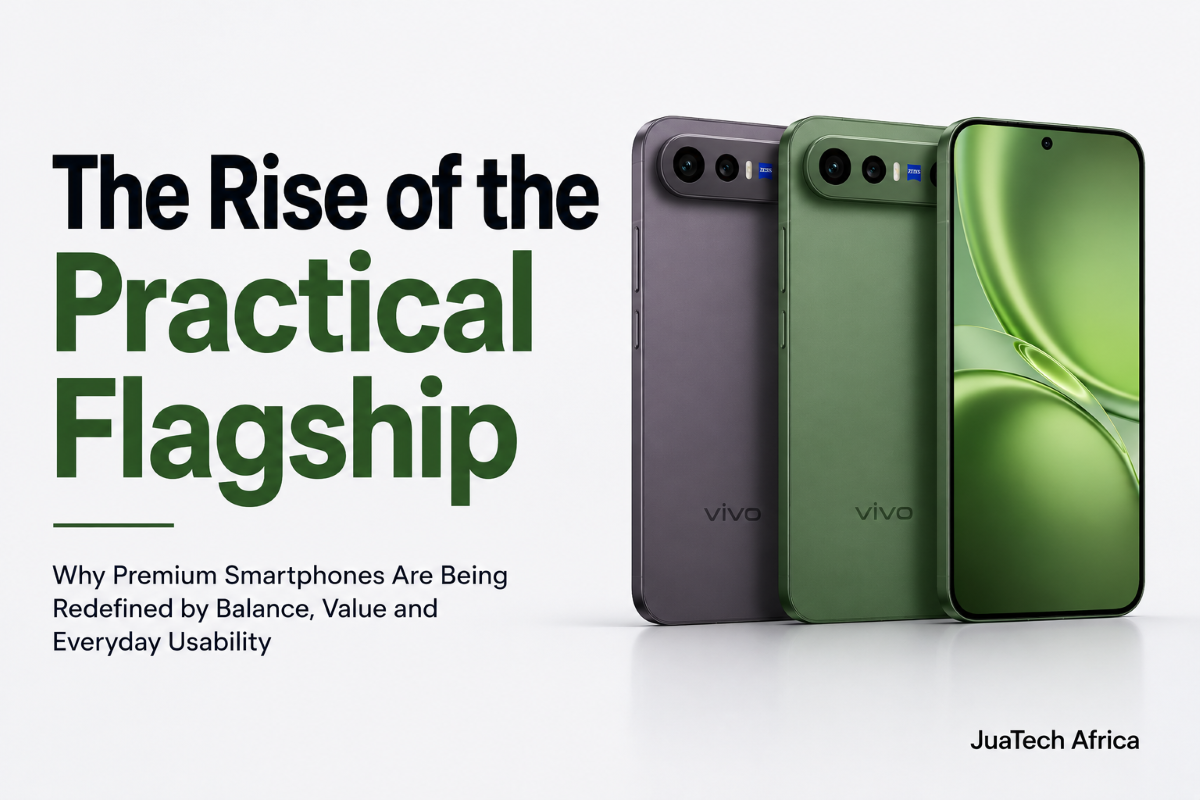
The X300 FE appears to be Vivo’s response to that realization. Rather than reinventing the concept, the company has refined it. The device combines flagship-grade performance, ZEISS-backed cameras, wireless charging, premium construction, and a substantial 6500mAh battery within a compact 6.31-inch form factor. More importantly, it suggests Vivo sees the FE formula not as a niche experiment, but as a product category with a future.
The X300 FE Is Not a Smaller X300 Ultra
One of the easiest ways to misunderstand the Vivo X300 FE is to view it as a reduced version of the Vivo X300 Ultra. While both devices belong to the same flagship family, they are designed to serve different purposes. Comparing them purely on specifications risks missing the strategic thinking behind their existence.
The X300 Ultra represents the outer edge of Vivo’s engineering ambition. It exists to showcase what the company can achieve when performance, imaging, and innovation are pushed to the limit. Like a high-performance sports car, it serves a purpose beyond practicality. It is designed to demonstrate capability, attract attention, and establish technological leadership.
The X300 FE approaches the market from a different direction. Rather than asking how much technology can be added, it asks which technology matters most. Vivo appears to have recognized that many consumers are not seeking the most extreme smartphone experience available. They want the core benefits of a flagship device without the compromises that often accompany larger, more expensive hardware.
That philosophy is reflected in what Vivo chose to preserve. The X300 FE retains flagship-level performance, ZEISS-backed imaging, wireless charging, premium construction, and a substantial 6500mAh battery. What it appears to reduce is not value, but excess. The X300 Ultra demonstrates what Vivo can engineer. The X300 FE demonstrates what Vivo believes many people actually need.
The Rise of the Practical Flagship
The Vivo X300 FE is not an isolated product. It is part of a broader shift reshaping the premium smartphone market. For much of the past decade, flagship devices were defined by escalation. Manufacturers competed to deliver larger displays, more powerful processors, additional camera hardware, and increasingly ambitious feature sets. Innovation was measured by addition, and the brands that added the most often generated the most attention.
Today’s market looks very different. Modern flagship smartphones have become so capable that many users rarely come close to utilizing their full potential. As a result, the difference between a good smartphone and a great smartphone is no longer determined solely by performance or benchmark scores. It is increasingly determined by how naturally the device fits into everyday life.
This shift has created what is best described as a practical flagship. These devices still offer premium performance, capable cameras, and advanced features, but they place equal emphasis on comfort, battery endurance, portability, reliability, and long-term usability. Rather than chasing technical extremes, they focus on delivering a more balanced ownership experience.
Viewed through that lens, the Vivo X300 FE feels less like a compromise and more like a response to where the market is heading. Many buyers are no longer searching for the most powerful smartphone available. They are searching for the most sensible premium smartphone they can buy.
The Features That Matter Long After Launch Day
Technology coverage often focuses on specifications because they are easy to compare. Ownership experiences are harder to measure, yet they often determine whether a smartphone remains enjoyable after months or even years of use. The Vivo X300 FE is interesting because many of its most meaningful strengths are designed around everyday practicality rather than headline-grabbing numbers.
Its compact 6.31-inch form factor is a good example. In a market increasingly dominated by large devices, the X300 FE prioritizes comfort and usability. A smartphone that is easier to carry, easier to operate with one hand, and more comfortable during extended use can have a surprisingly large impact on long-term satisfaction.
The same principle applies to the 6500mAh battery and Vivo’s continued partnership with ZEISS. The battery delivers the freedom to work, create, travel, and communicate without constantly worrying about power levels, while ZEISS-backed imaging reinforces Vivo’s focus on dependable camera performance rather than specification-driven marketing.
Taken together, these choices reveal the X300 FE’s true value proposition. Vivo appears less interested in maximizing specifications and more interested in reducing friction. In everyday life, that may be the more meaningful form of innovation.
Why This Matters for Kenya and Africa
The significance of the Vivo X300 FE becomes clearer when viewed through the realities of smartphone ownership across Kenya and much of Africa. In many markets, smartphones exist alongside laptops, tablets, and other connected devices. Across much of Africa, however, the smartphone often serves as the primary gateway to the digital economy. It is not simply another device. It is infrastructure.
For many people, a smartphone functions simultaneously as a communication platform, business tool, camera, banking device, navigation system, and access point to education and opportunity. The same device used to attend an online class may later be used to manage customer orders, create content, process mobile payments, and communicate with clients. As a result, smartphone value is often measured differently than it is in more mature consumer markets.
This context helps explain why the X300 FE feels particularly relevant. For a creator building an audience online or an entrepreneur running daily operations from a single device, reliability, battery endurance, camera consistency, and portability are not simply desirable features. They directly influence productivity and income.
Rather than optimizing for technical extremes that many users may rarely need, the Vivo X300 FE appears designed around the realities of everyday ownership. In a region where smartphones increasingly function as both personal and professional infrastructure, that may be one of the most valuable features of all.
The JuaTech Africa Verdict
The Vivo X300 FE may never generate the same headlines as the X300 Ultra, but that does not necessarily make it the less important smartphone. If anything, it may prove to be the more revealing one because it reflects a growing shift in how both manufacturers and consumers think about premium devices.
For years, the smartphone industry has treated progress as a process of addition. More cameras, more performance, more features, and more complexity became the default path forward. The X300 FE challenges that assumption. Rather than asking how much technology can be added to a smartphone, it asks which technologies genuinely improve everyday experiences and deserve to remain at the product’s center.
The Vivo X300 FE is not a rejection of flagship smartphones. It is a redefinition of what a flagship can be. In a market that has spent years pursuing excess, Vivo is making a compelling argument for balance. The more interesting question is whether the rest of the industry will eventually follow.
Continue the Conversation
The Vivo X300 FE raises a question that extends far beyond a single smartphone launch: are practical flagships becoming more relevant than Ultra smartphones?
As smartphone prices continue to rise and upgrade cycles grow longer, buyers are increasingly forced to choose between maximum capability and everyday usability. Which matters more to you?
Join the conversation in the JuaTech Africa Facebook Community, follow our WhatsApp Channel for daily technology insights, and subscribe to the JuaTech Africa Newsletter for deeper analysis, buying advice, exclusive reports, and strategic perspectives tailored for African consumers.