

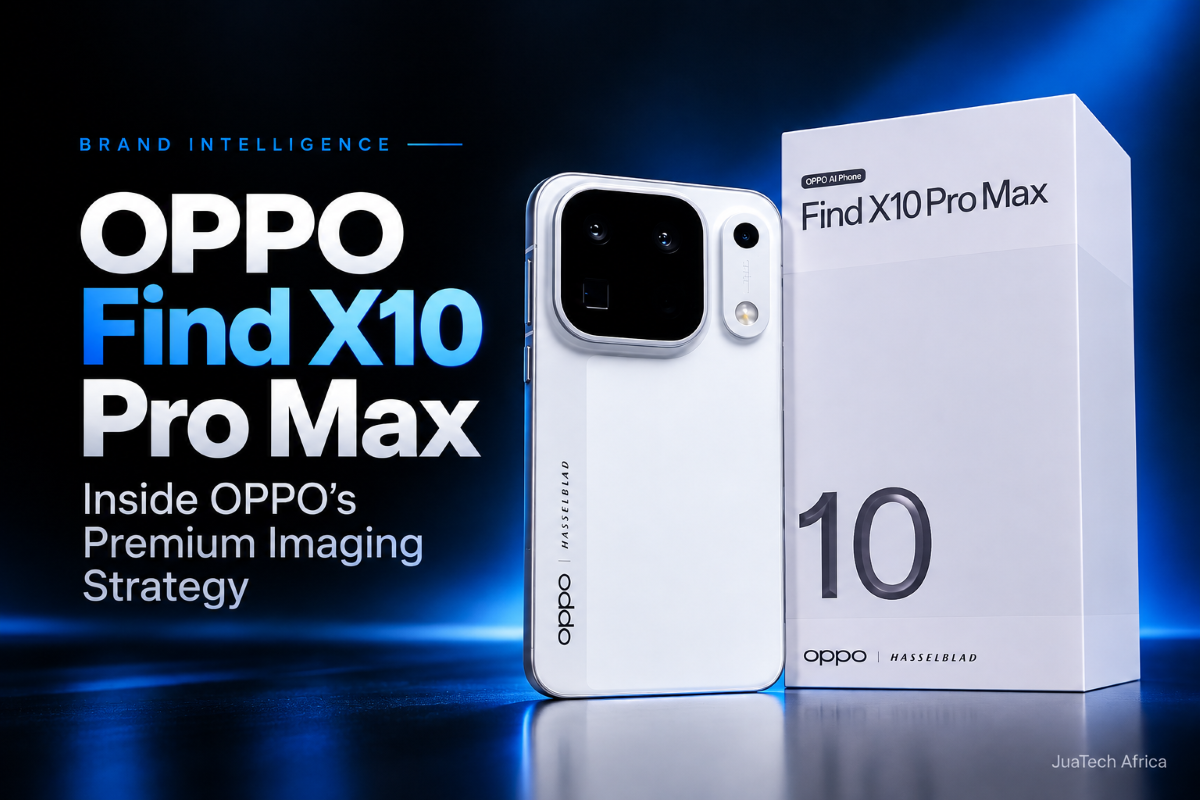
With a triple 200MP camera system and advanced video capabilities, OPPO is positioning the Find X10 Pro Max as a serious contender for creators and premium-phone buyers. But can its technology deliver practical advantages over rival flagships, justify the premium, and strengthen OPPO’s position in an increasingly competitive market? JuaTech Africa examines the device, the audience it targets, and the strategy behind OPPO’s premium ambitions.
A premium smartphone can boast extraordinary camera specifications and still fall short as a creative tool. What matters is whether it consistently captures good images, gives creators greater control over video production, and delivers dependable performance without compromising battery life or usability. That is the challenge OPPO faces with the Find X10 Pro Max. Its triple 200MP camera system and advanced video capabilities signal an ambitious attempt to differentiate the Find X series in an increasingly competitive flagship market. But can these features translate into a meaningful advantage over Apple, Samsung and other premium rivals? This JuaTech Africa analysis examines the technology, the target audience, and the commercial proposition behind OPPO’s latest flagship.

Who is the OPPO Find X10 Pro Max for?
The OPPO Find X10 Pro Max targets three audiences with different expectations. Mobile creators need dependable video quality, flexible framing, and production tools that reduce reliance on dedicated equipment. Photography and video enthusiasts want versatile focal lengths, detailed images, and consistent results across different lighting conditions. For both groups, impressive specifications matter only when they translate into better creative outcomes.
Their frustrations are familiar: inconsistent image processing, limited post-production flexibility, and compromises when switching between photography and video. OPPO’s imaging system and Open Gate Capture aim to address some of these demands, though real-world performance remains to be proven.
Premium professionals have different priorities. They need responsive performance, reliable battery life, dependable everyday operation, and software support that sustains the investment over several years. Exceptional cameras may be welcome, but they are not necessarily the reason to buy.
Ultimately, the Find X10 Pro Max must offer meaningful advantages over existing devices to justify its premium. Its value will depend on real-world performance, longevity, and price, not megapixels alone.
How OPPO Turns Flagship Technology into Everyday Value
The OPPO Find X10 Pro Max combines ambitious imaging hardware, advanced video tools, flagship processing and a large battery to address the demands of mobile creators and premium users. The question is whether these technologies translate into practical advantages.
Triple 200MP cameras: More than megapixels
Its triple 200MP rear-camera system, developed with Hasselblad collaboration and OPPO’s imaging technology, aims to deliver detail, colour fidelity and greater versatility across focal lengths. For photographers, this could mean more flexibility when cropping images, capturing distant subjects or switching perspectives. However, megapixel counts alone cannot establish image quality. Lens performance, sensor characteristics, image processing and low-light handling matter just as much. Consistency between cameras will be particularly important.
Advanced video: Greater freedom in production
Open Gate Capture uses the sensor’s full imaging area, allowing creators to reframe footage for vertical and horizontal formats during editing. Support for 4K recording at 120 frames per second and 8K at 30 frames per second across the rear cameras could expand options for slow-motion sequences and high-resolution production. Stabilization, autofocus, recording limits, heat and file sizes still require independent testing.
Dimensity 9600 Pro: Power for demanding workloads
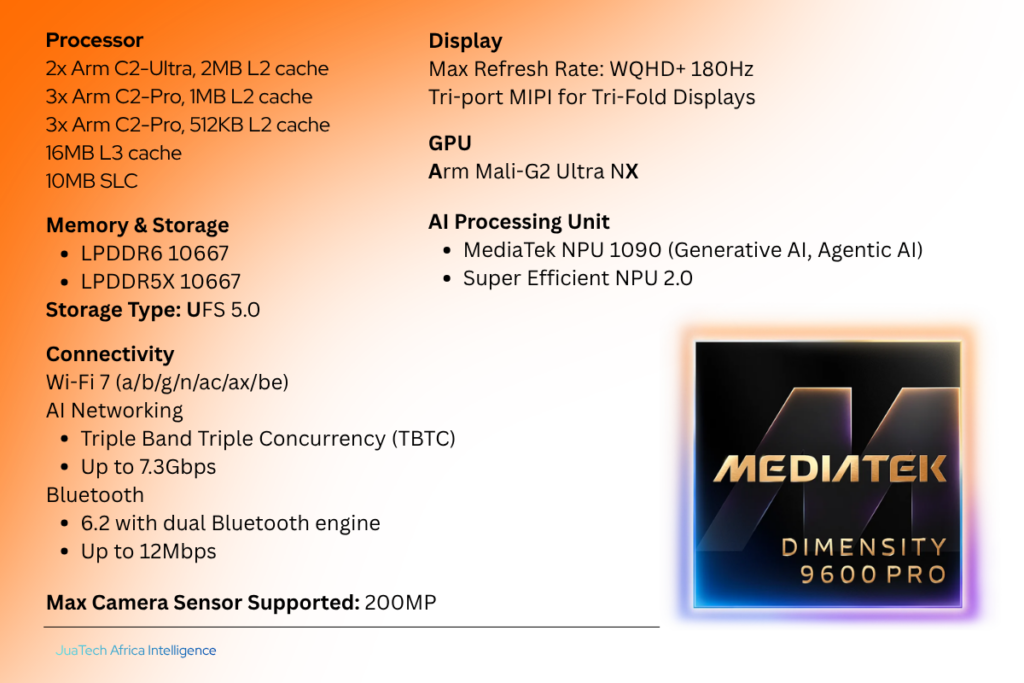
The MediaTek Dimensity 9600 Pro, built on a 2nm process, is designed to support demanding applications, computational photography and on-device AI. OPPO and MediaTek report gains in processing performance and energy efficiency, but these remain manufacturer claims until independently tested. For users, sustained performance matters more than benchmark peaks, particularly during intensive editing, multitasking and extended recording.
8,000mAh battery: Endurance for longer days
The announced 8,000mAh silicon-carbon battery could help creators record, edit and work while traveling with fewer charging interruptions. OPPO has also indicated that capacity may vary by market, so verify regional specifications. Actual endurance will depend on screen brightness, camera use, connectivity and workload.
The value proposition is integration: cameras, video tools, processing, and battery capacity working together in one device. Whether the Find X10 Pro Max delivers that advantage will depend on real-world testing, not specifications alone.
OPPO Find X10 vs Find X10 Pro Max: What is the difference?
The OPPO Find X10 and Find X10 Pro Max share a focus on high-resolution imaging and battery endurance, but target different levels of flagship capability. The standard Find X10 offers a dual 200MP camera system, while the Pro Max adds a third 200MP rear camera and a more powerful Dimensity 9600 Pro chipset. For buyers, the distinction is camera versatility and processing headroom, not simply the number in the model name.
OPPO Find X10 vs Find X10 Pro Max: Key specifications
| Feature | OPPO Find X10 | OPPO Find X10 Pro Max |
| Rear camera system | Dual 200MP | Triple 200MP |
| Chipset | MediaTek Dimensity 9600M | MediaTek Dimensity 9600 Pro, 2nm |
| Battery | 8,000mAh silicon-carbon | 8,000mAh silicon-carbon |
| Display | 6.59 inches | 6.78 inches |
| Best suited to | Users seeking versatile flagship photography | Creators seeking maximum camera versatility and processing capability |
Which model makes more sense?
The Find X10 may suit buyers who want high-resolution photography without needing the Pro Max’s full camera system. The Pro Max is more compelling for creators who can use its additional camera and processing capabilities. Whether that advantage justifies a higher price depends on final local pricing and individual needs.
The evolution of OPPO’s Find X philosophy
OPPO’s Find X series has built its premium identity around design, imaging and flagship performance. The Find X9 Pro embodied this approach with a 200MP Hasselblad telephoto camera, a MediaTek Dimensity 9500 chipset and a 7,500mAh silicon-carbon battery. Its proposition extended beyond photography, combining versatile imaging, processing power, and battery endurance in a premium device.
The Find X10 Pro Max advances this formula with a triple 200MP rear-camera system, expanded video capabilities, and a larger announced battery. The differences illustrate how OPPO’s flagship strategy is evolving.
OPPO Find X9 Pro vs Find X10 Pro Max: What has changed?
| Feature | OPPO Find X9 Pro | OPPO Find X10 Pro Max |
| Main camera | 50MP | 200MP |
| Ultra-wide camera | 50MP | 200MP |
| Telephoto camera | 200MP Hasselblad | 200MP |
| Video capabilities | Flagship video recording | 4K at 120fps and 8K at 30fps across all three rear cameras, according to OPPO |
| Capture workflow | Advanced photography and video tools | Open Gate Capture for flexible reframing |
| Chipset | MediaTek Dimensity 9500 (2nm) | MediaTek Dimensity 9600 Pro, built on a 2nm process |
| Battery capacity | 7,500mAh | 8,000mAh announced capacity |
The biggest shift is expanding high-resolution imaging across all three rear cameras. For creators, this could offer greater flexibility when changing perspectives without sacrificing the intended resolution and detail. Open Gate Capture adds another dimension by letting creators reframe footage for different aspect ratios in editing. Together, these features suggest a stronger emphasis on mobile video production, though their practical advantages will depend on image quality, stabilization, autofocus, and real-world recording performance.
The battery increase from 7,500mAh to 8,000mAh also reinforces endurance as a priority, while the newer chipset represents a generational change in processing technology. Neither specification alone guarantees longer battery life or faster sustained performance.
For OPPO, the strategic opportunity is to associate its premium brand with imaging versatility, creative flexibility, and dependable performance. But differentiation depends on more than impressive specifications. Customers must see consistent results, value the added capabilities, and consider them worth the price. The Find X10 Pro Max signals an ambitious evolution of the Find X proposition; whether it strengthens OPPO’s position in the premium market will depend on execution, pricing, and performance against competing flagships.
How OPPO competes in the 2026 premium market
The OPPO Find X10 Pro Max enters a premium market where camera resolution alone won’t win. Apple’s iPhone 18 Pro Max competes through video workflows, image consistency, and ecosystem integration, while Samsung’s Galaxy S26 Ultra combines a versatile camera system with a premium display, productivity features, and connected-device services. Both brands make the overall experience central to their premium proposition.
Xiaomi’s 18 Pro Max targets imaging enthusiasts with its premium photography positioning, while the vivo X500 Pro Max directly competes with buyers who prioritize advanced camera hardware, telephoto photography, and flagship performance. Their appeal rests on the practical results of their imaging systems, not just the numbers on a spec sheet.
HONOR’s Magic9 Pro Max takes a distinctive creative approach, pairing dual 200MP cameras with ARRI imaging technology and cinema-oriented video features. Motorola’s Signature 27 offers another compelling combination: a Snapdragon 8 Elite Extreme Gen 6 platform, a 50MP Sony LYTIA 910 main camera and a 200MP periscope telephoto camera. Its LOFIC imaging technology is designed to expand dynamic range, while a redesigned vapor chamber and diamond-infused thermal material target sustained performance. Motorola also promises seven years of operating-system and security updates, strengthening its long-term ownership proposition.
OPPO’s potential advantage is integrating three 200MP rear cameras, Open Gate Capture, and 4K 120fps and 8K 30fps recording across all three cameras, powered by the Dimensity 9600 Pro. This gives creators a potentially flexible capture system, but real-world use must demonstrate the benefits.
Find X10 Pro Max: Merits and limitations
Merits: A consistent high-resolution camera system, advanced video formats, flexible reframing and a large announced battery could make OPPO attractive to creators who want one device for photography and video production.
Limitations: Three 200MP cameras do not guarantee better image quality. Low-light performance, autofocus, stabilization, thermal management, and sustained recording remain critical tests. Pricing, regional specifications, software support and Kenyan availability will determine its value.
JuaTech Africa’s verdict
The OPPO Find X10 Pro Max enters a fiercely contested premium market. vivo challenges it with specialist imaging and advanced telephoto capabilities; Motorola combines high-end camera hardware with flagship processing and long-term software support; HONOR pursues a cinema-oriented creative workflow. Apple and Samsung compete through the wider strength of their flagship ecosystems, while Xiaomi targets photography enthusiasts with its premium imaging proposition.
OPPO’s opportunity lies in making three 200MP cameras and Open Gate Capture work together as a practical creative advantage. But specifications alone cannot establish leadership. Camera consistency, video reliability, sustained performance, software support, and pricing will determine whether the Find X10 Pro Max is genuinely worth choosing over its rivals.
The real competition is not about who has the biggest numbers, but who turns technology into the most useful creative experience.
OPPO’s ambitions and the future of premium smartphones
The Find X10 series signals OPPO’s ambition to compete through an integrated premium experience: computational photography, AI-assisted workflows, silicon-carbon batteries and increasingly powerful imaging hardware. The broader philosophy also extends to foldables, where the Find N series explores whether larger screens can boost productivity without sacrificing portability.
The rumored OPPO Find N7 could be its next significant move. The Find N6 is a solid foldable device, standing apart from its peers in performance, design, and aesthetics. For the Oppo Find N7, Reports point to a wider book-style foldable, a redesigned hinge, and an ambitious camera system, potentially arriving in 2027. These remain unconfirmed specifications, not an official product roadmap.
The strategic challenge is turning R&D into lasting market advantage. More advanced hardware can attract attention, but software quality, update commitments, service networks, distribution, and resale confidence sustain premium ownership. As component costs rise and replacement cycles lengthen, OPPO must prove that its innovations deliver meaningful benefits worth paying for.
JuaTech Africa verdict: Who should consider it?
The OPPO Find X10 Pro Max is designed for buyers who demand more from smartphone imaging, particularly creators who need multiple perspectives and flexible video production in one device. Pro Creators should shortlist it for its triple 200MP cameras and Open Gate Capture, subject to independent verification of video quality, stabilization and sustained performance. Photography enthusiasts should prioritize image consistency, low-light results and telephoto performance over resolution alone.
General premium buyers should compare its battery performance, software support, durability, and total cost of ownership against competing flagships. The standard Find X10 is the more rational choice for those who don’t need the Pro Max’s extra camera versatility. Current OPPO users have a stronger case to upgrade if the new imaging and video capabilities address limitations in their current devices.
Kenyan pricing, availability, warranty terms and after-sales support remain to be confirmed. Some retailers like Phoneplace Kenya already have Oppo Find X10 Pro Max and the other models shipped in for early shoppers and trendsetters.
Our verdict: OPPO has built a compelling technical proposition around creative flexibility. Its success as a premium purchase will depend on whether real-world performance justifies the price against established rivals. Until independent testing confirms that advantage, the Find X10 Pro Max merits serious evaluation, not an automatic recommendation.
Continue with JuaTech Africa
Explore the technology shaping the next generation of premium smartphones. Discover what the MediaTek Dimensity 9600 Pro’s 2nm architecture means for flagship performance, examine the vivo X500 Pro Max’s capabilities for content creators, and see how the iPhone 18 Pro Max competes in the premium smartphone race.
- Dimensity 9600 Pro: Understanding the 2nm flagship chip
- vivo X500 Pro Max: A smartphone built for content creators?
- iPhone 18 Pro Max: Apple’s position in the premium smartphone race
Stay ahead of the market. Subscribe to the JuaTech Africa newsletter for smartphone intelligence, product analysis, and insights shaping Africa’s mobile industry. Prefer WhatsApp? Opt in to receive useful updates directly, with your consent.