

JuaTech Africa
TRENDING
No Result
View All Result
  • Explore
    • Buying Guides
      • Smartphones
      • Tablets & Productivity
      • Wearables
      • Audio
      • Accessories
    • Creator Hub
      • Creator Phones
      • Creator Audio
      • Creatives Growth Strategy
      • Creator Business
    • About Us
      • Founder’s Letter: The Vision Behind JuaTech Africa
      • Mission & Vision | JuaTech Africa
      • Editorial Policy
      • Advisory
      • Work with Us
      • Contact Us
  • Intelligence
    • JuaTech Africa Intelligence
    • Brand Intelligence
    • Market Intelligence
    • Mobile Imaging Intelligence
    • Industry Intelligence
    • Market Signals
    • Analytica
    • Artificial Intelligence
    • Digital Assets Intelligence
  • Reviews
    • Smartphones
    • Tablets
    • Audio
    • Wearables
    • Accessories
  • Tech Decoded
    • Core Technology
    • Device Hardware
    • Software & Platforms
    • Connectivity & Networks
    • AI & Emerging Technology
    • Buying, Safety & Integrity
    • Tech Guides & How-To
    • Product Strategy & Value Analysis
  • Ecosystems
    • Mobile Ecosystems
    • African Tech Ecosystem
    • Company Ecosystems
    • Platform Ecosystems
SUBSCRIBE
  • Explore
    • Buying Guides
      • Smartphones
      • Tablets & Productivity
      • Wearables
      • Audio
      • Accessories
    • Creator Hub
      • Creator Phones
      • Creator Audio
      • Creatives Growth Strategy
      • Creator Business
    • About Us
      • Founder’s Letter: The Vision Behind JuaTech Africa
      • Mission & Vision | JuaTech Africa
      • Editorial Policy
      • Advisory
      • Work with Us
      • Contact Us
  • Intelligence
    • JuaTech Africa Intelligence
    • Brand Intelligence
    • Market Intelligence
    • Mobile Imaging Intelligence
    • Industry Intelligence
    • Market Signals
    • Analytica
    • Artificial Intelligence
    • Digital Assets Intelligence
  • Reviews
    • Smartphones
    • Tablets
    • Audio
    • Wearables
    • Accessories
  • Tech Decoded
    • Core Technology
    • Device Hardware
    • Software & Platforms
    • Connectivity & Networks
    • AI & Emerging Technology
    • Buying, Safety & Integrity
    • Tech Guides & How-To
    • Product Strategy & Value Analysis
  • Ecosystems
    • Mobile Ecosystems
    • African Tech Ecosystem
    • Company Ecosystems
    • Platform Ecosystems
No Result
View All Result
JuaTech Africa
No Result
View All Result
Home Intelligence Brand Intelligence

Nothing Brand Africa: Can the Nothing Brand Build a Movement?

A strategic examination of whether movement-driven tech brands can scale in African markets

Lewis Wafula by Lewis Wafula
February 23, 2026
in Brand Intelligence
Reading Time: 7 mins read
0
Nothing Brand, Africa Chapter
0
SHARES
45
VIEWS
Share on FacebookShare on Twitter

Africa accepts new technology. It rejects uncertainty.

Across the continent, consumers have never adopted technology solely on the basis of novelty or narrative. Visibility, repairability, and distribution density shape adoption – along with the quiet confidence that a brand will remain present years after the launch noise fades. In African markets, design and community do not imply trust; consistency, proximity, and proof earn it.

Strategic Marketing by Alpha Brands Consulting

For the Nothing Brand, Africa represents more than a growth opportunity. It is a structural test. Globally, Nothing has positioned itself as a movement-driven technology ecosystem, design-led, community-first, and deliberately opposed to the conventions of consumer electronics. That philosophy has found resonance in mature markets where logistics are predictable, and service systems absorb risk invisibly.

Africa operates on different rules.

This editorial examines Nothing Brand Africa through the lens of market structure rather than product appeal, asking a more complex question: whether a movement-driven tech brand can build lasting relevance in environments where belief follows execution, community follows continuity, and long-term presence matters more than early excitement.

Understanding whether the Nothing Brand can build a movement in Africa requires stepping beyond products – and into market structure.

Read on:

  • Part 1: Style Meets Strategy: Can the Nothing Brand Thrive in Kenya’s Tech Market Realities?
  • Part 2: The Nothing Brand in Kenya | What It Must Understand To Win
  • Part 3: Beyond the Hype: The Nothing Brand’s Strategic Gamble in Kenya and Africa’s Tech Market

Jump Ahead

Toggle
  • Africa’s Tech Markets Are Rational, Not Romantic
  • The Global Thesis of the Nothing Brand-and Its Friction with Africa
  • Xiaomi as the Counterfactual Africa Keeps Teaching Us
  • The CMF Entry Point and the Limits of Product Logic
  • Why Community Does Not Substitute for Infrastructure
  • Can a Technology Movement Be Built in Africa?
  • What the Nothing Brand Would Need to Change
  • A Verdict That Demands Attention

Africa’s Tech Markets Are Rational, Not Romantic

African technology markets are often misunderstood as emotional, price-sensitive, or unsophisticated. In reality, they are among the most rational in the world.

Consumers here do not buy devices casually. Smartphones are long-term assets, often used for three to four years, sometimes longer. A purchase decision is therefore inseparable from questions of durability, repair access, resale value, and continuity of supply. In this context, branding does not operate as a promise of identity—it serves as a signal of reliability.

This is why distribution density, after-sales support, and physical visibility matter more than launch narratives. A brand that is seen repeatedly, serviced locally, and understood by technicians acquires trust even before affection. Africa rewards brands that feel present, not merely popular.

Any attempt to build a technology movement on the continent without first aligning to this logic risks mistaking attention for adoption.

The Global Thesis of the Nothing Brand-and Its Friction with Africa

The Nothing Brand was conceived as an ecosystem, not merely a smartphone manufacturer. Its ambition extends beyond devices into a philosophy of interaction – transparent design, minimalism, community participation, and emotional resonance. This ecosystem narrative is central to its appeal, particularly among digitally native, design-aware audiences.
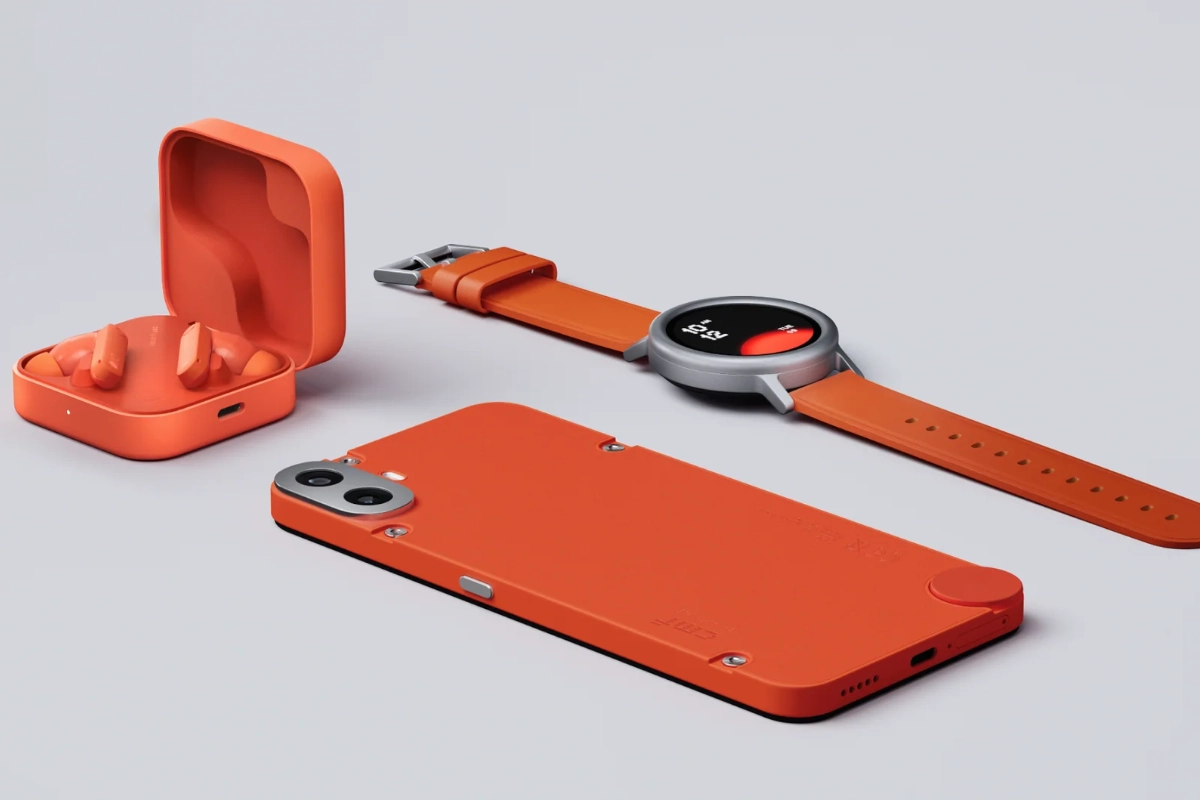
The Nothing Brand Ecosystem
Does the Nothing Brand Minimalist Ecosystem Sync with the African Audience?

Earlier in this series, we positioned the Nothing Brand as an idea worth interrogating, then examined it through the Kenyan market lens, and finally subjected it to a strategic audit that exposed execution gaps in visibility, trust signalling, and market grounding.

Taken together, those analyses point to a more profound insight: the Nothing Brand’s global thesis assumes conditions that Africa does not consistently provide.

Movement-driven branding presumes that community can substitute for distribution, that design can substitute for longevity, and that narrative can substitute for infrastructure. In African markets, these substitutions do not hold. Here, infrastructure precedes emotion, not the other way around.

This does not invalidate the Nothing Brand’s philosophy. It simply exposes its fragility when transposed without structural adaptation.

Xiaomi as the Counterfactual Africa Keeps Teaching Us

To understand what Africa rewards, it is instructive to examine what has already worked.

Xiaomi’s rise across Kenya and multiple African markets did not occur because of emotional storytelling or cult-like brand identity. It happened because Xiaomi embedded itself into the everyday mechanics of consumption. Over the past decade, the brand has consistently ranked among the top smartphone vendors in Africa by volume, particularly in the sub-$300 segment, according to firms such as IDC and Canalys.

Xiaomi built trust the slow way – through dense retail presence, aggressive price-value positioning, predictable product ladders, and broad service accessibility. Consumers learned where to buy Xiaomi devices, how to repair them, and what to expect from the brand over time. Familiarity compounded into confidence.

This is not an endorsement of Xiaomi’s aesthetics or philosophy. It is recognition of structural competence.

The contrast with the Nothing Brand is instructive. Where Xiaomi prioritised distribution before differentiation, Nothing prioritises differentiation before distribution. Where Xiaomi allowed trust to emerge quietly, Nothing invites belief from the start.

Historically, Africa has sided with the former.

The CMF Entry Point and the Limits of Product Logic

Strategically, CMF by Nothing appears to be the brand’s most credible bridge into African markets. It aligns with mass-market pricing realities, delivers competitive specifications, and maintains a distinctive industrial design without drifting into exclusion.

Yet CMF exposes a paradox that African markets have revealed repeatedly: the right product is not enough if the ecosystem behind it is unclear.

In markets dominated by Xiaomi, Tecno, Infinix, and Samsung, success rarely comes from being the most interesting device. It comes from being the most dependable choice. Consumers commit to product ladders, not isolated launches. They grow within brands they trust will remain present when the next upgrade—or repair—is required.

Without a visible ladder behind it, CMF risks appearing less like a gateway and more like an experiment. African consumers do not reject experiments – but they rarely finance them.

Why Community Does Not Substitute for Infrastructure

The Nothing Brand’s community-first ethos is one of its most celebrated global assets. Online forums, social engagement, and participatory branding have created a sense of belonging that traditional manufacturers struggle to replicate.

In Africa, however, community enthusiasm does not resolve offline risk.

Digital communities do not guarantee the availability of spare parts. Influencer advocacy does not ensure service coverage. Visibility on social platforms does not translate into confidence at the point of sale. African consumers observe brands in motion – how they respond to faults, how they sustain presence, how they behave after the launch cycle ends.

This is why many globally admired brands stall on the continent. They arrive loudly, communicate creatively, and then recede quietly. Africa has learned to watch for this pattern.

The Nothing Brand is not immune to that scrutiny.

Can a Technology Movement Be Built in Africa?

This is the deeper question this editorial confronts, which extends beyond the Nothing Brand. It speaks to the viability of movement-driven technology brands within African market structures – markets that reward continuity over novelty and execution over expression.

The answer is nuanced, but consistent.

Movements can exist in Africa, but they do not lead. They follow structure. Identity emerges after reliability. Loyalty follows consistency. Emotional attachment becomes the reward for endurance, not the entry requirement.

African technology history reinforces this pattern. Over the past decade, brands such as Xiaomi, Tecno, Infinix, and Samsung have not dominated African smartphone markets by cultivating cult identity or community-first narratives. They have won by embedding themselves operationally. Collectively, these brands have accounted for the majority of smartphone shipments across Africa for years, particularly in the sub-$300 segment that defines mass adoption. Their advantage has not been spectacle, but presence—dense retail networks, predictable product ladders, accessible repair ecosystems, and long-term market commitment.

Crucially, African consumers did not adopt these brands because they felt inspired. They adopted them because they felt safe. Over time, familiarity compounded into trust, and trust matured into loyalty. What followed looked like a movement – but only after structure had done its work.

For the Nothing Brand, this distinction is critical. Success in Africa will not be determined by how passionately the brand is discussed online, nor by how distinctive its design language appears at launch. It will be determined by how convincingly Nothing embeds itself offline – through visibility, service confidence, and sustained presence that reassures consumers it is not passing through, but settling in.

What the Nothing Brand Would Need to Change

If Nothing intends to build a genuine movement in Africa, it must invert certain instincts.

To succeed, the brand must treat physical presence as a strategic asset rather than a logistical afterthought. It must prioritise repair confidence and service visibility as core brand signals, and demonstrate long-term commitment not through messaging, but through consistency.

Most importantly, it would need to accept that Africa does not reward belief alone. It rewards patience, repetition, and proof.

This is not a limitation. It is an opportunity to build something more durable than hype.

A Verdict That Demands Attention

Africa is not waiting for the next cult brand. It is consolidating around brands that reduce uncertainty.

The Nothing Brand can still build a movement on the continent—but only if it understands that movements here are not declared. They are earned through presence, continuity, and care. Design attracts attention. Community sparks conversation. But only structure sustains belief.

Tecno, Infinix, Itel, Samsung, and Xiaomi are brands that confirm this. It has worked out for them because they structured and strategized from the outset.

For technology brands serious about Africa, the lesson is clear: before you ask consumers to believe in your vision, show them you will stay.

That is the movement Africa responds to.

This editorial concludes the Nothing Series. What follows – both for the Nothing Brand and for Africa’s technology markets – will be shaped less by narrative ambition and more by execution discipline.


Tags: Africa Smartphone MarketNothing AfricaNothing brandNothing KenyaNothing Phone strategysmartphone brand strategysmartphone competition Africatechnology brand expansion
ShareTweet
Strategic marketing and positioning by Alpha Brands Consulting Strategic marketing and positioning by Alpha Brands Consulting Strategic marketing and positioning by Alpha Brands Consulting
Previous Post

Kenya’s Mobile Economy in 2025: The Numbers, the Winners, and What the Data Signals Next

Next Post

The iPhone 17 Series Strategy: Why Apple Designs for Power, Not Preference

Lewis Wafula

Lewis Wafula

Tech Analyst | Reviewer | Founder of JuaTech Africa Tech analyst and founder of JuaTech Africa, delivering practical smartphone reviews, mobile tech insights, and digital solutions for professionals and businesses in Africa. Explore the latest insights on JuaTech Africa or get in touch for collaboration and consulting. Connect with Lewis.

Related Posts

Sony continues to shape global technology through imaging sensors, gaming platforms, and professional creator tools.
Brand Intelligence

Sony’s Quiet Dominance: How One Company Still Shapes the Global Tech Industry

June 14, 2026
Education Technology Kenya classroom
Brand Intelligence

Education Tablets and the Digital Learning Transition in Kenya: The ElimuTab Perspective

February 22, 2026
HONOR smartphones and ecosystem in Kenya and Africa
Brand Intelligence

Is There Honor in the HONOR?

February 24, 2026
Safaricom’s Product Playbook
Brand Intelligence

Safaricom’s Product Playbook: Strategy, Ecosystem Expansion, and Market Control

February 24, 2026
The Nothing Brand in Kenya Strategy
Brand Intelligence

Examining how Nothing is positioning itself in Kenya’s competitive smartphone market and what its strategy reveals about its global brand ambitions

February 24, 2026
Nothing Brand in Kenya
Brand Intelligence

Nothing in Kenya: What the Brand Must Understand to Compete and Win

February 24, 2026
Next Post
Apple's iPhone 17 Series Strategy

The iPhone 17 Series Strategy: Why Apple Designs for Power, Not Preference

Leave a Reply Cancel reply

Your email address will not be published. Required fields are marked *

About the Founder

Lewis Wafula, Founder of JuaTech Africa

Lewis Wafula

Founder, JuaTech Africa

Helping Africans make smarter technology decisions through trusted reviews, buying guides, creator technology insights, and market intelligence.

Connect on LinkedIn

JuaTech Africa Intelligence

Independent research and market intelligence exploring the trends, technologies, and market forces shaping Africa's digital future.

📊 Flagship Research
  • 2025 Brand Performance Report
  • Q1 2026 Market Report
🧠 Research Areas
  • Analytica
  • Market Intelligence
  • AI Intelligence
Explore Intelligence

Join the JuaTech Intelligence Circle

Signal over noise. Get trusted reviews, market intelligence, buying guidance, and emerging technology insights shaping Africa's digital future.

Get Free Access

Essential Buyer Guides

Ultimate Smartphone Buying Guide Kenya 2025

The Ultimate Smartphone Buying Guide for Kenya (2026): How to Choose the Right Phone with Confidence

June 9, 2026
Best phones under KES 30,000 in Kenya 2026 including Samsung Galaxy A26, POCO M6 Pro, Tecno Camon 50, Infinix Note 40 and Oppo A60

Best Phones Under KES 30,000 in Kenya (2026): Smart Picks That Deliver Real Value

June 22, 2026
Best phones under 60000 Kenya 2026 including Samsung Galaxy A57, OnePlus Nord 6, Google Pixel 10a and Nothing Phone 4a comparison

Best Phone Under KES 60,000 (2026): 7 Phones That Actually Deliver Value Before You Spend Your Money

June 23, 2026
Battery Kings for power outages in Africa – editorial smartphone battery guide

Battery Kings: Best Smartphones for Power Outages, Value, and Daily Life in Africa

May 25, 2026
Best premium midrange smartphones in Kenya 2026 comparison featuring Samsung Galaxy A57, Vivo V70, Xiaomi Note 15 Pro Plus, Oppo Reno15 Pro and Nothing Phone 4a Pro

Best Premium Midrange Smartphones in Kenya (2026): Samsung, Redmi, HONOR, Pixel and More

May 25, 2026
Samsung Galaxy Z Fold8, Galaxy Z Fold8 Ultra and the Samsung Galaxy Z Fold8 Series showcased in JuaTech Africa's in-depth product review.

Samsung Galaxy Z Fold8 Review: Is This the Most Complete Foldable Smartphone Yet?

July 28, 2026

Tech Decoded

Beyond specifications and marketing claims. Deep analysis of the technologies, strategies, and emerging trends shaping how we build, buy, and use technology.

⚙️ Technology Explained

Breaking down complex technologies, specifications, and concepts into practical understanding.

💡 Product Strategy & Value Analysis

Understanding why products exist, how they are positioned, and the value they deliver.

🤖 AI & Emerging Technology

Exploring the technologies reshaping devices, industries, and digital experiences.

Explore Tech Decoded

Editor's Pick

Smartphone processors 2026 comparison showing Snapdragon, MediaTek Dimensity 9500 and Apple A19 Pro chips with flagship phones

Best Smartphone Processor 2026: Snapdragon vs Dimensity vs Apple What Actually Matters

April 24, 2026
MediaTek Dimensity 9500

Dimensity 9500 Unleashed: MediaTek’s 3nm Powerhouse Redefines Flagship Performance in 2025

June 19, 2026
HONOR smartphone naming explained showing X Series, Number Series and Magic Series lineup hierarchy for Kenyan buyers

HONOR Smartphone Naming Explained (2026 Kenya Master Guide)

Infinix Note Edge vs Samsung Galaxy A36 5G

Infinix Note Edge vs Samsung Galaxy A36 5G: Which Makes More Sense for Daily Use?

February 22, 2026

Work With JuaTech Africa

Reach technology consumers, creators, and decision-makers through trusted reviews, market intelligence, sponsored campaigns, and strategic partnerships.

Explore Opportunities

Helping You Choose Right

Insight | Clarity | Better Tech Decisions

  • JuaTech Africa Intelligence
  • Tech Reviews
  • Ecosystems Intelligence Hub
  • About Us

Connect With Us

  • About Us
  • Editorial Policy
  • Disclaimer
  • Our Services
  • Advertise
  • Newsletter
  • Contact Us
  • Media Kit

© 2026 JuaTech Africa. All rights reserved. Built for tech intelligence in Africa.

No Result
View All Result
  • Explore
    • Buying Guides
      • Smartphones
      • Tablets & Productivity
      • Wearables
      • Audio
      • Accessories
    • Creator Hub
      • Creator Phones
      • Creator Audio
      • Creatives Growth Strategy
      • Creator Business
    • About Us
      • Founder’s Letter: The Vision Behind JuaTech Africa
      • Mission & Vision | JuaTech Africa
      • Editorial Policy
      • Advisory
      • Work with Us
      • Contact Us
  • Intelligence
    • JuaTech Africa Intelligence
    • Brand Intelligence
    • Market Intelligence
    • Mobile Imaging Intelligence
    • Industry Intelligence
    • Market Signals
    • Analytica
    • Artificial Intelligence
    • Digital Assets Intelligence
  • Reviews
    • Smartphones
    • Tablets
    • Audio
    • Wearables
    • Accessories
  • Tech Decoded
    • Core Technology
    • Device Hardware
    • Software & Platforms
    • Connectivity & Networks
    • AI & Emerging Technology
    • Buying, Safety & Integrity
    • Tech Guides & How-To
    • Product Strategy & Value Analysis
  • Ecosystems
    • Mobile Ecosystems
    • African Tech Ecosystem
    • Company Ecosystems
    • Platform Ecosystems

© 2026 JuaTech Africa. All rights reserved. Built for tech intelligence in Africa.

JuaTech Africa

Typically replies within minutes

Any questions related to Nothing Brand Africa: Can the Nothing Brand Build a Movement??

WhatsApp Us

Online | Privacy policy

WhatsApp us