

With 200MP ZEISS telephoto imaging, 4K 240fps video and professional Log recording, vivo’s flagship pushes mobile production further. We examine what its imaging system offers filmmakers, vloggers and independent creators, and where it stands against rival creator phones.
For professional content creators, the value of a smartphone camera is measured by more than megapixels. The real test is whether it can capture a moving subject reliably, preserve detail in difficult lighting, deliver footage that withstands color grading, and remain practical throughout a production day. These requirements shape the way filmmakers, vloggers, mobile journalists and commercial creators choose their equipment.

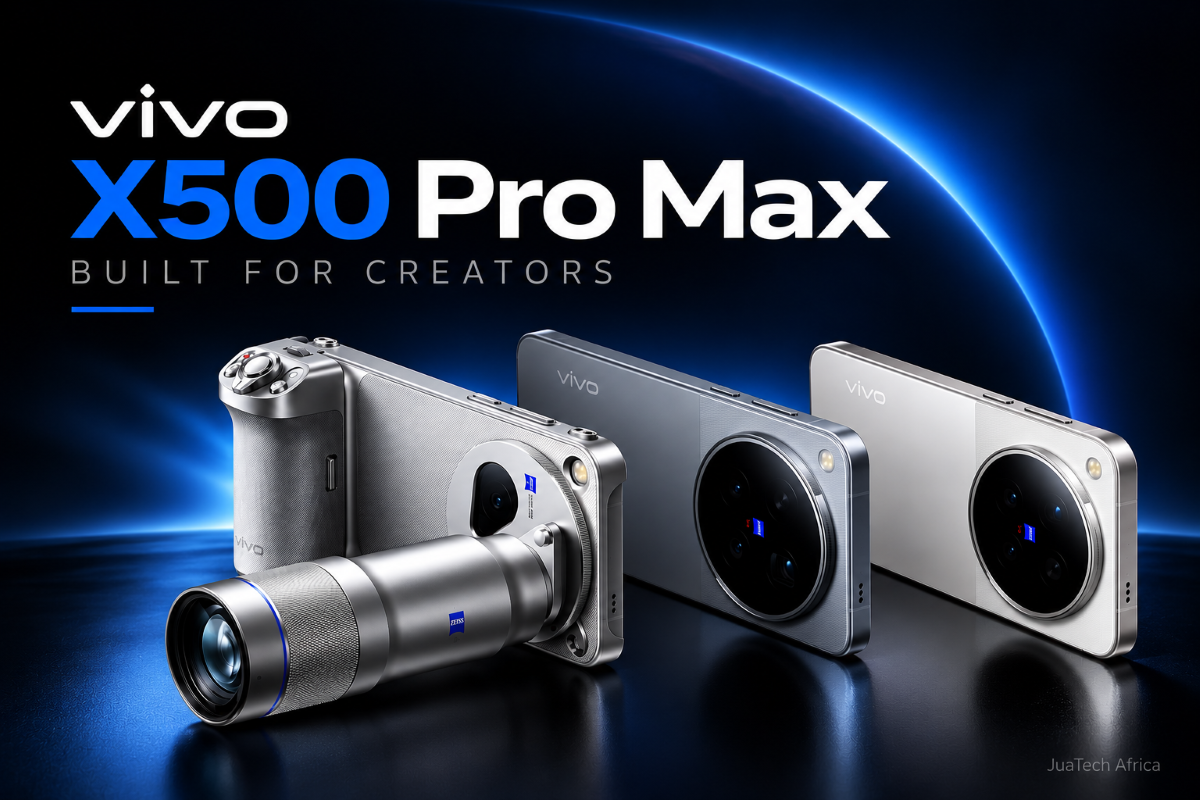
The vivo X500 Pro Max addresses this demand through a combination of advanced imaging hardware and video-production features. Announced in September 2026, it introduces a 200MP ZEISS APO telephoto camera, CIPA 7.0-rated stabilization, 4K 240fps recording, and support for an optional 400mm-equivalent telephoto extender. Rather than treating photography and video as separate selling points, vivo is developing a more integrated mobile imaging platform.
Telephoto imaging: reach without changing the production position
The 200MP ZEISS APO telephoto camera uses an 85mm-equivalent focal length and a 1/1.4-inch sensor. Its optical reach gives creators a useful alternative to the wide-angle perspective common in smartphone footage, allowing tighter framing, portrait photography, and greater separation between a subject and its background. For a vlogger filming a live performance, this means being able to isolate a performer from the audience without moving closer to the stage. A mobile journalist could frame a distant subject, while a product filmmaker could capture close details and compressed backgrounds for a more deliberate visual sequence. The benefit is not simply magnification; it is access to different visual perspectives without carrying multiple camera bodies and lenses.
The optional ZEISS Telephoto Extender Gen 2 Ultra extends the system to a claimed 400mm equivalent, pushing the phone towards specialized long-range photography. This could appeal to sports, wildlife and event creators, although such focal lengths demand careful framing, sufficient light and effective stabilization. The extender’s actual video compatibility, autofocus behavior and availability in Kenya should be confirmed before purchase.
4K 240fps: Greater control over motion
The X500 Pro Max supports 4K recording at up to 240 frames per second on its main camera, alongside 4K 120fps subject-tracking video. These modes give creators greater control over motion and editing pace.
At 240fps, footage played back at 24fps produces a nominal ten-times slow-motion effect. A commercial creator could use this for a product reveal, a splash of liquid or a carefully choreographed action sequence, turning a brief moment into a more deliberate visual statement. At 120fps, creators have another option for smooth slow motion while retaining more flexibility around playback speed.
High frame rates are not automatically superior, however. They require adequate light, consume storage and may impose recording-duration or processing constraints. Creators should also distinguish between modes available on the main camera and those supported by the telephoto camera. The X500 Pro Max’s headline 240fps capability should not be interpreted as universal across every lens and recording format.
Log recording and the color-grading workflow
vivo advertises up to 17 EV of dynamic range for its TrueDynamic imaging system and supports professional Log recording. The purpose of Log is to preserve tonal information for post-production, giving editors greater flexibility over contrast, color, and the balance between highlights and shadows.
Consider a creator filming an interview outdoors at sunset. A bright sky and a face in shadow create competing exposure demands. Log footage can provide additional grading flexibility, helping the editor shape the final image rather than relying entirely on the phone’s automatic processing. This is especially useful for branded films, documentaries and campaigns requiring consistent color across multiple scenes.
The trade-off is a more demanding workflow. Log footage generally needs color correction, suitable editing software, and careful exposure. The advertised 17 EV figure is a manufacturer claim, not a guarantee of that much usable dynamic range in every recorded clip. Independent testing is necessary to establish how well the phone preserves highlight detail, shadow information and colour accuracy under real production conditions.
Stabilization and tracking for creators working alone
The X500 Pro Max combines CIPA 7.0-rated stabilization with vivo’s X-Track subject-tracking system. The company states that its tracking system can follow subjects at up to 60 frames per second in Snapshot Mode, although that figure should not be confused with a universal video-tracking frame rate.
These features address a practical problem for solo creators: maintaining usable footage without a camera operator. A vlogger walking through Nairobi, a journalist following an interview subject, or a small business owner demonstrating a product can benefit from steadier framing and more reliable subject tracking. Fewer missed shots can mean less reshooting and less time spent fixing footage in post-production.
Stabilization does not eliminate every form of camera movement, and neither does tracking guarantee flawless focus in crowded or poorly lit scenes. A gimbal may still be preferable for complex camera movements, while an external microphone remains important when dialogue quality is critical. The phone should be evaluated as part of a production kit, not as a complete replacement for every accessory.
What has changed from the vivo X300 Pro?
The X300 Pro already established vivo’s creator-focused direction with a 200MP ZEISS APO telephoto camera, CIPA 5.5-rated stabilization, 4K 120fps video and 10-bit Log recording. The X500 Pro Max builds on that foundation rather than inventing the concept of a professional smartphone camera.
| Capability | vivo X300 Pro | vivo X500 Pro Max |
| Telephoto camera | 200MP ZEISS APO | 200MP ZEISS APO |
| Stabilisation rating | CIPA 5.5 | CIPA 7.0 |
| Maximum advertised main-camera video frame rate | 4K 120fps | 4K 240fps |
| Log video | 10-bit Log, up to 4K 120fps | Cinematic Pro Log; advertised up to 17 EV dynamic range |
| Telephoto extender | 200mm-equivalent accessory | 400mm-equivalent extender |
| Battery capacity | 6,510mAh | 7,800mAh |
Specifications are based on vivo’s published product information. Regional configurations and accessory compatibility may vary.
The meaningful changes are higher-frame-rate capture, improved stabilization ratings and greater telephoto reach. The X300 Pro remains relevant for creators who already have one, so upgrading makes most sense when 240fps recording, the longer-reach extender or the newer stabilization system addresses a specific production requirement.
Here is the more technically useful version for the article. It compares the actual camera hardware, focal lengths, recording modes, colour pipelines, stabilisation, battery and processing platforms, then explains what those specifications mean in a professional creator’s workflow.
How the vivo X500 Pro Max compares with the iPhone 18 Pro Max and Xiaomi 18 Pro Max
The premium smartphone camera race is increasingly about control over the entire imaging process. The vivo X500 Pro Max combines ZEISS optics, long-range telephoto photography and high-frame-rate capture; Apple’s iPhone 18 Pro Max emphasizes professional video formats and production integration; and the Xiaomi 18 Pro Max brings a dual-200MP Leica camera system to the contest. Their differences become clearer when the specifications are examined at the sensor, lens and recording-workflow levels.
Technical comparison
| Specification | vivo X500 Pro Max | Apple iPhone 18 Pro Max | Xiaomi 18 Pro Max |
| Main camera | 50MP Sony LYTIA L910, 1/1.28-inch, f/1.6, 24mm equivalent, OIS | 48 MP, f/1.5-4.0, 24mm (wide), 1/1.28″, 1.22µm, dual pixel PDAF, sensor-shift OIS (gen2) | 200MP Light Hunter 960L, 1/1.28-inch, f/1.7, 23mm equivalent, OIS |
| Telephoto camera | 200MP Samsung ISOCELL HP9, 1/1.4-inch, f/2.7, 85mm equivalent, 3.5x optical zoom, OIS | 48MP Fusion telephoto; 4x optical zoom at 100mm equivalent, with 8x optical-quality framing at 200mm equivalent | 200MP Samsung ISOCELL HP9, 1/1.56-inch, f/2.4, 75mm equivalent, 3.2x optical zoom, OIS |
| Ultrawide camera | 50MP, 15mm equivalent, f/2.0, autofocus | 48 MP, f/2.2, 13mm, 120˚ (ultrawide), 1/2.55″, 0.7µm, PDAF | 50MP, 17mm equivalent, f/2.4 |
| Front camera | 50MP, autofocus; 4K video up to 60fps | 18MP Center Stage camera with autofocus; 4K Dolby Vision up to 60fps | 50MP; 4K video up to 60fps |
| High-frame-rate video | Main camera: 4K 240fps; 4K 120fps autofocus tracking | Main camera: 4K Dolby Vision up to 120fps; 1080p slow motion up to 240fps | 4K and 8K recording specifications require checking against the exact supported modes |
| Professional recording | Cinematic Pro Log; 10-bit 4:2:2 support; ACES compatibility | Apple Log 2, ProRes RAW, ACES and Genlock support | Leica imaging profiles; professional Log and RAW video support require confirmation |
| Stabilization | CIPA 7.0 rating; 3° Gimbal-Grade OIS on the main camera | Second-generation sensor-shift OIS on main camera; 3D sensor-shift OIS and autofocus on telephoto | OIS on main and telephoto cameras |
| Processing platform | MediaTek Dimensity 9600 Pro, 2nm | Apple A20 Pro, 2nm | Snapdragon 8 Elite Extreme Gen 6, 2nm |
| Display | 6.85-inch 2K AMOLED, up to 144Hz | 6.9-inch Super Retina XDR OLED, adaptive refresh up to 120Hz | 6.9-inch AMOLED, 120Hz, plus a 2.9-inch rear display |
| Battery and charging | 7,800mAh; 90W wired, 40W wireless | Apple rates battery by runtime rather than mAh; up to 45 hours of video playback | 8,500mAh; 100W wired, 50W wireless |
| Weight | Approximately 225g | 249g | Approximately 235g |
What the specifications mean for professional creators
Telephoto reach and sensor size: The vivo and Xiaomi both use 200MP telephoto sensors, but the vivo’s 85mm-equivalent focal length gives it a tighter field of view than Xiaomi’s reported 75mm equivalent. The vivo’s larger 1/1.4-inch telephoto sensor also gives it a potential light-gathering advantage over Xiaomi’s 1/1.56-inch unit, although aperture, optical design and image processing influence the final result. For concert videographers, sports creators and filmmakers shooting from a distance, the vivo’s optional 400mm-equivalent extender adds a specialised capability that should be assessed separately from its built-in 3.5x optical zoom.
High-frame-rate video: The vivo’s native 4K 240fps main-camera mode is a significant differentiator for creators who need extreme slow motion. Played back at 24fps, 240fps footage produces a nominal ten-times slow-motion effect. Apple’s main-camera 4K recording up to 120fps offers a nominal five-times effect at 24fps, while its 1080p 240fps mode provides a comparable frame rate at a lower resolution. Xiaomi’s precise high-frame-rate modes should be verified before making a direct comparison.
Colour grading and post-production: vivo’s Cinematic Pro Log and 10-bit 4:2:2 support target creators who want flexibility over colour and tonal adjustments. Apple’s Apple Log 2, ProRes RAW, ACES and Genlock support offer a particularly developed professional workflow for filmmakers working with external recorders, colour-managed post-production and synchronised multicamera setups. These formats are not interchangeable, and creators should confirm codec availability, recording restrictions and editing-software compatibility before choosing a device for a professional pipeline.
Stabilization and sustained production: vivo’s CIPA 7.0 rating and 3° Gimbal-Grade OIS indicate an emphasis on camera stability, but a standardized rating does not guarantee identical results during walking, running or rapid pans. Xiaomi’s reported 8,500mAh battery and 100W charging provide substantial capacity on paper, while vivo’s 7,800mAh battery and 90W charging offer a different balance. Apple does not publish a directly comparable battery-capacity figure, so its stated video-playback runtime is the more defensible measure. Actual recording endurance depends on resolution, frame rate, temperature, display brightness and network use.
The verdict for creators
The vivo X500 Pro Max is particularly compelling for creators who prioritize long-range telephoto imaging and 4K 240fps capture. The iPhone 18 Pro Max is a strong alternative for filmmakers who value ProRes RAW, Apple Log 2, ACES and Genlock within an established production workflow. The Xiaomi 18 Pro Max deserves consideration for its dual-200MP Leica imaging system, but its video formats and recording limits need closer verification before it can be ranked confidently against the other two.
For JuaTech Africa, the defensible conclusion is that these phones serve different production priorities rather than establishing a universal winner. A creator choosing between them should weigh the required focal lengths, recording formats, color workflow, stabilization, accessory ecosystem and sustained performance against the work they actually produce
Battery, performance and the wider production kit
The X500 Pro Max combines MediaTek’s Dimensity 9600 Pro with a 7,800mAh battery, a 6.85-inch 2K display and support for 90W wired and 40W wireless charging. These specifications support the broader production proposition by providing processing capacity, a large viewing surface and substantial battery capacity. For creators, however, the relevant measure is practical endurance under sustained recording and editing, not battery capacity alone. High-resolution capture, bright displays, mobile data and video processing all affect runtime. Storage capacity, heat management, backup power, and transfer speeds also influence whether the phone can support a full production day.
A serious mobile kit should account for audio, lighting, mounts, storage and backup. The X500 Pro Max may reduce the amount of dedicated camera equipment required for some assignments, but the best results still depend on planning, technique and the accessories appropriate to the job.
Editorial Verdict: X500 Pro Max as a serious mobile imaging system
The vivo X500 Pro Max makes its strongest case through the combination of 200MP telephoto imaging, 4K 240fps recording, Log video, advanced stabilization and an optional long-range telephoto extender. For professional vloggers, independent filmmakers, mobile journalists and commercial creators, these capabilities offer meaningful flexibility in a portable form factor.
Its superiority over competing flagships remains a question for independent testing, particularly around image quality, sustained performance, workflow compatibility and the practical value of its accessories. Kenyan pricing and local availability should also be confirmed before making a purchase recommendation.
The larger industry signal is that flagship smartphones are evolving from convenient cameras into increasingly complete mobile production systems. The X500 Pro Max is a strong expression of that direction, and its value ultimately depends on whether its advanced imaging tools solve real problems in the creator’s workflow.
Build Your Creative Edge with JuaTech Africa
The right smartphone is more than a camera. It is a production tool, a creative investment, and an extension of your workflow. At JuaTech Africa, we go beyond specifications to examine the technology, capabilities, and trade-offs that shape how creators work.
Start with the JuaTech Creator Hub, your destination for insights into mobile creation, creative technology and production tools. Explore our dedicated Creator Phones coverage to assess devices through the lens of photography, videography, performance, and real-world creative demands.
Go deeper with our analysis of the Motorola Signature’s 27 features and our technical breakdown of the Dimensity 9600 Pro 2nm chipset.
Stay ahead of the curve. Subscribe to the JuaTech Africa newsletter for informed technology intelligence, and join our WhatsApp community for timely updates and continued conversation. Make better-informed choices. Create with purpose.