

MediaTek’s Dimensity 9600 Pro moves its flagship smartphone platform to 2nm, a new All-Big-Core CPU, Neural Graphics, advanced on-device AI and faster memory and storage. Here is what has changed from the Dimensity 9500, what the new architecture enables, and why it matters for the next generation of smartphones.
The Dimensity 9500 Changed the Conversation. The 9600 Pro Has a Much Higher Bar to Clear.
The MediaTek Dimensity 9500 was already a serious statement of intent. Its All-Big-Core CPU architecture, NPU 990, flagship GPU and generative and agentic AI capabilities pushed MediaTek deeper into the premium smartphone conversation. But the mobile industry has moved quickly, and the next generation of flagship silicon is being shaped by an even more demanding race.

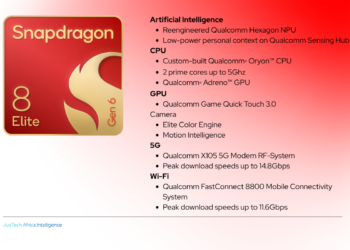
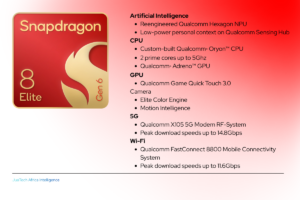
Samsung has taken its Exynos 2600 to 2nm GAA technology in the Galaxy S26 and S26+, while Qualcomm’s Snapdragon 8 Elite Gen 6 continues to push flagship performance, graphics and on-device AI. MediaTek therefore enters a field where 2nm efficiency, sustained performance and intelligent computing are becoming fundamental to flagship smartphone design.
The Dimensity 9600 Pro responds with a 2nm process, new All-Big-Core CPU, LPDDR6 memory, UFS 5.0 storage, Neural Graphics and a new AI architecture integrating CPU, GPU, NPU and imaging. The real question is not simply how fast it is, but what these changes enable smartphones to do differently, and why they matter to the next generation of mobile technology.
Dimensity 9600 Pro vs Dimensity 9500
What Actually Changed Between the Two Generations?
The Dimensity 9500 established MediaTek as a serious contender in flagship smartphone silicon, combining a third-generation All-Big-Core CPU with the NPU 990, Mali-G1 Ultra GPU, LPDDR5X memory, and UFS 4.1 storage. Built on TSMC’s N3P 3nm process, it was designed to increase performance while improving power efficiency across demanding workloads such as gaming, generative AI, and multitasking. The Dimensity 9600 Pro takes that foundation and changes almost every major layer of the platform, moving to 2nm manufacturing while introducing a fourth-generation All-Big-Core CPU, Mali-G2 Ultra NX graphics, NPU 1090, LPDDR6 memory, UFS 5.0 storage and a more integrated AI and imaging architecture.
Differences between Dimensity 9500 (3nm) and 9600 Pro (2nm)
| Key specification | Dimensity 9500 | Dimensity 9600 Pro |
| Manufacturing process | TSMC N3P, 3nm | 2nm |
| CPU generation | 3rd-gen All-Big-Core | 4th-gen All-Big-Core |
| CPU configuration | 1× C1-Ultra + 3× C1-Premium + 4× C1-Pro (1+3+4) | 2× C2-Ultra + 3× C2-Pro + 3× C2-Pro (2+3+3) |
| Peak CPU clock | 4.21GHz | Up to 4.55GHz |
| GPU | Mali-G1 Ultra MC12 | Mali-G2 Ultra NX |
| NPU | NPU 990 | NPU 1090 + Super Efficient NPU 2.0 |
| Memory | LPDDR5X | LPDDR6 |
| Storage | UFS 4.1 | UFS 5.0 |
| Imaging | Imagiq 1190 | AI Imaging Fusion Architecture |
| AI architecture | Generative & Agentic AI | Native AI Architecture + AI Compute Fusion |
The move from 3nm to 2nm deserves particular attention because it is easy to misunderstand. A smaller process node does not automatically mean a phone will be twice as fast or use half as much power. It represents a more advanced manufacturing technology that gives chip designers greater opportunity to improve transistor density, performance, and efficiency within the limited power and thermal envelope of a smartphone. The gains ultimately depend on how the manufacturer combines the process technology with the chip’s architecture and system design.
That is exactly what makes the Dimensity 9600 Pro interesting. MediaTek has not treated 2nm as an isolated upgrade. It has combined the new process with a redesigned CPU, a 21% larger L2 cache, faster LPDDR6 memory, and UFS 5.0 storage, while connecting the CPU, GPU, NPU, and ISP more closely through its Native AI Architecture. MediaTek reports 17% higher single-core performance and 15% higher multi-core performance, alongside substantial improvements in CPU power efficiency compared with the previous-generation Dimensity flagship.
This is therefore a platform-level upgrade, not simply a faster processor. The Dimensity 9600 Pro is designed to move more data, process more demanding workloads, and coordinate AI, graphics, and imaging more intelligently, while leveraging the advantages of 2nm manufacturing to manage the power required. That distinction is important because it sets up the bigger question for this article: what can a smartphone actually do when all these improvements arrive together?
The 2NM Transition
2nm Is the Foundation. Not the Feature.
Our existing 2nm analysis explains why semiconductor manufacturers are moving toward smaller process technologies. The Dimensity 9600 Pro provides a practical example of what that transition means in a smartphone. TSMC’s 2nm process uses gate-all-around nanosheet transistors and is designed to improve the balance between performance, power efficiency and transistor density. However, 2nm does not automatically make a smartphone twice as fast or cut power consumption in half. The process provides a more advanced manufacturing foundation, while the chip’s architecture determines how much of that potential becomes usable performance.
MediaTek describes the Dimensity 9600 Pro as a first-wave 2nm smartphone chip design, combining the process with a fourth-generation 2+3+3 All-Big-Core CPU, a 21% larger L2 cache system, LPDDR6, UFS 5.0, and new AI, graphics, and imaging architectures. Compared to its previous-generation Dimensity flagship, MediaTek reports 17% higher single-core performance, 15% higher multi-core performance, 37% better single-core CPU power efficiency, and 61% better multi-core CPU power efficiency. These are platform-level results from MediaTek’s testing, not gains attributable to 2nm alone.
For users, the significance of 2nm lies not in the process node itself, but in the performance and efficiency it enables when combined with the chip’s architecture. The Dimensity 9600 Pro demonstrates that a smaller process node becomes meaningful when it allows the smartphone to handle more demanding workloads within its thermal and power limits.
Performance
More Power Is Useful Only If the Phone Can Sustain It
MediaTek’s performance claims show that the Dimensity 9600 Pro is not simply chasing higher clock speeds. Compared with the previous-generation Dimensity flagship, MediaTek reports 17% higher single-core performance, 15% higher multi-core performance, and 27% higher peak GPU performance. Ray tracing performance improves by up to 18%, while peak GPU power efficiency increases by 24%. MediaTek also reports 51% faster LLM prefill, which means the chip can prepare large language models for inference more quickly.
These figures translate into different capabilities across the smartphone. Faster CPU performance means quicker computation and better responsiveness when demanding tasks are running simultaneously. A more capable GPU provides greater rendering headroom for complex graphics, while improved ray tracing can produce more realistic lighting, shadows, and reflections in supported games. Higher efficiency matters because lower-power performance gives manufacturers more room to sustain demanding workloads within the phone’s thermal and battery limits.
The LLM prefill improvement is particularly significant as AI becomes a larger part of the smartphone workload. Prefill is the stage in which an AI model processes the user’s input and prepares the context needed to generate a response. Faster prefill can reduce the time before an on-device AI system begins responding.
The bigger lesson, however, sits beyond the benchmark figures. Peak performance tells you what the silicon can do. Sustained performance tells you what the phone can actually live with. The Dimensity 9600 Pro therefore matters not only for how high it can climb, but for how efficiently a smartphone can keep demanding CPU, GPU, and AI workloads running over time.
4. Artificial Intelligence
The Biggest Upgrade May Be the Part You Cannot See
The Dimensity 9500 already marked an important step in MediaTek’s push toward generative and agentic AI. The Dimensity 9600 Pro takes that direction further through its Native AI Architecture, which brings CPU, GPU, NPU, and imaging capabilities into a more coordinated AI computing system. At the center is the NPU 1090, supported by a Super Efficient NPU 2.0 designed to handle persistent AI workloads while consuming less power. MediaTek reports 51% faster LLM prefill than its previous-generation flagship, while AI Compute Fusion allows workloads to be distributed across different parts of the SoC according to their performance and efficiency requirements.
This matters because an AI-native smartphone is not simply a phone with an AI assistant added. Traditionally, an application would rely primarily on the CPU or GPU to process an instruction and produce a result. Increasingly, the smartphone can combine CPU, GPU, NPU, and ISP processing with local AI models and device context to determine how a task should be executed. That architecture can support AI directly across photography, video, search, translation, assistants, productivity, personalization, security and gaming, without every operation depending on a remote cloud service.
The practical significance is that AI can become part of the phone’s underlying computing behavior rather than remaining an isolated feature. A camera can use local models to understand scenes and subjects. An assistant can process context more intelligently. Translation can happen with lower latency. AI-enhanced gaming and imaging can operate closer to the hardware, while lower-power AI processing can handle tasks that need to remain active in the background.
This is the more important shift represented by the Dimensity 9600 Pro. The question is no longer whether a smartphone has AI. It is how deeply AI is embedded in the device’s computing architecture. As MediaTek moves AI processing across multiple computing engines, the smartphone begins to look less like a device that runs AI applications and more like an intelligent computing platform designed around them.
GPU & Imaging Capabilities
Where Silicon Becomes Visible
The Dimensity 9600 Pro’s graphics architecture shows how flagship silicon is moving beyond conventional rendering. Its Arm Mali-G2 Ultra NX GPU combines rasterization and ray tracing with MediaTek’s Neural Graphics Architecture, which synchronizes GPU and NPU resources to support AI-assisted graphics processing. MediaTek reports 27% higher peak GPU performance, 24% better power efficiency at peak performance, and 18% faster ray tracing than its previous-generation flagship. The significance is not simply higher frame rates. Neural graphics points to a model in which GPU + AI can enhance rendering quality, including super-resolution and more sophisticated visual effects, thereby making computational intelligence part of the graphics pipeline.
The same principle is becoming increasingly important in the camera. The Dimensity 9600 Pro integrates the Imagiq 1290 ISP with its AI Imaging Fusion Architecture, allowing the ISP and NPU to work together across photography and video processing. MediaTek lists capabilities including 60fps subject tracking, 4K60 content-aware semantic processing, 4K120 Log video, and 4K240 native slow-motion capture.
A specification such as 4K240 therefore needs context. It is not simply a larger number on a camera sheet. Capturing 240 frames per second at 4K resolution requires the smartphone to acquire, process, and move enormous volumes of image data quickly enough to produce usable footage. The capability demonstrates how much modern smartphone photography and videography now depend on the computational power behind the camera sensor.
The pattern is clear: the processor is increasingly becoming part of the camera and the graphics engine, not merely the component running them.
Memory & Storage
The Hidden Upgrades: LPDDR6 and UFS 5.0
A powerful processor can only perform as well as the data flowing into and out of it. LPDDR6, or Low-Power Double Data Rate 6, is the latest generation of low-power dynamic random-access memory (DRAM) designed for tightly integrated computing systems such as smartphones. It serves as the phone’s working memory, temporarily holding the data and instructions that the CPU, GPU, and NPU need while applications and workloads are running. The Dimensity 9600 Pro is among the first smartphone platforms to support LPDDR6, and MediaTek says it delivers 33% higher effective memory bandwidth at the same frequency than LPDDR5X. More memory bandwidth means the processor can move more data between computing resources and memory, which becomes increasingly important for demanding AI, gaming, and multitasking workloads.
UFS 5.0 serves a different role. UFS, or Universal Flash Storage, is the smartphone’s persistent storage, where applications, games, photos, videos and AI models remain when the device is powered off. MediaTek says UFS 5.0 delivers 2× faster read and write performance than the previous generation’s two-channel UFS 4 implementation. Faster storage can reduce the time required to load large applications and move substantial amounts of data into working memory.
These upgrades reveal a bigger principle: modern smartphone performance is increasingly about the entire data path, not just the CPU. The Dimensity 9600 Pro improves multiple points along that path, connecting CPU and cache resources to LPDDR6 and UFS 5.0, while its AI architecture coordinates CPU, GPU, NPU, and ISP workloads. The result is a platform designed to keep data moving efficiently as computational demands increase.
The First MediaTek 2nm Smartphones
From Silicon to Smartphones: Who Is Using the Dimensity 9600 Pro?
The Dimensity 9600 Pro becomes more meaningful once it moves from a semiconductor specification into an actual smartphone. Among the early devices built around the platform are the vivo X500 Pro, vivo X500 Pro Max and OPPO Find X10 Pro Max, giving consumers a first look at how manufacturers are translating MediaTek’s flagship silicon into finished products. For readers comparing these phones, the chipset provides an important common foundation, but the overall experience will still depend on the manufacturer’s display, cooling system, cameras, battery, software, and system optimization.
OPPO provides a useful example. The company pairs the Dimensity 9600 Pro with its Laminar Flow Engine, a system-level optimization approach that coordinates scheduling, rendering, and power management across the device. This illustrates an important distinction in modern smartphone design: a chipset’s specifications represent potential, while the smartphone manufacturer determines how much of that potential becomes usable performance, battery life, gaming stability, imaging quality, and everyday responsiveness.
For buyers, that makes the Dimensity 9600 Pro more than a specification to search for on a product page. It becomes a useful starting point for comparing flagship smartphones, their implementations and the technologies built around the platform. The chip sets the capability ceiling. The phone’s engineering determines how close the experience gets to it.
MediaTek’s place in Mobile Silicon
Where Does Dimensity Stand in the Smartphone Chipset World?
To understand why the Dimensity 9600 Pro matters, it helps to understand the ecosystem around it. Apple controls its own silicon, operating system, and hardware platform, allowing the company to tightly integrate chips such as Apple silicon with iOS, device hardware, and services. Apple itself describes its products as an integration of hardware, software and services. Qualcomm, meanwhile, supplies Snapdragon platforms across the Android ecosystem, with its portfolio spanning premium, mid-tier and entry-level devices and integrating computing, connectivity, imaging and AI technologies. Its Snapdragon 8 family occupies the premium Android segment.
MediaTek occupies a different position. Its Dimensity portfolio spans entry-level and mainstream smartphones to premium and flagship devices, giving smartphone manufacturers a broad platform family rather than a single vertically integrated hardware-software ecosystem.
The important historical shift is that MediaTek’s flagship ambitions are no longer new. The Dimensity 9000, launched in 2021, marked a deliberate move into true flagship smartphone silicon, followed by successive generations, including the 9300, 9400, 9500, and now the 9600 Pro.
The Dimensity 9600 Pro therefore represents continuity, not a sudden arrival. Its significance is that MediaTek is carrying that flagship strategy into the current 2nm generation, alongside other leading mobile silicon platforms such as Qualcomm’s Snapdragon 8 Elite Gen 6. As the fight for dominance in the best chipset continues, MediaTek is not resting on its laurels, delivering the best to the industry.
The Real Competition Is Moving Beyond Clock Speed
The Dimensity 9600 Pro illustrates how smartphone competition is changing. AI is becoming a core hardware function, with dedicated neural processing working alongside the CPU, GPU, and ISP rather than sitting purely as a software feature. That shift allows more intelligence to run locally across photography, assistants, translation, productivity, and other device experiences.
At the same time, efficiency is becoming as important as peak performance. A processor that can reach a higher performance level matters less if thermal and battery constraints prevent a phone from sustaining demanding workloads. The combination of 2nm manufacturing, architectural changes, and more efficient computing therefore becomes part of the performance story.
The same integration is reshaping imaging and gaming. Computational photography increasingly depends on the ISP, NPU and software working together, while neural graphics and ray tracing allow AI-assisted techniques to contribute to increasingly sophisticated game rendering. These capabilities show that the smartphone is becoming a more tightly integrated computing system.
That leads to the broader shift: smartphone differentiation is moving from individual components toward system integration. The chipset provides the computing foundation, but memory, storage, cooling, battery, cameras, and software determine how much of that capability reaches the user. The Dimensity 9600 Pro matters because it brings more of those capabilities together on one platform.
Mother Africa
When Smartphone Technology Moves Faster Than the Market
The Dimensity 9600 Pro exposes a tension that matters to Africa’s smartphone market. Flagship silicon is advancing rapidly, yet much of the continent remains constrained by affordability, longer device replacement cycles, and uneven access to premium smartphones. The result is a widening gap between what smartphone technology can do and what most consumers can afford.
This does not make the 9600 Pro irrelevant. It makes the technology cycle itself worth watching. Today’s flagship capabilities can eventually move into lower price tiers, bringing better AI processing, imaging, graphics, connectivity, and efficiency to more affordable devices. But the arrival of a new generation does not automatically render the previous one inadequate. A well-designed Dimensity 9400 or 9500 smartphone can remain highly capable long after the 9600 Pro reaches the market.
That distinction matters as specification-led marketing accelerates. The newest technology is not automatically the best value, and more computational power does not automatically translate into greater consumer benefit.For Africa, the more important question is how quickly flagship innovation becomes affordable, useful and durable enough to matter at scale. That is where JuaTech Africa will continue to watch the technology curve.
Conclusion
The Dimensity 9600 Pro Is About More Than 2nm
The Dimensity 9600 Pro chip is easily describable as another step in the race toward faster smartphone processors. That would miss the more important story. The Dimensity 9500 established MediaTek’s sustained flagship trajectory, while the 9600 Pro extends it by bringing together 2nm manufacturing, a fourth-generation All-Big-Core CPU, Neural Graphics, NPU 1090, AI Compute Fusion, LPDDR6, UFS 5.0, and a more deeply integrated imaging architecture.
Taken individually, these technologies represent meaningful upgrades. Taken together, they reveal where smartphone computing is heading. More processing is moving closer to the device itself, while AI, graphics, imaging, memory, and storage increasingly operate as parts of a single computing system. The question is therefore no longer simply how fast a smartphone can run a benchmark, but how intelligently and efficiently it can use the computing resources available to it.
That distinction will become increasingly important as flagship capabilities move into more devices and price tiers. For consumers, manufacturers and markets such as Kenya and the wider African continent, the meaningful measure of progress will not simply be the arrival of another more powerful chip. It will be whether that additional capability produces experiences that are genuinely more useful, sustainable and valuable over the life of the device. In that sense, the next generation of smartphones will be defined less by how much silicon they contain and more by how intelligently they use it.
FAQs About the Dimensity 9600 Pro
1. What is the MediaTek Dimensity 9600 Pro?
The MediaTek Dimensity 9600 Pro is MediaTek’s latest flagship smartphone platform built using a 2nm manufacturing process. It combines a fourth-generation All-Big-Core CPU, Mali-G2 Ultra NX graphics, NPU 1090 and Super Efficient NPU 2.0, LPDDR6 memory, and UFS 5.0 storage. Its Native AI Architecture is designed to coordinate CPU, GPU, NPU, and imaging workloads for demanding applications, including on-device AI, gaming, photography, and video.
2. What does 2nm mean on the Dimensity 9600 Pro?
2nm refers to the semiconductor manufacturing process used to build the Dimensity 9600 Pro. It does not mean the chip is automatically twice as fast or uses half the power of a 3nm processor. A more advanced process gives chip designers greater scope to improve the balance between performance, efficiency, and transistor density. The actual experience still depends on the chip’s architecture and how a smartphone manufacturer implements cooling, battery, software, and other system components.
3. Is the Dimensity 9600 Pro better than the Dimensity 9500?
The Dimensity 9600 Pro is the newer flagship platform and introduces several generational changes, including 2nm manufacturing, a fourth-generation All-Big-Core CPU, NPU 1090, Neural Graphics, LPDDR6, and UFS 5.0. MediaTek reports improvements in CPU and GPU performance and power efficiency compared with its previous-generation flagship. However, a newer chipset does not automatically make a Dimensity 9500 smartphone inadequate. The practical difference depends on the user’s workload, the phone’s implementation, and how much value the newer capabilities provide.
4. Which phones use the Dimensity 9600 Pro?
Among the early smartphones built around the Dimensity 9600 Pro are the vivo X500 Pro, vivo X500 Pro Max and OPPO Find X10 Pro Max. More manufacturers and devices can be expected to adopt the platform as the 9600 Pro generation expands. For buyers, the chipset should be considered alongside the phone’s cooling system, battery, display, cameras, software, and overall implementation rather than as a standalone measure of device quality.
5. What can the Dimensity 9600 Pro’s AI hardware do?
The Dimensity 9600 Pro combines the NPU 1090, Super Efficient NPU 2.0, and MediaTek’s Native AI Architecture and AI Compute Fusion to distribute AI workloads across the platform. These capabilities are designed for tasks such as generative AI, local language-model processing, photography, video, translation, assistants, and other on-device applications. MediaTek reports 51% faster LLM prefill compared with its previous-generation flagship. The specific AI features available to consumers depend on how each smartphone manufacturer implements the platform.
6. Is the Dimensity 9600 Pro worth upgrading to?
There is no universal upgrade threshold. Heavy gamers, creators, and users who rely on demanding AI, imaging, or sustained workloads may have more reason to seek the additional performance and efficiency of the newer platform. For someone already using a capable Dimensity 9400 or 9500 smartphone, however, the existing device may provide more than enough computing power for everyday use. The better question is not simply whether the Dimensity 9600 Pro is more powerful, but whether its additional capabilities solve a real limitation in the phone you already use.
Keep Exploring Juatech Intelligence
The Dimensity 9600 Pro is part of a much bigger shift in mobile silicon. Go deeper with our Dimensity 9500 deep dive, our analysis of what 2nm smartphone chips actually mean, and our Dimensity 9500 vs Snapdragon 8 Elite Gen 5 comparison to see how this generation of flagship silicon has evolved and where the competition is heading.
Read the Dimensity 9500 deep dive · Understand the 2nm transition · Compare Dimensity 9500 vs Snapdragon 8 Elite Gen 5
Want to stay ahead of what comes next? Subscribe to the JuaTech Intelligence newsletter for technology analysis, market intelligence and emerging trends shaping Africa’s digital future. Follow JuaTech Africa on our social channels and join our WhatsApp community for timely updates, new analysis and important developments as they happen. JuaTech Africa helps you understand not just what technology is launching, but what it means.