


A comprehensive long-term evaluation of the Samsung Galaxy A56, examining everyday reliability, camera consistency, software experience, and battery endurance—alongside comparisons with the Xiaomi Redmi Note 15 Pro 5G and Nothing Phone (3a) to determine how Samsung’s latest mid-range contender performs in one of the most competitive smartphone segments today.
The Samsung Galaxy A56 enters one of the most competitive segments of the global smartphone market: the modern mid-range category. Over the past few years, this tier has evolved dramatically, with manufacturers delivering increasingly powerful processors, advanced camera systems, and premium design features at prices that were once reserved for entry-level devices.

Within this fast-moving landscape, Samsung’s strategy with the Galaxy A56 is clear. Rather than chasing specification headlines alone, the device focuses on delivering a balanced smartphone experience built around everyday reliability. Display quality, camera consistency, software refinement, and dependable battery life form the foundation of Samsung’s approach to the device.
This matters because the vast majority of smartphone users are not chasing benchmark records. What they need instead is a device that performs consistently across the tasks that define modern mobile usage—browsing, messaging, social media engagement, content consumption, photography, and productivity.
In extended real-world usage, the Galaxy A56 begins to reveal its true character. The device prioritizes stability, usability, and long-term reliability over raw performance dominance. That positioning places it directly against some of the most capable mid-range smartphones currently available, including devices like the Xiaomi Redmi Note 15 Pro 5G and the design-driven Nothing Phone (3a).
This review takes a comprehensive look at the Samsung Galaxy A56 display quality, performance, camera capabilities, battery endurance, software experience, and long-term usability. By examining how the device performs in everyday scenarios, the goal is simple: determine whether the Galaxy A56 delivers the balanced reliability that many users expect from a modern mid-range smartphone.
Quick Verdict
Samsung Galaxy A56 stands out as one of the most balanced smartphones in the mid-range segment, delivering a dependable everyday experience built around the features that matter most to modern users. Its 6.7-inch Super AMOLED display offers vibrant colors, smooth 120Hz performance, and excellent visibility for browsing, media consumption, and daily productivity.
The 50MP camera system produces reliable photos and stable 4K video, making the device suitable for everyday photography and social media content creation. Combined with Samsung’s refined One UI software experience and the efficient Exynos 1580 chipset, the Galaxy A56 maintains consistent performance across multitasking, research, and media usage.
Supported by a 5000mAh battery that comfortably powers a full day of typical use, the Galaxy A56 focuses on reliability rather than extreme specifications. For users seeking a well-rounded smartphone that balances display quality, camera performance, and long-term usability, it remains a strong contender in the mid-range market.
Samsung Galaxy A56 Specifications Overview
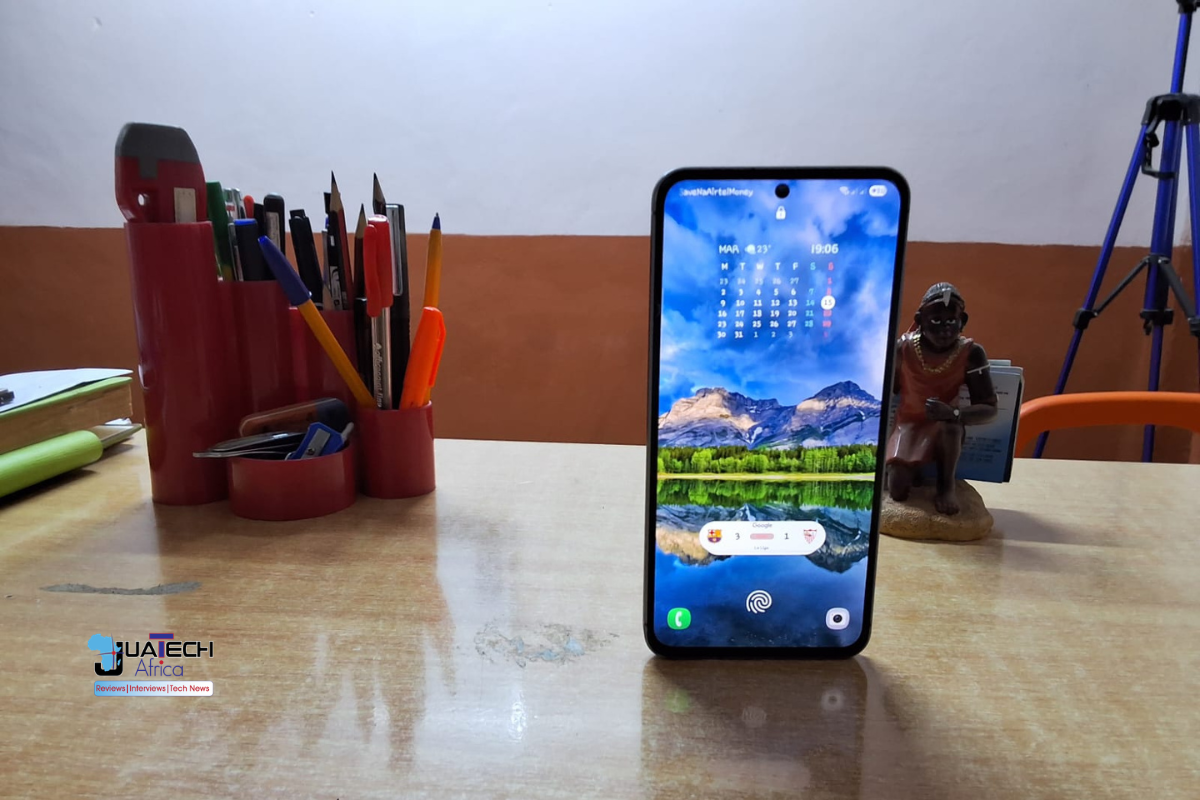
Before evaluating real-world performance, it is important to examine the core hardware that defines the Samsung Galaxy A56. The device combines Samsung’s AMOLED display technology, a modern mid-range processor, and a large battery designed to support demanding daily smartphone usage.
These specifications establish the foundation for the Galaxy A56’s positioning in the upper mid-range smartphone segment, where manufacturers aim to deliver many flagship-level features at a more accessible price point.
| Feature | Samsung Galaxy A56 |
| Display | 6.7-inch Super AMOLED |
| Refresh Rate | 120Hz adaptive refresh rate |
| Processor | Samsung Exynos 1580 |
| RAM | 8GB / 12GB |
| Storage | 128GB / 256GB |
| Rear Cameras | 50MP main + 12MP ultra-wide + 5MP macro |
| Front Camera | 12MP |
| Battery | 5,000mAh |
| Charging | 45W wired fast charging |
| Software | Android with Samsung One UI |
| Connectivity | 5G, Wi-Fi, Bluetooth, NFC |
Note: The model in use and review has 8GB RAM and 256GB Internal Storage.
Taken together, these specifications highlight Samsung’s strategy for the Galaxy A56: deliver balanced hardware, a high-quality AMOLED display, capable cameras, and dependable battery endurance rather than focusing solely on benchmark performance.
In the current mid-range market, this balance is increasingly important as devices compete not only on raw specifications but also on software stability, display quality, and overall everyday usability.
Design and Build Quality
The design of the Samsung Galaxy A56 reflects Samsung’s increasingly refined approach to the mid-range smartphone segment. In recent years, Samsung has worked to bring elements of its flagship design language to the Galaxy A-series, and the Galaxy A56 continues that evolution with a clean, modern aesthetic that emphasizes simplicity and usability.
The rear panel adopts a minimalist layout with a vertically aligned camera system that integrates neatly into the device’s overall design. This understated approach avoids unnecessary visual clutter while giving the smartphone a contemporary appearance that aligns closely with Samsung’s broader Galaxy lineup.
The flat frame design improves ergonomics and grip, making the device comfortable to hold during extended usage sessions. Whether browsing online content, watching videos, or engaging with social media platforms, the phone maintains a balanced feel in hand without becoming cumbersome during prolonged use.

Build quality is another area where the Galaxy A56 performs well. The device feels structurally solid, with tight tolerances and materials that reinforce the sense of durability expected from a modern smartphone. Despite its mid-range positioning, the Galaxy A56 carries several visual and structural cues common to Samsung’s more premium devices.
Button placement is intuitive and easily accessible, contributing to a user experience that feels familiar and refined. The overall dimensions and weight distribution also help ensure the device remains comfortable during everyday handling.
Durability appears dependable in day-to-day use, with the device maintaining its structural integrity through routine handling, pocket carry, and extended daily operation.
Taken together, the design and construction of the Galaxy A56 reinforce Samsung’s broader strategy for the device: deliver a smartphone that feels mature, well-built, and practical, capable of serving as a reliable daily driver in the increasingly competitive mid-range market.
Samsung Galaxy A56 Display Quality
Display technology remains one of Samsung’s strongest advantages, and the **Samsung Galaxy A56 continues that tradition with a high-quality Super AMOLED panel that performs impressively within the mid-range smartphone category.
The device features a 6.7-inch Super AMOLED display with a 120Hz refresh rate, delivering vibrant colors, deep contrast levels, and strong visual clarity. Samsung’s AMOLED technology allows individual pixels to turn off completely when displaying black tones. This produces the deep contrast and rich image depth for which Galaxy is widely known.
The high refresh rate further enhances the experience by enabling smooth scrolling, fluid animations, and responsive navigation across the interface. Browsing websites, navigating social media feeds, and switching between applications feel noticeably smoother compared with traditional 60Hz displays.
Brightness performance is another strong point. The screen remains readable even in bright outdoor environments, which is important for users who rely on their smartphones for navigation, photography, and everyday mobile productivity. Automatic brightness adjustment also works efficiently, adapting quickly to changing lighting conditions. With peak brightness reaching up to 1900 nits, the display remains comfortably visible in direct sunlight or highly illuminated environments.
Media consumption is another area where the display performs particularly well. Video playback benefits from the AMOLED panel’s rich color reproduction and strong contrast ratio. Streaming content, viewing photos, and reading long-form articles all feel visually engaging and comfortable for extended sessions.
Combined with Samsung’s mature display calibration and color tuning, the screen becomes one of the Galaxy A56’s defining strengths. In the competitive mid-range smartphone market, where display quality can vary significantly, the Galaxy A56 delivers a viewing experience that feels closer to premium devices than many smartphones within its price segment.
Performance and Real-World Usage
Performance is one of the areas where the Samsung Galaxy A56 demonstrates the maturity of Samsung’s mid-range smartphone lineup. Powered by the Exynos 1580 chipset and supported by generous RAM and storage configurations, the device is designed to deliver stable everyday performance across a wide range of tasks.
In typical daily use scenarios such as web browsing, messaging, social media, and media streaming, the Galaxy A56 performs consistently with minimal slowdowns. Applications launch quickly, navigation remains smooth, and multitasking is handled efficiently. The available RAM allows multiple applications to remain active in the background without frequent reloads.
Thermal management is also well controlled during most everyday workloads. The device maintains stable operating temperatures during prolonged browsing sessions, video streaming, and productivity tasks. On rare occasions, slight warmth can be noticed during more demanding activities such as long-form video editing or exporting large video files, but this remains within expected limits for a smartphone operating under sustained workloads.
Real-world use shows that the Galaxy A56 handles productivity and creative tasks comfortably. The device has been used extensively for video content creation with tools such as Canva and CapCut, as well as for research and content preparation with AI platforms, such as Gemini, ChatGPT, Grok, and Perplexity. In addition to content creation, the phone is regularly used for professional communication and social media engagement across platforms such as LinkedIn, Instagram, Facebook, Threads, and WhatsApp.
The device also handles frequent video consumption across platforms such as YouTube, TikTok, and Facebook Reels without performance issues. In these scenarios, the handset remains responsive and stable, even when switching between applications frequently.
Multitasking performance remains particularly dependable. A typical workload includes running productivity tools, content creation apps, analytics platforms such as Google Analytics, navigation and fitness apps such as Strava, and everyday services such as Uber and Bolt. Despite this diverse mix of applications, the Galaxy A56 maintains consistent responsiveness. Since acquiring the device, there have been no persistent issues related to buffering, interface stuttering, or system instability.
Storage management is an area that heavy content creators should keep in mind. Capturing large volumes of high-resolution video, particularly 4K footage, can quickly consume internal storage space. After recording a substantial number of long-form videos, storage usage approached its limit, requiring the transfer of several files to external storage to free up space. Once this adjustment was made, the device continued to operate normally without further performance limitations.
Gaming is not the primary focus of this usage profile. However, the Galaxy A56 can still run popular mobile titles at moderate graphical settings with stable frame rates. For casual gaming sessions, the device performs reliably.
Compared with earlier entry-level devices such as the Samsung Galaxy A13, the upgrade in responsiveness, multitasking performance, and overall system fluidity is immediately noticeable. The Galaxy A56 delivers a much smoother and more capable experience, particularly for users who rely heavily on their smartphones for productivity and digital content creation.
Overall, the Galaxy A56 provides performance that aligns well with its position in the upper mid-range smartphone category. Rather than chasing benchmark dominance, the device focuses on balanced performance, stability, and dependable real-world usability, making it well-suited for users who depend on their smartphones as everyday productivity and communication tools.
Benchmark Performance (Context and Industry Position)
Synthetic benchmarks provide useful technical insight into how a smartphone performs under controlled testing conditions. While benchmark scores do not always reflect everyday use perfectly, they help illustrate a device’s processing capabilities and how it compares with competing smartphones in the same performance category.
The Samsung Galaxy A56 is powered by Samsung’s Exynos 1580 chipset, designed to deliver balanced performance, strong efficiency, and reliable everyday usability. To better understand its performance profile, benchmark testing was conducted on the review unit using widely recognized benchmarking tools, including Geekbench and 3DMark.
These results provide additional context for evaluating the device’s CPU capability, graphics performance, and overall system responsiveness.
Benchmark Results (Tested on Review Unit)
| Benchmark | Result |
| Geekbench 6 Single-Core | 988 |
| Geekbench 6 Multi-Core | 3218 |
| 3DMark Wild Life GPU Score | 4837 |
| Average GPU Frame Rate | 28.97 FPS |
Benchmark screenshots were captured directly from tests performed on the review unit of the Galaxy A56.
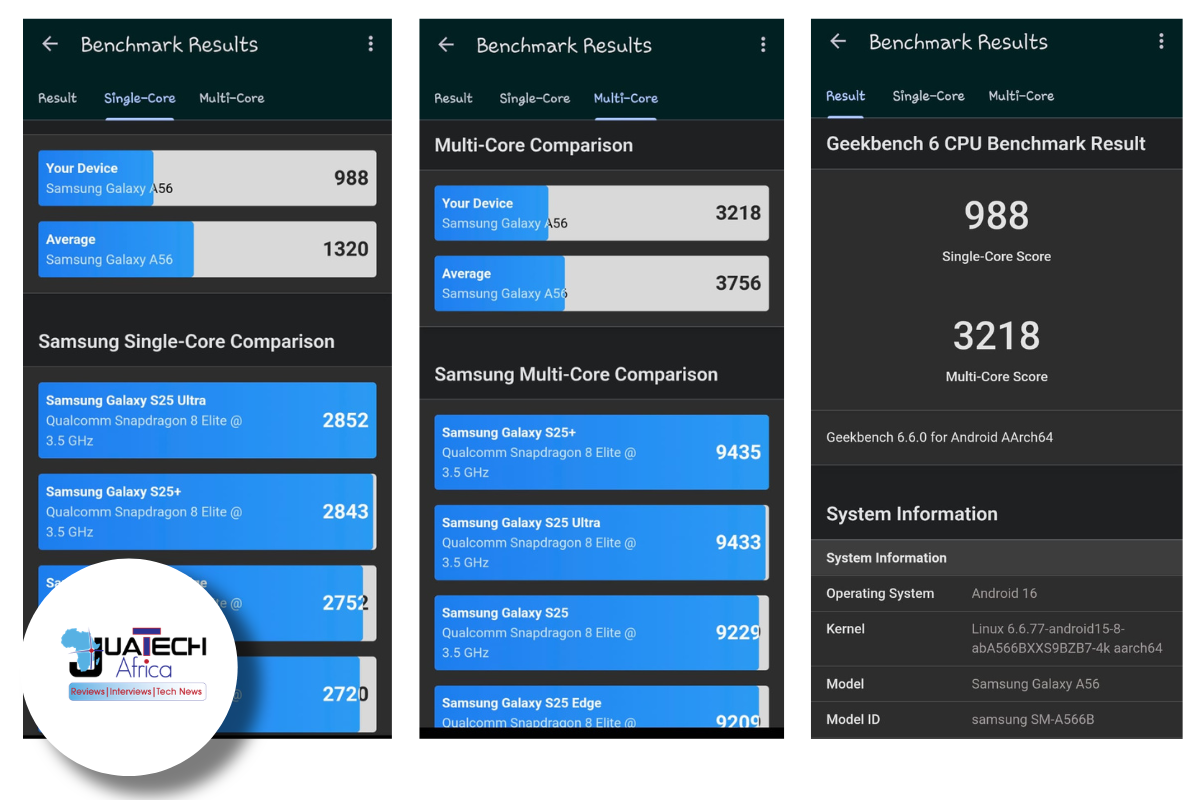
CPU Performance Analysis
Geekbench evaluates CPU performance by measuring how efficiently a processor handles both single-threaded and multi-threaded workloads.
The Galaxy A56 recorded 988 points in the single-core test and 3218 points in the multi-core test during testing. While these scores may vary slightly across devices and testing conditions, they fall within the expected performance range for modern mid-range smartphones.
Single-core performance influences everyday interactions, such as:
- launching applications
- browsing the web
- navigating the user interface
Multi-core performance becomes more relevant during heavier workloads, including:
- multitasking between several applications
- video editing and media processing
- background system operations
In practical use, these results translate into smooth navigation, responsive application behavior, and reliable multitasking performance.
GPU Performance: 3DMark Wild Life

Graphics performance was evaluated using the **3DMark Wild Life benchmark, which measures GPU capability using real-time 3D rendering workloads.
During testing, the Galaxy A56 achieved:
- GPU score: 4837
- Average frame rate: 28.97 FPS
This level of GPU performance indicates that the device can comfortably support many mobile games at moderate graphical settings while maintaining smooth system animations and stable video playback.
Although the Galaxy A56 is not designed as a gaming-focused smartphone, its graphics capability remains sufficient for casual and moderate gaming workloads.
Industry Context
Within the competitive mid-range smartphone category, devices such as the Xiaomi Redmi Note 15 Pro 5G and the Nothing Phone (3a) often emphasize strong hardware specifications and aggressive performance positioning.
The Galaxy A56 takes a slightly different approach. Instead of focusing purely on peak benchmark scores, Samsung prioritizes balanced performance, system stability, and long-term software optimization through its One UI ecosystem.
For most users, this translates into consistent everyday performance across tasks such as communication, content consumption, productivity applications, and social media usage.
Real-World Performance Perspective
While benchmark scores provide useful technical context, real-world usability remains the most meaningful indicator of smartphone performance. During extended usage, the Galaxy A56 demonstrated stable performance across a wide range of tasks, including:
- web browsing and research
- video recording and content creation
- social media management
- media streaming and playback
- multitasking between productivity applications
In everyday use, the Galaxy A56 proves that balanced performance and software optimization often matter more than marginal differences in benchmark scores.
Software Experience and One UI
Software experience is a critical part of the Samsung Galaxy A56’s overall value proposition, and Samsung continues to demonstrate clear maturity in this area. The device runs Samsung’s One UI interface on top of Android, delivering a software environment that prioritizes usability, stability, and customization.
One UI remains one of the most refined Android interfaces available in the smartphone market today. The design emphasizes clarity and ease of navigation, allowing users to access core features quickly without unnecessary complexity. Menus are well organized, navigation gestures are responsive, and the overall interface feels intuitive even for users transitioning from older Galaxy devices.
Customization is another strength of Samsung’s software ecosystem. The Galaxy A56 allows users to personalize their experience extensively through features such as dynamic wallpapers, customizable icons, and lock screen personalization. With Samsung’s theme ecosystem and the Galaxy Store, users can tailor the device’s look and feel to reflect their personal preferences. Even small details such as lock screen design, home screen layouts, and icon styling can be adjusted once users become familiar with the available customization tools.
In daily usage, the interface proves both stable and efficient. Navigation across applications is smooth, and the system remains responsive even during extended multitasking sessions. The combination of Samsung’s software optimization and the device’s hardware capabilities contributes to a user experience that feels dependable and well-balanced.
Samsung’s approach to software updates is another area where the Galaxy A56 stands out within the mid-range segment. Since acquiring the device, updates have been delivered regularly and installed without complications. These updates include system improvements, security patches, and application updates that help maintain device stability over time.
Update notifications are delivered clearly through the system interface, and the device provides flexibility in scheduling installations. This allows updates to be performed during less busy periods, which is particularly useful for users who rely heavily on their smartphones throughout the day for communication, content consumption, or productivity tasks. Scheduling updates during late evening hours or periods of low device activity helps minimize interruptions while keeping the device up to date.
Taken together, the software experience on the Galaxy A56 reinforces Samsung’s broader reputation for delivering stable, user-friendly, and well-supported Android devices. For users who value reliability, customization, and consistent software support, One UI remains one of the Galaxy A56’s strongest advantages in the competitive mid-range smartphone market.
Samsung Galaxy A56 Camera Review
The camera system on the Samsung Galaxy A56 is designed to deliver a balanced photography and video experience within the mid-range smartphone category. Samsung combines capable camera hardware with mature image processing and a broad set of shooting modes, enabling both casual users and content creators to capture high-quality photos and videos.
Rather than focusing purely on extremely high megapixel counts, Samsung prioritizes reliable autofocus, stabilization, and intelligent image processing, ensuring the camera performs consistently across different lighting conditions and everyday scenarios.
Camera specifications referenced in this review are verified against the official Samsung product documentation and the widely used technical specification database maintained by GSMArena.
Verified Camera Hardware
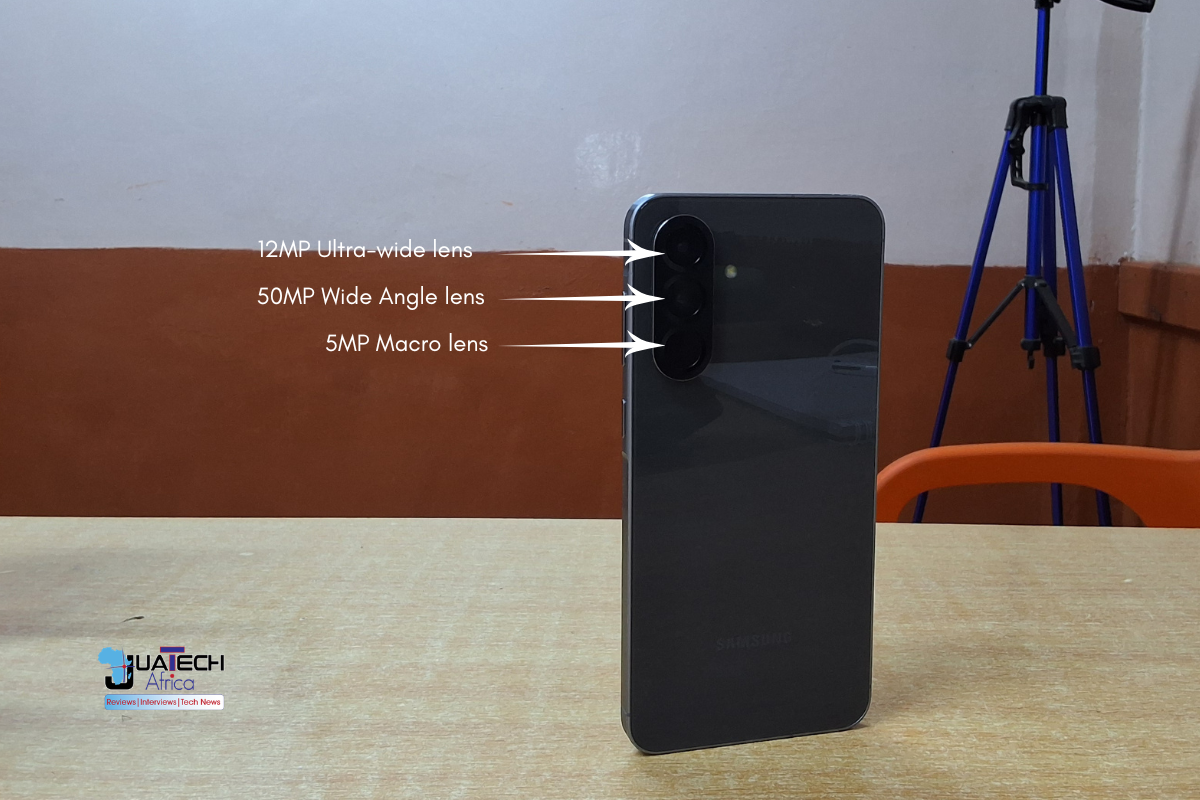
Rear Camera System
| Camera | Specification |
| Main Camera | 50 MP, f/1.8, wide, 1/1.56″ sensor, PDAF, OIS |
| Ultra-Wide Camera | 12 MP, f/2.2, 123° field of view, 1/3.06″ sensor |
| Macro Camera | 5 MP |
| Rear Video | 4K @ 30fps, 1080p @ 30/60fps |
| Stabilization | Optical Image Stabilization + gyro-EIS |
| Features | Best Face, LED flash, HDR, panorama |
Front Camera
| Feature | Specification |
| Front Camera | 12 MP, f/2.2 wide |
| Front Video | 4K @ 30fps |
| Additional Video | 1080p @ 30fps / 60fps |
| HDR Video | 10-bit HDR support |
These specifications confirm that the Galaxy A56 includes several features typically found on higher-tier devices, including optical image stabilization and 4K recording on both cameras.
Understanding the Camera Technology
For readers unfamiliar with camera terminology, several technologies built into the Galaxy A56 directly influence the final photo and video quality.
Optical Image Stabilization (OIS)
OIS physically stabilizes the camera lens to reduce blur caused by hand movement.
User benefit: Photos captured in low light appear sharper, and handheld videos look smoother.
Phase Detection Autofocus (PDAF)
PDAF enables the camera to focus quickly on subjects.
User benefit: Fast autofocus ensures moving subjects such as people, pets, or vehicles remain sharp.
HDR (High Dynamic Range)
HDR combines multiple exposures to balance the brightness of bright and dark areas in a photo.
User benefit: Scenes with strong sunlight or shadows retain more detail.
Front Camera Experience
The 12 MP front camera provides strong performance for selfies, video calls, and short-form video content.
Samsung’s image processing produces:
- Natural skin tones
- Good facial detail
- Balanced exposure
Portrait mode allows users to apply background blur, creating a depth effect that highlights the subject.
Beauty adjustments are also available for users who prefer subtle enhancements, such as:
- Skin smoothing
- Eye enhancement
- Jawline adjustments
These features can be turned on or off depending on personal preference.
Front Camera Video
One of the Galaxy A56’s strongest features is 4K video recording on the front camera.
Available recording options include:
Resolution
- UHD 4K
- Full HD
- HD
Frame rates
- 30fps
- 60fps (Full HD)
Aspect ratios
- 9:16 vertical video
- 1:1 square video
- Full frame
This makes the device particularly suitable for vlogging, video calls, and social media content creation.
The front camera also supports HDR video, improving color contrast when filming in challenging lighting conditions.
Rear Camera Photography Performance
The 50 MP primary camera is the core of the Galaxy A56 photography system.
In good lighting conditions, the camera produces:
- Sharp detail
- Vibrant colors
- Balanced highlights and shadows
Samsung’s image processing typically emphasizes rich color tones, producing photos that appear visually appealing without requiring editing.
The camera also benefits from optical stabilization and fast autofocus, which improve reliability when capturing moving subjects or shooting handheld.
Ultra-Wide Camera
The 12 MP ultra-wide camera captures a 123-degree field of view.
This allows users to capture:
- Landscapes
- Group photos
- Architecture
- Travel scenes
Ultra-wide cameras generally capture slightly less detail than the main camera but provide additional creative flexibility.
Macro Camera
The 5 MP macro lens enables close-up photography of small subjects, such as flowers, textures, and objects.
Macro lenses are primarily intended for creative photography rather than everyday shooting, but expand the versatility of the camera system.
Video Recording Performance
The Galaxy A56 supports 4K video recording at 30 frames per second and 1080p recording at up to 60 frames per second.
Video stabilization combines optical stabilization with gyro-based electronic stabilization, helping reduce camera shake during handheld recording.
The camera also allows digital zoom up to approximately 10× during video recording, which can be useful when filming distant subjects.
Camera Modes Explained
Samsung provides a wide range of camera modes designed to simplify photography.
- Pro Mode: Allows manual adjustment of ISO, shutter speed, focus, and white balance.
- Pro Video: Provides manual exposure and focus control for video recording.
- Night Mode: Captures multiple images and combines them to improve brightness and reduce noise in dark environments.
- Food Mode: Enhances color saturation and sharpness for food photography.
- Panorama: Captures wide landscapes by stitching multiple images together.
- Macro Mode: Optimizes focus for close-range photography.
- Slow Motion: Captures high-frame-rate footage for slow-motion playback.
- Hyperlapse: Creates time-lapse videos of moving scenes.
- Dual Recording: Records video using both front and rear cameras simultaneously.
- Single Take: Captures multiple photos and videos and automatically selects the best moments using AI.
Camera Comparison
The Galaxy A56 competes directly with the Nothing Phone (3a) and the Xiaomi Redmi Note 15 Pro 5G, both of which target similar mid-range price segments.
| Feature | Galaxy A56 | Nothing Phone 3a | Redmi Note 15 Pro 5G |
| Main Camera | 50MP, OIS | 50MP, OIS + 50MP telephoto | 200MP, OIS |
| Ultra-Wide | 12MP | 8MP | 8MP |
| Telephoto | — | 50MP (2× optical zoom) | — |
| Macro | 5MP | — | 2MP |
| Front Camera | 12MP | 32MP | 20MP |
| Rear Video | 4K | 4K | 4K |
| Front Video | 4K | 1080p | 1080p |
Camera Verdict
The Samsung Galaxy A56 may not position itself as a flagship camera phone, but it delivers a well-balanced photography experience for its price.
Samsung’s strength lies in reliable autofocus, optical stabilization, consistent image processing, and an intuitive camera interface. These factors contribute more to everyday usability than extreme megapixel counts alone.
While competitors such as the Redmi Note 15 Pro 5G emphasize very high megapixel sensors and the Nothing Phone 3a adds telephoto capabilities, the Galaxy A56 focuses on consistency, usability, and versatile shooting modes.
For users seeking dependable photography, capable video recording, and a camera system that works well without complicated adjustments, the Galaxy A56 remains one of the strongest camera packages available in the mid-range smartphone market.
Samsung Galaxy A56 Battery Life and Charging Performance
Battery endurance remains one of the most important aspects of the smartphone experience, and the Samsung Galaxy A56 is equipped with a battery system designed to support demanding everyday usage. Samsung integrates a 5000 mAh battery with efficient power management and fast charging support to balance performance and longevity throughout the day.
According to official specifications and independent testing references, the device supports 45 W wired fast charging, allowing the battery to reach approximately 65% charge in about 30 minutes and a full charge in roughly 68 minutes when paired with a compatible charger.
Real-world experience shows that it takes about 1 hour to fully charge the device from 0-100%.
Battery Specifications
| Feature | Specification |
| Battery Capacity | 5000 mAh |
| Charging | 45 W wired fast charging |
| Charging Speed | ~65% in 30 minutes |
| Full Charge | ~68 minutes |
| Power Management | Adaptive battery optimization |
These specifications place the Galaxy A56 in line with most modern mid-range smartphones that prioritize balanced battery endurance over fast charging.
Understanding Battery Technology
For readers unfamiliar with smartphone battery terminology, several factors influence how long a phone lasts on a single charge.
Battery Capacity (5000 mAh)
Battery capacity is measured in milliamp hours (mAh). A larger number generally means the phone can store more energy.
- User benefit: A 5000 mAh battery typically provides a full day of usage for most users without requiring mid-day charging.
Fast Charging (45 W)
Fast charging allows the battery to replenish quickly when connected to a compatible charger.
- User benefit: Short charging sessions can provide several hours of additional use.
For example, charging the device for about 30 minutes can restore more than half of its capacity, which is useful during busy schedules.
Power Efficiency
Battery life also depends on how efficiently the phone uses energy. The Galaxy A56 benefits from:
The Exynos 1580 processor
- Samsung’s One UI power management system
- Adaptive background app control
These elements help reduce unnecessary power consumption.
Real-World Battery Experience
Typical Usage
In everyday use, the Galaxy A56 delivers dependable battery endurance. With typical usage patterns such as:
- phone calls
- web browsing
- messaging
- social media activity
- research and productivity tasks
The device can last an entire working day on a single charge.
For users who rely heavily on their smartphones for communication and productivity, this level of battery endurance provides a reliable baseline for daily use.
Battery Performance During Heavy Usage
More demanding activities naturally consume battery power more quickly. Tasks such as:
- Recording video content
- Editing videos
- Watching long-form video reviews
- Extended social media browsing
place a heavier workload on the processor and the display, increasing energy consumption. Under these conditions, the Galaxy A56 still performs reliably, but faster charging becomes more important for quickly restoring power when needed.
To avoid interruptions during work, maintaining a full battery before starting the day can help ensure uninterrupted productivity.
Fast Charging in Practical Use
Because heavy smartphone use can drain the battery more quickly, fast charging is important for maintaining productivity. Using a Samsung 45 W charger and a compatible cable, the Galaxy A56 can recharge significantly faster than standard charging speeds.
Short charging sessions throughout the day can restore enough battery power to continue working without extended downtime.
For users who depend on their smartphones for professional communication, content creation, and research, this charging speed offers a practical advantage.
Power Saving and Battery Optimization
Samsung also includes several built-in tools that help extend battery life.
One of the most useful features is Power Saving Mode, which reduces background activity and optimizes system performance to conserve energy.
Activating this mode can help extend battery life during busy workdays or when charging is limited.
Samsung’s software also monitors application behavior and automatically limits background activity from apps that consume excessive power.
Battery Management in a Productivity Workflow
For users who rely heavily on their smartphones for professional tasks, effective battery management becomes part of the daily workflow.
In practice, combining the Galaxy A56 with other devices such as the Samsung Galaxy Tab S9 FE can help distribute workloads more efficiently. Tasks that require extended reading, research, or long editing sessions can be handled on a larger device, reducing continuous strain on the smartphone battery.
This type of workflow balance can help maintain strong battery performance throughout the day.
Battery Verdict
The Galaxy A56 delivers a battery experience that aligns well with its role as a productivity-focused mid-range smartphone. The combination of a 5000 mAh battery, efficient chipset, and 45 W fast charging allows the device to handle a full day of typical usage without difficulty.
While extremely heavy workloads, such as prolonged video editing or content recording, can drain the battery more quickly, fast charging helps minimize downtime and restore power quickly.
For most users, the Galaxy A56 offers reliable battery endurance, practical charging speeds, and effective power management, making it well-suited for everyday productivity and mobile content consumption.
Connectivity and Everyday Features
Modern smartphones are expected to provide reliable connectivity across a wide range of daily activities, from communication and navigation to media consumption and cloud-based productivity. The Samsung Galaxy A56 supports a comprehensive set of connectivity technologies designed to ensure stable wireless communication and fast network access.
The device supports 5G mobile networks, Wi-Fi 6, Bluetooth 5.3, NFC, and multi-system satellite positioning. Together, these technologies help ensure the phone remains compatible with current and future network infrastructure while delivering dependable performance across everyday tasks.
Network Performance and 5G Connectivity
The inclusion of 5G network support represents an important step forward for users who rely heavily on mobile data connectivity. Compared with earlier generations of mobile networks, 5G can provide significantly faster data speeds and improved responsiveness.
For users engaged in tasks such as:
- online research
- media streaming
- social media publishing
- cloud-based productivity
5G connectivity can noticeably improve workflow efficiency.
In everyday use, the Galaxy A56 maintains stable network performance while browsing, streaming video, and synchronizing files with cloud services. For users building digital platforms or managing online content, this reliability becomes an important advantage.
In a productivity-focused workflow, 5G connectivity supports activities such as research, content creation, and online publishing with minimal interruptions.
Bluetooth Connectivity
The Galaxy A56 supports Bluetooth 5.3, one of the latest wireless standards for connecting audio accessories and other devices. Bluetooth 5.3 improves:
- Connection stability
- Pairing speed
- Energy efficiency.
These improvements become particularly noticeable when pairing the phone with modern wireless audio devices.
For example, pairing the Galaxy A56 with devices such as the CMF Buds Pro 2 delivers a stable wireless connection with automatic reconnection when the earbuds are removed from their charging case. Audio playback remains smooth, and connection reliability is maintained even during extended listening sessions.
For users who frequently rely on wireless earbuds for calls, music, or video playback, Bluetooth 5.3 helps ensure a consistent and dependable experience.
Location and Navigation Accuracy
The Galaxy A56 supports several global positioning systems, including GPS, GLONASS, GALILEO, BDS, and QZSS.
Using multiple satellite systems improves location accuracy and signal reliability, especially in areas where a single satellite network might struggle to maintain strong coverage. In real-world usage, this translates to reliable positioning for activities such as:
- navigation and mapping
- ride-hailing services
- outdoor fitness tracking
- location-based services
For users who spend time outdoors or travel frequently, accurate location tracking becomes particularly valuable, whether navigating city streets or exploring remote, rural areas. The Galaxy A56 provides reliable real-time positioning information.
NFC Capability
The Galaxy A56 also supports Near Field Communication (NFC), though availability may vary by region. NFC technology allows smartphones to communicate with compatible devices over short distances. It is commonly used for:
- contactless mobile payments
• quick device pairing
• secure digital authentication
Even for users who may not actively use NFC daily, the presence of the feature ensures the device remains compatible with emerging digital payment and authentication systems.
Fingerprint Security and Everyday Convenience
The Galaxy A56 features a fast, reliable fingerprint authentication system that lets users unlock the device quickly and securely.
Biometric authentication helps simplify everyday interactions with the phone while maintaining a high level of security for personal data, apps, and digital services.
Quick unlocking is particularly useful for users who frequently access their smartphones throughout the day for communication, productivity, and content consumption.
Real-World Connectivity Experience
In practical use, the Galaxy A56 maintains stable connections across all major wireless technologies. Wi-Fi connectivity remains dependable during extended browsing sessions and media streaming, while Bluetooth pairing remains consistent with modern wireless accessories.
Combined with accurate location tracking and NFC support, the Galaxy A56 delivers a connectivity experience that aligns well with the needs of modern smartphone users.
These features collectively make a device feel future-ready, dependable, and capable of supporting demanding everyday workflows.
Samsung Galaxy A56 vs Redmi Note 15 Pro 5G vs Nothing Phone 3a
Within the mid-range smartphone segment, the **Samsung Galaxy A56 competes directly with devices such as the **Xiaomi Redmi Note 15 Pro 5G and the **Nothing Phone (3a).
While all three devices target similar price points, each manufacturer approaches the segment with a different strategy.
Samsung focuses on balanced performance, display quality, and long-term software reliability. Xiaomi typically emphasizes aggressive hardware specifications, especially in camera resolution and battery capacity. Nothing differentiates itself with clean, Android-like software and a distinctive industrial design, while also introducing features such as a telephoto camera, uncommon at this price.
Understanding how these smartphones compare across core categories helps clarify which device best suits different user priorities.
Core Hardware Comparison
| Category | Samsung Galaxy A56 | Xiaomi Redmi Note 15 Pro 5G | Nothing Phone (3a) |
| Display | 6.7-inch Super AMOLED, 120Hz | 6.67-inch AMOLED, 120Hz | 6.77-inch AMOLED, 120Hz |
| Main Camera | 50 MP, OIS | 200 MP, OIS | 50 MP, OIS |
| Secondary Cameras | 12 MP ultrawide + 5 MP macro | 8 MP ultrawide | 50 MP telephoto (2× optical zoom) + 8 MP ultrawide |
| Front Camera | 12 MP | 20 MP | 32 MP |
| Battery | 5000 mAh, 45W charging | up to ~6500 mAh silicon-carbon battery | 5000 mAh, ~50W charging |
| Software | One UI (Android) | HyperOS | Nothing OS |
| Design Focus | Samsung flagship-inspired design | Hardware-focused mid-range design | Transparent industrial aesthetic |
Specifications verified against the manufacturer’s product pages and technical specification references.
Display Experience
All three smartphones feature large AMOLED displays with 120Hz refresh rates, which provide smooth scrolling, responsive interaction, and vibrant colors during media consumption and gaming.
Samsung’s advantage lies in its display calibration expertise. The Galaxy A56 benefits from Samsung’s long-standing leadership in AMOLED panel technology, delivering high brightness, consistent color reproduction, and excellent outdoor visibility.
The Redmi Note 15 Pro 5G also offers a bright AMOLED panel, but is more focused on raw specifications and hardware features rather than display tuning.
The Nothing Phone 3a pairs its AMOLED display with a minimalist interface, creating a clean visual experience that complements the company’s design philosophy.
Camera Philosophy
Camera hardware is one of the most significant differences between these devices.
The Galaxy A56 features a balanced camera system that delivers consistent photography through reliable autofocus, optical stabilization, and refined image processing.
The Redmi Note 15 Pro 5G emphasizes extreme resolution with its 200-megapixel main sensor, which can capture highly detailed images but relies heavily on software processing.
The Nothing Phone 3a introduces an unusual advantage for this segment by including a dedicated telephoto camera with 2× optical zoom, which improves portrait photography and zoom flexibility.
Each approach reflects a different philosophy:
- Samsung focuses on consistency and usability
- Xiaomi focuses on high-resolution hardware specifications
- Nothing focuses on versatility and design differentiation
Battery and Charging
Battery performance across these devices reflects different engineering priorities.
The Galaxy A56 uses a 5000 mAh battery with 45W charging, designed to balance endurance and charging speed.
The Redmi Note 15 Pro 5G introduces a larger silicon-carbon battery that can exceed 6000 mAh, depending on the model variant. This technology allows Xiaomi to increase battery capacity while maintaining a relatively slim device profile.
The Nothing Phone 3a also uses a 5000 mAh battery, paired with faster charging speeds (50W wired, 50% in 19 min, 100% in 56 min) that replenish power more quickly.
In everyday use, all three phones can last a full day under moderate to heavy workloads.
Software Experience
Software experience remains one of the most important differentiators between these devices.
The Galaxy A56 runs Samsung One UI, one of the most mature Android interfaces. It offers extensive customization, strong ecosystem integration, and reliable long-term software support.
The Redmi Note 15 Pro 5G runs Xiaomi HyperOS, which introduces improved system optimization and deeper integration with Xiaomi’s broader device ecosystem.
The Nothing Phone 3a runs Nothing OS, which emphasizes a minimalist user interface with fewer pre-installed apps and a design language closely aligned with stock Android.
Each software approach appeals to different types of users.
Overall Positioning
Although these devices compete in the same price category, they are designed with different priorities in mind:
- Galaxy A56: Balanced smartphone focused on reliability, display quality, and long-term usability.
- Redmi Note 15 Pro 5G: Hardware-driven device emphasizing high megapixel cameras and large battery capacity.
- Nothing Phone 3a: Design-centric smartphone offering clean software and a unique telephoto camera advantage.
For users seeking a stable, well-rounded smartphone experience with dependable performance across display, camera, software, and battery, the Galaxy A56 remains one of the most balanced choices in the mid-range.
Six Months Later: Long-Term Reliability
One of the most meaningful ways to evaluate a smartphone is to observe how it performs after extended real-world usage. Initial impressions can highlight specifications and features, but long-term usage reveals how well a device holds up under everyday workloads and environmental exposure.
After more than six months of consistent use, the Samsung Galaxy A56 continues to demonstrate stable performance across daily tasks. The device remains responsive when navigating the interface, launching applications, and multitasking between productivity tools, research platforms, and social media services.
Battery endurance has also remained dependable. Under a typical routine that includes calls, browsing, content consumption, research, and media sharing, the phone consistently delivers a full day of usage before requiring a recharge. Samsung’s power optimization and optional power-saving features help maintain this reliability even during heavier workloads.
Software stability has been another strong point. Over the months of usage, the device has continued to operate smoothly without persistent issues such as system lag, application crashes, or interface stuttering. Regular system updates and security patches have also been delivered reliably, reinforcing Samsung’s reputation for maintaining device stability through ongoing software support.
Durability has proven equally impressive. The device has been used actively in a demanding workflow that involves frequent travel, outdoor movement, and content capture. To protect the phone, a protective case and screen protector were installed from the beginning. These precautions have helped preserve the device, but unavoidable incidents such as accidental slips, minor drops onto tiled or concrete surfaces, and occasional exposure to water splashes or rain have still occurred.
Despite these situations, the Galaxy A56 continues to hold up remarkably well. Structural integrity remains solid, and the device shows only minimal cosmetic wear. The display remains fully intact and responsive, thanks to replaceable screen protectors. After several months of real-world handling, the phone still feels almost as good as new.
For users who rely on their smartphones in active, fast-moving environments such as travel, content creation, and fieldwork, this level of durability adds meaningful confidence to everyday use.
Overall, Samsung devices have traditionally performed well in long-term reliability, and the Galaxy A56 continues to uphold that reputation. After months of consistent real-world use, the device remains stable, durable, and dependable across the tasks that define modern smartphone usage.
Pros and Cons of the Galaxy A56
Pros
- Excellent Super AMOLED display: The 6.7-inch Super AMOLED display delivers vibrant colors, deep contrast, and strong brightness levels, making it one of the standout features of the device for media consumption, browsing, and everyday usage.
- Reliable and versatile camera system: The 50MP main camera, paired with Samsung’s mature image processing, produces consistently strong photos and dependable video performance. Features such as optical image stabilization, HDR processing, and multiple shooting modes make the camera suitable for both casual photography and content creation.
- Strong battery endurance with efficient power management: The 5000mAh battery provides dependable all-day performance under typical usage patterns that include calls, browsing, media consumption, and social media engagement. Samsung’s software optimization further helps extend battery longevity.
- Refined and stable One UI software experience: Samsung’s One UI interface remains one of the most polished Android software environments. The software is intuitive, highly customizable, and supported by regular system updates and security patches.
- Balanced everyday performance: Powered by the Exynos 1580 chipset and supported by generous 8/12GB RAM configurations, the Galaxy A56 handles multitasking, productivity apps, and media consumption smoothly.
- Strong overall durability in real-world usage: After several months of active use, including travel, content capture, and occasional accidental drops, the device continues to maintain solid structural integrity and stable performance.
Cons
- Charging speeds remain moderate compared with some competitors: While the device supports 45W fast charging, several competing devices in the same price category offer faster charging technologies. The Redmi Note Series, for example, shows ambition beyond the mid-range segment norm.
- Not optimized for heavy mobile gaming: The Galaxy A56 prioritizes balanced performance and power efficiency rather than peak GPU performance, which means demanding mobile games may require lower graphics settings.
- Some preinstalled applications may feel unnecessary: Samsung includes several system applications and services that not every user may need, although most can be disabled or removed.
Who Should Buy the Samsung Galaxy A56?
It’s best suited for…
The Samsung Galaxy A56 is best suited for users who want a reliable and well-balanced smartphone that performs consistently across everyday tasks without unnecessary complexity.
This device is particularly well-suited for:
- Users seeking a dependable everyday smartphone:
The Galaxy A56 offers stable performance, dependable battery life, and a refined software experience, making it a reliable companion for communication, browsing, and media consumption.
- Content creators and active social media users:
With a capable camera system, optical image stabilization, and 4K video recording on both front and rear cameras, the device performs well for capturing photos and recording video content for platforms such as Instagram, TikTok, and YouTube.
- Users who prioritize display quality:
Samsung’s Super AMOLED display delivers vibrant colors, smooth 120Hz scrolling, and high brightness, making the device ideal for streaming video, browsing, and reading long-form content.
- Professionals who rely on their phones for productivity:
For users managing research, communication, and digital tools throughout the day, the Galaxy A56 delivers dependable performance, backed by Samsung’s mature One UI ecosystem.
Who Should Consider Other Options
While the Galaxy A56 offers a balanced experience, some users may benefit from considering alternatives.
- Mobile gaming enthusiasts:
Users who play demanding games at high graphics settings may prefer devices with more gaming-oriented chipsets and stronger GPU performance.
- Users who prioritize ultra-fast charging:
Although the Galaxy A56 supports 45W charging, some competing smartphones in the same price category offer faster charging technologies.
- Users seeking specialized camera hardware
Buyers specifically looking for features such as high-resolution sensors or dedicated telephoto zoom lenses may find alternative devices better suited to those needs.
Final Verdict
After extensive real-world use, the Samsung Galaxy A56 proves to be one of the most balanced mid-range smartphones. Rather than chasing headline specifications alone, Samsung focuses on delivering a dependable everyday experience built around the features most users value: a vibrant Super AMOLED display, reliable camera performance, stable software, and strong battery endurance.
Performance remains consistent across productivity tasks, content consumption, and social media usage, while Samsung’s One UI continues to offer one of the most refined Android software experiences. The camera system may not pursue extreme megapixel numbers, but it consistently produces high-quality photos and dependable video capture suitable for everyday photography and content creation.
Combined with solid durability and long-term reliability after months of use, the Galaxy A56 emerges as a smartphone designed for practicality and stability. For users seeking a dependable device that balances performance, usability, and longevity, the Galaxy A56 remains an excellent mid-range choice.
Frequently Asked Questions
- Is the Samsung Galaxy A56 worth buying in the mid-range segment?
Yes. The Samsung Galaxy A56 offers a well-balanced smartphone experience built around strong fundamentals. Its Super AMOLED display, dependable camera system, stable One UI software, and reliable battery performance make it one of the more consistent options in the mid-range category. Rather than focusing on extreme hardware specifications, the device prioritizes reliability, usability, and long-term stability.
- How good is the Samsung Galaxy A56 camera for everyday photography?
The Galaxy A56 features a 50MP main camera with optical image stabilization, supported by an ultrawide and macro lens. Samsung’s image processing produces vibrant colors and balanced exposure, allowing the phone to capture detailed images in both outdoor and indoor conditions. The camera performs particularly well for social media photography, travel photos, and everyday content creation.
- Can the Galaxy A56 record high-quality video?
Yes. The Galaxy A56 supports 4K video recording on both the rear and front cameras, which is still uncommon in many mid-range smartphones. Combined with optical and electronic image stabilization, the phone can capture smooth handheld videos suitable for vlogging, short-form content, and everyday recording.
- Is the Samsung Galaxy A56 suitable for content creators?
For many content creators, the Galaxy A56 provides a practical mobile production tool. The camera system, 4K video recording capability, stable performance, and long battery life make it well-suited for capturing social media content, filming short videos, and editing media directly on the device using mobile applications.
- How long does the Galaxy A56 battery last in real-world use?
With its 5,000 mAh battery, the Galaxy A56 typically delivers a full day of use under normal conditions. Tasks such as browsing, messaging, video streaming, social media engagement, and research can be comfortably handled throughout the day before the device needs to be recharged.
- Does the Galaxy A56 support fast charging?
Yes. The Galaxy A56 supports 45W wired fast charging, allowing the battery to recharge relatively quickly when paired with a compatible charger. While some competing devices offer faster charging speeds, Samsung’s charging solution remains practical for everyday use.
- Is the Galaxy A56 durable enough for everyday use?
The Galaxy A56 demonstrates strong durability during daily handling. With appropriate protection, such as a case and screen protector, the device can withstand typical incidents, including accidental drops, minor impacts, and exposure to everyday environmental conditions.
- How good is the Galaxy A56 display?
The Galaxy A56 features a 6.7-inch Super AMOLED display with a 120Hz refresh rate, delivering vibrant colors, deep contrast, and smooth scrolling. Samsung’s display tuning remains one of the device’s strongest features, making it particularly enjoyable for video streaming, browsing, and media consumption.
- Is the Galaxy A56 good for gaming?
The Galaxy A56 can run most mobile games smoothly at moderate settings, thanks to the Exynos 1580 chipset and adequate RAM configurations. However, it is not specifically designed as a gaming-focused device, and users seeking maximum graphics performance may prefer smartphones with more powerful gaming chipsets.
- Does the Galaxy A56 support 5G connectivity?
Yes. The Galaxy A56 supports 5G mobile networks, allowing faster download speeds, lower latency, and improved network responsiveness where 5G coverage is available. This can be particularly beneficial for media streaming, online collaboration, and cloud-based services.
- How reliable is Samsung’s One UI software on the Galaxy A56?
Samsung’s One UI interface is widely regarded as one of the most mature Android software environments. It offers intuitive navigation, extensive customization options, and regular software updates. The Galaxy A56 benefits from this ecosystem, delivering a stable and user-friendly software experience.
- How does the Galaxy A56 compare with other mid-range smartphones?
Compared with alternatives such as the **Xiaomi Redmi Note 15 Pro 5G and the **Nothing Phone (3a), the Galaxy A56 focuses on delivering a balanced smartphone experience rather than emphasizing extreme specifications. Samsung prioritizes display quality, software stability, and camera consistency, while competitors often emphasize hardware specifications or unique design elements.
- Does the Galaxy A56 support NFC and modern connectivity features?
Yes. The Galaxy A56 features modern connectivity technologies, including 5G, Wi-Fi 6, Bluetooth 5.3, GPS, and NFC. These features ensure compatibility with modern networks, wireless accessories, and contactless payment systems.
- How well does the Galaxy A56 perform after several months of use?
After extended usage, the Galaxy A56 continues to deliver stable performance across everyday tasks. Battery endurance remains dependable, software responsiveness remains smooth, and the device maintains its structural integrity during daily handling.
- Who is the Galaxy A56 best suited for?
The Galaxy A56 is best suited for users who want a dependable, well-rounded smartphone rather than a device focused on extreme specifications. It is particularly appealing to users who prioritize display quality, reliable cameras, stable software, and consistent everyday performance.
Read through the Galaxy A56 Vs Redmi Note 15 Pro Comparison article we published.