

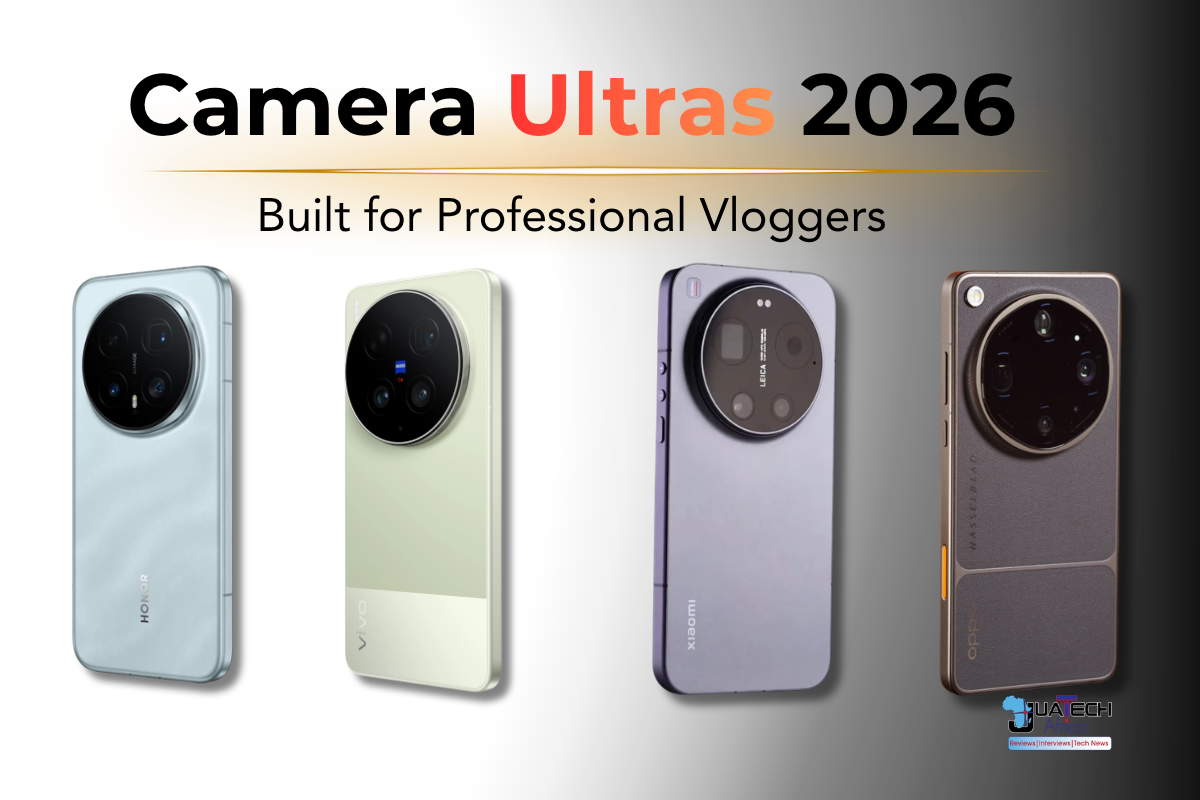
Four camera-first Ultra smartphones push beyond specs into real production territory. From LOG video and thermal performance to lens flexibility and workflow reliability, we test which device can actually shoot, handle, and deliver paid, high-value content in real-world conditions.
Executive Summary

Not all flagship smartphones are built for creators. In 2026, a new class of camera-first Ultra devices is redefining what it means to shoot, edit, and deliver professional content on a smartphone. The vivo X300 Ultra, Oppo Find X9 Ultra, Xiaomi 17 Ultra, and Honor Magic8 Pro are not competing on specs alone. They are built as production tools, each optimized for a specific workflow.
Vivo leads in cinematic capture and grading flexibility. Oppo dominates in zoom and real-time framing control. Xiaomi delivers the most balanced, consistent output across formats. Honor prioritizes speed, automation, and reliable out-of-camera results. The differences are not theoretical. They directly affect how efficiently you can produce and deliver paid content.
The key takeaway is simple. The best camera phone for vloggers is not the one with the most features. It is the one that aligns with your workflow, reduces friction, and helps you deliver consistent, client-ready results under real conditions.
Not All Flagships Are Built for Creators
The idea that all flagship smartphones deliver the same experience has held for years because, for most users, it is true. Performance is fast, cameras are good, and software is polished across the board. But for a professional vlogger or content creator, that assumption quickly breaks down. Once the goal shifts from capturing moments to delivering paid, high-value content, the differences between devices stop being subtle. They become decisive.
At the top end of the market, two distinct categories now exist. The first is the general-purpose flagship, designed for balance and broad appeal. These devices excel at everyday photography, offer smooth performance, and are reliable across common use cases. They dominate conversations about the best camera phones in 2026 because they serve the largest audience.
The second category is more focused and far more demanding. These are camera-first Ultra smartphones built for production. Instead of optimizing for versatility alone, they prioritize image quality, video capability, and workflow integration. They are designed for creators who need consistent results under pressure, not just good output in ideal conditions. For this audience, a smartphone is not an accessory. It is a primary production tool.
The difference becomes clear in real-world use. A general flagship can capture impressive footage, but it is rarely engineered for sustained performance. Long recording sessions introduce heat, dynamic lighting exposes processing limitations, and workflow gaps slow down delivery. A camera-first Ultra is designed to handle these realities. It supports extended recording without immediate thermal throttling, enables formats like LOG video for post-production control, and delivers footage that holds up when edited, graded, and presented to clients.
This shift from consumption to production defines the Ultra category. It is the difference between content that looks good on a screen and content that meets professional standards.
Devices in this class push beyond traditional smartphone limits. Larger sensors improve light capture and depth. Advanced lens systems allow for intentional framing rather than digital compromise. Video capabilities are built with post-production in mind, not just playback. Just as important, these devices are designed to fit into a complete workflow, from capture to edit to delivery, without breaking consistency.
That context shapes the lineup at the center of this comparison:
- Vivo X300 Ultra
- Oppo Find X9 Ultra
- Xiaomi 17 Ultra
- Honor Magic8 Pro
Each device reflects a different approach to the same challenge. Vivo emphasizes cinematic rendering and sensor performance. Oppo builds around zoom flexibility and framing control. Xiaomi focuses on color science and balanced output. Honor combines strong hardware with intelligent processing to simplify complex shooting conditions.
What unites them is intent. These are not devices built to win spec sheet comparisons. They are built to answer a more practical question: which smartphone can reliably produce video content that meets professional expectations in real working conditions?
For creators operating in unpredictable environments, that question matters more than any benchmark score. Lighting is not controlled, timelines are tight, and failure is not an option. The device must perform consistently, not occasionally.
This is why the conversation around the best camera phone for vloggers in 2026 cannot be reduced to megapixels or brand familiarity. It must be grounded in real-world performance, sustained reliability, and the ability to deliver usable output under pressure.
In that context, these Ultra smartphones are not competing with standard flagships. They are positioning themselves as viable alternatives to traditional camera setups for creators who need mobility without compromising production quality.
That is the foundation of this comparison.
What Professional Vloggers Actually Need
Deliverable Quality vs Spec Sheet Quality
Professional vlogging is judged at the point of delivery, not at the point of capture. Clients do not care about megapixels or sensor size. They care about whether the final video looks clean, consistent, and ready to publish without compromise.
This is where many flagship smartphones fall short. They can produce impressive clips in isolation but struggle to maintain consistency across scenes, lighting conditions, and lenses. For paid work, inconsistency creates friction. Skin tones shift, exposure fluctuates, and footage becomes harder to match in post-production.
For a professional vlogger, the priority is simple. Can this device produce footage that holds up across an entire project and meets client expectations without excessive correction? The best camera phone for vloggers in 2026 is not the one that looks the most impressive on a spec sheet. It is the one that delivers reliable, editable footage every time.
LOG Video, Dynamic Range, Color Flexibility
If you are shooting content for clients, LOG video is not optional. It is the difference between locked footage and flexible footage.
LOG recording preserves dynamic range and gives you control in post-production. It allows you to recover highlights, lift shadows, and shape your final look without degrading image quality. This matters in real shooting conditions where lighting is rarely controlled. Outdoor shoots, varied lighting conditions, and fast-paced scenarios demand flexibility.
Dynamic range determines whether your footage survives difficult scenes. Bright skies, harsh sunlight, and deep shadows are everyday realities for creators. A camera system that captures more information gives you more control when editing, which directly impacts the final deliverable.
Color flexibility is equally critical. Clients expect consistency. Whether you are shooting interviews, brand content, or travel vlogs, your footage needs to maintain a coherent visual identity. A smartphone for professional vlogging must support grading workflows, not just produce visually pleasing clips out of the box.
Audio Capture Reality (External Mics, Environments)
Audio is where most good-looking videos fail. Viewers will tolerate slight visual imperfections, but they will not tolerate poor sound. For professional vlogging, built-in microphones are rarely sufficient. External audio becomes part of your setup, whether you are using lavaliers, shotgun mics, or wireless systems.
This introduces real-world challenges. Port compatibility, stable audio input, and the ability to monitor sound during recording become essential. Environmental noise, wind, and echo are constant variables that must be managed.
A device that integrates cleanly with external microphones and maintains reliable audio input removes a major point of failure. For creators delivering paid content, audio is not secondary. It is part of the product.
Stability, Heat, Battery Endurance
Professional vlogging rarely happens in controlled environments. You are moving, tracking subjects, and shooting handheld in unpredictable conditions. Stability determines whether your footage is usable without additional gear.
While gimbals can help, they are not always practical. Strong in-body stabilization and reliable video processing allow you to shoot confidently without slowing down your workflow.
Heat management is equally important. Extended recording generates heat, and many smartphones reduce performance or stop recording when temperatures rise. For paid work, this is a critical failure point. A device must sustain recording without interruption.
Battery endurance follows the same logic. Long shoots require consistency. Running out of power mid-session disrupts production and delays delivery. A reliable smartphone for professional vlogging must handle extended use without compromise.
Workflow Speed (Shoot, Edit and Deliver)
For professional vloggers, speed is part of the business model. The faster you can move from shooting to delivery, the more efficient your workflow becomes.
High-quality footage is only valuable if it can be handled efficiently in post-production. File sizes, transfer speeds, and editing compatibility all affect turnaround time. Devices that support smooth editing, whether on-device or through fast transfer to a workstation, reduce friction.
Workflow efficiency directly impacts output and revenue. A camera system that slows down editing or complicates delivery creates hidden costs. The best camera phone for vloggers in 2026 is not just a capture device. It is a tool that supports the entire production pipeline.
What this means to you
Professional vlogging is not defined by individual features. It is defined by how well a device performs across the full production process. From capture to final export, every stage must hold up under real conditions. Understanding these requirements is what separates a capable flagship from a true camera-first Ultra.
The Camera Philosophy Behind Each Ultra
At this level, cameras are no longer defined by isolated specifications. They are defined by how the system behaves under real pressure. Sensor size, focal length choices, color tuning, video pipelines, and thermal behavior all point to a deeper intent. What kind of footage is this device built to produce, and how much control does it give you when it matters?
For professional vloggers, this is the real decision. Not which phone has the highest numbers, but which one holds up when lighting shifts, when shoots run long, and when the final output has to meet client expectations.
These four Ultra smartphones represent four distinct approaches to mobile filmmaking.
Vivo X300 Ultra: Cinematic Sensor Dominance
Camera Configuration
| Category | Specification |
| Main Camera | 200MP, f/1.9, 35mm, 1/1.12″, PDAF, gimbal OIS |
| Periscope Telephoto | 200MP, f/2.7, 85mm, 1/1.4″, OIS, 3.7x optical zoom, macro |
| Ultrawide | 50MP, f/2.0, 14mm, 116°, 1/1.28″, dual pixel PDAF, OIS |
| Autofocus | Multi-directional PDAF, Laser AF |
| Optics & Coating | Zeiss optics, Zeiss T* coating |
| Imaging Tools | Color spectrum sensor, 3D LUT import |
| Video Capabilities | 8K@30fps, 4K@24/30/60/120fps, 10-bit LOG, Dolby Vision HDR, HDR10+ |
| Stabilization | Gimbal OIS + gyro-EIS |
Vivo builds its camera system around sensor size and optical fidelity. The X300 Ultra leans into large, near-1-inch-class sensors and a deliberate focal-length strategy built around 35mm, 14mm, and 85mm equivalents. This is not accidental. These are traditional filmmaking focal lengths that affect how depth, perspective, and subject separation are rendered.
The result is footage that feels less processed and more intentional. Highlights roll off more naturally, shadows retain usable detail, and the image holds together under difficult lighting. ZEISS tuning further refines contrast and flare control, which becomes noticeable in high-contrast scenes.
On the video side, support for 10-bit LOG recording and high bitrate capture gives creators full control in post-production. This is not footage designed to look finished out of the camera. It is footage designed to be shaped.
For professional work, this matters. When lighting is harsh or inconsistent, you need data, not processing. The X300 Ultra delivers that.
This is a tool for creators who want full control and are willing to work for the final image.
Oppo Find X9 Ultra: Zoom and Framing Flexibility
Camera Configuration
| Category | Specification |
| MAIN CAMERA | Modules |
| 200 MP, f/1.5, 23mm (wide), 1/1.12″, PDAF, OIS | |
| 200 MP, f/2.2, 70mm (periscope telephoto), 1/1.28″, PDAF, OIS, 3x optical zoom | |
| 50 MP, f/3.5, 230mm (periscope telephoto), PDAF, OIS, 10x optical zoom | |
| 50 MP, f/2.0, 14mm (ultrawide), 123°, PDAF | |
| 3.2 MP monochrome (color calibration sensor) | |
| Features | Laser AF, color spectrum sensor, Hasselblad color calibration, LED flash, HDR, panorama |
| Video | 8K@30fps, 4K@30/60/120fps, Dolby Vision HDR, 10-bit video, gyro-EIS |
| Selfie CAMERA | Modules |
| 50 MP, f/2.4, ~21mm (wide), PDAF | |
| Features | PANORAMA, HDR |
| Video | 4K@30/60fps, 1080p@30/60fps, gyro-EIS |
Oppo approaches the problem from a different angle. The Find X9 Ultra is built around optical range and compositional flexibility.
With a multi-lens system that includes high-resolution sensors and dual telephoto setups, including a periscope lens, the device allows you to move across focal lengths without sacrificing clarity. This is not just about zoom. It is about framing without compromise.
In real production, this changes how you shoot. You do not always have time or space to reposition. Being able to move from a wide establishing shot to a tight subject frame instantly keeps your workflow fluid and your footage consistent.
Hasselblad color tuning provides a neutral baseline that responds well to grading, while consistent color mapping across lenses ensures that switching focal lengths does not break your edit.
The video pipeline supports high dynamic range capture and maintains stability across lenses, which is critical when shooting sequences that require multiple perspectives.
This is a system designed for creators who need flexibility, speed, and real-time control over composition.
Xiaomi 17 Ultra: Leica Color Science and Balance
Technical reference for Camera Configuation
Camera Configuration (Technical Reference)
| Category | Specification |
| MAIN CAMERA | Modules |
| 50 MP, f/1.7, 23mm (wide), 1-inch sensor, dual pixel PDAF, OIS | |
| 200 MP, f/2.4–3.0, 75–100mm (periscope telephoto), 1/1.4″, PDAF, OIS, continuous optical zoom | |
| 50 MP, f/2.2, 14mm (ultrawide), 115°, dual pixel PDAF | |
| ToF 3D depth sensor | |
| Features | Laser AF, color spectrum sensor, Leica optics, Dual-LED flash, HDR, panorama |
| Video | 8K@30fps, 4K@30/60/120fps, 1080p@30/60/120/240fps, gyro-EIS, Dolby Vision HDR, 10-bit recording |
| SELFIE CAMERA | Modules |
| Features | HDR, panorama |
| Video | 4K@30/60fps, 1080p@30/60/120fps, gyro-EIS |
Xiaomi’s strength lies in balance and controlled image rendering, shaped by its Leica partnership.
The 17 Ultra combines large sensors with a tuning philosophy that avoids aggressive processing. Instead of pushing sharpness and saturation, it prioritizes tonal accuracy and highlight control. This results in footage that looks closer to a finished grade straight out of the camera.
For professional vloggers, this reduces friction. Skin tones remain consistent, contrast is predictable, and the image holds together across different environments. You spend less time correcting and more time assembling your final output.
Technically, the system supports strong dynamic range, high-resolution video capture, and stable performance across lenses. The processing pipeline is refined enough to enhance the image without overwhelming it.
This is the device for creators who value consistency, efficiency, and a reliable visual identity across their work.
Honor Magic8 Pro: AI-Driven Smart Imaging
Oppo Find X9 Ultra Camera Configuration
| Category | Specification |
| MAIN CAMERA | Modules |
| 200 MP, f/1.5, 23mm (wide), 1/1.12″, PDAF, OIS | |
| 200 MP, f/2.2, 70mm (periscope telephoto), 1/1.28″, PDAF, OIS, 3x optical zoom | |
| 50 MP, f/3.5, 230mm (periscope telephoto), PDAF, OIS, 10x optical zoom | |
| 50 MP, f/2.0, 14mm (ultrawide), 123°, PDAF | |
| 3.2 MP monochrome (color calibration sensor) | |
| Features | Laser AF, color spectrum sensor, Hasselblad color calibration, LED flash, HDR, panorama |
| Video | 8K@30fps, 4K@30/60/120fps, Dolby Vision HDR, 10-bit video, gyro-EIS |
| SELFIE CAMERA | Modules |
| 50 MP, f/2.4, ~21mm (wide), PDAF | |
| Features | Panorama, HDR |
| video | Video 4K@30/60fps, 1080p@30/60fps, gyro-EIS |
Honor takes a more computational approach. The Magic8 Pro combines flagship-grade sensors with an AI-driven imaging engine that adapts in real time.
The system analyzes motion, lighting, and subject behavior, dynamically adjusting exposure, focus, and processing. This is particularly effective in unpredictable environments where manual control is limited or time is constrained.
In practice, this reduces missed shots. Fast-moving subjects, shifting light, and complex scenes are handled more reliably without constant intervention.
Video performance is supported by advanced stabilization, high-resolution capture, and intelligent scene optimization, all designed to maintain usable output under pressure.
This is a tool for creators who prioritize reliability and speed, especially when conditions are unpredictable and there are no second takes.
The Real Difference
These Ultra smartphones are not competing on the same terms. They are built for different kinds of creators.
- Vivo delivers maximum control and cinematic output
- Oppo delivers framing freedom and optical versatility
- Xiaomi delivers consistency and production-ready color
- Honor delivers intelligent reliability under pressure.
The best camera phone for pro vloggers in 2026 is not the one with the most impressive hardware. It is the one that fits your workflow, your shooting style, and your delivery demands.
Because in professional vlogging, the right tool is not the most powerful one. It is the one that does not fail when the work begins.
Summary Table: Choosing the Right Filmmaking Tool
| Device | Core Philosophy | Hardware Focus | Video & Color Pipeline | Strength in Real Work | Best For |
| vivo X300 Ultra | Cinematic sensor dominance | Near 1-inch class main, filmic focal lengths (35/14/85) | 10-bit LOG, high bitrate, ZEISS tuning | Maximum grading latitude, controlled highlights, consistent lens language | Creators who want full control and cinematic output |
| Oppo Find X9 Ultra | Zoom and framing flexibility | Multi-lens system, dual telephoto with periscope | HDR video, Hasselblad color, cross-lens consistency | Rapid reframing without quality loss, clean multi-lens edits | Travel, documentary, dynamic shoots needing reach |
| Xiaomi 17 Ultra | Leica color science and balance | Large sensors with restrained processing | Natural tones, stable contrast, predictable output | Minimal correction, consistent look across scenes | Interviews, brand work, creators prioritizing efficiency |
| Honor Magic8 Pro | AI-driven smart imaging | High-res main, advanced periscope, AI pipeline | Intelligent scene tuning, strong stabilization | High hit rate in difficult conditions, fewer missed shots | Fast-paced work where reliability and speed matter |
Choosing between them is not about which is most powerful. It is about which one fits your shooting, editing, and delivery. The next step is understanding which Ultra aligns with your workflow.
Real-World Vlogging Scenarios That Matter
Specifications rarely fail in isolation. Workflows do. For professional vloggers, the best camera phone in 2026 is the one that captures usable footage under pressure, integrates cleanly into editing pipelines, and delivers consistently to a client-ready standard. The differences between these Ultra devices only become clear under demanding conditions. Sensor size, lens design, stabilization systems, color pipelines, and computational processing all reveal their strengths when the environment stops cooperating.
Harsh Daylight (African Tropical Sun, Contrast Handling)
Shooting under harsh sunlight creates one of the most difficult conditions for any camera system. Bright skies, reflective surfaces, and deep shadows push dynamic range to its limits. In these situations, the camera must decide how to balance exposure, and that decision directly affects whether footage is usable.
The Vivo X300 Ultra benefits from a large sensor that captures more light information at the point of capture. This allows highlights to roll off more gradually, preventing abrupt clipping and preserving detail in skies and bright surfaces. The 35mm focal length also maintains natural proportions in subject framing, which is especially important for talking-head content under direct sunlight. The Xiaomi 17 Ultra approaches the same challenge through a refined HDR pipeline and Leica color tuning, balancing highlights and shadows without flattening contrast. This results in footage that remains visually natural while still retaining detail.
The Oppo Find X9 Ultra stabilizes exposure effectively through computational HDR, but this can compress contrast, reducing image depth. The Honor Magic8 Pro uses AI-driven exposure adjustments to adapt quickly to changing light, though this can introduce slight variations between clips.
In practical terms, dynamic range determines whether footage survives post-production. When highlights are clipped, that information is permanently lost, limiting flexibility in editing. Systems that preserve more data at capture provide a clear advantage, producing footage that can be graded and matched across scenes without breaking.
Low Light and Night Shooting
Low light performance is defined by how a camera balances light capture, noise control, and color accuracy. The goal is not simply to produce a brighter image, but to retain detail and texture in a way that holds up during editing.
The vivo X300 Ultra captures more light through its large sensor, reducing the need for aggressive noise reduction. This preserves fine detail and maintains color fidelity, even in darker scenes.
The Xiaomi 17 Ultra maintains tonal accuracy by avoiding heavy processing, ensuring that colors remain natural and consistent across shots.
The Oppo Find X9 Ultra performs well across its lenses but relies more on computational cleanup, which can soften textures in extreme low light.
The Honor Magic8 Pro brightens scenes using AI, improving visibility but sometimes smoothing out fine detail.
What matters in low light is how well the footage holds up in post-production. Overprocessed footage may look acceptable on a phone screen but can break apart when graded or exported. Systems that preserve detail and avoid aggressive smoothing produce footage that remains stable and usable throughout the editing process.
Run-and-Gun Handheld Vlogging
Run-and-gun shooting reflects how most content is actually created. Movement is constant, framing changes quickly, and there is little time to adjust settings. In this context, stabilization, autofocus reliability, and responsiveness determine whether a shot is captured successfully.
The Oppo Find X9 Ultra stands out due to its combination of strong stabilization and optical flexibility. Its multi-lens system allows creators to reframe shots instantly without physically repositioning, maintaining both speed and composition.
The Honor Magic8 Pro complements this with AI-driven stabilization and subject tracking, helping maintain focus and framing even in unpredictable motion.
The Vivo X300 Ultra delivers stable output but favors controlled, deliberate movement, while the Xiaomi 17 Ultra maintains consistency without pushing stabilization as aggressively.
In practical terms, this scenario is defined by responsiveness. A camera that cannot keep up with movement results in missed shots, and missed shots cannot be recovered. Systems that combine stabilization with fast-framing adaptability produce footage usable on the first take, reducing the need for reshoots.
Travel and Documentary Shooting
Travel and documentary work demand adaptability. Environments change quickly, lighting conditions shift constantly, and opportunities are often fleeting. The camera must adjust without interrupting the creative process.
The Oppo Find X9 Ultra leads in this scenario through its optical versatility. Multiple focal lengths allow seamless transitions between wide, mid, and telephoto perspectives, enabling creators to capture a variety of shots without changing position.
The Xiaomi 17 Ultra provides consistent color and exposure across environments, simplifying editing across different locations.
The Vivo X300 Ultra excels when there is time to compose shots deliberately, producing cinematic output, while the Honor Magic8 Pro adapts quickly through AI-driven adjustments, reducing the need for manual intervention.
In these scenarios, efficiency is critical. Every adjustment takes time, and every missed moment is lost permanently. The most effective systems reduce friction, allowing creators to focus on capturing the story rather than managing the camera.
Client Work (Ads, Interviews, Branded Content)
Client work places the highest demands on a camera system. Footage must be consistent, gradeable, and ready to integrate into professional workflows. There is little tolerance for inconsistency or failure.
The vivo X300 Ultra provides maximum control through its large sensor and LOG recording capabilities, enabling precise grading and making it ideal for controlled productions. The Xiaomi 17 Ultra delivers predictable output, with consistent color and exposure that reduces post-production time and streamlines delivery.
The Oppo Find X9 Ultra offers compositional flexibility, allowing multiple framing options without repositioning, which is valuable in interviews and branded shoots. The Honor Magic8 Pro ensures reliability in fast-paced environments, increasing the likelihood of capturing usable footage without retakes.
In this context, the technical differences directly translate into improved workflow efficiency. Systems that maintain consistent color, stable exposure, and sufficient dynamic range reduce the need for correction during editing. This shortens turnaround time, minimizes revision cycles, and ensures that the final deliverable meets client expectations without compromise.
JuaTech Africa Merit Table: Which Device Carries the Day?
| Scenario | Best Performer | Why It Wins |
| Harsh Daylight | Vivo X300 Ultra | Superior dynamic range and highlight retention |
| Low Light | Vivo X300 Ultra / Xiaomi 17 Ultra | Clean detail and natural color |
| Run-and-Gun | Oppo Find X9 Ultra | Stabilization and instant framing |
| Travel & Documentary | Oppo Find X9 Ultra | Optical versatility and adaptability |
| Client Work | Vivo X300 Ultra / Xiaomi 17 Ultra | Control vs consistency balance |
What This Means in Practice
No single device dominates every scenario because each is engineered with a different priority. Vivo leads when image integrity and grading flexibility are critical. Oppo leads when speed, framing, and adaptability define the shoot. Xiaomi leads when consistency and delivery efficiency are the priority, while Honor leads when reliability in unpredictable conditions is essential.
The best smartphone for professional vlogging is not the one that wins across categories. It is the one that performs in the scenarios that define your work. Because in real-world production, the question is not what the camera can do, but whether it delivers when the moment cannot be repeated.
Video Performance Breakdown
At the Ultra Camera Smartphone tier, video performance is not defined by what a smartphone can record in isolation. It is defined by what survives the full production pipeline – capture, edit, grade, and delivery – without introducing friction or compromising output. Resolution, bit depth, stabilization, autofocus, and lens behavior only matter when they translate into consistent, usable footage under real-world conditions.
For professional vloggers, the evaluation is grounded in a practical standard. Can this device produce footage that holds up under pressure, integrates cleanly into a workflow, and meets client expectations without excessive correction?
Resolution and Frame Rates (4K, 8K, Slow Motion)
Resolution is often treated as a headline specification, but in professional workflows, 4K remains the operational standard. The real advantage of high-resolution sensors lies in oversampling rather than native 8K delivery.
The Vivo X300 Ultra and Xiaomi 17 Ultra both leverage high-resolution sensors to produce oversampled 4K footage. This process captures more data at the source and downsamples it into a cleaner image with improved detail, reduced noise, and better texture fidelity. The result is footage that can be cropped, reframed, or stabilized in post without visible degradation.
The Oppo Find X9 Ultra extends this advantage across multiple lenses. Its high-resolution telephoto system maintains detail even at longer focal lengths, allowing creators to adjust framing without relying on digital zoom or sacrificing image quality. This is particularly valuable in dynamic shooting environments.
The Honor Magic8 Pro focuses less on pushing maximum resolution and more on ensuring that recorded footage remains stable and consistent across conditions. This approach prioritizes reliability over raw pixel count.
Frame rates introduce another layer of control. Standard 24fps and 30fps define cinematic and general delivery formats, while 60fps provides smoother motion and flexibility for slight slowdowns in post. Higher frame rates enable slow motion but often come with trade-offs in dynamic range and low-light performance.
In practice, resolution and frame rate only matter when they support the final deliverable. Clean, oversampled 4K with stable exposure and color is more valuable than higher-resolution footage that introduces noise, rolling shutter artifacts, or inconsistent processing.
LOG and Color Grading Headroom
Color depth and recording formats determine how much control remains after capture. LOG recording, combined with 10-bit color, preserves a wider dynamic range and greater tonal information, enabling precise adjustments during grading.
The Vivo X300 Ultra is built around this principle. Its LOG implementation captures a broad dynamic range with minimal in-camera processing, preserving highlight and shadow detail. This allows footage to be shaped extensively in post-production without degrading image quality. For creators working across multiple scenes or integrating footage with other cameras, this level of headroom is critical.
The Xiaomi 17 Ultra combines LOG support with a balanced color pipeline influenced by Leica tuning. While it offers slightly less grading latitude than Vivo, it produces footage that is inherently stable and requires fewer corrections, making it efficient for faster workflows.
The Oppo Find X9 Ultra integrates LUT workflows and consistent color mapping across lenses. This reduces the complexity of grading multi-lens footage and ensures visual continuity within a sequence.
The Honor Magic8 Pro prioritizes immediate usability. Its processing pipeline produces visually appealing footage directly from the camera but offers less flexibility for extensive grading.
In real-world production, grading headroom determines whether footage can be corrected, matched, and refined without breaking. Systems that preserve more data at capture provide greater control and reduce the risk of unusable output.
Stabilization (Real Handheld vs Gimbal)
Stabilization determines whether footage can be used directly or requires additional correction. While gimbals provide the highest level of stability, many vloggers rely on handheld shooting for speed and flexibility.
The Oppo Find X9 Ultra delivers strong stabilization across its lens system, maintaining smooth footage even during movement and focal length changes. This consistency is critical in dynamic shooting environments where repositioning is not possible.
The Honor Magic8 Pro uses AI-driven stabilization to compensate for unpredictable motion in real time. This increases reliability when shooting handheld under changing conditions.
The Vivo X300 Ultra provides stable output but is optimized for controlled movement. It performs best when paired with deliberate shooting techniques or external stabilization tools.
The Xiaomi 17 Ultra maintains consistent stabilization while preserving image integrity, avoiding overly aggressive corrections that can introduce artifacts.
In practice, stabilization is not about eliminating all motion. It is about producing footage that remains usable without excessive correction while maintaining a natural sense of movement.
Autofocus and Subject Tracking
Autofocus performance directly affects reliability. In vlogging scenarios, subjects move, lighting changes, and focus must adjust instantly without hesitation.
The Honor Magic8 Pro excels through AI-driven subject tracking. Its system continuously analyzes motion and maintains focus on subjects even in complex scenes, reducing the likelihood of missed shots.
The Oppo Find X9 Ultra combines fast autofocus with consistent tracking across lenses, ensuring stable focus when switching perspectives.
The Vivo X300 Ultra delivers accurate autofocus, particularly in controlled environments, though it relies more on deliberate shooting than predictive tracking.
The Xiaomi 17 Ultra prioritizes stability and predictability, maintaining consistent focus without aggressive adjustments.
In real-world workflows, autofocus is a critical point of failure. Out-of-focus footage cannot be corrected. Systems that maintain reliable focus reduce risk and improve efficiency.
Lens Switching and Consistency
Switching between lenses during recording introduces challenges in color matching, exposure consistency, and focus continuity. These factors directly affect editing efficiency and final output quality.
The Oppo Find X9 Ultra leads in maintaining consistency across lenses. Its color mapping and exposure control allow seamless transitions without disrupting the visual flow.
The Xiaomi 17 Ultra also delivers strong consistency, ensuring that footage integrates cleanly across focal lengths.
The vivo X300 Ultra provides high-quality output on each lens, though transitions may require additional matching during editing.
The Honor Magic8 Pro uses AI to maintain balance across lenses, though slight variations may still occur depending on conditions.
In practice, lens consistency reduces post-production effort. When footage matches naturally, editing becomes faster, more predictable, and more efficient.
What This Means for Real Work
Video performance is not defined by isolated features. It is defined by how those features hold together under real production pressure, from capture through to delivery. Resolution, bit depth, stabilization, autofocus, and lens behavior only matter if they produce footage that remains stable, consistent, and workable across the entire pipeline.
In practical terms, each element carries a specific responsibility. Resolution must provide sufficient overhead for reframing and stabilization without introducing noise or rolling-shutter artifacts. LOG recording and 10-bit color must preserve highlight and shadow detail in a way that withstands grading without breaking the image. Stabilization must reduce unwanted motion while retaining a natural sense of movement, especially in handheld shooting. Autofocus must lock and track subjects reliably, without hunting or hesitation, because missed focus cannot be corrected in post. Lens switching must maintain color, exposure, and tonal consistency so that footage cuts together without additional correction.
When these systems work together, the workflow becomes predictable. Footage integrates cleanly into editing timelines, grading remains controlled, and delivery stays on schedule. When they fail, the impact is immediate. Editing slows down, corrections increase, and the risk of unusable footage rises.
For professional vloggers, the best camera phone in 2026 is not the one with the most advanced features on paper. It is the one that reduces friction at every stage of production, captures footage that holds up under pressure, and delivers consistent results across different scenarios.
Because in professional work, video performance is not measured by what the camera can record. It is measured by what you can deliver, on time, at standard, and without compromise.
Camera Hardware vs Computational Power
At the top end of smartphone imaging, the real conversation is not hardware versus software. It is about how each system balances physical capture with computational intervention to produce footage that remains usable throughout a professional workflow. Sensor size, lens design, and optical zoom determine what the camera can capture at the source, while AI processing, HDR pipelines, and enhancement algorithms shape how that data is interpreted and presented. For professional vloggers, this distinction is not abstract. It directly influences image integrity, grading flexibility, and the reliability of the final deliverable.
Sensor Size vs AI Processing
Sensor size remains the foundation of image quality because it determines how much light and detail are captured at the moment of exposure. Larger sensors gather more light information, preserve greater dynamic range, and maintain finer texture in both highlights and shadows. This is why devices like the vivo X300 Ultra and Xiaomi 17 Ultra prioritize near-1-inch-class sensors. The advantage is not theoretical. It results in cleaner shadow detail, more controlled highlight roll-off, and more stable color reproduction across varying lighting conditions.
AI processing operates at a different stage of the pipeline. Instead of capturing more data, it enhances and reconstructs what has already been recorded. The Honor Magic8 Pro leans heavily into this approach, using real-time scene recognition and adaptive algorithms to balance exposure, reduce noise, and maintain clarity under changing conditions. This produces footage that appears refined from the start, often requiring minimal intervention before use.
The distinction becomes critical during post-production. Sensor-driven footage retains more of the original data, enabling extensive grading, exposure correction, and color matching without degrading the image. AI-processed footage can appear polished at capture, but its flexibility diminishes when pushed beyond its intended range. For creators, this reflects a clear operational trade-off between control and convenience, where hardware provides latitude for adjustment and computation provides speed at the point of capture.
Optical Zoom vs Digital Enhancement
Zoom performance highlights the difference between physical optics and computational reconstruction. Optical zoom relies on dedicated telephoto lenses and periscope systems to maintain image quality across focal lengths. The Oppo Find X9 Ultra exemplifies this approach through a multi-lens architecture that allows creators to shift perspective without sacrificing detail. Each focal length is supported by dedicated optics, preserving texture, depth, and clarity even at extended zoom levels.
Digital zoom and AI enhancement simulate reach by cropping into the image and reconstructing missing detail through algorithms. While modern systems can produce convincing results, they are inherently limited by the amount of data available from the original capture. As a result, fine textures may be softened, edges may appear artificial, and consistency across frames can be affected.
In video workflows, these limitations become more apparent. Optical systems maintain continuity in detail and tonal rendering across frames, which is essential for seamless editing. Computational zoom methods can introduce subtle inconsistencies that become visible when footage is graded or exported. For vloggers, this translates into a practical distinction between reliable, flexible framing and convenience-based approximation, where optical systems consistently deliver more dependable results.
Natural Rendering vs Processed Output
Image rendering determines how footage behaves before it enters the editing timeline. Some systems aim to preserve the scene as captured, maintaining neutral color, balanced contrast, and natural tonal transitions. Others apply processing to enhance sharpness, saturation, and dynamic range, producing a more visually striking image immediately.
The Xiaomi 17 Ultra, influenced by Leica color science, emphasizes tonal accuracy and controlled contrast. This approach produces footage that remains consistent across different environments and responds predictably during grading. The Vivo X300 Ultra follows a similar philosophy, particularly when recording in LOG, where minimal processing preserves the maximum amount of image data for post-production.
In contrast, devices such as the Honor Magic8 Pro apply more aggressive computational processing to deliver footage that appears polished, as if it were shot directly from the camera. This reduces the need for immediate adjustments but can limit flexibility when precise control is required in editing.
For professional workflows, natural rendering provides a stable and adaptable foundation. Processed output offers efficiency at the point of capture but may introduce constraints when consistency and precision are required across multiple shots and scenes.
What This Means in Practice
The balance between camera hardware and computational power ultimately defines how a device performs across the entire production pipeline. Hardware determines how much authentic image data is captured, while computation determines how that data is refined and presented. The effectiveness of a system depends on how well these two elements work together rather than how heavily it relies on one over the other.
For professional vloggers, the decision is not about choosing hardware or software in isolation. It is about understanding how each approach aligns with the workflow’s demands. Systems that emphasize hardware offer greater flexibility for grading, color matching, and long-form production. Systems that prioritize computational processing offer speed, adaptability, and immediate usability in unpredictable environments.
The most effective devices are those that use computational power to enhance the image without replacing the underlying data captured by the sensor. This balance ensures that footage remains both accessible at capture and flexible in post-production. In practical terms, the choice comes down to whether the workflow benefits more from control after the shot or efficiency during the shot.
In professional content creation, this distinction is not theoretical. It directly impacts how quickly footage can be edited, how reliably it can be matched across scenes, and how confidently it can be delivered. The right system is the one that supports the entire process without introducing unnecessary friction, ensuring that the final output meets both technical standards and client expectations.
Audio Setup: The Make-or-Break Factor
In professional vlogging, audio is not a supporting element. It is the primary carrier of meaning. Viewers can tolerate imperfect visuals, but they disengage quickly when dialogue is unclear, distorted, or inconsistent. For client work, intelligibility is non-negotiable. If the message is not captured cleanly, the production fails regardless of how strong the footage looks.
This is where smartphones are tested as complete production tools, not just cameras. A reliable audio setup requires stable external input, real-time monitoring, and the ability to handle unpredictable environments without compromising clarity.
External Mic Compatibility (USB-C Workflows)
Built-in microphones prioritize convenience over control. They capture a wide field, which introduces ambient noise, room reflections, and inconsistent levels. For professional output, external microphones are essential.
Devices such as the vivo X300 Ultra, Oppo Find X9 Ultra, Xiaomi 17 Ultra, and Honor Magic8 Pro rely on USB-C audio workflows to connect lavalier microphones, wireless systems, and compact interfaces. This shifts the signal path from analog to digital, reducing interference and preserving signal integrity.
The practical implication goes beyond connection. Stable USB-C audio requires proper gain handling, consistent device recognition, and minimal latency. Dropouts, clipping, or gain fluctuations during recording can render footage unusable. For creators, the expectation is simple. External audio must integrate seamlessly, remain stable throughout the shoot, and stay in sync with the video.
Monitoring Challenges
Capturing audio without monitoring it introduces unnecessary risk. Professional workflows depend on the ability to verify levels, detect clipping, and identify environmental noise in real time.
Most modern smartphones lack dedicated headphone outputs, which complicates monitoring. USB-C splitters, external audio interfaces, or wireless monitoring solutions may be necessary, each with potential limitations. Splitters can affect compatibility and signal stability, while wireless monitoring can introduce latency, making real-time evaluation less reliable.
Without consistent monitoring, issues such as overloaded input, background interference, or connection failures may only become apparent in post-production, where correction is limited or impossible. Reliable monitoring is therefore not a convenience feature. It is a control point that determines whether the recorded audio meets professional standards.
Real-World Audio Environments
Vlogging rarely takes place in controlled acoustic environments. Most recording takes place in environments shaped by traffic noise, wind, crowd movement, and reflective surfaces that introduce echo and reverb.
External microphones address these challenges by isolating the subject’s voice. Lavalier microphones capture audio close to the source, reducing ambient interference, while directional microphones focus on sound within a defined pickup pattern. However, placement and environment remain critical. Poor positioning or untreated spaces can still introduce unwanted artifacts.
Smartphone processing can assist through noise reduction and voice enhancement, but aggressive algorithms may degrade natural tone and introduce artifacts. The goal is not to eliminate all background sound, but to maintain clarity and intelligibility without compromising voice quality.
In practical terms, effective audio capture depends on both the hardware used and an understanding of how sound behaves in different environments.
Why Bad Audio Kills Good Video
Audio determines whether content can be consumed and understood. Distortion, clipping, inconsistent levels, or excessive background noise create friction that breaks engagement and undermines credibility.
From a production standpoint, audio issues are among the hardest to fix. Unlike exposure or color, which can often be corrected in post, compromised audio typically requires replacement or extensive processing, neither of which guarantees a clean result.
For professional vloggers, this has direct consequences. Poor audio increases editing time, limits usable footage, and can result in rejected deliverables in client work. It affects not only the quality of the content but also the efficiency and reliability of the workflow.
Clear, consistent audio validates the entire production. It ensures that the message is delivered as intended and that the final output meets both audience expectations and professional standards. In this context, audio is not an accessory to video. It is the factor that determines whether the content works.
A Real Paid Vlogging Workflow
A professional vlogging workflow is not defined by the camera you use. It is defined by how reliably you can move from capture to delivery without losing quality, time, or client trust. Every stage carries consequences. Mistakes made during shooting compound in editing. Poor file handling can lead to irreversible data loss. Inefficient workflows delay delivery. Incorrect export settings can compromise the final output.
In paid work, these are not minor setbacks. They affect timelines, revisions, and credibility. The objective is not simply to produce good footage, but to build a workflow that is repeatable, efficient, and resilient under pressure.
1. Shooting (LOG, Framing, Audio Setup)
The shoot is where quality is either secured or compromised. Decisions made at this stage determine the amount of flexibility available in post-production. Shooting in LOG, particularly on devices like the vivo X300 Ultra or Xiaomi 17 Ultra, preserves dynamic range and color information that becomes critical during grading. This is not about achieving a flat image. It is about retaining enough data to recover highlights, balance exposure, and maintain consistency across clips.
Framing must be deliberate. Multi-lens systems such as the Oppo Find X9 Ultra allow quick adjustments in focal length, but flexibility should not replace discipline. Inconsistent framing, unstable movement, or poor composition introduce problems that cannot be fully corrected later. Every adjustment avoided in post starts with control during capture.
Audio setup is equally critical. External microphones connected via USB-C provide cleaner input and better subject isolation, but placement determines effectiveness. Poor placement introduces noise and echo that no amount of processing can fully remove. Monitoring, where possible, ensures that clipping, interference, or signal dropouts are identified immediately rather than discovered during editing.
At this stage, the goal is simple but demanding. Capture footage that is clean, consistent, and flexible enough to withstand post-production without compromise.
2. File Handling and Transfer
Once the recording ends, the focus shifts to protecting the captured material. High-resolution footage, especially 4K LOG files, produces large data volumes that require disciplined handling. This is where many workflows fail, not due to a lack of capability, but a lack of process.
Immediate review is essential. Checking focus accuracy, exposure consistency, and audio integrity helps identify issues before reshoots are necessary. Once verified, files must be transferred using stable, high-speed methods. USB-C transfer remains the most reliable approach, preserving original quality without compression or interruption.
Wireless transfers and cloud uploads introduce variables such as bandwidth limitations, compression, and connectivity instability. These may be acceptable for backup or quick sharing, but they are not reliable as primary transfer methods in professional workflows.
Organization is equally important. A clear file structure, organized by project, scene, and take, ensures efficient editing. Disorganized files slow down timelines and increase the risk of errors.
At this stage, the objective is not just storage. It is data integrity, accessibility, and protection against loss, because lost footage cannot be recovered and often cannot be reshot.
3. Editing (Mobile vs Desktop Reality)
Editing transforms captured footage into a deliverable. The choice between mobile and desktop editing is not about preference. It is about the level of control required.
Mobile editing offers speed and convenience. Devices like the Honor Magic8 Pro can handle quick cuts, basic color adjustments, and fast exports, making them suitable for time-sensitive content.
However, professional workflows introduce additional demands. LOG footage requires precise grading. Multi-layer timelines require processing stability. Color accuracy requires calibrated environments. Desktop systems provide the tools and performance necessary to meet these requirements.
In practice, many creators adopt a hybrid workflow. Rough cuts and initial edits are completed on mobile for speed, while final grading and finishing are handled on desktop for precision. This approach balances efficiency with control, ensuring that deadlines are met without compromising quality.
The objective is to maintain a workflow that is fast enough to meet delivery timelines while precise enough to meet professional standards.
4. Export and Delivery Formats
The final stage determines how the work is received. Export settings translate edited footage into a deliverable product, and errors at this stage can undo previous effort.
Most professional outputs are delivered in 4K or 1080p using codecs such as H.264 or H.265. Bitrate selection must be deliberate. Low bitrates introduce compression artifacts, while excessively high bitrates result in impractically large files that complicate transfer.
Color management must be consistent. Mismatched color spaces can cause shifts that alter the footage’s final appearance, especially when viewed across different platforms or devices. Ensuring that export settings align with client or platform requirements is essential.
Delivery methods vary, including direct file transfer, cloud sharing, and platform uploads. Regardless of method, the priority remains unchanged. The delivered file must match the approved version without additional compression or unintended changes.
At this stage, the focus is on accuracy, consistency, and reliability, ensuring that the final output reflects the quality established throughout the workflow.
What This Workflow Reveals
A real paid vlogging workflow is not about isolated features. It is about how well each stage connects without introducing friction or failure points.
Capture must preserve flexibility. File handling must protect integrity. Editing must balance speed with precision. Delivery must maintain consistency.
The best camera phone for professional vlogging is not the one that excels in a single stage. It is the one that supports the entire pipeline, allowing creators to move from shooting to delivery with confidence, efficiency, and control.
Because in professional work, success is not defined by what you capture. It is defined by what you deliver, and how reliably you deliver it.
Shooting in Kenya and Typical African Conditions: What Actually Matters
Most smartphone camera evaluations assume controlled conditions: balanced lighting, moderate temperatures, reliable power, and fast internet. That baseline does not reflect how content is actually produced across much of Africa. For professional vloggers working in these environments, performance is defined by consistency under stress. The device must hold exposure in harsh light, sustain recording in high heat, last through long shooting days, and fit into workflows constrained by limited connectivity. This is not a niche scenario. It is the operating reality where meaningful differentiation emerges.
Harsh Lighting Conditions
Direct equatorial sunlight creates extreme dynamic range, with bright highlights and deep shadows coexisting in the same frame. In these conditions, the camera’s ability to preserve information at capture becomes critical. Devices like the vivo X300 Ultra and Xiaomi 17 Ultra, which rely on larger sensors and controlled image pipelines, retain more highlight detail and maintain balanced exposure across scenes. This reduces the need for aggressive correction during grading and helps maintain consistency across clips.
Computational approaches, such as those used by the Honor Magic8 Pro, can adapt quickly to changing light, adjusting exposure and contrast in real time. While this improves immediate usability, it can introduce variability between shots, which becomes more apparent during editing. The practical requirement is not just correct exposure in a single frame, but predictable, gradeable footage across an entire sequence. Systems that preserve more data at capture provide a stronger foundation for this.
Heat and Thermal Throttling
High ambient temperatures combined with sustained video recording place significant thermal stress on a device. When internal temperatures rise, performance is reduced to prevent damage, which can lead to dropped frames, recording limits, or unexpected shutdowns. For vloggers capturing interviews, events, or long takes, these interruptions are not minor inconveniences. They introduce real risk to the shoot.
Devices engineered with stable thermal management maintain consistent performance over extended recording periods. This allows creators to work without constantly monitoring device temperature or restarting sessions. In practice, thermal stability is not a specification to be noted. It is a reliability factor that determines whether a shoot can continue uninterrupted.
Power and Charging Realities
Access to power is often inconsistent, particularly during travel or on-location shoots. Battery capacity, charging speed, and power efficiency all contribute to how long a device can remain operational.
High-capacity batteries extend shooting time, but efficiency determines how that capacity is used. Fast charging reduces downtime, allowing devices to return to usable levels quickly between sessions. However, charging in high-temperature environments introduces additional strain, making power management equally important.
Professional workflows often incorporate power banks and portable charging solutions, but these are only effective when the device supports stable, efficient charging under load. In practical terms, power reliability is about maintaining continuity. A device that cannot sustain a full shooting cycle introduces interruptions that affect both workflow and output.
Network Limitations (Uploads and Cloud Workflows)
Large video files, particularly 4K and LOG footage, require substantial bandwidth for transfer. In environments where network speed and stability are inconsistent, cloud-based workflows become less reliable as primary transfer methods.
This shifts the workflow toward local handling. Fast, stable USB-C transfers allow files to be moved directly to editing systems without compression or delay. Cloud services remain useful for backup and sharing smaller proxies, but relying on them for full-resolution transfers can introduce bottlenecks.
These constraints also influence export decisions. File sizes, bitrates, and compression settings must balance quality with transfer practicality. Creators must plan workflows around available infrastructure rather than ideal conditions, ensuring that delivery timelines are not compromised by connectivity limitations.
What This Means in Practice
Shooting in African conditions highlights the difference between peak performance and dependable performance. Harsh lighting demands strong dynamic range at capture. High temperatures test sustained recording stability. Limited access to power requires efficient energy management. Network constraints reshape how files are transferred and delivered.
For professional vloggers, these are not edge cases. They are daily considerations that directly affect output quality and workflow efficiency. The best camera phone for vlogging in 2026 is not the one that performs best in controlled environments. It is the one that remains consistent when conditions are unpredictable and resources are constrained.
In this context, capability alone is not enough. What matters is reliability across the entire process, ensuring that content can be captured, handled, and delivered without interruption or compromise.
Are These Ultras Worth the Investment? (ROI Analysis)
At the Ultra tier, the question is not whether these devices are expensive. It is whether they consistently produce deliverable work that justifies their place in a professional workflow. For vloggers working with paying clients, return on investment is measured in usable footage, turnaround speed, reliability under real conditions, and client acceptance. The evaluation must move beyond price and focus on how effectively a device contributes to revenue-generating output.
Cost vs Mirrorless Setups
A mirrorless setup offers modularity and a higher performance ceiling, but it comes with layered costs. Camera bodies, lenses, stabilization gear, audio equipment, storage, and transport all add up, both financially and operationally. Setup time and complexity also increase, particularly in fast-paced environments where speed matters.
Ultra Camera smartphones such as the Vivo X300 Ultra, Oppo Find X9 Ultra, Xiaomi 17 Ultra, and Honor Magic8 Pro consolidate multiple functions into a single system. Wide, telephoto, stabilization, and processing are integrated, reducing setup time and logistical overhead. In practical terms, this means more time capturing and less time assembling.
While mirrorless systems remain essential for controlled productions and specialized work, the gap narrows significantly in mobile, documentary, and branded content. The decision shifts from absolute image quality to efficiency per shoot and consistency across deliverables, where Ultra smartphones often provide a stronger balance.
Versatility (Photo, Video, and Social Output)
Versatility is a core advantage of Ultra smartphones. A single device can capture high-quality video, still photography, and social-ready content without switching systems. Multi-lens setups and computational pipelines allow creators to move between focal lengths, formats, and aspect ratios instantly.
This flexibility becomes critical in real workflows where content requirements vary within a single shoot. Horizontal video for long-form platforms, vertical clips for social media, and still images for campaigns can all be produced in one session without reconfiguration. The result is a streamlined process that reduces duplication of effort.
From a business perspective, versatility increases output capacity. More content can be delivered from the same shoot, improving efficiency and expanding the range of services offered. This directly contributes to return on investment by enabling more deliverables within the same production cycle.
Longevity
Longevity is defined by how long a device remains relevant within a professional workflow. Features such as 10-bit video, LOG recording, and high-resolution sensors extend the usability of captured footage, ensuring it meets evolving platform and client standards.
Unlike modular camera systems, smartphones cannot be upgraded incrementally. Their value depends on how well they continue to perform across different scenarios over time. Devices that capture more data at the source and maintain consistent performance are better positioned to remain useful across multiple project cycles.
For creators, longevity is measured by the ability to deliver client-acceptable output over time without the device becoming a limitation. A system that maintains quality across projects reduces upgrade frequency and improves overall investment efficiency.
Client Perception and Acceptance
Client perception remains a practical consideration. Traditional camera setups often signal professionalism through their physical presence, while smartphones may initially be perceived as less capable. However, this perception is increasingly shaped by output rather than equipment.
In many digital-first projects, clients prioritize clarity, consistency, and delivery speed. When these expectations are met, the device used becomes secondary. Demonstrated capability through previous work builds trust and shifts focus from the tool to the result.
There are still scenarios where larger setups are expected, particularly in high-visibility productions. In these cases, acceptance depends on communication and proven results. Over time, consistent delivery of high-quality work reduces resistance and aligns client expectations with actual output.
What This Means for Real Decisions
Return on investment is determined by how effectively a device supports the entire production pipeline. Ultra smartphones offer a balance of capability, flexibility, and efficiency that aligns with modern content creation. They reduce setup complexity, support multiple content formats, and enable faster workflows while maintaining a level of quality that meets professional standards in most scenarios.
For professional vloggers, the decision is not whether these devices replace dedicated camera systems entirely. It is whether they can deliver consistent, client-ready results within real-world constraints. In many cases, they can.
The most valuable investment is the one that enables reliable output, efficient workflows, and consistent delivery. When a device supports all stages of production without introducing friction, its value extends beyond its cost and becomes a practical asset in generating and sustaining professional work.
Where Smartphones Still Fall Short
Ultra Camera smartphones have advanced to the point where they can handle a significant portion of professional vlogging work. However, they are not without constraints, and those constraints become visible under sustained, high-pressure use. For creators working on paid projects, understanding these limitations is not optional. It is essential for building a workflow that remains reliable, predictable, and capable of delivering consistent results.
Overheating in Long Shoots
Sustained video recording, particularly in 4K, high frame rates, or LOG formats, generates heat that must be managed within a compact device. Unlike dedicated cameras with larger bodies or active cooling systems, smartphones rely on passive thermal management. In high ambient temperatures, this limitation becomes more pronounced.
The practical impact is not theoretical. Thermal throttling can reduce performance, introduce frame instability, or trigger recording limits. In extreme cases, the device may stop recording altogether. For long interviews, event coverage, or continuous shooting scenarios, this introduces a point of failure that cannot be corrected after the fact.
Managing this requires deliberate shooting discipline. Shorter takes, controlled pacing, and awareness of environmental conditions become part of the workflow. While devices like the vivo X300 Ultra and Oppo Find X9 Ultra are engineered for better thermal stability, the constraint remains inherent to the form factor.
Storage Limitations
High-quality video recording produces large data volumes. 4K footage, particularly when captured in high bitrate or LOG formats, can consume storage rapidly. Smartphones depend primarily on internal storage, which introduces a finite limit during extended shoots.
Unlike dedicated cameras that allow hot-swapping of memory cards, smartphones require active file management. Once storage is full, recording must pause while files are transferred or deleted. In time-sensitive situations, this interruption can disrupt continuity and reduce shooting efficiency.
For professional vloggers, this translates into a structured workflow requirement. Regular file offloading, disciplined storage management, and awareness of remaining capacity are necessary to avoid interruptions. Devices such as the Xiaomi 17 Ultra and Honor Magic8 Pro may offer higher storage configurations, but capacity alone does not eliminate the need for process.
Depth vs Real Lenses
Smartphones have improved significantly in simulating depth of field through computational photography. However, they still use smaller sensors and shorter focal lengths than dedicated camera systems. This limits the ability to produce true optical depth and lens character.
In practice, this affects subject separation, background rendering, and the transition between in-focus and out-of-focus areas. While computational blur can approximate these effects, it does not fully replicate the natural falloff and consistency of larger sensors paired with professional lenses.
For most vlogging applications, this limitation is manageable. However, in scenarios that demand precise control over depth, such as cinematic storytelling or high-end branded content, dedicated camera systems maintain a clear advantage. The difference is not always visible at a glance, but it becomes apparent in controlled compositions and during post-production refinement.
Rig Dependency
Smartphones are often positioned as all-in-one tools, but professional use frequently requires additional equipment. External microphones, stabilization systems, lighting, and mounting solutions are necessary to achieve consistent, high-quality output.
As these components are added, the simplicity of a smartphone setup changes. The device becomes part of a broader rig, introducing additional setup time, complexity, and points of failure. This does not negate the advantages of smartphones, but it shifts the balance between portability and production control.
For creators, the key is understanding when a minimal setup is sufficient and when additional equipment is required. The flexibility to scale up is an advantage, but it also demands planning to ensure that the setup remains efficient and reliable.
What This Means in Practice
Smartphone limitations are not barriers. They are operational constraints that define how the device should be used. Overheating affects sustained recording. Storage limits require disciplined file management. Optical constraints influence how scenes are composed. Rig dependency shapes how setups are built and deployed.
For professional vloggers, acknowledging these factors leads to better decisions. It allows workflows to be structured around what the device can reliably deliver, rather than what it promises under ideal conditions.
The value of Ultra smartphones lies in their ability to handle a wide range of production scenarios with speed and flexibility. Their limitations do not diminish that value, but they do define its boundaries. Understanding those boundaries is what ensures consistent, professional output.
Which Ultra Fits Which Creator? ( A Decision Framework)
Choosing the best camera phone for vloggers in 2026 is not about identifying a universal winner. Each Ultra device is built around a distinct imaging philosophy that directly shapes its performance in real workflows. For professional creators, the decision must be grounded in how a device supports capture, editing, and delivery under real-world conditions, not in isolated tests. This framework aligns each Ultra with the type of creator it serves best, based on practical production needs, workflow demands, and output expectations.
Best for Cinematic Filmmakers: Vivo X300 Ultra
Creators focused on cinematic storytelling prioritize image integrity, dynamic range, and control in post-production. Their work often involves interviews, branded narratives, and controlled compositions where footage is shaped during editing rather than finalized in-camera. In this context, the ability to capture as much data as possible becomes more important than immediate visual impact.
The Vivo X300 Ultra is engineered around this requirement. Its large sensor architecture captures more light information, preserving highlight detail and shadow depth that are critical during grading. The use of a 35mm equivalent focal length produces natural perspective, which is particularly important for talking-head content and narrative work. LOG recording and 10-bit color provide the headroom needed to adjust exposure, match scenes, and maintain consistency across a project.
In practical workflows, this translates into footage that holds up under correction. Colors can be refined without breaking, highlights can be recovered, and tonal balance can be adjusted to meet client expectations. However, this level of control requires discipline during shooting. Exposure must be managed carefully, and the creator must be comfortable working with flat profiles and post-production tools.
This device is best suited for filmmakers who treat the smartphone as a production camera rather than a capture device, and who are willing to invest time in grading to achieve a cinematic result.
Best for Travel and Zoom Creators: Oppo Find X9 Ultra
Travel and documentary creators operate in environments where control is limited and moments cannot be repeated. Their priority is capturing usable footage quickly while maintaining compositional flexibility. The ability to adapt framing without repositioning is essential, especially in dynamic or crowded settings.
The Oppo Find X9 Ultra is designed around optical versatility. Its multi-lens system, including advanced telephoto and periscope capabilities, allows creators to move seamlessly between wide, mid, and long focal lengths. This enables rapid adjustments in framing while preserving detail, which is critical for storytelling in unpredictable environments.
In practice, this reduces missed opportunities. A subject can be reframed instantly without interrupting the flow of shooting. Stabilization and consistent color mapping across lenses further support this workflow, ensuring that footage remains cohesive when edited.
For creators producing travel content, documentaries, or event coverage, this device provides a clear advantage. It prioritizes speed, adaptability, and framing precision, allowing creators to focus on capturing the moment rather than managing the camera.
Best Balanced Creator Tool: Xiaomi 17 Ultra
Many creators require a system that performs reliably across a range of scenarios without introducing complexity. Their work often includes a mix of video, photography, and social content, with tight timelines and consistent delivery requirements. For this group, balance is more valuable than specialization.
The Xiaomi 17 Ultra positions itself as a consistent, all-round tool. Its Leica-influenced color science produces natural tones and controlled contrast, resulting in footage that integrates smoothly across different scenes. LOG support provides additional flexibility for grading, while the overall processing pipeline maintains stability and predictability.
In real workflows, this reduces post-production time. Footage requires fewer corrections, color matching becomes easier, and output remains consistent across projects. This is particularly valuable for creators managing multiple deliverables or working under time constraints.
This device is best suited for creators who need reliable performance across video, photography, and social content, and who prioritize efficiency and consistency over pushing technical extremes.
Best Smart Hybrid Creator: Honor Magic8 Pro
Hybrid creators often work in fast-paced environments where conditions change rapidly and there is limited time for manual adjustment. Their priority is capturing usable footage with minimal intervention, ensuring that content can be produced quickly and reliably.
The Honor Magic8 Pro is built around computational intelligence. Its AI-driven imaging system continuously adjusts exposure, focus, and stabilization in real time, increasing the likelihood of capturing usable footage even in challenging conditions. Subject tracking and adaptive processing reduce the need for manual control, allowing creators to focus on the subject rather than the settings.
In practice, this leads to a higher hit rate during shooting. More clips are usable on the first take, and less time is spent correcting issues during editing. While the output may offer less grading flexibility compared to more hardware-driven systems, it compensates with speed and reliability.
This device is best suited for creators working in social media production, live environments, and fast-turnaround projects where efficiency and consistency during capture are critical.
What This Means for Your Decision
Choosing the best camera phone for vloggers is not about comparing specifications in isolation. It is about selecting a tool that aligns with how you shoot, edit, and deliver.
Each Ultra in this lineup is optimized for a different workflow. Some prioritize image data and grading flexibility, others emphasize optical versatility and speed, while others focus on consistency or intelligent automation. The differences are not theoretical. They directly affect how efficiently you can produce and deliver content.
The right choice is the one that removes friction across your workflow. It should make capture more reliable, editing more predictable, and delivery more consistent.
In professional vlogging, value is not defined by the most advanced feature set. It is defined by how consistently a device helps you produce work that meets client expectations, on time and at standard.
Quick Comparison Table: Hybrid Performance Index
This combines at-a-glance clarity with defensible scoring. Numbers show weighted performance; tiers (A–A–) translate that score into real-world workflows.
Based on real-world vlogging performance, not lab benchmarks
Feature Scores (Weighted)
| Feature (Weight) | Vivo X300 Ultra | Oppo Find X9 Ultra | Xiaomi 17 Ultra | Honor Magic8 Pro |
| Video Quality (25%) | 9.5 | 8.8 | 8.9 | 8.7 |
| Zoom & Framing (15%) | 8.8 | 9.6 | 8.7 | 8.6 |
| Low Light (15%) | 9.4 | 8.9 | 8.9 | 8.8 |
| Stability (10%) | 8.8 | 9.2 | 8.9 | 9.0 |
| Ease of Use (10%) | 8.7 | 8.8 | 9.3 | 9.4 |
| Color & Consistency (10%) | 9.4 | 8.9 | 9.2 | 8.8 |
| Thermal Reliability (10%) | 8.8 | 8.8 | 8.9 | 8.7 |
| Workflow Efficiency (5%) | 8.9 | 9.1 | 9.2 | 9.3 |
Final Score + Tier (Decision Layer)
| Device | Score | Tier | What It Means in Practice |
| Vivo X300 Ultra | 9.2 | A | Maximum image data, LOG workflows, cinematic control |
| Oppo Find X9 Ultra | 9.1 | A– | Best zoom system, strongest for dynamic field shooting |
| Xiaomi 17 Ultra | 9.2 | A | Most balanced, consistent across video, photo, social |
| Honor Magic8 Pro | 9.0 | A– | Fastest workflow, most reliable out-of-camera output |
How to Read This (Fast and Clear)
- Scores reflect weighted real-world performance
- Tier translates confidence level in professional use
- Bold values indicate category leadership
A 0.2 difference is not cosmetic. It reflects real advantages in workflow, such as better grading headroom, faster framing, or more reliable output.
Decision Shortcut
- Choose Vivo if your work depends on grading and cinematic output
- Choose Oppo if you shoot moving subjects and need framing flexibility
- Choose Xiaomi if you want consistency across everything you produce
- Choose Honor if your priority is speed, simplicity, and delivery efficiency
This is not about which phone is “best.” It is about which one performs best in your workflow, under real conditions.
Can These Replace a Mirrorless Camera?
This is the central question behind the rise of camera-first Ultra smartphones. The answer is not absolute. These devices can replace a mirrorless camera in many professional vlogging scenarios, but not across all production contexts. The distinction depends on:
- workflow demands
- shooting conditions
- level of control required in the final output.
Where They Win
Ultra smartphones such as the Vivo X300 Ultra, Oppo Find X9 Ultra, Xiaomi 17 Ultra, and Honor Magic8 Pro excel where speed and efficiency define the workflow. Setup is minimal, transitions between lenses are immediate, and the path from capture to delivery is streamlined. For creators producing travel content, interviews, social campaigns, and branded digital work, this reduction in friction directly improves productivity.
Modern Ultra devices also support advanced features such as LOG recording, multi-lens systems, and strong stabilization. These capabilities allow creators to capture footage that can be edited, graded, and delivered at a professional standard. In real-world use, they perform best in scenarios where mobility, adaptability, and turnaround time are more critical than absolute technical control.
Where They Fall Short
Smartphones remain constrained by their physical design. Smaller sensors and fixed lens systems limit optical depth and reduce the level of creative control available compared to dedicated camera setups. Computational processing can enhance results, but it cannot fully replicate the natural rendering and flexibility of larger sensors paired with interchangeable lenses.
Thermal limitations also affect sustained performance. Extended recording in high-resolution formats can introduce throttling or recording limits, particularly in demanding environments. Storage capacity, which relies on internal memory, further restricts long-form or high-volume shooting unless managed carefully.
For workflows that require consistent performance over long sessions, precise exposure control, and specialized lens use, dedicated camera systems continue to provide a clear advantage.
Who Should Still Buy a Camera
Creators working in commercial production, cinematic storytelling, and controlled studio environments will still benefit from a mirrorless system. These workflows demand interchangeable lenses, reliable long-duration recording, and detailed manual control over exposure and focus.
Projects involving complex lighting setups, multi-camera coordination, or specific lens characteristics also favor traditional cameras. In these scenarios, the camera is part of a broader production system designed for precision and scalability.
For these users, smartphones are best positioned as complementary tools rather than primary systems.
What This Means in Practice
Ultra smartphones have reached a level where they can handle a significant share of professional vlogging work with consistency and efficiency. For many creators, they can serve as primary tools, especially in mobile-first and digital content workflows.
However, replacement is conditional. If your work prioritizes speed, flexibility, and rapid delivery, these devices can effectively replace a mirrorless camera. If your work requires maximum control, extended reliability, and specialized optics, a dedicated system remains the more appropriate choice.
The most practical approach is not to choose one category over the other, but to understand where each performs best and apply it accordingly.
Editorial Verdict: Choosing the Right Ultra for Your Work
At this level, the decision is no longer about identifying the most powerful smartphone. It is about selecting a tool that aligns with how you shoot, edit, and deliver. Each Ultra in this comparison is capable of professional output, but each is optimized for a different type of creator and workflow.
If your work depends on cinematic output, controlled shooting, and grading flexibility, the vivo X300 Ultra provides the strongest foundation. If you operate in dynamic environments where framing changes constantly, the Oppo Find X9 Ultra offers the most practical advantage through its zoom system and adaptability.
For creators who need consistent performance across video, photography, and social content, the Xiaomi 17 Ultra delivers the most balanced experience. If speed, simplicity, and reliable out-of-camera results define your workflow, the Honor Magic8 Pro is the most efficient option.
The differences are not about capability. They are about fit. The right device is the one that reduces friction across your workflow, maintains consistency under real-world conditions, and lets you deliver work at a professional standard without unnecessary complexity.
In professional vlogging, value is not defined by specifications. It is defined by how reliably you can produce and deliver content that meets expectations. Choose the device that supports that outcome.
Ready to Build a Professional Vlogging Setup That Pays?
Choosing the right Ultra smartphone is no longer about specs. It is about output, workflow, and consistency. Invest in a tool that aligns with your creative style, supports your production process, and helps you deliver content that clients are willing to pay for.
Read more on JuaTech Africa’s Creator Hub.