

A Brand Intelligence analysis examining Nothing’s strategy, design philosophy, and positioning within the global smartphone market.
The Nothing Brand has emerged as one of the most distinctive challengers in global consumer technology. In a world defined by visual uniformity and incremental upgrades, Nothing positions itself around radical minimalism, transparent hardware, and a design-first philosophy that challenges industry convention. Founded in 2020 by Carl Pei, co-founder of OnePlus, the London-based company is building an open and design-led ecosystem that prioritizes identity, simplicity, and long-term differentiation. Its ambition is clear: to compete not only on product capability, but on brand meaning and cultural relevance.

The momentum behind Nothing is measurable. The Nothing Phone (2) surpassed 600,000 units sold globally within its first year, signaling strong early adoption for a relatively new entrant. Meanwhile, CMF by Nothing, its budget-focused sub-brand, has expanded across India, the UAE, and parts of Europe, targeting price-sensitive users with design-conscious devices. But as Nothing turns its attention toward Kenya and the broader African market, the context shifts. Global attention creates visibility. Local markets demand execution.
Kenya’s smartphone market operates on pragmatic fundamentals. With smartphone penetration rising from 60.4% in 2023 to 80.5% by December 2024, the country has entered a mature phase of mobile adoption driven by connectivity, digital finance, and youth-led entrepreneurship. The ecosystem reflects deep integration of mobile technology into daily life:
- 71.4 million active SIM cards
- 56.1 million mobile broadband subscriptions
- 42.3 million mobile money users.
This is a market shaped not by aesthetics alone, but by reliability, accessibility, and ecosystem trust. Devices must withstand daily realities, align with operator ecosystems, and remain accessible through trusted retail channels. Brand identity attracts attention, but operational presence determines adoption.
The central question emerges: can a design-led brand translate global brand clarity into sustained relevance within a market defined by utility, resilience, and execution?
This is Part 1 of a three-part Brand Intelligence deep dive into the Nothing Brand Ecosystem. JuaTech Africa examines the brand’s strategic foundation, its expansion logic, and the structural realities it must navigate. Because beyond brand ambition lies market reality, and Kenya remains one of the most revealing proving grounds in the global smartphone industry.
A Growing Ecosystem: Phones, Earbuds, Wearables, and CMF
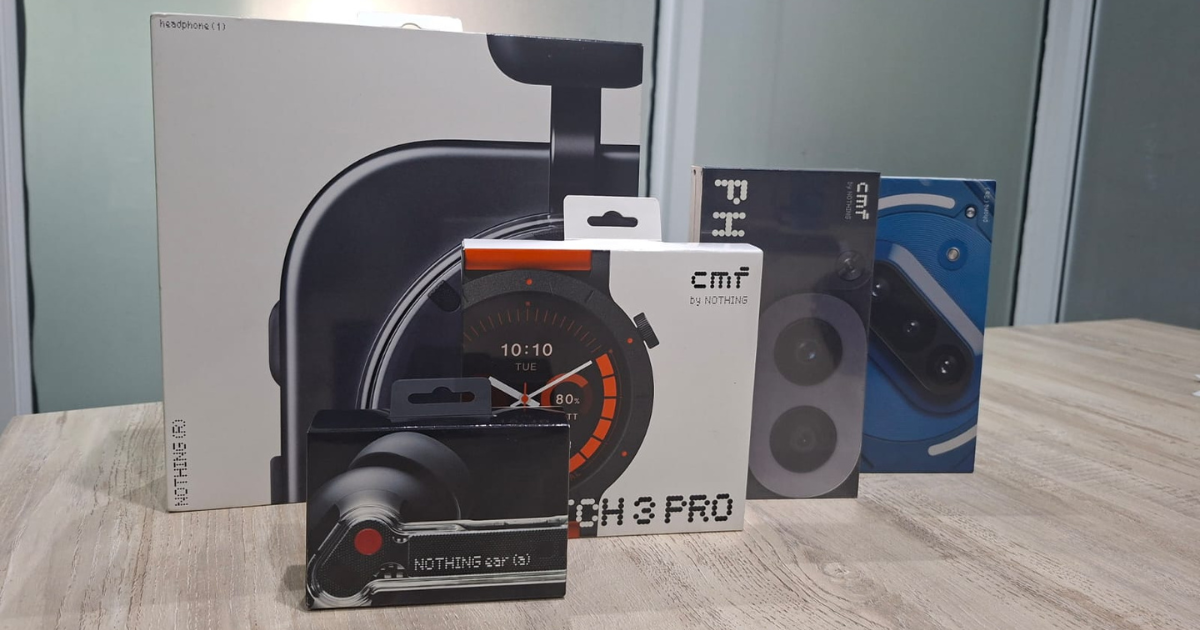
The Nothing Brand isn’t just launching products: it’s architecting a design-led ecosystem. From transparent smartphones to AI-powered earbuds and fashion – forward wearables, the brand is building a universe where style meets utility. But in Kenya, where value, durability, and local support drive adoption, this ecosystem must do more than look good – it must land with relevance.
Nothing Phone (1), (2), and CMF Phone 1: Specs, Positioning, Pricing
The Nothing Phone (1), launched in mid-2022, featured a Snapdragon 778G+ processor, a 120Hz OLED display, and the now-iconic glyph interface. Its successor, Phone (2), upgraded to the Snapdragon 8+ Gen 1, retailing globally at $639 (KES ~65,000). While praised for their design and UI fluidity, both models remain premium-tier, limiting their mass-market appeal in Kenya, where sub-$300 devices dominate.
Enter CMF Phone 1 – Nothing’s affordability-first pivot. Launched in July 2024, it packs a MediaTek Dimensity 7300, 6.67″ AMOLED display, 50MP camera, and 5000mAh battery. Priced at $199 (KES ~29,500), it’s positioned to compete with Xiaomi’s Redmi Note series and Oraimo’s mid-range offerings. But without local distribution, it risks being a ghost brand.
Ear (1), Ear (2), Ear (Stick): Design-Led Audio, ChatGPT Integration
Nothing’s audio line blends style and smarts. The Ear (2) introduced ChatGPT integration, adaptive ANC, and LHDC 5.0 support. Yet in Kenya, Oraimo FreePods and Xiaomi Buds dominate due to their superior battery life, competitive prices, and increased retail visibility. Without presence in local tech shops, Nothing’s audio edge remains aspirational.
CMF Watch Pro, Buds Pro: Affordable Entry Points, Fashion-Forward Tech
CMF’s wearables – Watch Pro, Pro 2, and Buds Pro – retail under KES ~10,500), offering AMOLED displays, IP ratings, and ANC. The recently launched Watch 3 Pro retails at around KES 15,000. They’re positioned to rival Oraimo and Xiaomi devices, but lack visibility in Nairobi’s retail corridors and Safaricom outlets. On select outlets have them.
JuaTech Africa: Strategic Insight
The Nothing Brand’s ecosystem is bold, cohesive, and globally admired. But Kenya’s market demands affordable, accessible, and locally supported tech. CMF is the right pivot – but only if distribution, repair networks, and retail trust back it.
Kenya’s Market Realities: What Style Must Confront
The Nothing Brand’s aesthetic rebellion may turn heads globally, but in Kenya, tech must earn its place through grit, value, and local relevance. This market doesn’t reward hype – it rewards resilience.
Price Sensitivity – Mid-Range Dominance, Value-First Buyers
Kenya’s smartphone market is value-first and fiercely price-sensitive. According to the Communications Authority of Kenya (CAK), smartphone penetration reached 61% in 2023, with over 30.8 million smartphones connected to mobile networks. The numbers increased to an encouraging 80.5% by the end of 2024. Yet, over 70% of devices sold fall within the KES 10,000–30,000 range (approximately USD $70–$210), dominated by Tecno, Infinix, Xiaomi, and Samsung A-series devices. Buyers prioritize battery life, camera performance, and storage – not glyphs or glass. While the CMF Phone 1 fits the pricing bracket, its absence from local shelves makes it invisible.
“Specs don’t sell here – trust, price, and practicality do,” notes Moses Kemibaro, founder of Dotsavvy and a respected voice in Kenya’s digital space.
Support & Repair Culture – Trust in Local Shops, Spare Parts, After-Sales
Kenyan buyers expect immediate, walk-in support. Brands like Oraimo, Tecno, and Samsung thrive because they’ve built repair networks, stocked spare parts, and trained technicians across Nairobi, Eldoret, and Mombasa. A cracked Nothing Phone screen or faulty CMF Buds must be fixable within the nearest urban centre or town – not shipped to Dubai. Without local after-sales infrastructure, Nothing risks being seen as disposable.
Retail Channels: Safaricom, Jumia, Tech Shops, Influencer Retail
Distribution is everything. Safaricom’s device financing, Jumia’s flash sales, and assorted tech shops in Nairobi CBD shape buying behavior. Influencer retail—where creators demo gadgets on TikTok and Instagram – drives Gen Z adoption. If CMF isn’t stocked in these channels, it’s irrelevant. Presence equals purchase.
Strategic Tensions
Kenya’s market doesn’t reject style – it demands style that survives. It requires adaptability to the culture and realities around the people targeted. The Kenyan market is unique from the UK or even India. The Nothing Brand must go beyond aesthetics and embed itself in the rhythms of Kenyan tech life. Because here, design is admired—but durability is worshipped.
Can Design-Led Tech Survive the Nairobi Test?
The Nothing Brand’s design-first philosophy is bold, disruptive, and globally admired. But in Nairobi, where tech meets terrain, the question isn’t just how it looks—it’s how it lives. Kenya’s mobile market is a battlefield of distribution, durability, and trust. And design, no matter how elegant, must survive the test of accessibility.
Visibility vs. Accessibility: Glyphs Look Cool, But Can They Be Serviced?
The Glyph interface on Nothing Phones is a visual marvel, featuring LED strips that signal calls, notifications, and charging status. But in Kenya, visibility means something else: retail presence, demo access, and repairability. If a buyer can’t walk into a shop on Moi Avenue, Kenyatta Avenue, or Phoneplace Kenya and see, touch, or fix the device, it doesn’t exist. As of Q3 2025, Nothing has no official retail footprint in Kenya, and CMF products remain unavailable on Safaricom, Jumia, Kilimall, or trusted tech outlets. That’s not just a gap – it’s a strategic blind spot.
Nothing Brand Story vs. Brand Trust: Global Hype vs. Local Credibility
Carl Pei’s narrative—disrupting tech with transparency and minimalism—has earned Nothing global media coverage and cult-like fandom. But in Kenya, brand trust is earned on the ground. Tecno and Infinix didn’t win by storytelling – they won by showing up: in kiosks, bundles, and repair shops. Without local ambassadors, service centers, or creator partnerships, Nothing risks being seen as style without substance.
“It takes more than specs to sell a phone here – it takes trust, support, and presence,” says a senior rep at Phoneplace Kenya.
Xiaomi, keen to capture the Kenyan, East African, and African markets, has been intentional in its strategy implementation. Read our comprehensive article on Xiaomi’s steady rise and increased inroads in Kenya’s Mobile Tech corridors. Over the years, Xiaomi has risen to be a recognised, admired, and respected brand in Kenya. Can Nothing Phone fall suit?
CMF’s Role: Is This the Right Entry Point for Kenya?
CMF by Nothing is the brand’s affordability-first sub-label, with products priced under KES 30,000. On paper, it’s a strategic fit. But without distribution, support, and visibility, CMF risks being a ghost brand. Kenya’s market doesn’t just reward affordability—it demands accessibility, adaptability, and after-sales assurance.
Takeaway | Strategic Tension
Design may spark desire—but distribution delivers trust. For the Nothing Brand to thrive in Kenya, it must transition from being seen to being served. Because here, tech isn’t just admired—it’s lived with, fixed, and passed down.
What Nothing Must Learn to Win in Kenya
Nothing has captured global attention through bold design, transparent hardware, and a minimalist product philosophy. But Kenya’s smartphone market operates on a different foundation. It is shaped by trust, retail visibility, service infrastructure, and long-term reliability. Design attracts attention, but execution sustains adoption.
This creates a critical inflection point. Nothing’s identity-driven approach must now translate into operational strength. Kenyan buyers embrace innovation, but they prioritize availability, after-sales support, and ecosystem confidence. For Nothing to succeed, its brand clarity must be matched by retail presence, service accessibility, and long-term market commitment.
Kenya represents more than a new territory. It is a proving ground where global brand ambition must align with local market realities. Nothing’s ability to bridge this gap will determine whether its design-led differentiation evolves into sustained competitive relevance.
Intelligence Verdict: Brand Identity Is Nothing’s Strategic Foundation, but Execution Will Determine Market Success
Nothing’s strategy represents a deliberate departure from conventional smartphone competition. Rather than pursuing rapid volume expansion, the company is prioritizing brand identity, design differentiation, and community-driven positioning as its primary strategic assets.
This approach strengthens long-term brand equity, but market success in regions like Kenya will depend on execution beyond design. Retail accessibility, service infrastructure, and ecosystem integration will determine whether Nothing can convert brand attention into sustained adoption.
Nothing is building one of the clearest brand identities in the modern smartphone industry. Its long-term trajectory will depend on its ability to translate this identity into operational strength within competitive and execution-driven markets.
Read Part 2 → Kenya’s Tech Landscape: What Nothing Must Understand to Win.
“This series is part of JuaTech Africa’s mission to decode global tech through an East African lens—empowering buyers, creators, and retailers with insight, clarity, and strategic foresight.”
Also Read Part 1 | Part 2 | of the ongoing Deep Dive Series on Safaricom.