

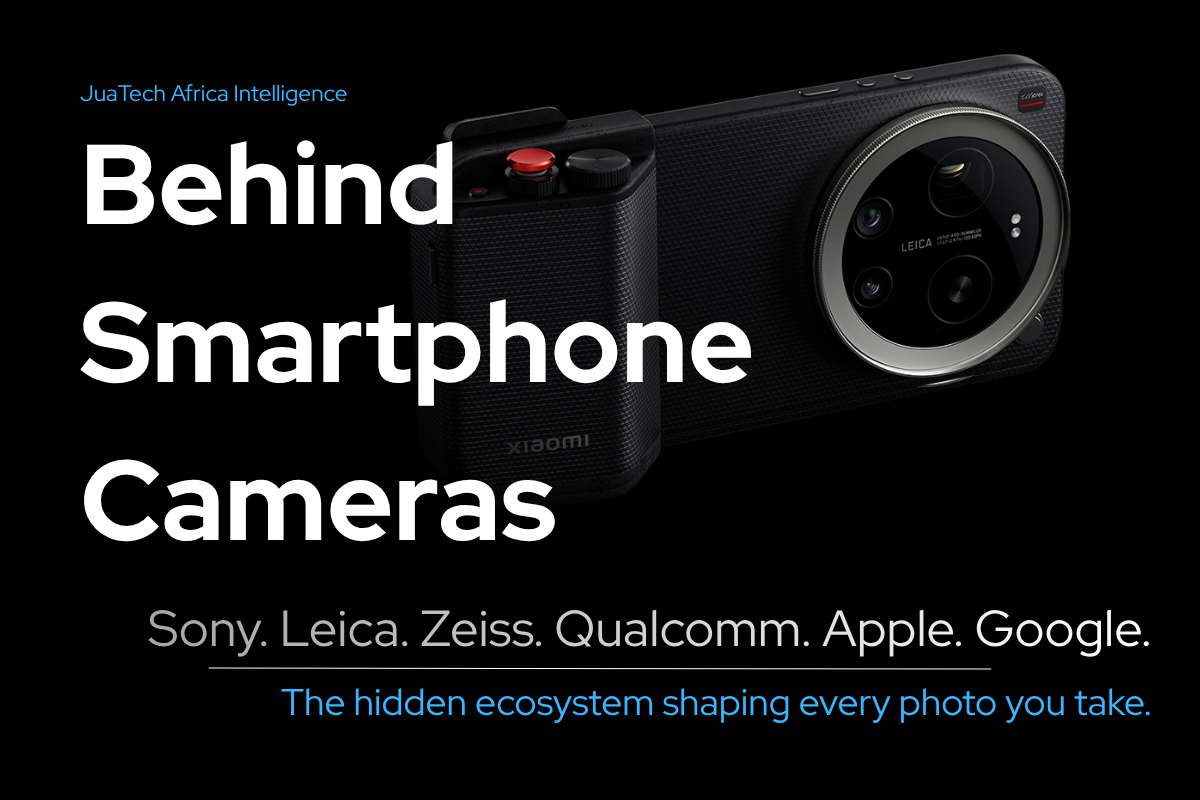
Behind every great smartphone photo lies a complex ecosystem of sensor manufacturers, optics specialists, chipset makers, software developers, and legendary camera brands. As mobile photography and videography become central to communication, creativity, and commerce, understanding the companies shaping mobile imaging has never been more important.
Every day, billions of photos and videos are captured on smartphones. Creators build audiences with them. Businesses market products through them. Journalists document events with them. Families preserve memories through them. Across Africa and around the world, the smartphone camera has evolved from a convenient feature into one of the most influential technologies of the digital age.

This shift is about far more than photography. The smartphone camera has become a tool for communication, creativity, commerce, and storytelling. It powers social media platforms, supports small businesses, enables mobile journalism, and fuels the rapidly growing creator economy. For many people, a smartphone is no longer simply a phone. It is a camera, video production tool, marketing platform, and publishing device rolled into one. As visual content becomes increasingly central to how people work, create, and connect, the value of mobile imaging continues to grow.
The importance of this technology has transformed mobile photography and videography into one of the most fiercely contested battlegrounds in consumer electronics. Smartphone manufacturers invest billions of dollars every year developing camera systems that can differentiate their products in an increasingly competitive market. Product launches are built around camera capabilities. Marketing campaigns showcase photographic achievements. Reviews scrutinize image quality. For many consumers, camera performance is now one of the most important factors influencing a smartphone purchase decision.
Yet despite the attention smartphone cameras receive, most people only see the brands on the surface. The conversation is often framed as a battle between Apple, Samsung, Xiaomi, Vivo, OPPO, HONOR, and other smartphone makers competing to deliver the best camera experience. Discussions typically focus on megapixels, zoom capabilities, portrait modes, low-light performance, and video quality. While these comparisons are important, they overlook a much larger story.
The modern smartphone camera is no longer simply a camera. It is a sophisticated imaging platform built upon multiple layers of hardware and software. At its foundation sits a sensor designed to capture light. That light passes through carefully engineered optics before being transformed into data. Powerful processors, image signal processors, and artificial intelligence engines then analyze, enhance, and refine the final image in real time. By the time a photo appears on a screen, dozens of complex processes have already taken place behind the scenes.
Those processes are powered by an ecosystem of companies that most consumers rarely think about. Sony supplies image sensors used in many of the world’s leading smartphones. Leica, Zeiss, and Hasselblad contribute decades of expertise in optics, color science, and photographic heritage. Qualcomm and MediaTek provide the computational power required to process increasingly complex visual information. Meanwhile, Google and Apple continue to push the boundaries of computational photography, machine learning, and AI-assisted imaging.
Understanding modern smartphone cameras therefore requires looking beyond the logos on the back of a device. It requires understanding the companies, technologies, and partnerships shaping how billions of people capture, create, communicate, and tell stories. This article explores the hidden ecosystem behind mobile imaging and examines the companies driving the future of smartphone photography and videography.
Why Smartphone Cameras Became the Most Important Consumer Technology
When the first camera phones emerged in the late 1990s and early 2000s, few could have predicted the role they would eventually play in everyday life. Early mobile cameras were limited in capability and often produced images that fell far short of dedicated digital cameras. For many consumers, they were little more than a novelty. Over the next two decades, advances in sensor technology, mobile processors, optics, storage, and connectivity transformed the smartphone camera from a secondary feature into one of the defining technologies of the modern era.
The shift coincided with a fundamental change in how people communicate online. Text remains important, but visual content increasingly dominates digital interactions. Platforms such as TikTok, Instagram, YouTube, and LinkedIn have accelerated the demand for high-quality photos and videos by rewarding content that captures attention quickly and communicates ideas effectively. Individuals, businesses, creators, educators, and organizations now rely on visual storytelling to reach audiences, build communities, and establish credibility in increasingly competitive digital environments.
At the same time, the smartphone evolved into the most accessible creative tool in history. Mobile filmmakers can shoot, edit, and publish content from a single device. Journalists can document events and share updates in real time. Small businesses can create marketing campaigns without investing in expensive production equipment. Entrepreneurs, influencers, and content creators can build entire brands using tools that fit comfortably in a pocket. The smartphone camera has democratized content creation, lowering barriers that once limited professional photography and video production to those with specialized equipment and technical expertise.
Manufacturers recognized this shift early. As smartphone performance, battery life, and display quality matured, camera innovation emerged as one of the most effective ways to differentiate products in a highly competitive market. Companies responded by investing heavily in imaging research, advanced sensors, computational photography, artificial intelligence, and strategic partnerships with established photography brands. What began as a race to improve image quality evolved into a broader competition to deliver better visual experiences, stronger creator tools, and more sophisticated imaging capabilities.
This transformation explains why camera performance has become one of the leading reasons consumers upgrade their smartphones. In an increasingly visual world, the ability to capture, create, and communicate through images and video has become central to how people live, work, and connect. As demand for better mobile photography and videography accelerated, smartphone manufacturers increasingly turned to specialized partners for sensors, optics, image processing, and computational photography. The result is a powerful ecosystem of companies whose technologies influence the smartphone experiences of billions of people worldwide and set the stage for the next phase of innovation in mobile imaging.
Understanding the Four Layers of Mobile Imaging
Most consumers judge a smartphone camera by the image it produces. The companies shaping modern mobile imaging view the process very differently. For them, every photograph and video is the result of multiple technologies working together behind the scenes. What appears to be a simple camera system is, in reality, a sophisticated imaging pipeline involving hardware, software, processing power, and artificial intelligence.
Understanding this distinction is important because modern smartphone photography is no longer defined by a single component. A larger sensor alone cannot guarantee a better image. Advanced software cannot fully compensate for weak hardware. Instead, the best camera experiences emerge when multiple technologies work together seamlessly. This helps explain why two smartphones with similar specifications can produce remarkably different results in real-world use.
At a high level, the smartphone imaging ecosystem can be understood through four interconnected layers: sensors, optics, processing, and computational photography. Together, these layers determine how light enters a smartphone camera, how it is interpreted, and how it ultimately appears as a photograph or video.
Layer 1: Sensors | Capturing Light
Every image begins with light. The sensor serves as the foundation of the smartphone camera and functions as the device’s digital eye. Its role is to capture incoming light and convert it into electronic information that can be processed by the smartphone.
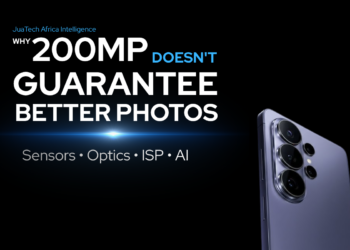
This is where companies such as Sony, Samsung ISOCELL, and OmniVision play a critical role. Their sensors influence image detail, dynamic range, color accuracy, and low-light performance. While consumers often focus on megapixels, factors such as sensor size, pixel architecture, and light-gathering capability frequently have a greater impact on the final image.
Layer 2: Optics | Managing Light
Before light reaches the sensor, it must pass through a system of lenses designed to direct, focus, and control it. This optical layer determines how effectively a camera translates real-world scenes into accurate digital representations.
Companies such as Zeiss, Leica, and Hasselblad contribute expertise in lens design, optical engineering, color science, and imaging philosophy. While optics often receive less attention than sensors, they remain essential to image quality, consistency, and overall photographic character.
Layer 3: Processing | Transforming Data into Images
Once light has been captured by the sensor, the smartphone must transform raw information into a usable image. This responsibility falls to powerful processors and Image Signal Processors, commonly known as ISPs.
Companies such as Qualcomm, MediaTek, and Apple develop the technologies that power this stage of the imaging pipeline. Their processors perform billions of calculations in real time, managing autofocus, HDR processing, noise reduction, color reproduction, and video optimization. The effectiveness of this layer often explains why smartphones using similar camera hardware can produce noticeably different photographic and video results.
Layer 4: Computational Photography | Creating the Final Image
The final layer is increasingly becoming the most influential. Computational photography combines software, machine learning, and artificial intelligence to enhance images beyond the limits of hardware alone.
Companies such as Google, Apple, Samsung, Xiaomi, and Vivo have invested heavily in this area, developing algorithms that improve low-light performance, expand dynamic range, enhance portraits, sharpen detail, and optimize video quality. Rather than relying solely on what the camera physically captures, computational photography analyzes scenes, interprets context, and intelligently refines the final image.
Understanding these four layers reveals a fundamental truth about modern mobile imaging. The era when smartphone cameras could be judged primarily by megapixels and hardware specifications is rapidly fading. Today’s best camera systems are the product of sensors capturing light, optics shaping it, processors interpreting it, and intelligent software refining it. This layered ecosystem also explains why camera comparisons have become increasingly complex and why different companies have emerged as leaders in different parts of the imaging stack. Understanding those roles is essential to understanding the future of smartphone photography and videography.
Sony: The Quiet Company Powering the Smartphone Camera Revolution
If you have ever wondered why some smartphones consistently produce better photos and videos than others, the answer often begins long before software processing or artificial intelligence enters the equation. It begins with the sensor. Hidden behind the camera systems of many flagship smartphones is technology developed by a company that most consumers rarely associate with mobile photography: Sony.
While consumers often compare camera performance across brands such as Apple, Samsung, Google, Xiaomi, Vivo, OPPO, and HONOR, many of these devices share a common foundation. Sony supplies image sensors used throughout the smartphone industry, giving the company a level of influence that extends far beyond its own smartphone business. Rather than competing primarily through handset sales, Sony occupies a strategic position at the heart of the mobile imaging ecosystem.
The importance of the sensor cannot be overstated. Every photograph begins with light, and the sensor captures it and converts it into digital information. The quality of that information influences everything that follows, from detail and dynamic range to color reproduction and low-light performance. For smartphone users, this matters because even the most advanced software depends on the quality of the data captured at the sensor level.
Sony’s leadership did not emerge overnight. Long before smartphones became the world’s most popular cameras, the company had built expertise in digital imaging, professional camera systems, and semiconductor technology. As smartphone manufacturers pushed for better photographic performance, Sony was uniquely positioned to provide the sensor technology needed to support increasingly advanced imaging systems.
Today, Sony’s influence can be found across the flagship smartphone market. A premium Vivo, Xiaomi, OPPO, HONOR, or Google device may use a Sony sensor at the heart of its camera system. While each manufacturer applies its own software, image processing, and photographic philosophy, many begin with the same foundation. This helps explain why smartphone photography is about far more than megapixels and why camera performance cannot be judged by specifications alone.
Sony has also continued to push innovation in sensor technology, developing solutions that improve light capture, low-light performance, readout speeds, and computational photography support. For most consumers, the company remains largely invisible in the smartphone buying process. Yet every time a flagship smartphone captures a stunning landscape, preserves detail in difficult lighting, or records high-quality video, there is a good chance Sony technology played a role. The company may not dominate smartphone sales, but it has become one of the most influential forces shaping modern mobile photography.
Leica: Bringing Photography Heritage to Smartphones
Two smartphones can photograph the same scene and produce noticeably different results. One image may appear warmer, another may emphasize contrast, while a third may aim for a more natural and understated look. These differences are not always the result of hardware alone. They often reflect a company’s philosophy about what photography should look like. Few names have influenced that conversation more than Leica.
Known for its cameras, lenses, and photographic heritage, Leica entered the smartphone industry through its partnership with Xiaomi. At a time when many smartphone manufacturers were competing on megapixels and specifications, the collaboration introduced a different dimension to the conversation. It shifted attention toward image character, color science, and the overall photographic experience.
One of Leica’s most visible contributions is its approach to color reproduction and image rendering. Through Xiaomi devices, users are often given different photographic profiles that reflect distinct imaging philosophies. Rather than simply pursuing brighter colors or more aggressive processing, Leica’s influence is often associated with natural tones, balanced contrast, and images designed to feel authentic. For photography enthusiasts and creators, these choices can significantly influence how a photograph looks and feels.
This naturally raises a question that frequently appears in discussions about smartphone cameras: Is Leica merely a marketing logo on the back of a phone? The answer is more nuanced than a simple yes or no. Leica does not design Xiaomi smartphones or manufacture their camera hardware. However, its involvement extends beyond branding. The company contributes expertise in areas such as color tuning, image evaluation, user experience, and photographic direction. While the extent of that influence may vary between products, the partnership represents a deeper collaboration than a traditional licensing arrangement.
For Xiaomi, Leica strengthens the company’s premium positioning and reinforces its ambitions in flagship mobile imaging. For Leica, the partnership provides an opportunity to bring its photographic philosophy to a generation of users who may never own a dedicated Leica camera.
Leica’s significance in mobile imaging ultimately extends beyond technology. Its contribution is not simply about making smartphone cameras better. It is about shaping how photographs are interpreted, rendered, and experienced. In an industry increasingly defined by software and computational photography, Leica demonstrates that artistic vision and image philosophy remain important parts of the mobile imaging equation.
Zeiss and Vivo: Engineering Mobile Optics for the Smartphone Era
When smartphone camera discussions focus on image quality, attention often gravitates toward sensors, megapixels, and software processing. Yet before light reaches the sensor and long before artificial intelligence begins refining an image, it must pass through the camera’s optical system. The quality of that journey plays a critical role in determining the final result. This is where Zeiss has established its influence within the mobile imaging industry.
Founded in Germany in 1846, Zeiss built its reputation through decades of expertise in optics, precision engineering, and lens design. Its technologies have been used across scientific instruments, professional photography, filmmaking, and industrial applications. In the smartphone era, that expertise has found a new platform through Zeiss’s partnership with Vivo, one of the most ambitious collaborations in modern mobile imaging.
Unlike partnerships focused primarily on brand recognition, the Vivo-Zeiss relationship places significant emphasis on optical engineering. The two companies have worked together on lens design, image quality evaluation, and imaging technologies intended to improve how smartphone cameras capture and reproduce light. This collaboration reflects a broader challenge facing smartphone manufacturers: fitting increasingly sophisticated optical systems into devices measured in millimeters.
One of the most visible examples of Zeiss’s influence is its T* coating technology. Originally developed to reduce reflections and improve light transmission, these specialized optical coatings help minimize issues such as lens flare and unwanted reflections that can affect image quality. While consumers may not immediately notice the engineering involved, the benefits often become apparent in challenging lighting conditions where optical imperfections are more likely to appear.
For creators, photographers, and everyday users, better optics contribute to cleaner images, improved consistency, and greater confidence in difficult shooting environments. This is particularly important as smartphones take on increasingly demanding roles in photography and videography.
The Vivo-Zeiss partnership demonstrates that mobile imaging innovation is not driven solely by sensors or software. Optics remain a critical part of the equation. Zeiss’s contribution lies in helping manufacturers manage and control light before it ever reaches the sensor. In doing so, the company has become one of the most important technical partners in the smartphone industry and represents one of the deepest engineering collaborations in modern mobile imaging.
Hasselblad and the Pursuit of Professional Color
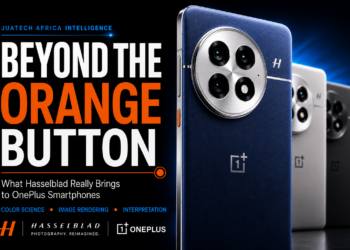
Few photography brands carry the prestige of Hasselblad. Best known for its medium-format cameras and its association with some of history’s most iconic photographs, the Swedish company has long been recognized for image quality, color accuracy, and professional imaging excellence. In the smartphone era, that heritage found a new audience through partnerships with OnePlus and OPPO.
As smartphone cameras matured, manufacturers increasingly looked beyond hardware specifications to strengthen their imaging credentials. The challenge was no longer simply capturing more detail or adding more megapixels. It was creating images that felt natural, balanced, and visually appealing. This is where Hasselblad’s expertise became valuable.
One of the partnership’s primary areas of focus has been color calibration. Through collaborations with OnePlus and OPPO, Hasselblad has contributed to efforts to improve color reproduction and achieve a more consistent photographic experience. The goal is not necessarily to create dramatic or highly processed images, but rather to deliver colors that appear accurate and true to the scene being captured.
The partnership also carries strategic significance. For smartphone manufacturers, aligning with a respected photography brand helps reinforce premium positioning and signals a commitment to imaging quality. For consumers, the Hasselblad name evokes decades of photographic heritage and professional credibility, even if they may not be familiar with the technical details behind the collaboration.
Hasselblad’s contribution to mobile imaging highlights an important aspect of the modern smartphone industry. Technology alone does not shape consumer perception. Heritage, expertise, and trust also play meaningful roles. While the company’s influence may not be as visible as a sensor manufacturer or software developer, it demonstrates how prestige and professional imaging expertise continue to shape the evolution of smartphone cameras.
Qualcomm, MediaTek and the Hidden Intelligence Behind Every Photo
A common assumption in smartphone photography is that better camera hardware automatically produces better images. While sensors and optics remain essential, they tell only part of the story. Two smartphones can use similar camera sensors and lens systems yet deliver noticeably different results. Colors may vary, low-light performance may differ, autofocus may behave differently, and video quality can produce entirely different impressions. The reason often lies in a less visible part of the imaging pipeline: processing.
Once a sensor captures light and converts it into digital information, that data must be transformed into a photograph or video. This process takes place through a combination of processors, Image Signal Processors (ISPs), artificial intelligence engines, and Neural Processing Units (NPUs). Together, these technologies perform billions of calculations in real time, helping determine how an image is exposed, how colors are reproduced, how noise is reduced, and how details are preserved.
Companies such as Qualcomm and MediaTek play a central role in this stage of mobile imaging. Their chipsets power a significant portion of the global smartphone market and provide the computational foundation for modern photography features. The ISP acts as the imaging specialist within the chipset, managing tasks such as autofocus, HDR processing, noise reduction, color optimization, and video enhancement. AI engines and NPUs accelerate machine learning workloads that help smartphones recognize scenes, identify subjects, improve portraits, optimize low-light photography, and support increasingly sophisticated computational photography capabilities.
For smartphone users, creators, and reviewers, this hidden intelligence layer has become increasingly important. It influences whether a night photo appears clean or noisy, whether skin tones look natural or artificial, and whether a video remains stable while recording on the move. Much of what consumers perceive as camera quality is actually the result of advanced image processing taking place behind the scenes. This reality helps explain why two smartphones using similar Sony sensors can produce dramatically different photographic and video results.
The significance of this shift extends beyond photography enthusiasts. For content creators, processing can influence workflow efficiency, video quality, and creative flexibility. For businesses, it affects the quality of visual content used to market products and services. It shapes the moments for everyday users as they capture and share with family, friends, and online communities. In many cases, the difference between a good smartphone camera and a great one is no longer determined solely by hardware. It is determined by how effectively that hardware is supported by intelligent software and processing.
The smartphone industry often celebrates sensors and lenses because they are easy to market. Processing is different. It operates largely out of sight. Yet it is increasingly becoming one of the most important factors separating good smartphone cameras from exceptional ones. As mobile imaging continues to evolve, computational intelligence is becoming just as important as the hardware that captures the light in the first place.
Google, Apple and the Rise of Computational Photography
For decades, camera performance was largely determined by physical hardware. Better sensors captured more light. Notably, better lenses produced sharper images. And essentially, better cameras generally required larger components and more sophisticated equipment. Smartphones challenged that traditional relationship. Constrained by size, manufacturers could not simply add larger lenses and sensors indefinitely. Instead, they began looking for another path forward. That path became computational photography.
Computational photography combines software, artificial intelligence, machine learning, and advanced image processing to improve photographs beyond what hardware alone can achieve. Rather than relying on a single image captured when the shutter is pressed, modern smartphones often analyze multiple frames, compare information, identify subjects, and intelligently optimize the final result. The photograph users see is increasingly the product of both optical capture and computational decision-making.
Few companies have played a larger role in this transformation than Google and Apple. In 2014, Google’s HDR+ technology demonstrated how software could dramatically improve image quality by combining multiple exposures to reduce noise, preserve detail, and improve dynamic range. Years later, features such as Night Sight further challenged assumptions about what smartphone cameras could achieve in low-light conditions. Rather than depending solely on larger hardware, Google showed that intelligent processing could compensate for many physical limitations.
Apple pursued a similar vision through its own computational imaging technologies. Features such as Smart HDR, Deep Fusion, Portrait Mode, and Photonic Engine transformed how iPhones capture and process images. Rather than simply recording a scene, the camera continuously analyzes lighting conditions, textures, faces, and subjects before producing the final photograph. The result is an imaging experience that feels increasingly intelligent and adaptive.
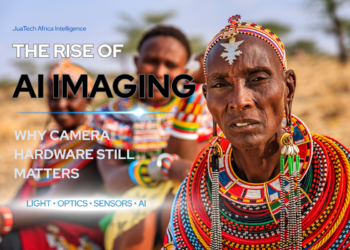
Today, computational photography extends far beyond HDR and low-light imaging. Portrait processing can simulate depth-of-field effects once the domain of dedicated cameras. AI-powered systems can identify scenes, optimize settings, remove unwanted artifacts, and enhance details in real time. Increasingly, smartphone cameras are not just capturing reality. They are interpreting it.
For creators, businesses, and everyday users, the benefits are substantial. Better low-light performance, improved portraits, enhanced video quality, and more reliable results have made advanced photography accessible to millions of people. Yet these capabilities also reveal a broader shift within the industry. The future of smartphone imaging will not be defined solely by larger sensors or better lenses. It will be shaped by how effectively software, artificial intelligence, and computational photography work alongside hardware to create images that would once have been impossible to achieve on a smartphone.
Why Mobile Videography Is the Next Great Battleground
For much of the smartphone industry’s history, camera innovation focused primarily on photography. Manufacturers competed to deliver sharper images, better low-light performance, improved zoom capabilities, and more sophisticated portrait effects. While photography remains important, the competitive landscape is rapidly shifting. Increasingly, the next major battleground in mobile imaging is video.
This shift reflects broader changes in how people create and consume content. Platforms such as YouTube, TikTok, Instagram Reels, and LinkedIn have accelerated demand for video-first communication. Creators build audiences through video. Businesses market products through video. Educators teach through video. Across the digital economy, video has become one of the most powerful tools for storytelling, engagement, and audience growth.
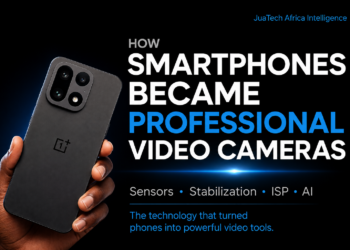
As a result, smartphone manufacturers are investing heavily in professional-grade video capabilities. Features such as LOG recording provide creators with greater flexibility during color grading and post-production. HDR video improves dynamic range and preserves detail across challenging lighting conditions. Advanced stabilization systems help deliver smoother footage while shooting handheld, while cinematic modes simulate depth effects and more sophisticated visual storytelling techniques. Capabilities that were once associated with dedicated cameras are increasingly available on devices that fit into a pocket.
For creators and mobile filmmakers, this transformation is particularly significant. A modern smartphone can now function as a camera, editing suite, publishing platform, and distribution channel within a single device. The barriers to producing professional-looking video content have never been lower. This has expanded opportunities for vloggers, independent filmmakers, journalists, entrepreneurs, and content creators seeking to reach audiences without investing in expensive production equipment.
The growing emphasis on video also explains why imaging innovation can no longer be measured through photography alone. The companies shaping the future of mobile imaging are increasingly optimizing their technologies for both still images and motion capture. As the creator economy continues to expand, the competition between smartphone manufacturers will be defined not only by who takes the best photo, but also by who delivers the most capable and accessible professional video experience.
Why Mobile Imaging Matters for Africa’s Digital Economy
The significance of mobile imaging extends far beyond technology companies and smartphone manufacturers. Across Africa, smartphones have become powerful tools for communication, creativity, entrepreneurship, and economic participation. For millions of people, the smartphone camera is no longer simply a way to capture memories. It has become a tool for creating opportunities, building businesses, reaching audiences, and generating income.
This transformation is particularly significant in a region where access to traditional production equipment can be limited by cost. A modern smartphone now combines the capabilities of a camera, video recorder, editing suite, publishing platform, and communication device within a single product. Tools that once required significant financial investment are increasingly available to individuals carrying a smartphone in their pocket.
Content Creation and the Creator Economy
The growth of digital platforms has created new opportunities for African creators to reach audiences both locally and globally. YouTubers, vloggers, educators, podcasters, influencers, and digital storytellers increasingly rely on smartphones as their primary production tools. A device capable of capturing high-quality photos and videos can now support content creation, audience growth, brand partnerships, and revenue generation.
The importance of this shift extends beyond individual creators. Smartphones are helping democratize storytelling by enabling more voices to participate in the digital economy. The ability to produce compelling visual content is no longer reserved for those with access to professional cameras and production studios. It is increasingly accessible to anyone with creativity, consistency, and the right mobile tools.
Empowering Small Businesses and Entrepreneurs
The impact of mobile imaging can also be seen in the way businesses market and sell products. Small enterprises use smartphone cameras to create product photography, promotional videos, social media campaigns, and customer engagement content. Entrepreneurs can showcase services, build brand visibility, and attract new customers without investing heavily in traditional advertising or media production.
For many businesses, visual content has become a critical part of customer acquisition and brand growth. The quality of images and videos shared online often influences how products, services, and businesses are perceived. As a result, advances in mobile imaging increasingly translate into practical business advantages.
The Smartphone as Africa’s New Production Studio
The influence of smartphone cameras extends beyond creators and businesses. Journalists use them to document events and report stories in real time. Community organizations use them to share information and raise awareness. Professionals use them to communicate ideas, showcase expertise, and build personal brands. Across multiple sectors, the smartphone camera has become a versatile tool for communication and value creation.
This reality helps explain why the companies discussed throughout this article matter. Advances in sensors, optics, processing, artificial intelligence, and computational photography are not simply making smartphone cameras better. They are expanding access to capabilities that support storytelling, commerce, education, journalism, and entrepreneurship.
As Africa’s digital economy continues to evolve, mobile imaging is becoming more than a consumer technology. It is becoming an economic enabler. The smartphone camera now serves as a production studio, marketing platform, storytelling tool, and gateway to opportunity for millions of people across the continent. Understanding the companies shaping mobile imaging is therefore not just about understanding technology. It is about understanding one of the tools helping define Africa’s digital future.
The Future of Mobile Imaging
When most consumers compare smartphone cameras, they compare brands. They evaluate the latest iPhone, Galaxy, Xiaomi, Vivo, OPPO, HONOR, or Pixel device and ask a simple question: Which smartphone takes the best photos and videos? Yet as this article has shown, the answer extends far beyond the logo on the back of a device.
Modern mobile imaging is powered by a vast and interconnected ecosystem. Sensor manufacturers capture the light. Optics specialists shape and control it. Chipmakers provide the processing power required to transform raw data into usable images. Software developers and artificial intelligence researchers increasingly determine how those images are interpreted, enhanced, and experienced. Together, these organizations form the foundation upon which modern smartphone photography and videography are built.
The smartphone camera may be one of the most collaborative products in modern consumer technology. Every photo and video represents the convergence of optics, semiconductors, software, artificial intelligence, engineering, and creative vision. The industry’s most significant breakthroughs are no longer emerging from a single technology. They are emerging from the successful integration of multiple disciplines working together to overcome the limitations of increasingly compact devices.
This evolution carries implications that extend far beyond photography itself. Across Africa and around the world, smartphone cameras have become tools for communication, entrepreneurship, journalism, education, marketing, and storytelling. For creators, businesses, and professionals, the smartphone is no longer merely a device for consuming content. It has become a platform for creating value, building audiences, growing brands, and participating in the digital economy.
Perhaps the most important lesson from the evolution of mobile imaging is that photography is no longer defined solely by hardware. The era when cameras could be judged primarily by megapixels and specifications is rapidly fading. Increasingly, image quality is shaped by the interaction between sensors, optics, image processing, artificial intelligence, and computational photography. Consumers may see smartphone brands, but the industry runs on a far deeper ecosystem of innovators, engineers, researchers, software developers, and imaging specialists whose contributions often remain invisible.
The next decade of mobile imaging will be defined not only by better cameras, but by the convergence of optics, artificial intelligence, computational photography, and creator-driven storytelling. The companies shaping this future will influence far more than the images we capture. They will influence how we communicate, create, conduct business, share knowledge, and participate in the digital economy.
The story of mobile imaging is still being written. The companies explored in this article are not merely building better cameras. They are helping shape one of the most important creative and economic technologies of the modern era.
Continue Exploring Mobile Imaging Intelligence
- Why Sony Quietly Powers the Smartphone Camera Industry
- Leica Beyond the Red Dot: What Leica Really Brings to Smartphones
- Zeiss and Vivo: The Most Serious Camera Partnership in Smartphones?
- The Hidden Processor Behind Every Smartphone Photo
- AI Imaging: Is Software Becoming More Important Than Hardware?
Stay Connected
Want deeper insights into mobile imaging, creator technology, and Africa’s digital economy?
- Subscribe to the JuaTech Africa Newsletter
- Join the JuaTech Africa WhatsApp Community
- Follow JuaTech Africa on TikTok
- Follow JuaTech Africa on Facebook