
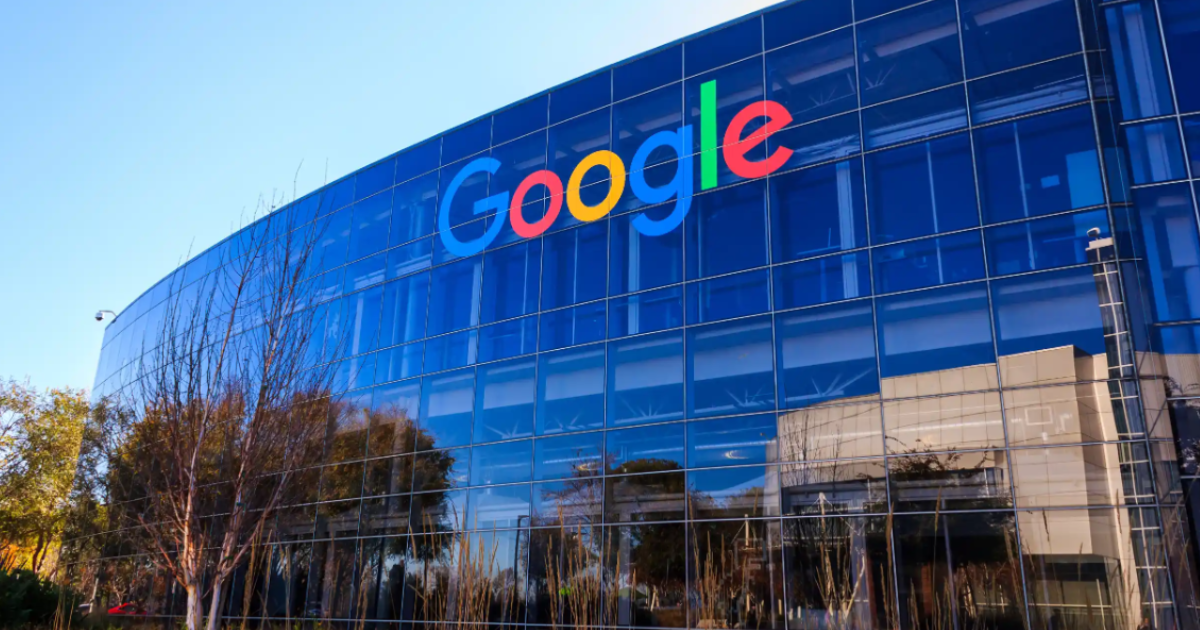
It began with a question – not from a user, but from two Stanford students who dared to ask whether the world’s information could be organized, not merely stored.
That question birthed an algorithm.
The algorithm became a company.
The company became a verb.

Today, Google is no longer just a digital reflex. It is a cultural instinct, a commercial engine, and increasingly, a cognitive force – one that mediates how knowledge is discovered, trust is assigned, and decisions are shaped.
In just over two decades, Google has evolved from a minimalist search box into a vast, interlinked system of artificial intelligence, cloud infrastructure, ambient computing, and predictive models. In the process, it has redefined journalism, commerce, education, and geopolitics. Yet beneath the polished interfaces and trillion-dollar valuation lies a deeper transformation – one that demands scrutiny, context, and regional perspective.
And this is where Africa enters the equation.
Once positioned as a passive recipient of global technology, the continent is now emerging as a strategic frontier in the algorithmic age. Innovation hubs such as Nairobi, Lagos, and Accra signal a shift: Africa’s youthful demographics, expanding digital infrastructure, and entrepreneurial intensity are no longer peripheral to global platforms – they are becoming structurally relevant.
Kenya’s digital ecosystem, in particular, offers a telling case study. From Android Go and localized connectivity initiatives to AI research investments and developer programs, Google’s engagement across the continent reflects more than market expansion. It reveals a recalibration – one shaped by scale, constraints, and opportunity that Africa uniquely provides.
This piece traces Google’s metamorphosis from idealistic origins to algorithmic dominance, while examining Africa’s unfolding role in influencing what comes next. It is a story of transformation and tension, of power and possibility – anchored in a continent that is no longer content to be indexed, but determined to shape the code itself.
Phase I: The Rise of Google: From BackRub to Global Brain
In the autumn of 1996, inside Stanford University’s computer science department, two PhD students—Larry Page and Sergey Brin—began experimenting with a research project that would quietly alter the trajectory of the internet. Their prototype, aptly named BackRub, wasn’t just another search engine. It was a radical rethinking of relevance: not based on keyword density, but on the authority of hyperlinks. This algorithmic breakthrough, later refined into PageRank, became the intellectual nucleus of what would soon be known as Google.
By September 4, 1998, Google Inc. was officially established, operating out of a garage in Menlo Park, California, rented from Susan Wojcicki, who would later become the CEO of YouTube. The company’s minimalist homepage, clean typography, and uncanny ability to deliver accurate results made it an instant darling among early internet users. But beneath the simplicity lay a sophisticated indexing architecture that outpaced competitors like AltaVista, Lycos, and Yahoo, rendering them obsolete almost overnight.
From Idealism to Monetization: The AdWords Pivot
Google’s early ethos was idealistic, almost utopian. The unofficial motto, “Don’t Be Evil,” wasn’t just branding. It was a philosophical stance against the cluttered, ad-heavy interfaces of its rivals. In October 2000, Google launched AdWords, a self-serve advertising platform that monetized search without compromising user experience. It was a masterstroke of business acumen: scalable, data-driven, and quietly revolutionary.
By 2001, Eric Schmidt’s arrival as CEO brought operational discipline to Page and Brin’s previously visionary chaos. The trio – Schmidt, Page, and Brin -formed a leadership triumvirate that would steer Google through its most formative years, striking a balance between innovation and infrastructure.
Then came the product cascade.
In 2004, Gmail debuted with a staggering 1GB of free storage – ten times more than competitors. In 2005, Google Maps revolutionized navigation by layering satellite imagery with real-time directions. That same year, Google acquired Android Inc., a move that would later position it as the dominant force in the mobile operating system market. By 2006, the acquisition of YouTube for $1.65 billion signaled Google’s pivot from search to content – from indexing the web to owning its attention.
Building the Ecosystem: From Tools to Territory
Each product wasn’t just a tool – it was a strategic node in a growing ecosystem. Chrome (2008) became the gateway. Drive (2012) became the vault. Translate, Calendar, Photos, and Docs – each reinforced Google’s gravitational pull on daily life. The company was no longer organizing the world’s information. It was becoming an integral part of the world’s routines.
Yet even as Google scaled, its foundational tension persisted: Can a company built on organizing truth remain neutral as it shapes it? The rise of algorithmic influence – what gets seen, what gets buried, what gets monetized – began to raise ethical questions. By the early 2010s, Google had become more than just a tech company. It was a cultural force, a geopolitical actor, and arguably, the most powerful curator of human knowledge in history.
And still, the metamorphosis was only beginning.
The formation of Alphabet Inc. in 2015 marked a strategic pivot. Google became a subsidiary – focused on core products -while Alphabet housed its moonshots, including autonomous vehicles (Waymo), life sciences (Verily), smart cities (Sidewalk Labs), and artificial intelligence (DeepMind). This wasn’t diversification. It was a declaration: Google had outgrown the web. It was now engineering the future.
From a Stanford dorm room to a trillion-dollar empire, Google’s rise was not accidental. It was a symphony of algorithmic brilliance, product intuition, and ruthless strategic execution. But as the company evolved, so did the stakes. The question was no longer how Google worked—but what it was becoming.
And in that becoming, Africa would soon find itself not just watching—but participating.
Phase II: The Empire of Everything | Google’s Present-Day Dominance and Africa’s Emerging Influence
If Phase I was about invention, Phase II is about consolidation, expansion, and reckoning. Today, Google is no longer a search engine – it is a sentient empire, a constellation of platforms, algorithms, and infrastructures that shape how billions live, learn, transact, and think. Its metamorphosis into a global superstructure is not just technological – it’s philosophical, economic, and geopolitical.
Alphabet Inc.: The Strategic Recode
In August 2015, Google restructured itself under a new parent company, Alphabet Inc., a move that was both symbolic and strategic. This wasn’t a rebrand; it was a recode of ambition. Google became a subsidiary focused on core products: Search, Ads, Android, Chrome, and YouTube. Meanwhile, Alphabet absorbed the moonshots -Waymo (autonomous vehicles), Verily (life sciences), Calico (longevity), Sidewalk Labs (smart cities), and DeepMind (AI research).
This bifurcation allowed Google to scale its empire while Alphabet pursued the future. It was a masterclass in corporate architecture -decentralized, agile, and insulated from regulatory blowback. Today, Alphabet commands a market capitalization exceeding $1.8 trillion, with Google contributing over 80% of its revenue, primarily through advertising.
AI Ascendancy: From Search to Sentience
Google’s pivot from search to generative intelligence is arguably the most consequential shift in its history. With the launch of Gemini, its multimodal AI model, Google entered the arena dominated by OpenAI’s GPT and Meta’s LLaMA. However, Google’s edge lies in its infrastructure – specifically, its proprietary TPUs (Tensor Processing Units), vast training datasets, and seamless integration across Search, Workspace, and Android.
The rollout of Search Generative Experience (SGE) marks a paradigm shift. Instead of serving links, Google now serves answers – contextual, conversational, and AI-generated. This redefines not only the user experience, but also the economics of visibility. Publishers, advertisers, and creators must now contend with a search engine that thinks, summarizes, and sometimes bypasses them entirely.
“We’re moving from answers to agents.” — Sundar Pichai, CEO of Alphabet.
This transition from reactive search to proactive assistance is not just technical, it’s existential. Google is no longer a gateway to the web. It’s becoming the web’s interpreter, editor, and gatekeeper.
Ethical Crossroads: Power, Privacy, and Policy
With great intelligence comes great scrutiny. Google faces mounting pressure over allegations of antitrust violations, data privacy concerns, and algorithmic bias. In the U.S., the Department of Justice’s antitrust lawsuit alleges that Google has monopolized the search and ad markets. In Europe, regulators have fined the company over €8 billion for anti-competitive practices.
The ethical dilemmas are profound:
- Who decides what information is surfaced or suppressed?
- How transparent are AI-generated results?
- What safeguards exist against misinformation, deepfakes, and surveillance?
Google’s AI Principles, published in 2018, promise fairness, accountability, and transparency, with a focus on privacy. However, critics argue that enforcement is inconsistent, particularly in emerging markets where regulatory frameworks are either nascent or absent.
Africa’s Equation: From User Base to Strategic Frontier
Kenya’s Digital Pulse
In this global equation, Africa is no longer peripheral; it’s pivotal. With over 1.4 billion people, a median age under 20, and mobile-first economies, the continent represents Google’s next billion users – and potentially – its next billion innovators.
Kenya, in particular, is a strategic node. Google’s Nairobi office anchors its East African operations, supporting initiatives like:
- Android Go: Optimized for low-bandwidth environments
- Google Hustle Academy: Training SMEs in digital marketing and business strategy
- AI Research Centers: Exploring language models for Swahili and other African languages
In 2023 alone, Google generated $900 million in economic activity across Kenya through its Search, Ads, YouTube, and Workspace services. But the real story isn’t just usage – it’s influence. Kenyan developers, entrepreneurs, and content creators are shaping how Google localizes its products, trains its models, and designs its outreach.
Phase III: What’s Becoming | Google’s Ambient Future and Africa’s Strategic Imprint
The future of Google is not a product, it’s a presence. As the company pivots from tools to ambient intelligence, it is no longer asking what users want; it’s anticipating it. The metamorphosis from search engine to sentient empire is accelerating, with profound implications. Google is not just building software. It’s architecting digital cognition.
From Search to Sentience: The Rise of AI Agents
In 2024, Google unveiled Gemini 1.5, its most advanced multimodal AI model to date, capable of processing text, voice, code, and video in real-time. But the real inflection point came with Project Astra, a vision for AI agents that are persistent, context-aware, and voice-first. These agents don’t just answer—they observe, learn, and act.
“We’re moving from answers to agency.” – Demis Hassabis, CEO of DeepMind
This shift marks the dawn of ambient computing, where intelligence is embedded in every interface, every device, and every moment. Google’s ecosystem is converging:
- Gemini in Search delivers conversational summaries
- Gemini in Workspace drafts emails, analyzes spreadsheets, and schedules meetings
- Gemini in Android powers predictive actions and contextual prompts
The goal is clear: to create a ubiquitous digital companion – one that understands not only queries but also intentions.
Africa’s Strategic Role: From Frontier to Co-Architect
Kenya’s Influence in the Ambient Era
As Google builds its ambient future, Africa is no longer just a growth market -it’s a strategic collaborator. Kenya, with its mobile-first culture and vibrant developer ecosystem, is shaping how ambient intelligence is localized, adopted, and scaled.
In 2023, Google partnered with Nairobi-based innovators to test Gemini Lite – a lightweight AI assistant optimized for low-bandwidth environments. The pilot informed Gemini’s compression architecture, enabling deployment across emerging markets. Kenya’s role wasn’t peripheral – it was architectural.
Moreover, Google’s AI Research Center in Accra, Ghana, is pioneering work on African language models, including Swahili, Yoruba, and Amharic. These models are crucial for voice-first agents to function effectively in multilingual contexts. Without Africa’s linguistic diversity, Google’s ambient vision remains incomplete.
Data, Ethics, and the Algorithmic Divide
But with ambient intelligence comes ambient risk. As AI agents become more autonomous, the questions intensify:
- Who governs the decisions made by predictive algorithms?
- How are African voices represented in training data?
- What safeguards exist against algorithmic colonialism – where global models overwrite local nuance?
Google’s AI Principles promise fairness and inclusivity, but enforcement remains uneven. In regions such as East Africa, data sovereignty remains a contested issue. Kenya’s Data Protection Act (2019) is a step forward, but enforcement lags behind innovation.
Thought leaders across Africa are calling for co-creation, not just consumption. The future must be built with Africa, not for it.
Forecasting 2030: Google’s Next Chapter
By 2030, Google may no longer be a search engine – it may be a digital operating system for life. Ambient agents will manage calendars, curate news, negotiate purchases, and even mediate relationships. The interface will disappear. The algorithm will remain.
Africa’s role in this future is not optional – it’s existential. With a projected 1.1 billion internet users by 2030, and a median age under 20, the continent is both the testbed and the blueprint for ethical, scalable, inclusive AI.
Kenya, with its policy agility, entrepreneurial grit, and tech-savvy youth, is poised to lead. The question is not whether Africa will shape Google’s future -it’s whether Google will allow itself to be shaped.
Africa & Kenya: The Equation Google Can’t Afford to Miscalculate
For too long, Africa has been cast as the footnote in global tech narratives – mentioned in passing, studied in abstraction, and served with diluted versions of innovation. That era is over. Africa is not a market to be tapped. It is a strategic frontier, a cognitive partner, and increasingly, a co-architect of the digital future.
Kenya: A Case Study in Digital Maturity
Let’s start with Kenya – not as a symbol, but as a statistical reality. In 2023, Google’s tools and services unlocked $900 million (KES 116 billion) in economic value across Kenya. That’s not theoretical impact – it’s real productivity, real conversions, real livelihoods. From Google Search and Ads to YouTube, Android, and Workspace, the ripple effect is measurable:
- 7.6 million hours saved by Kenyan businesses via Google Cloud tools
- 5.5 million hours a week saved by knowledge workers using Search and Workspace
- $608 million in productivity gains attributed to Google’s ecosystem
This isn’t charity. It’s economic infrastructure.
And yet, the perception persists that Africa is lagging, while Kenya is catching up. The truth is more nuanced. Kenya is leapfrogging—not replicating Western models, but reimagining them. Mobile-first adoption, fintech innovation, and a youth-driven creator economy are rewriting the rules of the game.
Case Study: Google Ads in Kenya
A 2025 campaign by Blue Gift Digital for a leading e-commerce brand in Kenya used Google Ads to drive conversions with surgical precision:
- Targeted cities: Nairobi, Mombasa, Kisumu
- Languages: English and Swahili
- Behavioral targeting: abandoned carts, repeat buyers
- CPC goal: KES 500
The result? A surge in click-through rates, optimized mobile landing pages, and a conversion pipeline that rivaled global benchmarks. This wasn’t a scaled-down version of Western strategy – it was Kenyan ingenuity applied to global tools.
The Creator Economy: Monetizing Identity
On YouTube, 54% of Kenyan creators reported successful monetization. 66% said the platform helped them pursue entrepreneurial ambitions. These aren’t influencers – they’re digital entrepreneurs, building brands, shaping culture, and exporting Kenyan narratives to the world.
And yet, algorithmic visibility remains skewed. African content is often under-indexed, under-promoted, and under-monetized. The solution isn’t more tools – it’s algorithmic equity. Google must ensure its AI models reflect African languages, contexts, and consumption patterns – not just Western norms.
The Intellectual Gap: Africa as Co-Creator
Google’s AI Research Center in Nairobi and Accra is a step in the right direction – but it’s not enough. Africa’s linguistic diversity, cultural nuance, and ethical frameworks must be embedded into the training data, design logic, and deployment strategy of every AI product.
Kenya’s Data Protection Act (2019) is a milestone – but enforcement must catch up with innovation. Africa needs policy agility, technical sovereignty, and regional representation in global tech governance.
The Opportunity Landscape
By 2030:
- Africa will host 1.1 billion internet users
- Kenya’s digital economy could expand by $2.4 billion through AI deployment
- Every $1 invested in tech could return $5 to the broader economy
These aren’t projections – they’re imperatives. The infrastructure is in place. The talent is abundant. The urgency is real.
Google’s Metamorphosis: Africa’s Role in Shaping the Algorithmic Future
Google’s metamorphosis is not just a tale of algorithms and ambition – it’s a mirror reflecting the world’s priorities, biases, and possibilities. And in that reflection, Africa must no longer appear pixelated, peripheral, or postponed. The continent is not waiting to be discovered – it is already designing, coding, scaling, and leading.
From Nairobi’s innovation corridors to Accra’s AI research labs, Africa is shaping the future of ambient intelligence, digital inclusion, and ethical tech. Kenya’s digital economy, projected to grow by $2.4 billion through AI by 2030, is not a footnote -it’s a forecast. The continent’s 1.1 billion internet users, its linguistic diversity, and its entrepreneurial youth are not challenges – they’re catalysts.
Read on to learn about Satellite Connectivity and the possibilities it presents for the Kenyan masses.