

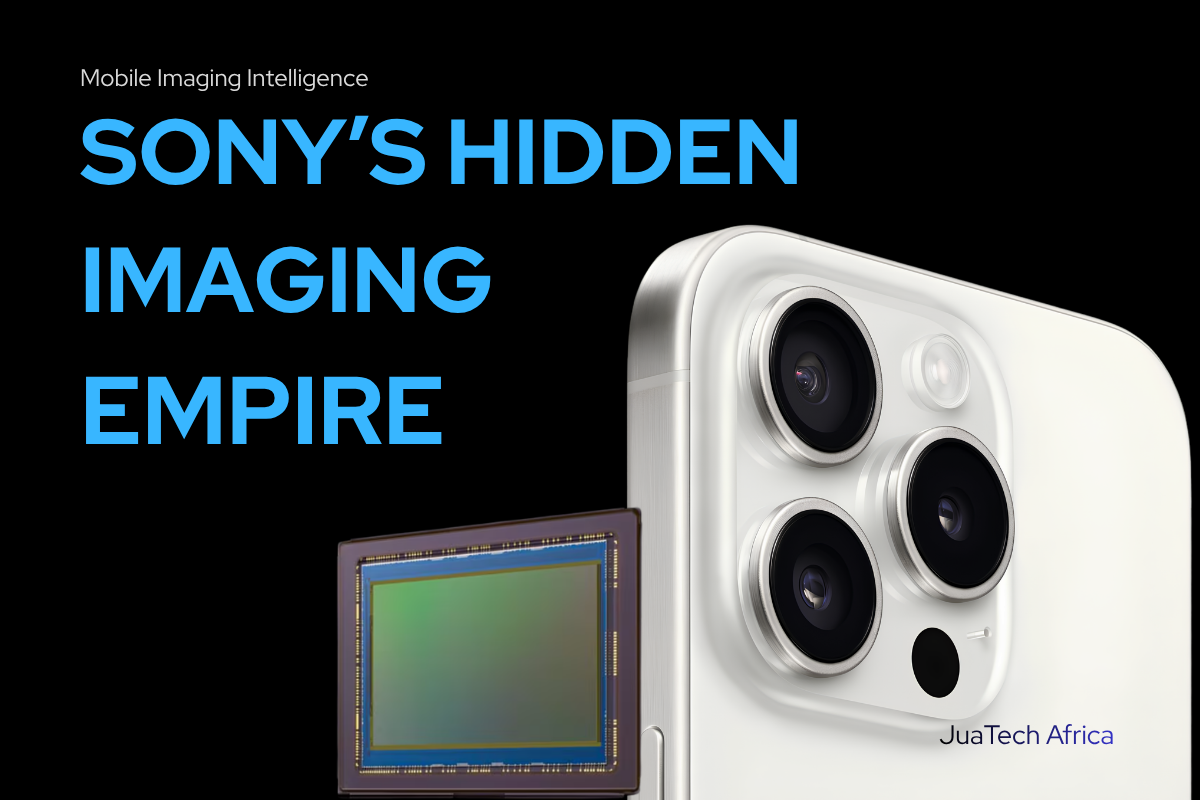
Most smartphone users compare iPhones, Galaxy devices, Pixels, Xiaomi flagships, and Vivo camera phones without realizing that many of them rely on technology from the same company. From image sensors and low-light photography to mobile videography and creator-focused camera systems, Sony has become one of the most influential forces shaping modern smartphone imaging. This is the story of how Sony built that position, why smartphone brands continue to trust it, and what its future means for photography, video, and the next generation of creators.
The Most Important Camera Company Most Smartphone Users Never Think About
Most smartphone users can name the brands behind today’s best camera phones. Apple, Samsung, Google, Xiaomi, and Vivo dominate conversations about smartphone photography, mobile videography, and camera innovation. Yet few people stop to ask a simple question: who actually makes the technology that captures those images?
More often than most people realize, the answer is Sony.
That may seem surprising. Sony smartphones occupy only a small share of the global smartphone market, yet the company plays an outsized role in modern mobile imaging. Many of the world’s best smartphone cameras rely on Sony image sensors, the critical components that capture light and convert it into photographs and videos. From flagship camera phones to creator-focused devices, Sony’s technology powers experiences that billions of people use every day.
This influence extends far beyond specifications and marketing claims. Whether you are shooting a portrait for Instagram, recording a vlog for YouTube, covering a news event, or capturing a family memory, there is a good chance Sony technology is working behind the scenes.
How did a company that sells relatively few smartphones become one of the most influential forces in smartphone photography? The answer reveals a story of innovation, strategic foresight, and technological leadership that continues to shape the future of mobile imaging.
Editor’s Note: This article is part of JuaTech Africa’s Mobile Imaging Intelligence series, exploring the companies, technologies, and partnerships shaping modern smartphone photography. For a broader view of the ecosystem, read our pillar guide: The Companies Behind Smartphone Cameras: Sony, Leica, Zeiss, Hasselblad and the Battle for Mobile Imaging.
Every Great Smartphone Photo Begins With a Sensor
Before a smartphone can enhance a photo with artificial intelligence, improve colors through image processing, or sharpen details using computational photography, it must first capture light. That responsibility falls to the image sensor, one of the most important yet least understood components inside a smartphone camera.
In simple terms, an image sensor acts as the camera’s digital eye. When you tap the shutter button, light passes through the lens and reaches the sensor. Millions of tiny light-sensitive pixels then collect that information and convert it into digital data that the smartphone can process into a photograph or video. No matter how advanced a camera system may be, the quality of that initial data plays a major role in determining the final result.
This is why image sensors matter so much. A high-quality sensor can capture more light, preserve finer details, and record a wider range of brightness levels within a scene. This capability, known as dynamic range, helps cameras retain information in both bright highlights and dark shadows. It is also a major reason some smartphones produce cleaner, more natural-looking images in challenging lighting conditions.
Low-light photography provides another practical example. When light becomes scarce, the sensor’s ability to gather and interpret available light often determines whether a photo appears detailed and usable or noisy and disappointing. The same principle applies to video quality, where strong sensor performance contributes to sharper footage, better exposure control, and improved color reproduction.
For smartphone users, content creators, and mobile filmmakers, this distinction is important. When people praise a smartphone’s night photography, cinematic video quality, or impressive detail retention, they are often seeing the influence of the sensor long before software enters the equation. Put simply, every great smartphone photo begins with light, and every successful camera system begins with the sensor that captures it.
How Sony Built an Imaging Empire
Sony’s position in modern smartphone photography was not built during the smartphone era. By the time mobile photography began transforming consumer technology, the company had already spent decades investing in imaging science, digital cameras, and semiconductor research.
The foundations were laid long before smartphones became the primary camera for most people. Throughout the late twentieth century and early digital photography era, Sony established itself as a major force in consumer electronics and imaging technology. The company developed expertise in image processing, sensor design, and digital camera systems at a time when photography was still largely dominated by dedicated cameras.
As digital photography expanded during the 1990s and early 2000s, Sony increasingly focused on image sensor development. The company recognized that sensors would become the foundation of future imaging systems, whether those systems appeared inside cameras, industrial equipment, or eventually smartphones. This long-term vision led to significant investment in semiconductor manufacturing and research capabilities that few competitors could match.
One of Sony’s most important contributions was advancing CMOS image sensor technology. Compared to earlier sensor designs, CMOS sensors offered advantages in power efficiency, speed, and integration, making them particularly well suited to the compact and power-constrained world of smartphones. Over time, Sony continued to refine its sensor architecture, introducing innovations that improved light-gathering, autofocus performance, dynamic range, and image quality.
Today, much of this work is carried out by Sony Semiconductor Solutions, a division that has become one of the most influential players in the global imaging industry. While consumers often associate Sony with PlayStation, televisions, and Alpha cameras, many smartphone manufacturers know the company for something far more important: its ability to produce industry-leading image sensors at scale.
This is why Sony’s dominance in mobile imaging was never accidental. The rise of smartphone photography coincided with decades of expertise the company had already accumulated. When smartphones evolved into powerful creative tools, Sony was uniquely positioned to supply one of the most critical technologies behind them. In many ways, Sony’s smartphone success began long before smartphones became important.
INDUSTRY INSIGHT
The Competitive Landscape
Sony’s leadership in image sensors should not be mistaken for a monopoly. The company operates in one of the most competitive segments of the semiconductor industry, where rivals are investing heavily to capture a share of the growing smartphone imaging market.
As smartphone cameras have become a major selling point, competition among image sensor manufacturers has intensified. Companies are racing to develop larger sensors, faster readout speeds, better low-light performance, improved autofocus systems, and more advanced imaging architectures. The result is an innovation cycle that continues to advance mobile photography and videography.
This competitive landscape explains why Sony continues investing aggressively in sensor technology. Leadership in mobile imaging is not guaranteed. Every advancement in sensor design, autofocus performance, dynamic range, and low-light photography is occurring in a market where competitors are constantly working to close the gap.
For consumers and creators, that competition is ultimately beneficial. It drives innovation across the industry and ensures that smartphone cameras continue to improve with every generation.

This competitive landscape reveals a larger reality explored throughout our Mobile Imaging Intelligence series: the smartphone camera industry extends far beyond the brands consumers see on store shelves. Behind every smartphone photo lies a network of sensor manufacturers, optics specialists, semiconductor companies, and software innovators competing to shape the future of mobile imaging.
The Hidden Technology Inside Today’s Best Camera Phones
For most consumers, the smartphone camera market appears to be a battle between brands. Apple competes with Samsung. Google challenges Xiaomi. Vivo pushes mobile photography forward, while OPPO continues to invest heavily in imaging innovation. Each company promotes its own camera technologies, software features, and photographic achievements.
Behind the scenes, however, the story is often more interconnected than it appears.
Many of today’s most respected camera phones rely on Sony image sensors. Variants of Sony’s sensor technology have appeared across flagship devices from Apple, Google, Xiaomi, Vivo, and OPPO. While each manufacturer combines hardware, software, image processing, and computational photography differently, the process often begins with technology supplied by the same company.
This reality highlights an important distinction in modern smartphone photography. The sensor is only one part of the imaging pipeline, but it remains one of the most critical. Smartphone manufacturers compete fiercely to deliver better portraits, stronger low-light performance, improved video quality, and more natural color reproduction. Yet many of them begin with a similar foundation before applying their own engineering expertise.
This is one reason two smartphones using related Sony sensors can produce remarkably different photographic results. Apple’s image processing differs from Google’s computational photography approach. Vivo and Xiaomi may tune color science differently. Each brand creates its own imaging identity, even when drawing from similar underlying sensor technologies.
For readers, this reveals a fascinating aspect of the smartphone industry. Companies that compete aggressively on store shelves often collaborate through a shared technology ecosystem. Sony sits at the center of that ecosystem, supplying imaging technology to brands that are simultaneously partners and rivals.
In practical terms, this means Sony wins regardless of which smartphone brand captures consumer attention. Every time the competition for the best smartphone camera intensifies, Sony often remains one of the companies benefiting from that race.
Why Smartphone Brands Continue to Trust Sony
In the technology industry, being innovative is important. Being reliable is often even more important.
Smartphone manufacturers invest enormous resources developing flagship devices. Product roadmaps are planned years in advance, camera systems undergo extensive testing, and millions of units may depend on a single component supplier. In this environment, choosing an image sensor is not simply about selecting the most advanced technology. It is about selecting a technology partner that can consistently deliver performance, quality, and scale.
This is one of the reasons Sony has maintained such a strong position in the smartphone camera industry. Beyond sensor performance, the company has built a reputation for manufacturing expertise, engineering consistency, and continuous research and development. Smartphone makers know what to expect from Sony’s imaging technologies, whether they are building a premium camera flagship or refining the next generation of mobile photography experiences.
Trust becomes particularly important when introducing new camera innovations. Features such as improved autofocus systems, enhanced low-light photography, faster sensor readout speeds, and better dynamic range must perform reliably across millions of devices and countless shooting scenarios. Even a small inconsistency can affect user experience, product reviews, and brand reputation.
Sony’s long-term investment in semiconductor manufacturing also provides a significant advantage. Developing cutting-edge sensors is only part of the challenge. Producing those sensors at scale while maintaining quality standards is equally important. Few companies possess the combination of technical expertise, manufacturing capacity, and industry credibility required to compete at that level.
For smartphone brands, the decision ultimately extends beyond specifications on a product sheet. The best sensor is not always the one with the most impressive marketing claims. More often than not, it is the sensor that delivers dependable performance, supports long-term product development, and earns manufacturers’ confidence year after year. That trust remains one of Sony’s most valuable competitive advantages.
Why Sony Matters to Creators, Vloggers and Mobile Filmmakers
For many people, smartphone cameras are no longer just tools for capturing memories. They have become production studios, storytelling platforms, and business tools. Content creators build audiences on TikTok, Instagram, YouTube, and Facebook. Journalists report breaking news directly from the field. Entrepreneurs market products through short-form video. Mobile filmmakers increasingly push the boundaries of what can be created with a pocket-sized device.
In this environment, camera performance becomes more than a technical specification. It directly influences the quality of the stories people can tell.
This is where image sensor technology becomes especially important. A high-performance sensor helps cameras gather more light, preserve finer details, and maintain image quality in challenging conditions. For creators shooting at night, indoors, or in unpredictable environments, stronger low-light performance can mean the difference between usable footage and missed opportunities.
Reliable autofocus is equally important. Whether filming a product review, recording a walking vlog, or capturing a live event, creators depend on cameras that can track subjects accurately and maintain focus consistently. Combined with improved detail retention and dynamic range, these capabilities help produce content that appears more professional and engaging.
Video performance is another area where sensor quality plays a significant role. Better sensors provide cleaner footage, more accurate colors, improved exposure control, and greater consistency across a wide range of lighting conditions. These advantages are particularly valuable as mobile videography continues to grow as a creative and commercial medium.
For creators, the lesson is simple. Behind every successful photo, video, documentary, social media post, or mobile film lies a chain of technologies working together. Long before software processing, editing tools, or artificial intelligence enter the workflow, everything begins with one essential task: capturing light as effectively as possible.
Can Sony Stay Ahead in the Age of AI Photography?
For much of smartphone photography’s evolution, better images were closely tied to better hardware. Larger sensors, improved optics, and more advanced camera systems often translated into superior image quality. Today, however, the industry is being transformed by another powerful force: artificial intelligence. From computational photography and AI-assisted image enhancement to increasingly sophisticated on-device processing, software is playing a larger role in shaping the final image than ever before.
Companies such as Apple and Google have demonstrated the remarkable potential of computational photography. Features like Smart HDR, Night Mode, portrait processing, and AI-powered scene optimization allow smartphones to produce results that would have seemed impossible only a decade ago. At the same time, companies such as Qualcomm continue advancing image signal processors and neural processing units capable of performing billions of imaging-related calculations in real time. These technologies help smartphones recognize scenes, reduce noise, improve exposure, enhance colors, and optimize image quality within fractions of a second.
As software becomes increasingly capable, a legitimate question emerges: will image sensors become less important in the future? The evidence suggests otherwise. Artificial intelligence can only work with the information captured by the camera system. While modern algorithms are extraordinarily sophisticated, they remain dependent on the quality of the data entering the imaging pipeline. A larger, more capable sensor can capture more light, preserve greater detail, and provide richer information for computational photography systems to process.
This reality explains why leading smartphone manufacturers continue investing heavily in both hardware and software. Apple’s imaging success combines advanced sensors with powerful image processing. Google’s computational photography leadership still relies on high-quality camera hardware. The same pattern can be seen across Xiaomi, Vivo, OPPO, and other flagship-focused brands that increasingly view imaging as a combination of optics, sensors, processing, and artificial intelligence.
For Sony, this shift presents both a challenge and an opportunity. Sensor technology alone may no longer guarantee leadership, but the growing demand for high-quality image data could make advanced imaging hardware even more valuable. As AI photography continues to evolve, the companies most likely to succeed will be those that combine exceptional hardware with intelligent software. The future of smartphone photography will not be defined by hardware or software alone. The convergence of both will shape it.
The Invisible Giant Behind Modern Smartphone Photography
Sony’s influence on smartphone photography extends far beyond the smartphones it sells. Through decades of investment in imaging science, sensor development, and semiconductor technology, the company has become one of the most important forces shaping modern mobile imaging. Its image sensors power many of today’s leading camera phones, helping brands deliver better photos, stronger video performance, and more capable creator tools.
Yet Sony’s story is about more than hardware. The rise of computational photography, artificial intelligence, and advanced image processing is transforming how smartphone cameras work. Success in the years ahead will depend on the ability to combine exceptional imaging hardware with increasingly intelligent software.
Consumers often judge smartphone cameras by the logo on the back of a phone. The smartphone industry understands that many of those experiences begin much deeper in the imaging pipeline. Sony’s influence may be largely invisible, but it remains embedded in the way billions of people capture, create, and share the world around them.
As Mobile Imaging Intelligence continues, we will explore the companies, partnerships, and technologies shaping the future of smartphone photography and videography.
Continue Exploring Mobile Imaging Intelligence
Sony’s story is only one part of a much larger ecosystem shaping the future of smartphone photography and videography. Behind every image lies a complex network of sensor manufacturers, optics specialists, chipmakers, software developers, and imaging brands working together to push the boundaries of what mobile devices can achieve.
As smartphone cameras continue to evolve, understanding the companies behind the technology is just as important as understanding the devices themselves.
Continue your journey through Mobile Imaging Intelligence with these related articles:
- Leica Beyond the Red Dot: What Leica Really Brings to Smartphones
- Zeiss and Vivo: Engineering Mobile Optics for the Smartphone Era
- The Hidden Processor Behind Every Smartphone Photo
- AI Imaging: Is Software Becoming More Important Than Hardware?
- How Smartphones Became Professional Video Cameras
Together, these articles reveal the technologies, partnerships, and innovations shaping the next generation of mobile imaging.
Related Reading
Before Sony became a leader in smartphone imaging, it spent decades building expertise across consumer electronics, entertainment, gaming, imaging, and semiconductor technology. To understand the broader story behind the company’s influence, explore:
Sony’s Quiet Dominance in the Global Tech Industry: An in-depth look at how Sony built one of the world’s most diversified and influential technology ecosystems.
Stay Ahead of the Future of Mobile Imaging
Smartphone cameras have become some of the most important creative tools of the digital age. They power content creation, journalism, entrepreneurship, social media storytelling, and mobile filmmaking for billions of people worldwide.
At JuaTech Africa, our mission is to go beyond product launches and specifications to explore the technologies, companies, and industry shifts driving the future of innovation.
Subscribe to the JuaTech Africa Newsletter for in-depth analysis, industry intelligence, buying insights, and exclusive perspectives delivered directly to your inbox.
Join our WhatsApp Community to connect with creators, professionals, entrepreneurs, and technology enthusiasts exploring the future of mobile technology and digital creativity.
Follow JuaTech Africa on Facebook for the latest stories, insights, discussions, and updates from across the technology ecosystem.
The future of mobile imaging is still being written. Join us as we explore the people, partnerships, and technologies shaping what comes next.