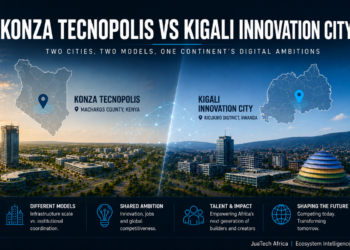


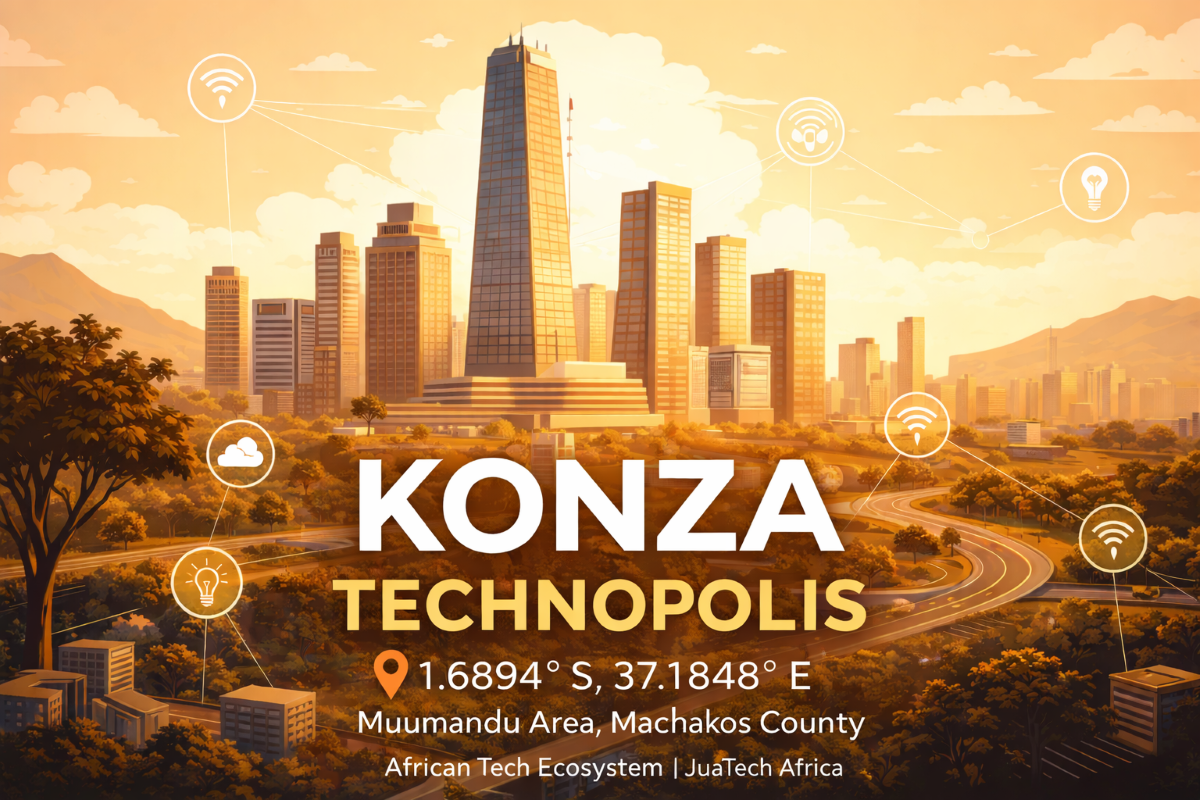
A deep analysis of Konza Technopolis, Kenya’s flagship smart city designed to power the Silicon Savannah, attract global technology investment, and position the country at the forefront of Africa’s digital economy.
Across Africa, a quiet but consequential race is underway. Governments are investing heavily in technology parks, innovation districts, and smart cities designed to anchor the continent’s rapidly expanding digital economies. From research campuses and startup accelerators to high-capacity data infrastructure, these ecosystems are being built to attract global investment, nurture homegrown talent, and catalyze the next generation of knowledge-driven industries.

Kenya has placed one of its most ambitious bets on this future through Konza Technopolis, the country’s flagship smart city project located about 60 kilometers southeast of Nairobi. Envisioned as the centerpiece of the country’s Silicon Savannah, Konza is designed to become a thriving hub for technology companies, research institutions, startups, and global investors seeking opportunities in Africa’s fast-growing digital economy.
The Konza Technopolis Development Authority spearheads the project. It is a central pillar of the national development blueprint, Kenya Vision 2030, which aims to transform Kenya into a globally competitive, knowledge-driven economy.
More than a new city rising from the plains south of Nairobi, Konza Technopolis represents a strategic national experiment. It is an attempt to build an innovation ecosystem where technology, research, entrepreneurship, and smart urban planning converge. If successful, it could reshape Kenya’s position in the global technology landscape and strengthen Africa’s role in the rapidly evolving digital age.
Konza Technopolis at a Glance: Key Facts Behind Kenya’s Silicon Savannah
| Key Fact | Details |
| Location | Approximately 60 km southeast of Nairobi along the Nairobi–Mombasa transport corridor |
| Total Land Area | About 5,000 acres (≈2,000 hectares) are designated for the master-planned smart city. |
| National Development Framework | Flagship project under Kenya Vision 2030, Kenya’s long-term economic transformation strategy |
| Implementing Authority | Managed by the Konza Technopolis Development Authority (KoTDA), responsible for planning, infrastructure development, and investment coordination |
| Strategic Objective | To develop a smart city and innovation ecosystem supporting ICT, research, and knowledge-driven industries |
| Core Economic Sectors | Information and Communication Technology (ICT), Business Process Outsourcing (BPO), research and innovation, and digital services |
| Phase One Development | Core infrastructure covering over 400 acres, including roads, utilities, and digital connectivity systems |
| Digital Backbone | Includes the National Data Center, supporting government digital services and enterprise cloud infrastructure |
| Smart Infrastructure | Integrated systems, including smart roads, power networks, water infrastructure, and high-speed fiber connectivity |
| Long-Term Population Projection | An estimated 200,000 residents and workers are at full development. |
| Strategic Vision | To anchor Kenya’s Silicon Savannah and position the country as a leading hub for technology and digital innovation in Africa |
The Vision Behind Konza Technopolis
The vision behind Konza Technopolis emerged from Kenya’s ambition to position itself as a leading digital economy in Africa. In the late 2000s, policymakers began exploring how technology, innovation, and knowledge industries could become major drivers of economic growth. The result was the concept of a purpose-built smart city that would anchor the country’s technology ecosystem and further strengthen Kenya’s Silicon Savannah.
This ambition was formally embedded in Kenya Vision 2030, the national development blueprint designed to transform Kenya into a globally competitive, middle-income economy. Within this framework, Konza Technopolis was identified as a flagship project to catalyze high-value sectors such as information technology, digital services, business process outsourcing, research, and innovation.
Responsibility for planning and implementation was entrusted to the Konza Technopolis Development Authority, which oversees infrastructure development, land planning, and investment partnerships within the technopolis. The broader goal is to create an integrated ecosystem where universities, research laboratories, technology companies, startups, and investors operate within a connected environment designed for collaboration and innovation.
The idea reflects a growing global recognition that innovation districts and technology clusters play a central role in shaping modern economies. By concentrating digital infrastructure, research capacity, and entrepreneurial talent in one location, Konza Technopolis aims to accelerate Kenya’s transition toward a knowledge-driven economy and reinforce its position as one of Africa’s most dynamic technology hubs.
If realized at scale, the technopolis could become a defining pillar of the Silicon Savannah vision and a model for innovation-led development across the continent.
Infrastructure Powering Konza Technopolis
The ambition behind Konza Technopolis depends heavily on the infrastructure being built to support it. Unlike traditional technology clusters that grow gradually around existing cities, Konza is being developed as a purpose-built smart city designed from the outset to host innovation-driven industries, research institutions, and global technology companies.
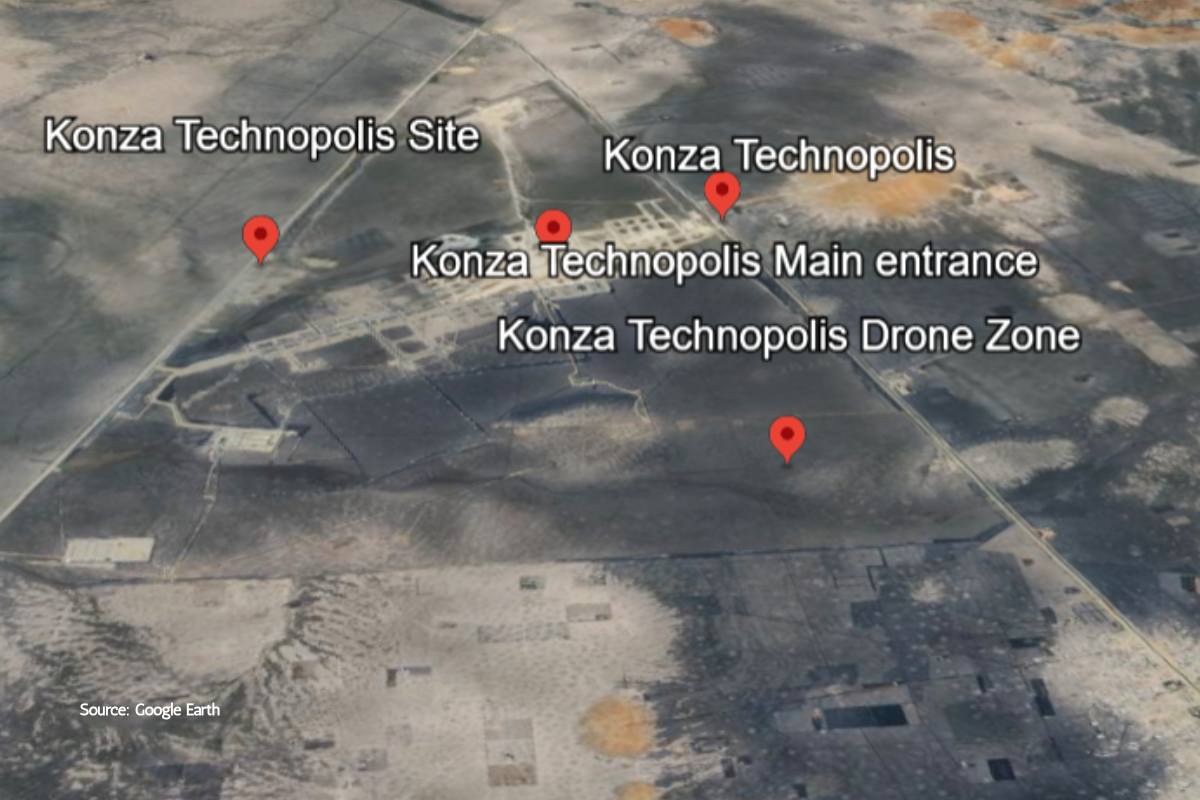
Located about 60 kilometers southeast of Nairobi, the technopolis spans roughly 5,000 acres, with the first development phase covering more than 400 acres of core infrastructure. This phase includes government complexes, technology parks, commercial districts, and the foundational digital and urban systems required to power a modern innovation ecosystem.
One of the most significant components of this infrastructure is the National Data Center, a high-capacity digital backbone that supports government services, cloud computing, and enterprise data operations. The facility forms part of Kenya’s broader effort to strengthen national digital infrastructure while positioning the country as a regional hub for cloud services and data-driven innovation.
Beyond digital infrastructure, Konza is also being designed as a center for research and higher education. The master plan includes university campuses, research institutes, and innovation laboratories intended to foster collaboration between academia, startups, and established technology companies. This model mirrors successful global innovation districts where universities play a central role in talent development and technological breakthroughs.
The technopolis is further supported by smart urban infrastructure, including integrated transport networks, energy systems, water management, and high-speed fiber connectivity. Together, these systems are intended to create a modern urban environment where businesses, researchers, and entrepreneurs can operate within a highly connected ecosystem.
By combining digital infrastructure, research capacity, and smart city planning, Konza Technopolis is being positioned as a foundational platform for Kenya’s Silicon Savannah and a catalyst for the country’s long-term transition toward a knowledge-driven economy.
Why Konza Technopolis Matters for Africa’s Tech Ecosystem
The significance of Konza Technopolis extends well beyond Kenya’s borders. At a time when African economies are accelerating their digital transformation agendas, large-scale innovation districts such as Konza represent a strategic effort to build the infrastructure required for the continent’s next phase of economic growth.
Africa’s digital economy is expanding rapidly, driven by mobile connectivity, fintech innovation, cloud computing, and a growing population of young technology entrepreneurs. Yet one of the continent’s persistent structural challenges has been the absence of integrated innovation environments where research institutions, startups, investors, and technology companies operate in proximity. Konza Technopolis seeks to address this gap by creating a purpose-built ecosystem that concentrates talent, capital, and digital infrastructure within a single innovation district.
For Kenya, the technopolis reinforces the country’s long-standing reputation as one of Africa’s most influential technology markets. From the global success of mobile money platforms such as M-Pesa to a vibrant startup ecosystem centered in Nairobi, Kenya has played a defining role in shaping the narrative of the Silicon Savannah. Konza is intended to provide the physical and institutional infrastructure needed to sustain and scale that momentum.
Across the continent, governments are experimenting with similar models of innovation-led development. Initiatives such as Botswana Innovation Hub, Kigali Innovation City, and Egypt’s Smart Village Cairo illustrate a growing recognition that technology clusters, research ecosystems, and digital infrastructure will play a decisive role in shaping Africa’s economic future.
Within this emerging landscape of innovation districts, Konza Technopolis stands out as one of the continent’s most ambitious attempts to build a technology ecosystem from the ground up.
Konza Technopolis and Africa’s Emerging Innovation Cities
The rise of Konza Technopolis is part of a wider continental movement in which African governments are investing in innovation districts designed to support technology-driven economic growth. These projects reflect a growing understanding that modern economies are increasingly shaped by research ecosystems, startup networks, and digital infrastructure that attract global technology investment.
Across Africa, several countries are experimenting with different models for building these innovation environments. While the approaches vary, the underlying objective is similar: to create ecosystems where universities, startups, technology companies, and investors operate within a connected infrastructure that accelerates innovation.
Rwanda’s Talent and Innovation Model
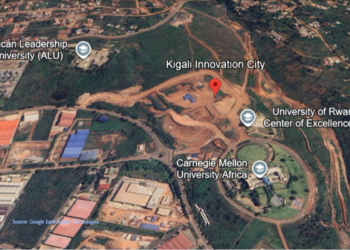
One of the most prominent examples is Kigali Innovation City, a government-backed initiative that seeks to position Rwanda as a regional center for technology education, entrepreneurship, and research. The project emphasizes partnerships with global universities and technology firms to cultivate a highly skilled workforce capable of supporting Rwanda’s ambition to become a knowledge-driven economy.
Botswana’s Research and Commercialization Strategy
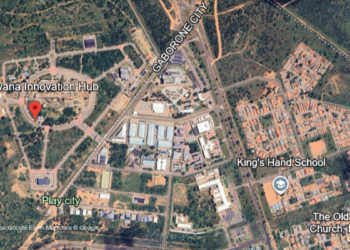
In Southern Africa, the Botswana Innovation Hub reflects a different approach. The hub focuses strongly on scientific research, technology commercialization, and innovation-led diversification of Botswana’s economy. By fostering collaboration between research institutions and industry, the initiative seeks to build new technology sectors that can complement the country’s historically resource-driven economy.
Egypt’s Established ICT Cluster
North Africa offers another instructive example through Smart Village Cairo. Developed as a technology and communications park outside Cairo, the cluster has attracted multinational technology firms, ICT government agencies, and major business process outsourcing operations. Over time, it has evolved into one of the continent’s most mature technology business districts.
Kenya’s Silicon Savannah Vision
Within this continental landscape, Konza Technopolis represents one of the most ambitious attempts to build a technology ecosystem from the ground up. Rather than expanding around an existing urban cluster, the technopolis is being developed as a purpose-built smart city designed to anchor Kenya’s Silicon Savannah and strengthen the country’s position as one of Africa’s leading digital innovation hubs.
Together, these initiatives illustrate how African nations are increasingly investing in innovation infrastructure as a pathway toward participation in the global digital economy.
Opportunities for Startups and Investors
The real test of Konza Technopolis will not be its skyline or urban design, but whether it can reshape the economic mechanics of innovation across Kenya’s Silicon Savannah. At its core, the technopolis represents an attempt to engineer the conditions under which startups, capital, research institutions, and digital infrastructure interact with far greater intensity than in fragmented ecosystems.
For startups, the value proposition lies in proximity and access. Innovation districts around the world tend to thrive when universities, venture capital networks, emerging companies, and established technology firms operate within the same geographic and intellectual orbit. Konza’s development model seeks to replicate this dynamic by integrating research campuses, digital infrastructure, and technology parks within a single ecosystem designed to accelerate the journey from research and experimentation to commercialization and scale.
For investors, the technopolis reflects a broader shift in how African technology markets are evolving. Venture capital activity across the continent has expanded significantly over the past decade. Yet infrastructure gaps, fragmented markets, and limited research commercialization have often slowed the transition from promising startups to globally competitive companies. A concentrated innovation district such as Konza could help reduce some of these structural barriers by creating an environment where startups, investors, and research institutions interact within a more coordinated framework.
Several sectors are particularly well-positioned to benefit from this environment. Kenya already commands global attention in fintech, driven by the widespread adoption of platforms such as M-Pesa. At the same time, demand for cloud computing, artificial intelligence applications, cybersecurity services, and digital public infrastructure is accelerating across African economies.
If Konza Technopolis attracts sustained investment, research partnerships, and entrepreneurial talent, it could emerge as a launch platform for the next generation of African technology companies while reinforcing Kenya’s role as a continental center for digital innovation.
Challenges Facing Konza Technopolis
Despite its ambition and strategic importance, Konza Technopolis faces several structural challenges that will determine whether it evolves into a thriving innovation ecosystem or remains primarily an infrastructure project.
The first challenge is execution over time. Large-scale technology cities require sustained policy continuity, long-term capital investment, and institutional coordination that often extends across multiple political and economic cycles. Since its launch under Kenya Vision 2030, Konza has made measurable progress in foundational infrastructure. Yet the development of a fully functioning innovation ecosystem typically unfolds over decades rather than years.
A second challenge concerns ecosystem gravity. Successful technology clusters rarely emerge solely through planning. They develop when universities, venture capital, startups, and multinational technology firms reach a critical mass within the same innovation environment. For Konza to succeed, it must attract this concentration of talent and enterprise while complementing the already vibrant technology ecosystem centered in Nairobi rather than fragmenting it.
Financing and investor confidence also remain important factors. Innovation districts require sustained public investment alongside long-term private sector participation, particularly from technology companies, research institutions, and venture capital networks willing to anchor the ecosystem.
Ultimately, the success of Konza Technopolis will depend on whether it can transition from a well-designed smart city into a dynamic innovation cluster capable of producing research breakthroughs, successful startups, and globally competitive technology companies.
The Future of Kenya’s Silicon Savannah
The long-term trajectory of Konza Technopolis will ultimately depend on whether Kenya can turn infrastructure into a living, innovation-driven economy. Around the world, successful technology clusters rarely emerge solely from urban planning. They develop when policy, capital, research institutions, and entrepreneurial talent converge to create ecosystems where ideas evolve into globally competitive companies.
Kenya enters this experiment with several structural advantages. The country already hosts one of Africa’s most dynamic technology ecosystems, centered in Nairobi and reinforced by globally influential innovations such as M-Pesa. Over the past two decades, this ecosystem has helped establish the narrative of the Silicon Savannah, attracting venture capital, multinational technology companies, and a growing generation of digital entrepreneurs.
Konza Technopolis has the potential to deepen that trajectory by providing the physical and institutional infrastructure required for research collaboration, technology commercialization, and long-term investment in knowledge industries. If universities, startups, technology companies, and investors establish sustained operations within the technopolis, the city could evolve into one of Africa’s most significant innovation districts.
More broadly, the future of Konza reflects a larger continental experiment. Across Africa, governments are investing in innovation infrastructure as a pathway toward economic transformation. Whether Konza ultimately fulfills its promise will depend on sustained investment, policy continuity, and the emergence of globally competitive companies that can validate the Silicon Savannah vision.
If those elements converge, Konza Technopolis could become one of the defining symbols of Africa’s transition into the global digital economy.
Frequently Asked Questions About Konza Technopolis
- What is Konza Technopolis?
Konza Technopolis is a planned smart city and technology hub located about 60 kilometers southeast of Nairobi in Machakos County. Designed as a flagship innovation ecosystem, the city aims to bring together technology companies, startups, research institutions, universities, and investors within a purpose-built environment. The project forms a central pillar of Kenya Vision 2030, Kenya’s long-term strategy for building a globally competitive knowledge economy.
- Why is Konza Technopolis associated with the “Silicon Savannah”?
The term Silicon Savannah refers to Kenya’s rapidly growing technology ecosystem. Konza Technopolis is closely linked to this vision because it is designed to anchor technology-driven economic growth, much as Silicon Valley became a center of innovation in the United States. The technopolis aims to provide infrastructure and collaboration networks that enable startups, investors, universities, and technology firms to develop globally competitive innovations.
- Where exactly is Konza Technopolis located?
Konza Technopolis lies roughly 60 kilometers southeast of Nairobi along the Nairobi–Mombasa corridor. The site was selected for its proximity to Kenya’s capital city, access to national transportation infrastructure, and availability of large tracts of land suitable for building a modern smart city from the ground up.
- How large is Konza Technopolis?
The master-planned city covers approximately 5,000 acres (about 2,000 hectares). Development is being implemented in phases, beginning with approximately 400 acres of core infrastructure, including roads, utilities, government facilities, and digital connectivity systems.
- What sectors is Konza Technopolis prioritizing for investment and innovation?
Konza Technopolis is designed to support knowledge-driven industries, including:
- Information and Communication Technology (ICT)
- Software engineering and digital services
- Business Process Outsourcing (BPO)
- Research and innovation
- Artificial intelligence and emerging technologies
These sectors reflect Kenya’s ambition to expand its digital economy.
- Who is responsible for developing Konza Technopolis?
The project is overseen by the Konza Technopolis Development Authority (KoTDA). The authority is responsible for master planning, infrastructure development, investment promotion, and coordination between public and private stakeholders involved in the technopolis.
- What role does Kenya Vision 2030 play in the Konza project?
Kenya Vision 2030 is Kenya’s long-term economic development framework aimed at transforming the country into a middle-income, knowledge-based economy. Konza Technopolis is one of its flagship initiatives and is intended to catalyze growth in the technology, research, and innovation sectors.
- What infrastructure has already been built in Konza Technopolis?
Phase One infrastructure includes:
- smart road networks
- water and power utilities
- high-speed fiber connectivity
- government administrative complexes
- the National Data Center
These systems provide the foundation required for companies and institutions to operate within the technopolis.
- What is the National Data Center at Konza Technopolis?
The National Data Center is a critical digital infrastructure facility located within the technopolis. It supports government digital services, secure data storage, and cloud infrastructure for both public- and private-sector organizations.
- How many people are expected to live or work in Konza Technopolis?
At full development, Konza Technopolis is projected to support approximately 200,000 residents and workers, including researchers, students, entrepreneurs, and technology professionals.
- What opportunities does Konza Technopolis create for startups?
Konza Technopolis aims to create an ecosystem that enables startups to access research institutions, digital infrastructure, venture capital networks, and enterprise partners. This environment is intended to accelerate innovation and help startups move more quickly from concept to commercialization.
- Why are investors paying attention to Konza Technopolis?
Investors view Konza Technopolis as a potential gateway into Africa’s rapidly expanding digital economy. By concentrating technology infrastructure, research institutions, and startups in one location, the project could create a scalable environment for innovation and technology investment.
- How does Konza compare with other innovation hubs in Africa?
Konza Technopolis is part of a broader continental trend toward innovation cities. Comparable initiatives include:
- Kigali Innovation City
- Botswana Innovation Hub
- Smart Village Cairo
Each reflects a different national strategy for building technology ecosystems.
- Is Konza Technopolis already operational?
Konza Technopolis is being developed in phases. Foundational infrastructure has already been completed, and additional developments will occur as companies, universities, and research institutions establish operations within the city.
- Why has Konza Technopolis taken time to develop?
Large-scale smart city and innovation district projects typically unfold over decades. Infrastructure construction, investment attraction, and ecosystem formation require sustained policy commitment and long-term capital investment.
- Which companies are expected to operate in Konza Technopolis?
The technopolis aims to attract a mix of multinational technology firms, research institutions, universities, and startups operating in ICT services, software development, digital services, and data infrastructure.
- Will Konza compete with Nairobi’s technology ecosystem?
Konza Technopolis is designed to complement rather than replace Nairobi’s technology ecosystem. While Nairobi serves as Kenya’s commercial and startup hub, Konza aims to provide additional infrastructure for research, development, and large-scale innovation.
- What challenges could affect the success of Konza Technopolis?
Key challenges include attracting a critical mass of companies and talent, sustaining long-term investment, and ensuring strong collaboration between universities, startups, and technology firms.
- Is Konza Technopolis successful so far?
Konza Technopolis is still in the early stages of development. Foundational infrastructure and key facilities, such as the National Data Center, have been completed, marking significant progress. However, the true measure of success will depend on whether the city evolves into a vibrant innovation ecosystem hosting globally competitive technology companies.
- What could Konza Technopolis mean for Africa’s technology future?
If successfully developed, Konza Technopolis could become one of Africa’s most influential innovation districts. By combining research institutions, technology companies, startups, and digital infrastructure in one location, it could strengthen Kenya’s role in the global digital economy and contribute to the growth of Africa’s technology sector.
Explore Botswana’s Innovation Hub in depth as the Southern African country builds its tech ecosystem. The bold move to develop the necessary infrastructure for sustainable tech growth and economic empowerment to march into global competition and demands.