

Foldable smartphones are no longer experimental curiosities. In Kenya’s premium smartphone market, they represent one of the most consequential technology decisions a buyer can make. With prices often exceeding the cost of a laptop, choosing a foldable is not about novelty. It is about whether the device can deliver measurable value through productivity, durability, and long-term reliability.
For professionals managing mobile workflows, entrepreneurs running businesses from their phones, and creators producing content daily, the appeal is clear. A foldable promises tablet-level screen space in a device that still fits in your pocket. It offers expanded multitasking, improved document handling, and greater flexibility in how work gets done. But alongside that promise comes real risk. Questions around hinge durability, software optimization, resale value, and long-term support remain critical, especially in a market like Kenya where device longevity directly affects financial return.

Interest in foldable smartphones in Kenya has grown steadily as hardware improves and competition expands beyond a single manufacturer. Samsung’s Galaxy Z Fold series has established foldables as productivity tools, while newer entrants such as the Tecno Phantom V Fold 2 are reshaping expectations around accessibility and value. Buyers are no longer asking whether foldables are impressive. They are asking whether foldables are worth the investment.
This guide evaluates foldable smartphones available in Kenya through a practical, investment-focused lens. It examines performance, durability, software support, ecosystem integration, resale potential, and real-world usability. The objective is simple. To help you determine whether a foldable smartphone will strengthen your productivity and digital capability, or whether it remains a premium purchase better suited to specific users and workflows.
In Kenya’s evolving mobile-first economy, a smartphone is more than a communication tool. It is infrastructure. And when the investment reaches foldable-level pricing, clarity becomes essential.
Foldables Go Global: From Experiment to Established Category
Foldable smartphones have transitioned from experimental devices to a defined segment of the global premium smartphone market. What began as a technological showcase has evolved into a mature category driven by productivity needs, mobile-first work patterns, and demand for more versatile computing devices. By 2025, the global foldable smartphone market is projected to surpass $30 billion, reflecting sustained investment from manufacturers and growing adoption among professionals and premium users.
Major manufacturers, including Samsung, Oppo, Honor, and Tecno, are no longer testing the concept. They are refining it. Modern foldable devices now deliver flagship-level performance, advanced camera systems, optimized multitasking software, and significantly improved structural durability. These improvements address early concerns around reliability and usability, positioning foldables as practical tools rather than experimental hardware.
This global shift has direct implications for Kenya’s premium smartphone market. As foldables become more durable, capable, and accessible, Kenyan buyers are beginning to evaluate them not as luxury curiosities but as potential long-term productivity tools. The key question is no longer whether foldable smartphones represent the future. It is whether they deliver meaningful, investment-grade value under real-world usage conditions.
Kenya’s Adoption Curve: Premium, Measured, and Market-Driven
Foldable smartphone adoption in Kenya remains in its early stages, but the trajectory is clear and deliberate. Unlike mass-market smartphone adoption, foldables are entering the market through professionals and power users who depend on their devices for productivity, communication, and content creation. In Nairobi’s commercial and creative hubs, such as the CBD, Westlands, Ngong Road, and Kilimani, foldable devices are increasingly visible among executives, entrepreneurs, and technology-forward professionals who value expanded screen space and multitasking capability.
Local availability has improved significantly, marking an important shift from limited import-only access to structured retail presence. Devices such as the Tecno Phantom V Fold 2 are now available through established Kenyan retailers, including PhonePlace Kenya, Avechi, and Jumia, at a price of around KSh 123,000. This level of accessibility introduces foldables to a broader segment of premium buyers who previously faced limited options.
Samsung’s Galaxy Z Fold and Z Flip series continue to define the premium tier, with retail pricing often exceeding KSh 240,000 depending on configuration and import channel. Other foldables, such as the OnePlus Open, Motorola Razr series, and Google Pixel Fold, remain less common in official retail channels, typically entering the market through specialized importers, private dealers, or international acquisition. This layered availability structure reflects a market that is expanding, but still maturing.
For Kenyan buyers, the foldable category has reached a critical inflection point. There is now sufficient availability, performance maturity, and ecosystem support to make foldables viable long-term devices. The decision is no longer constrained by access, but by clarity. Buyers must evaluate durability, productivity benefit, resale potential, and long-term usability to determine whether a foldable represents a strategic investment or a premium device with limited practical advantage.
Retail Dynamics: Trust, Authenticity, and Long-Term Value
Retail dynamics around foldable smartphones in Kenya are evolving as the category matures. Buyers in this segment are no longer driven by novelty or early-adopter enthusiasm. They are making deliberate, high-value purchasing decisions and prioritizing factors such as manufacturer-backed warranties, reliable after-sales support, and predictable resale potential. These considerations directly affect the device’s long-term financial and practical value.
As a result, grey-market channels, while still present, are becoming less attractive to buyers focused on device authenticity, service reliability, and long-term ownership confidence. The risk of limited warranty coverage, uncertain device history, and lack of formal support has shifted buyer preference toward established and reputable retail channels.
Major platforms such as Jumia and Avechi, as well as specialized smartphone retailers, are adapting to this shift by introducing verified listings, structured pre-order programs, and flexible payment options for premium devices. This evolution reflects a bigger structural change in buyer behavior. Foldable smartphone buyers in Kenya are not casual consumers. They are strategic purchasers investing in devices expected to deliver sustained productivity, reliability, and measurable long-term value.
The Inflection Point: Why Foldables Are Entering Their Defining Phase
The foldable smartphone category has reached a structural inflection point. What was once an experimental form factor is now intersecting directly with modern mobile computing demands, including multitasking workflows, content creation, and AI-assisted productivity. Improvements in hardware durability, software optimization, and ecosystem integration have transformed foldables from concept devices into practical tools capable of supporting real work and sustained daily use.
As mobile devices increasingly function as primary computing infrastructure, foldables offer a distinct advantage through expanded screen real estate and enhanced multitasking capability. This enables users to manage documents, communication, media, and creative workflows more efficiently within a single device. These capabilities are particularly relevant in mobile-first markets such as Kenya, where smartphones often serve as the central platform for business, content creation, and professional communication.
For Kenya’s premium smartphone buyers, the decision is no longer about whether foldable technology is viable. It is about identifying which foldable device delivers the durability, performance, ecosystem support, and long-term value necessary to justify the investment. This distinction marks the transition of foldables from an experimental technology to a defined, strategically relevant category within the premium smartphone market.
Buyer Personas: Who Buys Foldables in Kenya?
Foldables are no longer fringe tech. They’re precision tools for Kenya’s most discerning buyers. These are not impulse purchases. They’re calculated investments by individuals who demand performance, prestige, and strategic utility. Here’s how the market segments:
1. The Executive Buyer: Heads of Organisations, Heads of States, Senior Executive Leaders, Policymakers
For senior executives and high-level decision-makers, foldables function as mobile command centres. This persona prioritises productivity density — the ability to review documents, manage communications, conduct video meetings, and multitask across apps without friction, regardless of location.
Large internal displays enable side-by-side workflows that mirror tablet or laptop usage, while the external form factor preserves smartphone convenience. Devices such as the Samsung Galaxy Z Fold 7 and the OnePlus Open are particularly well-suited to this profile, offering desktop-grade multitasking, stylus compatibility, and robust performance under sustained workloads.
Beyond function, foldables also operate as symbols of leadership presence. Their visibility in boardrooms, official engagements, and high-level travel environments reinforces authority, modernity, and technological confidence. It is not uncommon to see senior public and private sector leaders — including figures such as Dr. William Ruto – adopt foldable devices as part of their daily workflow.
For this persona, a foldable smartphone is neither a luxury nor a novelty. It is a strategic instrument — one that consolidates productivity, mobility, and professional signalling into a single device.
2. The Pro Creator: Digital Storytellers, Media Professionals, Influencers
For professional content creators, foldables are production tools, not lifestyle accessories. This persona prioritises camera fidelity, real-time editing flexibility, stylus precision, and AI-assisted workflows that reduce turnaround time from capture to publish.
Larger internal displays enable accurate timeline scrubbing, colour grading, captioning, and multi-app workflows — tasks that are restrictive on conventional smartphones. Devices such as the Tecno Phantom V Fold 2 stand out for offering stylus support and reliable local availability, making them practical choices for creators operating within Kenya. Meanwhile, the Google Pixel Fold appeals to creators who value computational photography, colour science, and a clean, distraction-free Android experience.
Convenience and workflow continuity matter as much as raw output. It is therefore common to see established creators adopt compact, efficient foldables such as the Oppo Find N5, which balance one-handed usability with expansive internal displays. Kenyan tech creator Roy Kanyi has publicly noted the appeal of foldables in managing demanding, fast-paced creator schedules – a sentiment echoed across professional content circles.
For this persona, the value of a foldable lies in speed, precision, and creative control. The right device compresses production time, enhances visual output, and sustains consistency across platforms.
3. The Tech Enthusiast: Early Adopters, Design Purists, Innovation Seekers
For tech enthusiasts, foldables are expressions of innovation leadership and personal prestige. This persona is drawn less by practicality alone and more by engineering ambition — the thinnest hinge, the most refined materials, and devices that signal early adoption of cutting-edge design.
Aesthetic execution and form factor matter as much as performance. Devices such as the Oppo Find N5 and the Motorola Razr Ultra appeal strongly to this group, combining slim profiles, premium finishes, and distinctive folding mechanisms that set them apart in everyday use.
Beyond visual appeal, these devices deliver tangible advantages. Compact external dimensions paired with expansive internal displays allow enthusiasts to transition seamlessly from casual interactions to serious tasks — reviewing pitch decks, watching high-resolution video, or engaging in multi-app workflows — all without compromising portability.
For this persona, foldables are conversation starters and confidence statements. Ownership reflects not only access to advanced technology, but a willingness to lead rather than follow. The value lies in exclusivity, craftsmanship, and visible innovation.
4. The Entrepreneur: Founders, Business Leaders, Growth-Focused Professionals
For entrepreneurs and business leaders, foldables are evaluated through a single lens: return on investment. This persona seeks devices that balance productivity, resale value, brand alignment, and long-term relevance.
Value-driven options such as the Tecno Phantom V Fold 2 deliver flagship-level features at comparatively accessible price points, making them attractive for founders who prioritise performance without excessive capital outlay. Meanwhile, devices like the Samsung Galaxy Z Flip 7 blend style and practicality, appealing to brand-conscious operators who value portability and visual identity.
At the upper end of the spectrum, premium foldables such as the Pixel 10 Fold Pro and the Samsung Galaxy Z Fold 7 function as both productivity platforms and symbols of scale. For this persona, the device must support demanding workflows while signalling momentum, credibility, and professional maturity.
Choosing the Right Foldable Is About Alignment
Across these personas, one truth becomes clear: foldables are no longer purchased solely for novelty. They are selected for alignment with workflow, identity, ambition, and long-term value.
Executives prioritise command and multitasking. Creators optimise for speed and creative control. Enthusiasts seek innovation and distinction. Entrepreneurs evaluate ROI, signalling, and scalability. Each persona demands a different balance of form, function, and presence.
The best foldable smartphone, therefore, is not the most expensive or the most talked about. It is the one that integrates seamlessly into how you work, move, and lead. In a market that finally offers real choice, clarity — not hype — determines whether a foldable becomes a strategic asset or an expensive distraction.
Merit Table: Best Foldable Smartphones in Kenya (2025)
This table is your strategic compass—a high-level comparison of foldables available in Kenya, tailored for buyers who demand performance, prestige, and ROI.
| Model | Price (KES) | Key Strengths | Verdict |
| Tecno Phantom V Fold 2 | ~123,000 | Stylus support, AI tools, 70W fast charging, local warranty | Best value foldable |
| Samsung Galaxy Z Fold 7 | ~245,000 | Multitasking UI, DeX mode, S Pen support, 7-year updates | Productivity king |
| Oppo Find N5 | ~239,000 | Slim design, Hasselblad camera, IPX9 water resistance | Best build quality |
| Pixel 9 Pro Fold | ~185,000 | Tensor G4 chip, AI features, camera excellence | Best for creators |
| OnePlus Open | ~143,000 | Flagship specs, multitasking UI, fast charging | Best multitasking value |
| Samsung Galaxy Z Flip 7 | ~130,000 | Compact design, IPX8 rating, stylish build | Best clamshell experience |
| Motorola Razr Ultra (2025) | ~130,000 | Long battery life, outer screen utility, fast refresh rate | Best battery performance |
| Infinix Zero Flip 5G | ~66,000 | Budget-friendly, 8GB RAM, 256GB storage, 50MP camera | Best entry-level foldable |
Strategic Takeaways for Decision-Makers
- Phantom V Fold 2:
The only foldable under KSh 130K with stylus support, AI tools, and local warranty — ideal for creators and entrepreneurs.
- Z Fold 7:
Multitasking powerhouse with DeX mode, S Pen support, and long-term updates — built for executives and mobile professionals.
- Oppo Find N5:
Premium build, IPX9 durability, and Hasselblad optics — perfect for design-forward buyers.
- Pixel 9 Pro Fold:
AI-driven photography and clean UI — a top pick for content creators and digital storytellers.
- OnePlus Open:
Flagship multitasking at mid-tier pricing — smart choice for business users who want performance without overspending.
- Z Flip 7 & Razr Ultra:
Compact, stylish, and battery-strong — ideal for minimalists and fashion-forward professionals.
- Infinix Zero Flip 5G:
Strategic entry point into the foldable category — solid specs under KSh 70K for budget-conscious buyers.
Critical Analysis: Investment vs. Status
Foldables in Kenya are no longer fringe tech or vanity purchases — they’re strategic assets. But not all foldables justify their price tags. The real question is, can you afford one? Which one delivers tangible value for your workflow, brand, and long-term ROI?
Samsung Galaxy Z Fold7
The Fold7 is the undisputed benchmark for productivity. It’s not just a phone — it’s a mobile workstation. With DeX mode, S Pen support, and 7 years of software updates, it’s built for executives who run operations from anywhere. You get multitasking muscle, enterprise-grade durability, and resale confidence. At approximately KES 245,000, it’s expensive — but it earns its keep.
Galaxy Z Fold7 USPs?
- 200MP Pro-Visual camera sets a new benchmark for foldable photography.
- 8-inch QXGA+ main screen + expanded cover display offer immersive multitasking and a traditional phone feel.
- Snapdragon 8 Elite for Galaxy delivers blazing speed for AI, editing, and streaming.
- Armor Aluminum frame + Gorilla Glass Ceramic 2 ensures rugged durability with a premium finish.
- Galaxy AI + Google Gemini integration enables live screenshare and real-time assistance.
Tecno Phantom V Fold 2
It is the smartest value play in the market. For ~KSh 123,000, you get stylus input, AI tools, 70W fast charging, and local warranty support. It’s the only foldable in Kenya offering flagship features with regional service infrastructure. For creators, entrepreneurs, and ROI-driven buyers, it’s a no-brainer.
Unique Selling Points
- Triple 50MP rear cameras deliver flagship-grade wide, telephoto, and ultrawide shots with 2x optical zoom.
- 7.85-inch 2K+ LTPO AMOLED foldable display + 6.42-inch curved cover screen, both 120Hz and ultra-vibrant.
- 5750mAh battery with 70W wired + 15W wireless charging—a rare combo in foldables.
- MediaTek Dimensity 9000+ with 12GB RAM + 512GB storage balances power and affordability.
- Luxury Loewe design with vegan leather back and IP54 durability, built for elegance and resilience
The Oppo Find N5 & Pixel 9 Pro Fold
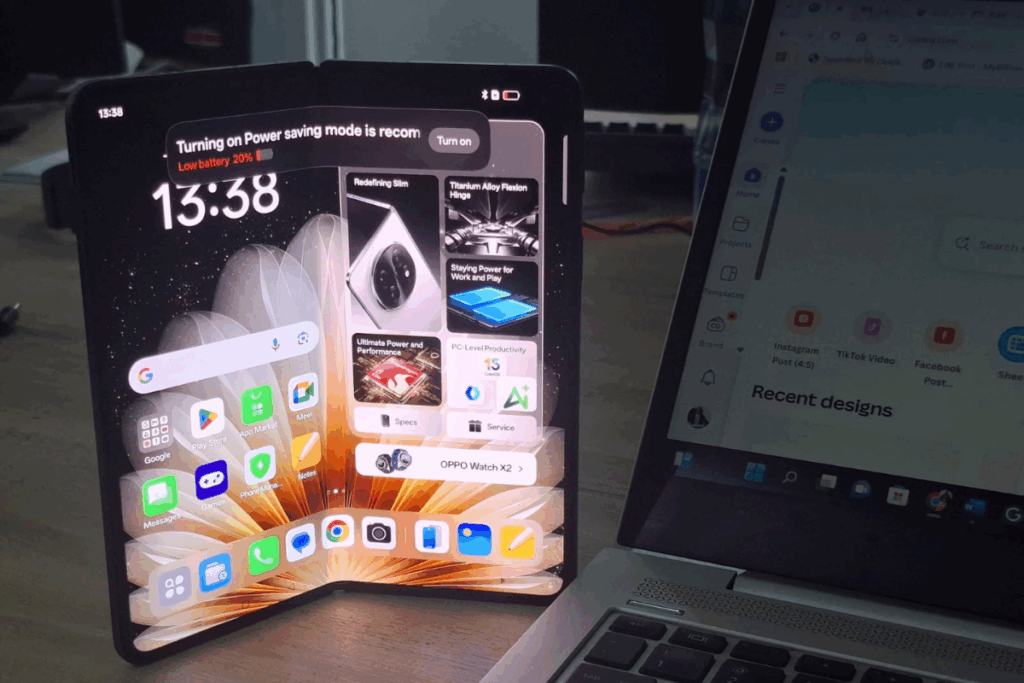
Both deliver prestige and engineering finesse — but lack local support and clarity on resale value. They’re ideal for buyers who prioritize design and camera excellence over practicality. As productive tools and status symbols, both stand out and are not inexpensive. Going head-to-head with the Fold7, the foldables market benchmark, they offer unique experiences for users, giving you value for your money. Having reviewed the Oppo Find N5, I can attest that it’s a marvel and a brilliant mini-pro handheld laptop in your palm.
OnePlus Open
It is the sleeper hit. Flagship specs, multitasking UI, and competitive pricing make it the best-kept secret for business users who want performance without overspending. OnePlus has been giving Samsung and other premium brands a run for their money, and the OnePlus Open further advances that agenda and narrative. Here is what it offers:
OnePlus Open Unique Selling Points
- Dual ProXDR displays with 2800 nits peak brightness deliver unmatched clarity indoors and out.
- Hasselblad-tuned triple camera system captures flagship-grade shots across folded and unfolded modes.
- Snapdragon 8 Gen 2 + 16GB RAM powers seamless multitasking and gaming on a foldable canvas.
- 67W fast charging fills the 4805mAh battery in just 42 minutes—no wireless, but blazing wired speed.
- OxygenOS Open Canvas multitasking redefines productivity with fluid split-screen and floating windows.
Z Flip 7 and Razr Ultra
These flippables are style-first devices. Compact, elegant, and reliable — but limited in screen real estate and multitasking depth. Great for minimalists, not for power users. The Razr Ultra costs around Kes 130,000.
Motorola Razr Ultra Unique Selling Points
- Largest 3.6-inch external AMOLED display at 144Hz lets you stream, game, and reply without flipping open.
- 6.9-inch LTPO AMOLED main screen at 165Hz offers ultra-fluid visuals with minimal crease and full HDR10+ support.
- Flex View mode with AI face tracking turns the phone into a hands-free tripod for content creation.
- Snapdragon 8+ Gen 1 + up to 12GB RAM + 512GB storage ensures flagship-grade performance.
- Sleek gapless foldable design with IP52 splash resistance, Gorilla Glass Victus, and wireless charging.
Infinix Zero Flip 5G
Infinix’s Flip 5 democratizes the foldable experience. It’s not a powerhouse, but it’s a strategic entry point under KSh 70K — ideal for budget-conscious buyers testing the category.
Unique Selling Points
- 6.9-inch LTPO AMOLED foldable display + 3.64-inch external AMOLED, both 120Hz with up to 1400 nits peak brightness;
- Triple 50MP camera system with OIS, PDAF, and 4K video on both front and rear lenses
- MediaTek Dimensity 8020 + 8GB RAM + 512GB UFS 3.1 storage, expandable to 16GB via RAM extension
- 4720mAh battery with 70W fast charging, plus 10W reverse wired charging
- Android 14 with XOS 14.5, upgradeable to Android 16 and backed by 3 years of security patch updates.
Retail Strategy: Where to Buy, What to Watch, and Why Support Matters
In Kenya’s foldable market, the difference between a smart purchase and a costly regret lies in retail intelligence. This is where JuaTech Africa earns its stripes — not by parroting specs, but by decoding the commercial realities that buyers face.
Warranty First, Support Always
Ignore the hype. If your foldable doesn’t come with a verified warranty, after-sales support, and resale infrastructure, it’s a liability. Samsung’s Z Fold 7 and Z Flip 7 require official channels — grey market imports may save you KES 10,000 upfront, but cost you KES 50,000 in repairs, offer zero resale value, and provide no service fallback.
After-Sales Support: The Hidden ROI
Foldables are complex machines. You need:
- Authorized service centers for screen repairs, hinge replacements, and software diagnostics
- Spare parts availability — especially for Phantom V Fold 2 and Z Fold 7
- Customer care escalation paths — not WhatsApp chats with resellers
Without this, your foldable becomes disposable tech.
Trusted Retailers Only
Buy from PhonePlace Kenya, Avechi, or Jumia Verified Sellers. These platforms offer:
- Authentic listings with IMEI tracking
- Flexible payment options (Lipa Mdogo Mdogo, BNPL)
- Access to pre-orders and bundle deals
Price Drops & Timing
Foldables depreciate fast. The sweet spot? 3–6 months post-launch. That’s when prices stabilize, and resale value is predictable. Phantom V Fold 2 and OnePlus Open are already in this zone — ideal for ROI-driven buyers. The Fold7, now retailing for KES 245,000, could experience a significant price drop by December 2025 or January 2026. For a strategic buyer, that could be the ideal time to pounce and make a purchase.
Final Verdict: Should You Buy One?
If you’re serious about upgrading your mobile experience — and you know why you want a foldable — the Phantom V Fold 2 and Galaxy Z Fold 7 are the best foldable smartphones in Kenya 2025. Period.
The Phantom V Fold 2 is unmatched in value, offering stylus support, AI tools, fast charging, and a local warranty — all for under KSh 130K. It’s the strategic pick for creators, entrepreneurs, and ROI-driven buyers who want flagship performance without flagship pricing.
The Galaxy Z Fold 7 is the executive’s mobile command center. With DeX mode, S Pen precision, and 7-year updates, it’s built for leaders who run operations on the move. It’s not cheap — but it’s built to last, work hard, and retain value.
Other foldables serve niche needs — such as style, prestige, and experimentation — but if you’re buying to work smarter, create faster, or lead louder, these two rise above the rest.
Ready to Buy? Let’s Get You the Best Deal
If you’re ready to invest in the best foldable smartphones in Kenya 2025, JuaTech Africa is your strategic partner — not just a reviewer, but a buyer’s ally.
We work directly with Kenya’s top retailers – PhonePlace Kenya, Avechi, and Jumia Verified Sellers – to help you secure warranty-backed devices, after-sales support, and resale clarity, with no grey market risks. No guesswork.
Inquire now for personalized foldable recommendations. Compare Prices across trusted channels with verified specs.
Join our buyer’s list for exclusive foldable alerts, resale tips, and launch insights. We don’t spam — we empower.
Whether you’re buying for productivity, prestige, or ROI, we help you match your intent with the correct device, retailer, and timing.
You can read our Ultimate Smartphone Buying Guide Kenya 2026 to be well-grounded when buying a new device, or to help a friend. You can also share this link with them for the best results.