

Inside the strategy, competition, and market forces driving Xiaomi’s transformation from a budget disruptor to a continental tech powerhouse in Kenya and across Africa
A Brand on the Rise | Kenya’s New Contender
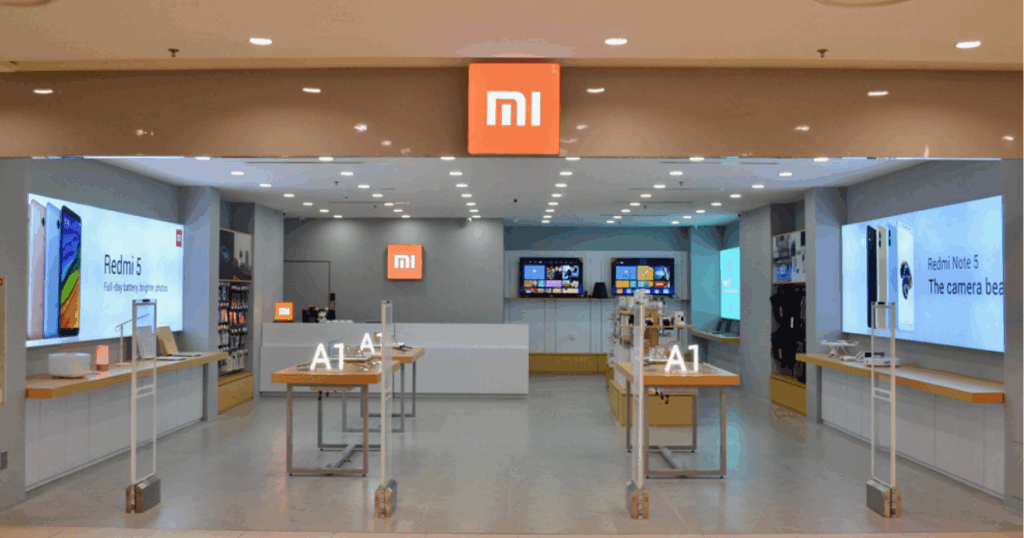
On a crisp Nairobi morning, the glass doors of Xiaomi’s newest Mi Store slide open, and the crowd surges forward. University students with backpacks, boda boda riders still in reflective vests, and suited professionals on coffee breaks all jostle for a first glimpse of the latest Redmi Note. It’s not just a product launch; it’s a signal flare.

In Q1 2025, Xiaomi’s smartphone shipments across Africa surged 32% year‑on‑year, even as some rivals stumbled. In Kenya, its market share has more than doubled in two years, driven by aggressive pricing, a growing device ecosystem, and a retail pivot that eliminates intermediaries. The recent appointment of Huang Jinhua as Country Manager underscores a sharpened local focus.
Once dismissed as “just another Chinese phone maker,” Xiaomi is now forcing industry veterans to rewrite their playbooks. The real question: how far, and how fast, can it climb in Africa’s mobile tech race?
This is the story of a brand rewriting the rules, and why its next moves could redefine how Kenya, and the continent, connect.
Origins and Global Rise
In April 2010, in a modest Beijing office, Lei Jun – fresh from steering software giant Kingsoft and selling his e-commerce venture Joyo.com to Amazon – assembled seven co-founders with pedigrees from Google, Microsoft, and Motorola. Their mission was audacious: to prove that cutting-edge technology need not carry a luxury price tag. Xiaomi’s first product wasn’t even hardware – it was MIUI, a community-driven Android skin updated weekly based on user feedback, forging a tribe of early adopters before a single phone shipped.
When the Mi 1 finally launched in 2011, it sold out in minutes via an online-only flash‑sale model that became a retail case study in scarcity marketing and inventory discipline. By 2014, Xiaomi had become China’s largest smartphone vendor; by 2018, it had gone public in Hong Kong in one of the largest tech-sector IPOs.
Strategic Inflection Points: Xiaomi’s Global Ascent
| Year | Milestone | Why It Mattered |
| 2010 | Founded in Beijing by Lei Jun and 7 co-founders, launched MIUI beta. | Built a loyal community before hardware, proving software-first brand building. |
| 2011 | The Mi 1 smartphone was released via online flash sales. | Created scarcity buzz; sold 300,000 units in 34 hours. |
| 2014 | Became China’s No. 1 smartphone brand. | Outpaced Samsung and Apple in its home market through aggressive pricing and fan engagement. |
| 2018 | Hong Kong IPO raised $4.7B. | Funded global expansion and R&D for the IoT ecosystem. |
| 2020 | Surpassed Apple to become the world’s No. 3 smartphone vendor. | Cemented position as a global challenger brand. |
| 2023 | Crossed the 500M connected AIoT devices milestone. | Reinforced dominance in consumer IoT, diversifying revenue beyond phones. |
| 2025 | Africa shipments up 32% YoY; Kenya market share doubled in 2 years. | Signals strategic pivot to high-growth emerging markets. |
Today, Xiaomi sits firmly in the global Top 3 smartphone brands, with a 13% market share, trailing only Samsung and Apple. Its AIoT ecosystem – spanning over 500 million connected devices from smart TVs to air purifiers – now contributes more than a third of non-smartphone revenue, making it the world’s largest consumer IoT platform.
Anchored by the philosophy “Innovation for Everyone”, Xiaomi operates on razor-thin hardware margins (often under 5%) and monetises through services and ecosystem lock-in. This value‑for‑money positioning has not only disrupted premium incumbents but also redefined consumer expectations in emerging markets – proving that democratized innovation can be both a growth engine and a global brand blueprint.
The Xiaomi Ecosystem
Xiaomi is not a phone company with accessories; it’s an ecosystem engine. Three smartphone lines – Redmi, POCO, and Xiaomi flagships – attract users with clear price–performance tiers, then expand lifetime value through tightly integrated audio wearables, power essentials, and an AIoT home that runs on Xiaomi Home and HyperOS. The result is a flywheel: affordable entry, sticky services, and cross-device convenience that feels premium without the premium tax.
Redmi handles mass adoption with huge battery wins and reliable cameras; POCO courts performance hunters and creators who want Snapdragon muscle on a budget; Xiaomi flagships deliver Leica-tuned imaging, a premium build, and cross-device continuity. Around the pocket sits a practical orbit: power banks that survive field days, buds tuned for commute calls, and watches that bring health metrics into an app fabric the brand fully controls. Step into the home, and the breadth becomes obvious — security cameras, Wi-Fi 6 routers, air purifiers, lights, TVs, and vacuums that set up in minutes and communicate with each other out of the box.
Emerging EV Venture
Emerging mobility is the long game. The SU7 puts HyperOS on wheels – a showcase of device‑to‑car continuity that strengthens the story even where the sedan isn’t yet officially sold. Near-term African relevance hinges on brand halo and software maturity, including better casting, faster pairing, more consistent automations, and the credibility to court fleet, hospitality, and retail partners as charging networks scale.
Xiaomi Product lines mapped out.
| Product line | Examples | Core value proposition | Price tier | Target customer segments |
| Redmi smartphones | Redmi Note (latest), Redmi 15C | Big battery, dependable camera, great value | Entry to mid | Students, first-time upgraders, micro‑entrepreneurs |
| POCO smartphones | POCO F‑series, X‑series | Flagship‑grade performance at mid prices | Mid | Mobile gamers, creators, power users |
| Xiaomi flagships | Xiaomi 14 and 15/Ultra | Leica imaging, premium build, HyperOS continuity | Premium | Prosumers, executives, and content leaders |
| Audio wearables | Redmi Buds 5, Xiaomi Buds, Watch S3 | Seamless pairing, solid mics, health tracking | Entry to mid | Commuters, creators, fitness-focused |
| Power & essentials | Mi Power Bank 10K/20K, chargers | All‑day uptime, fast charging | Entry | Field workers, riders, travelers |
| Home security | Smart Camera C200/C400, Doorbell | Easy setup, reliable remote monitoring | Entry | Homeowners, shopkeepers, SMEs |
| Networking | Router AX3000/AX5400 | Stable Wi‑Fi 6, app control | Mid | Home‑office, gamers, small offices |
| Smart lighting | LED Bulb, Lightstrip | Affordable automation, ambiance | Entry | Renters, Airbnb hosts, streamers |
| Mobility | SU7 (HyperOS car) | Cross-device continuity, tech halo | Premium | Early adopters, brand loyalists |
Xiaomi’s product strategy
The Chinese company adopts a layered ecosystem approach.
- Pocket & Personal Tech: Smartphones as the anchor, supported by wearables like smart bands, earbuds, and watches.
- Practical Accessories: Power banks, chargers, cases, and other add‑ons that deepen device stickiness.
- Smart Home Integration: IoT devices such as air purifiers, robot vacuums, smart lighting, and security cameras, all controlled via the Mi Home app.
- Lifestyle Expansion: E‑mobility products, kitchen appliances, and health devices that extend brand presence into daily routines.
- Future Mobility: The upcoming push into electric vehicles, aiming to unify mobile, home, and car experiences under one ecosystem.
In essence, Xiaomi’s strength lies in system design – segmenting the pocket, surrounding it with purposeful accessories, and extending comfort and control into the home and, eventually, the car. It’s a model whose depth and breadth position the brand as a formidable force in global tech for years to come.
Africa Strategy Overview
Xiaomi’s African playbook is no longer experimental – it’s a structured, data-driven expansion anchored in leadership localisation, retail innovation, and community-centric marketing. Since formally establishing its Africa division in 2019, the brand has grown its footprint to 16 countries, including Kenya, Nigeria, South Africa, Egypt, Morocco, and Algeria, with Africa smartphone shipments surging 32% year‑on‑year in Q1 2025.
PESTLE Analysis Snapshot
- Political & Regulatory: Relative stability in key East African markets like Kenya and Tanzania supports retail investment, though import duties and forex volatility remain operational risks.
- Economic: Africa’s smartphone market grew 6% in early 2025, driven by urban middle‑class expansion and mobile money penetration. Kenya’s GDP growth (projected 5.4% in 2025) underpins consumer tech demand.
- Sociocultural: A median age of 19.7 years across Africa fuels demand for affordable, high-spec devices for content creation, gaming, and social media.
- Technological: Expanding 4G/5G coverage and rising smartphone financing adoption create fertile ground for mid-tier device uptake.
- Legal & Environmental: Data privacy laws and e-waste regulations are tightening; compliance will be a differentiator.
Leadership Moves
In August 2025, Huang Jinhua was appointed Kenya Country Manager, tasked with steering retail, after-sales, and ecosystem growth. Zou Chengzong now heads East Africa, overseeing markets from Nairobi to Kigali, ensuring regional agility and faster product rollouts. Their reporting line to Africa GM Liu Shequan signals a flatter, more responsive structure.
Distribution Strategy
Xiaomi is bypassing traditional broker chains, opening flagship Mi Stores in Nairobi and Dar es Salaam, and deepening e-commerce integration with Jumia and Safaricom’s Masoko platform. This hybrid model ensures both urban retail visibility and nationwide reach.
Marketing and Community Engagement
The brand’s African marketing mirrors its global “community first” ethos. Annual Mi Fan Festivals blend product launches with exclusive offers, while influencer collaborations on TikTok, Instagram, and YouTube localize the brand voice. Campaigns are increasingly Africa-flavoured – from Swahili‑language unboxings to partnerships with regional tech reviewers — building authenticity and trust.
Strategic Take
By combining local leadership, direct-to-consumer retail, and culturally attuned marketing, Xiaomi is positioning itself not just as a device vendor but as an ecosystem partner in Africa’s digital transformation.
The challenge, and opportunity, lies in scaling this model while navigating regulatory complexity and intensifying competition from Transsion and Samsung.
Kenya market deep-dive: Xiaomi Redefining Mobile Technology
Kenya’s smartphone market is a KES-driven, youth-weighted battleground with absolute scale. Consumer spending on smartphones is projected to reach US$2.31 billion in 2025, with per-capita spending at US$40.19, and volumes on track to reach 11.4 million units by 2030, signaling durable demand even as macroeconomic headwinds persist. Shipments dipped 2% year-on-year in Q2 2025- an outlier as Africa grew 7% – reflecting affordability pressures and import costs rather than waning appetite. Earlier in Q1 2025, Kenya still managed to eke out 1% growth, as flexible financing cushioned demand.
Kenya’s digital fabric explains the resilience: 68.8 million cellular connections (121% of population) and 27.4 million internet users (48% penetration) as of early 2025, with just 30.3% of the population urban, leaving a vast rural upgrade runway tied to affordability and coverage. CA/KNBS data highlights the urban-rural divide: 53.7% of Kenyans aged 3 years and above own a mobile phone, with urban ownership at 64.6% compared to 48.6% in rural counties; internet use is similarly skewed towards urban centers, such as Nairobi (64.7%).
Installment Payment Option
Financing has become Kenya’s killer feature. Safaricom’s Lipa Mdogo Mdogo enables deposits as low as ~10% and daily installments (often KES 20–134) with device locks upon default – a practical fit for informal incomes and cash-flow realities. M-KOPA’s pay-as-you-go model incorporates SIM-lock security, M-PESA payments, and value-added services such as health coverage and device protection, providing instant access through daily/weekly repayments and a pathway to ownership and credit history. Analysts credit such models for Kenya’s steady Q1 2025 momentum and broader African expansion of budget and mid-tier adoption.
Official Support Centres in Kenya
Xiaomi’s Kenyan footprint is now concrete and service-led. Official support centers are located in Nairobi (Rehani House), Mombasa (Ambalal Building), Kisumu (Pioneer House), Eldoret (Sirgoi Building), and Nakuru (Masters Plaza), thereby strengthening after-sales trust- a historic pain point in value tiers. Retail presence includes an authorized “Official Xiaomi Store Kenya” hub at Bihi Towers, Moi Avenue, Nairobi, complemented by authorized resellers and robust online catalogues.
Consumer sentiment is shifting on value, updates, and trust. Statcounter trends show Samsung surging past 30% share, Transsion brands slipping, and Xiaomi rising to ~7.5% – a steady comeback signaling traction with spec-to-price balance and expanding retail/service reliability.
Kenya smartphone market share (June 2025)
| Brand group | Share |
| Samsung | 30.32% |
| Transsion (TECNO + Infinix + itel) | 24.03% |
| Xiaomi | 7.46% |
| Others (Apple, OPPO, Nokia, etc.) | 38.19% |
Sources: Adapted from Statcounter.
Competitive Landscape: Xiaomi mobile technology in Kenya and Africa
In Africa’s fast-evolving smartphone arena, four incumbents and one challenger dominate the scoreboard.
Formidable Line-up of Aggressive Players
Transsion, home to TECNO, Infinix, and itel, remains unshaken in the budget tier, controlling 51% of Q2 2025 shipments as its dual-SIM, long-battery models resonate from Lagos to Lusaka.
Samsung, once the uncontested market leader, now holds a roughly 18% share, growing 3% year-on-year by sharpening its Galaxy A-series offerings and deepening operator partnerships in Nigeria and Egypt.
OPPO: The brand has felt the squeeze, with shipments slipping 11% amid portfolio rationalization and a mid-range reset; its growth is now focused on experience centre rollouts in North Africa and localized carrier bundles.
HONOR: Honor steals headlines with a 161% surge to capture 4% share. How? Its budget-friendly X7c and 400 Lite models are buoyed by aggressive flash-sale tactics and telco tie-ups in South Africa and beyond. Now, the Honor X5, X6, X7, X9 Series, Honor 200, and 400 series are available across Africa, including in Kenya, with users appreciating their superior specs at affordable prices.
Huawei: It maintains a steady ~6% footprint despite global headwinds by leveraging its camera leadership and enterprise-channel agreements across East Africa.
Xiaomi Unique Proposition
Amid this crowded field, Xiaomi’s 32% jump to 14% share marks it as the third pillar of competition. Its “specs-per-shilling” proposition, underpinned by a unified AIoT ecosystem and direct-to-consumer Mi Stores, closes the gap between value and performance. By bundling Redmi and POCO handsets with earbuds, smart bands, and Mi Home IoT kits, Xiaomi amplifies lifetime value and cross-device stickiness.
As Transsion defends volume dominance and Samsung fortifies midrange loyalty, the battleground shifts to ecosystem pull, service revenue, and financing partnerships. Xiaomi’s razor-sharp pricing, coupled with e-commerce tie-ins with Jumia and Safaricom, positions it to challenge incumbents not just on price but also on platform cohesion. The key question: can it convert momentum into sustained market leadership across Kenya and the African continent?
Xiaomi SWOT Analysis
Strengths
Robust volume growth:
Xiaomi shipments increased by 32% to capture a 14% market share in Q1 2025, targeting value-conscious segments with the Redmi A-series and 14C models. With the 15C models, it can now make more inroads across Kenya and Africa. Xiaomi Redmi 15C retails between 12,000 and 15,000, a sweet point for most budget phone buyers who want value for money.
Integrated IoT ecosystem
In Q1 2025, Xiaomi’s IoT & lifestyle arm surged 58.7 % to RMB 32.3 billion, powered by Mi Smart Bands, Redmi Buds, and Mi Home automation kits. Unified firmware, cross-app integration, and bundled promotions increased the average number of IoT devices per user, elevating Average Revenue Per User (ARPU) and strengthening ecosystem lock-in across wearables, audio, and home appliances.
Laser-focused community marketing
Localized social media campaigns- such as Nigeria’s four-phase “Redmi 13C” launch – drive rapid buzz, unboxing content, and KOL engagement. In Kenya, localized Xiaomi campaigns have been highly successful, opening up new frontiers for marketing. It makes sense to stick with and build on these community marketing strategies. Why? The impact is reflected in Xiaomi’s growing presence in the Kenyan market.
Maasai Mara photo contest
In August–September 2024, Xiaomi Kenya’s Redmi Note 13 Series Offers Festival ran from August 9 to September 9, offering a KES 3,500 discount and pairing it with a Maasai Mara photo contest. Fans were invited to post their best Redmi Note 13 shots on Facebook and tag Xiaomi Kenya. The activation drew over 3,200 entries and generated 1.4 million social impressions, while Mi Stores nationwide reported a 15% quarter-on-quarter sales uplift. Complementary in-store “lucky draw” campaigns rewarded Redmi Note 13 purchasers with accessories, such as the Mi S1 Watch and Redmi Watch 3, seamlessly bridging digital buzz with brick-and-mortar sales.
Increase brand awareness and sales.
This community-centric model is paying off in Kenya’s mobile landscape. By Q3 2024, smartphone connections in Kenya reached 37.4 million devices – 72.6% of total mobile subscriptions – underscoring a broad, engaged base primed for targeted activations. Although Kenya’s overall smartphone shipments grew just 1% year-on-year in Q1 2025 (versus a 6% rise across Africa), Xiaomi’s Africa-wide shipments surged 32%, highlighting the efficacy of its localized, user-driven campaigns in driving market share gains during promotional windows.
By fusing aggressive value messaging with influencer-driven content, experiential events, and seamless online-offline integration, Xiaomi has sharpened purchase intent among price-sensitive, spec-savvy consumers. This blueprint not only cements Redmi and POCO as mid-tier leaders but also lays a scalable foundation for future launches, such as the Redmi 14 Series, aimed at deepening customer engagement and conversion across Kenya and beyond.
Strengthened regional leadership
In August 2025, Xiaomi appointed Huang Jinhua as Kenya Country Manager, Zou Chengzong to lead East Africa, and Liu Shequan as GM for West Africa, supported by Wu Chunhui (continental marketing) and Liu Yeqi (after-sales). This leadership network accelerates local market insights and intelligence, robust strategic distributor partnerships, and tailored after-sales support.
Xiaomi Weaknesses
Thin Hardware Margins
Xiaomi caps net profit margin at around 5% per device, compressing profitability in an industry where price wars and component shortages force deeper discounts. This tight margin leaves little room to absorb supply-chain shocks, currency fluctuations, or aggressive promotional pricing, heightening pressure on operating costs and long-term margin sustainability.
Premium Perception Gap
Despite global momentum, Xiaomi commands just 14% of Africa’s smartphone market by Q2 2025, trailing Samsung’s 18 percent. This shortfall highlights weaker brand resonance among affluent consumers who associate Samsung with aspirational quality, limiting Xiaomi’s ability to raise prices and fully capture growth in mid- to high-end segments.
Premium Portfolio Depth
Xiaomi’s flagship portfolio- including the camera-centric 15 Ultra – is rarely launched through official African channels, forcing import-dependent purchases and diluting aspirational appeal. This gap leaves premium buyers underserved, ceding market share to rivals that offer local availability, dedicated flagship lineups, and stronger high-end marketing.
Opportunities for Xiaomi: Redefining Mobile Technology in Kenya and Africa
EV ecosystem entry
Xiaomi EV delivered over 139,547 SU7 sedans in 2024, surpassing its initial 100,000-unit target, and has set an ambitious goal of 300,000 deliveries in 2025. This rapid scale-up not only cements Xiaomi’s smart mobility credentials but also deepens its AIoT ecosystem halo across devices and automotive experiences. With increased infrastructure for EVs in Kenya and across Africa, the possibility of shipments beyond the domestic Chinese market is high. There is a possibility of launching a unit in South Africa as a promotional showcase. Third parties are also stepping in to import the car for use. Africa is emerging as a new frontier for technology, and Xiaomi can exploit this opportunity profitably in the coming years.
Embedded fintech integration
Africa’s fintech sector raised $1.42 billion in H1 2025, with mobile-money platforms expanding into credit, insurance, and savings. Xiaomi’s roadmap to embed Mi Pay, consumer lending, and digital-wallet APIs directly into HyperOS positions its devices as full-service financial hubs – boosting user engagement, stickiness, and high-margin service revenues.
Local assembly partnerships
Through its partnership with HMD at EADAK, Kenya’s premier smartphone assembly plant, over 1.5 million units were produced locally in 2024. This model demonstrates how Xiaomi can replicate scalable, in-country manufacturing to mitigate import duties, shorten supply chains, accelerate time-to-market, and foster skills transfer across East Africa.
Chip-making self-sufficiency
Xiaomi’s chip self-sufficiency began with the 2017 Surge S1 and peaked with the 3nm XRing O1, building on a rumored Surge X1 expected to deliver 15% CPU and 10% GPU boosts. In-house silicon secures supply chains, cuts costs, accelerates rapid innovation, and unlocks unique on-device AI functions. In Kenya and Africa, this yields competitively priced flagships, Swahili-optimized AI, dependable after-sales support, and robust retail partnerships. Xiaomi’s integration rivals Apple and Samsung while empowering local markets with tailored, future-focused performance and affordability.
It’s been a journey of trials and improvements, and now Xiaomi has something to offer. See the table below.
| Chip Name | Type | Year | Purpose | Notes |
| Surge S1 | SoC (Smartphone) | 2017 | Mid-range processor | Debuted in Mi 5c |
| Surge C1 | ISP (Camera) | 2021 | Image signal processing | Used in Mi Mix Fold |
| Surge P1 | Power Management | 2022 | Fast charging controller | Found in Xiaomi 12 series |
| Surge X1 | Rumored SoC | — | Flagship-grade SoC (unconfirmed) | Possibly an internal codename |
| Xring O1 | Flagship SoC | 2025 | High-performance chip for phones | Confirmed and commercialized |
Showcasing the 3 nm XRing O1’s raw power, the upcoming Xiaomi Pad 7 Ultra transforms on-device AI multitasking with its 14-inch OLED display, stylus support, 12,000 mAh battery, and 120 W fast charging – seamlessly handling real-time translation, predictive workflows, and advanced imaging.
Moreover, the Xiaomi 15S Pro, officially teased by Lei Jun and certified in 3C filings, will become the first smartphone to harness XRing O1’s efficiency, delivering class-leading CPU and GPU performance in an elegantly slim design. And this is just the beginning: as XRing O1 rolls out across Xiaomi’s 2025 lineup, users can look forward to bespoke MIUI AI enhancements, deeper ecosystem integration, and locally tuned features that redefine mobile experiences.
Threats
Against these numerous opportunities, Xiaomi must also face equally innumerable threats in the market.
Intensifying price wars
Sub-$100 smartphones surged 38% year-over-year in Q2 2025, tapping into rural demand and triggering fierce undercutting by Transsion and local “Others” brands. This influx erodes Xiaomi’s margin buffers, forcing the company to engage in aggressive channel financing and promotional bundling, which drive average selling prices downward and compel higher-volume, lower-return strategies to defend its market share.
Regulatory compliance costs
Kenya’s January 1, 2025, IMEI registration mandate requires importers and assemblers to upload the IMEI of every device to the KRA portal, submit detailed import documentation, and face blacklisting or fines for non-compliance. The rule adds legal scrutiny, extends lead times, and inflates operational overhead—raising entry barriers for smaller distributors and squeezing thin-margin vendors.
Macroeconomic headwinds
Africa’s smartphone growth forecast decelerates to 3% in 2025 as persistently high inflation – projected at 12.6%, down from 18.6% in 2024 – coupled with currency volatility in the Naira, Rand, and Shilling, contracts purchasing power. Tightened consumer budgets threaten unit volumes, particularly in mid-tier segments, pressuring vendors to balance Average Selling Price (ASP) hikes against stagnant demand.
Supply-chain disruptions
Escalating US-China tariff tensions have manufacturers stockpiling components and devices, inflating Q1 2025 global shipments by just 1.5% despite underlying demand. Tariff uncertainty drives up semiconductor and display costs, delays product roadmaps, and tightens margins across emerging markets, where pass-through price increases risk dampening consumer sentiment and delaying upgrades.
Challenges & Market Realities
Affordability vs Innovation Trade-Off
Kenya’s average smartphone price has nearly tripled from KES 5,955 in 2019 to KES 18,979 in Q2 2025, pushing 68% of units into the mid-tier or higher segment. While Xiaomi’s Redmi 14 and 15 series showcase bleeding-edge imaging and AI features, the steep ASPs risk pricing out entry-level buyers and widening the digital divide between innovators and cost-sensitive segments.
Financing Gaps Limiting Mid-Range Adoption
GSMA reports that 59% of Kenyan shipments in 2024 were feature phones, indicating that micro-payment plans still overwhelmingly target devices priced under KES 10,000. While M-KOPA and Safaricom’s Lipa Mdogo Mdogo serve daily wage earners, financing for mid-tier phones (KES 10,000–20,000) remains scarce. This shortfall confines Xiaomi’s Redmi Note and POCO series to urban elites, stalling broader adoption in growth corridors.
Regulatory Complexity Across African Markets
Africa’s market labyrinth encompasses disparate import duties, IMEI registration protocols, data privacy rules, and e-waste regulations across 15 countries, resulting in delays of up to 90 days in new product approvals. Without unified frameworks under the African Continental Free Trade Area and deeper compliance harmonization, Nairobi launches face longer cycles than Johannesburg or Lagos—inflating operational costs and diluting Xiaomi’s time-to-market precision. Vendors and distributors of phone brands, including Xiaomi, face challenges in navigating all these regulations and hindrances to run successful businesses and serve end users.
Supply-Chain Vulnerabilities
A 2015 curved-glass yield failure on the Mi Note led to months-long stock shortages, exposing Xiaomi’s supplier risks. Today, African distribution is facing challenges such as port congestion, seasonal monsoon delays, and capacity constraints at semiconductor foundries. These lead-time fluctuations add 20–30 days to shipments and elevate inventory-holding costs by 5% per quarter, eroding margins in low-buffer markets.
Opportunities and The Road Ahead
Increase Partnerships with Telcos for Financing Solutions
Deepening partnerships with African telcos offers Xiaomi a powerful lever to bridge financing gaps and accelerate mid-range adoption. Device-financing models such as buy-now-pay-later and pay-as-you-go have unlocked sub-$100 and mid-segment sales across the continent. By embedding Xiaomi’s Redmi and POCO series into Safaricom’s Lipa Mdogo Mdogo, MTN South Africa’s FoneYam at Pep, or Kenya’s OnPhone Mobile and LOOP programs, Xiaomi can replicate FoneYam’s 37% device-sales share and drive sustained volume growth beyond entry-level buyers.
Smart Homes and Lifestyles
Expanding its Human × Car × Home ecosystem in Nairobi lays the foundation for deeper forays into smart homes and electric vehicles. Building on the January 2025 launch of AIoT-enabled TVs, cleaning robots, and the SU7 EV sedan, Xiaomi can partner with local installers and utilities to bundle smart-living packages. This positions Xiaomi to capture the rising urban demand for connected living—projected to grow at a 25% annual rate in Kenyan smart-home device shipments through 2027—and accelerate EV adoption in East Africa’s nascent market.
Leverage on MIUI
MIUI remains a pivotal platform for services, fintech, and content. With over 675.8 million monthly active users and a 22.3 million-member community, Xiaomi can integrate digital wallets, micro-savings, and microcredit into HyperOS. Leveraging Kenya’s 50% mobile-money penetration, Xiaomi-branded financial tools and in-OS content marketplaces will boost ARPU, deepen ecosystem stickiness, and drive incremental revenues from value-added services across East and West Africa.
Set up Local R&D and assembly Hubs
Establishing local R&D and assembly hubs in Kenya can further slash costs and elevate brand equity. By leveraging Export Processing Zone incentives and onshore part assembly, Xiaomi can reduce landed costs by up to 10%, shorten lead times, and enhance after-sales responsiveness. Coupled with a planned USD 4.2 billion R&D expenditure in 2025, this strategy underpins accelerated innovation, localized patent development, and enhanced stakeholder goodwill across African markets.
JuaTech Africa | Some Key Thought Leadership Takeaways
Retailers
Sell flagship devices (e.g., Redmi Note 14 Pro) alongside complementary accessories (Mi Band) and flexible financing plans. Bundles drive higher ARPU and deepen customer loyalty.
Micro-Segment for Precision
Move beyond mass marketing by designing bespoke promotions for students, micro-entrepreneurs, corporates, and other key segments. Targeted campaigns unlock richer engagement and actionable consumer insights.
Elevate After-Sales Support
Invest in service centers across Nairobi, Mombasa, Kisumu, Eldoret, and Nakuru. Guarantee spare-part availability and rapid, transparent repairs to foster trust and encourage repeat purchases.
Empower Buyers with Ecosystem & TCO Insights
Encourage ecosystem thinking – evaluate how devices, software, and services interconnect. Educate on the total cost of ownership, factoring in resale value, service plans, bundled offerings (Mi Pay, Mi Cloud), and regular MIUI upgrades. Local support networks and seamless updates minimize hidden costs and extend device lifespan.
A Distruptor on the Rise
Xiaomi’s evolution from Shenzhen disruptor to a global contender underscores its mastery of value engineering, ecosystem design, and community-driven growth. In Kenya and across Africa, this translates into mid-tier devices that punch above their weight, increasingly robust after-sales support, and a roadmap into smart homes and mobility that could redefine digital lifestyles. The stakes are high: consumers and retailers alike must navigate affordability, innovation, and financing to shape the continent’s mobile future.
We invite you to dive deeper – share your thoughts below, spread the insights, and explore our Xiaomi buyer guides to measure the total cost of ownership and ecosystem advantages against rival offerings. For a complementary perspective, don’t miss our in-depth look at Motorola’s likely comeback to Africa on JuaTech Africa. Embrace Xiaomi intelligently, calculate each benefit, and let data-driven decisions fuel your next upgrade or retail strategy.
Sign up for the JuaTech Africa Newsletter for insights on Mobile tech. Check in on our official WhatsApp channel for publications as soon as they are published.