


Kenya and Rwanda are building two radically different innovation ecosystems. One bets on infrastructure and entrepreneurial scale. The other prioritizes coordination, talent, and execution. Together, they reveal the opportunities, tensions, and unanswered questions shaping Africa’s technological future.
Africa’s Next Great Technology Experiment
Africa’s digital future is no longer shaped solely by startups, mobile apps, or billion-dollar funding rounds. Across the continent, governments are pursuing something far more ambitious: the creation of entire innovation ecosystems designed to compete in a global economy increasingly defined by technology, artificial intelligence, digital infrastructure, and knowledge-driven industries.

This shift reflects a growing recognition that technological capability will play a decisive role in determining economic relevance in the decades ahead. Countries that successfully build innovation economies could strengthen job creation, industrial competitiveness, digital inclusion, and long-term resilience in a rapidly evolving global landscape. Those that fail risk deeper dependence in a world where technological power increasingly shapes productivity, capital flows, and geopolitical influence.
Yet innovation ecosystems cannot be manufactured through infrastructure alone. The world’s most influential technology hubs emerged through decades of interaction between universities, entrepreneurs, investors, policymakers, and research institutions. Talent density, institutional trust, access to capital, and a culture of experimentation often matter as much as physical infrastructure itself. This creates a difficult challenge for African governments seeking to accelerate digital transformation while competing for global technological relevance.
The question is no longer whether Africa can participate in the digital economy. The more urgent question is whether African nations can build the environments required for innovation to scale sustainably from within. Can governments engineer ecosystems capable of attracting talent, startups, research, and investment at a globally competitive level? Can state-backed technology cities replicate the gravitational pull of Silicon Valley, Shenzhen, or Singapore? And what ultimately creates lasting technological power in emerging economies?
Nowhere are these questions more visible than in Kenya’s Konza Technopolis and Rwanda’s Kigali Innovation City, two ambitious projects pursuing radically different visions of Africa’s technological future.
The Rise of Africa’s Silicon Valley Ambition
Across Africa, governments are increasingly treating technology and innovation as central pillars of long-term economic strategy. The ambition now extends far beyond expanding internet access or attracting isolated success stories from startups. Countries are investing in smart cities, digital infrastructure, innovation districts, research institutions, and startup ecosystems designed to position themselves within a rapidly evolving global technology economy. From Kenya’s Vision 2030 agenda to Rwanda’s digital transformation strategy, the objective is becoming increasingly clear: build economies capable of generating innovation, attracting investment, retaining talent, and creating future-ready industries at scale.
This ambition has been shaped in part by the global influence of technology hubs such as Silicon Valley, Shenzhen, Singapore, and Dubai, where concentrated ecosystems of talent, research, venture capital, and infrastructure have accelerated economic transformation over decades. African policymakers increasingly view innovation ecosystems as strategic national assets capable of strengthening competitiveness in a world increasingly shaped by artificial intelligence, automation, cloud computing, digital finance, and advanced connectivity. Yet Africa’s approach is also being shaped by its own realities, including youthful populations, rising smartphone adoption, urbanization pressures, infrastructure gaps, and growing demand for digital jobs.
The urgency behind this transition is difficult to ignore. Africa is home to one of the world’s youngest populations at a time when traditional employment models are becoming increasingly uncertain. Governments face mounting pressure to create environments that support software development, fintech innovation, creator economies, digital entrepreneurship, and emerging technology industries capable of absorbing a rapidly expanding workforce. Innovation cities are therefore emerging not simply as real estate developments, but as economic strategies designed to increase productivity, strengthen knowledge economies, and accelerate digital transformation.
At the same time, African countries are competing aggressively for foreign direct investment, multinational technology partnerships, venture capital, research institutions, and digital infrastructure projects. The competition is no longer only about natural resources or industrial capacity. It increasingly revolves around which countries can build the strongest innovation ecosystems and attract the talent required to sustain them. This marks a significant shift in Africa’s economic direction. The continent is no longer only exporting talent to global markets. It is attempting to build environments where innovation, entrepreneurship, and technological capability can scale locally.
Within this broader transformation, Kenya’s Konza Technopolis and Rwanda’s Kigali Innovation City have emerged as two of East Africa’s most ambitious and closely watched experiments in technological nation-building.
Kenya’s Bet on Scale, Infrastructure, and Entrepreneurial Gravity
Konza and the Vision of Kenya’s Silicon Savannah
When Kenya launched Konza Technopolis under its Vision 2030 development agenda, the ambition extended far beyond constructing another technology park outside Nairobi. The project represented a broader national effort to position Kenya as one of Africa’s leading digital economies by building an integrated ecosystem that supports innovation, research, smart infrastructure, business growth, and long-term industrial transformation. Often described as part of Kenya’s Silicon Savannah vision, Konza was designed to symbolize a future in which technology would increasingly shape the country’s economic competitiveness, urban development, and global relevance.
The scale of that ambition remains significant. Planned as a smart city spanning thousands of acres, Konza was envisioned as a hub for technology companies, universities, research centers, digital infrastructure, housing, healthcare, and advanced public services. The project aligned closely with Kenya’s broader efforts to strengthen its position within Africa’s digital economy through investments in connectivity, fintech innovation, startup ecosystems, and advanced digital infrastructure. In many ways, Konza became both an infrastructure project and a national statement about Kenya’s technological aspirations.
Why Konza Matters Within Africa’s Technology Ecosystem
Konza’s importance cannot be understood in isolation from the ecosystem that already exists around Nairobi and the broader Kenyan technology sector. Kenya entered the digital economy conversation with structural advantages that many African markets were still developing. The rise of M-Pesa transformed the country into one of the world’s most recognized mobile money success stories while helping establish Kenya’s global reputation in fintech innovation. Nairobi also emerged as a major regional hub for startups, venture capital activity, developer communities, accelerators, and multinational technology firms seeking access to East Africa’s growing digital market.
This entrepreneurial momentum matters because Konza is not attempting to create a technology ecosystem from scratch. Rather, it is attempting to formalize, scale, and institutionalize innovation activity that has already been developing organically within Kenya’s broader startup ecosystem. Kenya’s technology sector already possesses many of the ingredients associated with successful innovation economies, including founder networks, engineering talent, fintech leadership, digital adoption, and international investor visibility. Konza’s long-term success, therefore, depends not only on infrastructure delivery but also on whether it can strengthen and concentrate the entrepreneurial gravity already present in Kenya’s digital economy.
Earlier analysis by JuaTech Africa also explored how Konza Technopolis fits within Kenya’s broader Silicon Savannah ambition and the country’s evolving digital economy strategy.
The Structural Challenges Behind the Ambition
At the same time, the project has faced persistent criticism regarding execution timelines, ecosystem maturity, and the broader challenge of translating physical infrastructure into sustained innovation. Despite years of investment and policy attention, critics argue that Konza has struggled to achieve the density of startups, research institutions, and private sector activity typically associated with globally competitive technology hubs. Some observers also question whether infrastructure-first models can successfully engineer innovation ecosystems without simultaneously cultivating deeper institutional networks, stronger university-industry collaboration, and consistent flows of talent and venture capital.
These concerns reflect a broader reality shaping technology ecosystems globally. Successful innovation hubs rarely emerge through infrastructure alone. They evolve through complex interactions among entrepreneurs, universities, investors, policymakers, corporations, and research institutions over extended periods. In Kenya’s case, Nairobi itself continues to exert enormous ecosystem gravity because it concentrates founders, developers, investors, media networks, and business infrastructure. This creates an additional challenge for Konza as it attempts to attract sustained innovation activity away from an already established urban technology center.
The Bigger Question Facing Konza
Konza’s greatest challenge may not be infrastructure delivery, but creating the human and institutional density that transforms infrastructure into innovation. That distinction could ultimately determine whether the project evolves into a globally competitive technology ecosystem or remains a powerful symbol of Africa’s digital ambitions still searching for full realization.
Precision, Coordination, and the Discipline of Execution
Rwanda’s Coordinated Approach to Digital Transformation
While Kenya’s innovation strategy has largely evolved around entrepreneurial momentum and ecosystem scale, Rwanda has pursued a more centralized and highly coordinated model of technological development. Over the past decade, the country has positioned digital transformation as a core pillar of its national development agenda through policies focused on governance efficiency, infrastructure modernization, investment attraction, and institutional coordination. Rwanda’s technology ambitions are therefore deeply integrated into a broader state-led strategy to strengthen economic competitiveness and position the country as a regional innovation hub.
This coordinated approach has helped Rwanda build a reputation for policy consistency, regulatory predictability, and execution discipline within Africa’s evolving technology landscape. The government has aggressively pursued international partnerships with universities, technology firms, development institutions, and investors to accelerate local innovation capacity and attract global visibility. Kigali has increasingly positioned itself as a gateway for technology conferences, startup events, research collaborations, and pan-African digital initiatives seeking a stable, well-organized operating environment.
Kigali Innovation City and the Ecosystem Strategy
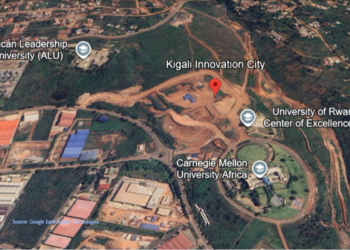
Kigali Innovation City sits at the center of this broader ambition. Rather than functioning primarily as a standalone smart city project, the initiative was designed as an ecosystem-building strategy focused on talent development, research, entrepreneurship, and the clustering of innovation. The project brings together universities, technology companies, startup support systems, and research institutions within a coordinated framework intended to strengthen collaboration and accelerate knowledge transfer.
Talent development remains one of the project’s most strategic priorities. Rwanda has invested heavily in higher-education partnerships, digital skills development, and technology-focused training programs to prepare a younger workforce for participation in knowledge-driven industries. Institutions such as Carnegie Mellon University Africa have also helped strengthen Kigali’s reputation as an emerging center for advanced technology education and engineering talent within East Africa.
This ecosystem-oriented model reflects a broader understanding that successful innovation economies depend not only on infrastructure, but also on institutional coordination and sustained talent cultivation. Kigali Innovation City therefore represents an attempt to orchestrate the conditions necessary for startups, investors, researchers, and technology firms to interact more efficiently within a concentrated innovation environment.
Earlier analysis by JuaTech Africa also explored how Kigali Innovation City fits within Rwanda’s broader strategy to position Rwanda as a coordinated, globally connected African technology ecosystem.
Rwanda’s Strategic Advantage and Its Constraints
Rwanda’s greatest advantage is not scale, but alignment. The country’s relatively centralized governance structure has enabled it to coordinate digital policy, infrastructure priorities, investment promotion, and institutional partnerships more decisively around long-term technology goals. This has helped Rwanda project an image of strategic clarity and disciplined execution that continues to attract international attention in Africa’s increasingly competitive innovation economy.
At the same time, the model also faces important structural limitations. Rwanda’s domestic market remains significantly smaller than larger African economies such as Kenya, Nigeria, or South Africa. The country must therefore rely heavily on regional integration, international partnerships, and external investment flows to sustain long-term ecosystem growth. Some observers also question whether highly centralized innovation models can generate the same level of organic entrepreneurial dynamism that often emerges more naturally in larger, less structured startup ecosystems.
There are also broader questions surrounding scalability and ecosystem resilience. Innovation ecosystems typically thrive through dense networks of independent founders, risk-taking investors, research institutions, and decentralized experimentation. Models that rely heavily on state coordination may achieve impressive organizational efficiency. Still, they can also face challenges in cultivating the unpredictability and bottom-up experimentation that often drive breakthrough innovation over time.
Still, Rwanda’s disciplined and coordinated approach continues to offer one of Africa’s clearest examples of how intentional governance, institutional alignment, and long-term digital strategy can shape the development of an emerging technology ecosystem.
Can Innovation Be Built From the Ground Up?
Two Visions of Africa’s Technology Future
At the center of the Konza Technopolis and Kigali Innovation City experiments lies a deeper question shaping Africa’s digital future: can governments deliberately build innovation ecosystems capable of competing on a global scale? Both Kenya and Rwanda are pursuing ambitious technology-driven development strategies, yet their approaches reflect fundamentally different assumptions about how innovation economies emerge, scale, and sustain themselves over time.
Kenya’s model leans heavily on scale, infrastructure, entrepreneurial momentum, and long-term ecosystem expansion. Konza reflects a belief that physical infrastructure, institutional investment, and national ambition can strengthen an already active technology ecosystem anchored around Nairobi’s startup culture, fintech leadership, and developer communities. Rwanda’s model, by contrast, prioritizes coordination, policy precision, talent systems, and institutional alignment. Kigali Innovation City reflects a more centralized attempt to orchestrate the conditions required for innovation ecosystems to function efficiently within a smaller but highly structured national environment.
Neither approach is inherently flawed. In many ways, both countries are responding to their own economic realities and structural advantages. Kenya possesses stronger entrepreneurial gravity, a larger domestic market, and a more organically developed startup ecosystem. Rwanda offers policy consistency, governance coordination, and execution discipline that many African markets continue to struggle to achieve. Yet both models also expose the complexity of building sustainable technology ecosystems in emerging economies.
Why Infrastructure Alone Is Not Enough
Infrastructure alone rarely creates innovation ecosystems. Smart buildings, fiber connectivity, and modern business districts may provide the physical foundation for digital economies, but they do not automatically generate startup culture, founder networks, research excellence, or sustained venture capital activity. At the same time, policy coordination and institutional discipline alone may not fully substitute for the unpredictability, experimentation, and entrepreneurial dynamism that often drive breakthrough innovation within globally competitive ecosystems.
The challenge becomes even more complex because successful technology hubs rarely emerge through planning alone. They evolve through years of interaction between universities, founders, investors, corporations, governments, and local communities. Silicon Valley, Shenzhen, and other globally influential innovation ecosystems developed through dense relationships, risk-taking cultures, access to capital, research intensity, and strong market incentives that matured gradually over time.
This creates a difficult reality for African governments attempting to accelerate digital transformation while competing for technological relevance in an increasingly competitive global economy. Building innovation ecosystems requires far more than constructing infrastructure or launching policy frameworks. It requires creating environments where experimentation, collaboration, investment, and talent development can continuously reinforce one another over the long term.
The Real Drivers of Sustainable Innovation Ecosystems
The broader debate surrounding Konza and Kigali Innovation City ultimately revolves around a deeper question: what, in fact, makes innovation ecosystems self-sustaining? Startup density, investor confidence, founder retention, engineering talent, research institutions, and market access all play critical roles in determining whether technology ecosystems evolve beyond ambition into long-term economic engines.
This challenge carries enormous significance for Africa’s future. Across the continent, governments face mounting pressure to create digital jobs, strengthen economic resilience, reduce youth unemployment, and compete within industries increasingly shaped by artificial intelligence, automation, and software-driven productivity. Innovation ecosystems are therefore being viewed not only as technology projects, but as strategic economic platforms capable of shaping future competitiveness.
Talent migration further intensifies the pressure. Many African founders, developers, engineers, and researchers continue to pursue opportunities abroad because of stronger funding ecosystems, mentorship networks, research infrastructure, and market access. Retaining talent increasingly requires more than modern office spaces or broadband connectivity. It requires ecosystems capable of generating opportunity density through access to capital, institutional trust, startup support systems, and long-term economic prospects.
Technology ecosystems are ultimately built not only through buildings and broadband, but through networks of talent, trust, capital, culture, and opportunity. That may represent the single most important lesson emerging from both Konza Technopolis and Kigali Innovation City.
Africa’s Bigger Innovation Challenge
For Africa, the deeper question may no longer be whether the continent can build its own Silicon Valleys. The more important challenge is whether African countries can develop innovation ecosystems grounded in their own economic realities while remaining globally competitive in a rapidly evolving digital economy. The answer may ultimately determine not only the future of projects like Konza and Kigali Innovation City, but also Africa’s broader position within the next era of technological transformation.
The Bigger Continental Lesson
Two Different Strengths, Two Different Limitations
The comparison between Konza Technopolis and Kigali Innovation City ultimately reveals that Africa’s innovation future will likely depend less on copying global technology hubs and more on developing ecosystem models grounded in local realities. Both Kenya and Rwanda are pursuing legitimate but fundamentally different approaches to technological transformation. Each model highlights important strengths, while also exposing structural limitations that many African countries will increasingly confront as they compete within the global digital economy.
Kenya demonstrates the power of entrepreneurial dynamism, market scale, startup density, and organic ecosystem growth. Nairobi’s fintech leadership, developer culture, venture capital visibility, and broader startup ecosystem have helped position the country as one of Africa’s most influential technology markets. Yet Konza also exposes the difficulty of translating entrepreneurial momentum into coordinated long-term institutional development. Strong startup ecosystems alone do not automatically produce research intensity, infrastructure efficiency, or sustained policy alignment.
Rwanda, by contrast, demonstrates the advantages of institutional coordination, policy discipline, execution efficiency, and long-term strategic alignment. Kigali Innovation City reflects a deliberate attempt to orchestrate talent development, investment attraction, research partnerships, and ecosystem planning within a tightly coordinated national framework. However, Rwanda’s model also faces the challenge of scaling innovation within a smaller domestic market while maintaining the entrepreneurial spontaneity and ecosystem diversity often associated with globally competitive startup environments.
What Africa’s Future Innovation Ecosystems May Require
Neither model alone appears sufficient to build Africa’s next globally significant technology ecosystem. The continent’s long-term competitiveness may ultimately depend on combining Kenya’s entrepreneurial energy with Rwanda’s execution discipline. Africa’s strongest innovation ecosystems will likely emerge not from infrastructure ambition or policy coordination alone, but from the ability to align talent, capital, institutions, research, governance, and entrepreneurial experimentation within sustainable and locally relevant economic systems.
Africa’s Innovation Future Is Still Being Written
Konza Technopolis and Kigali Innovation City reflect more than competing infrastructure projects or national branding exercises. Together, they represent two of Africa’s most ambitious attempts to redefine how technological power, innovation capacity, and economic transformation may evolve across the continent in the decades ahead. Their successes and limitations reveal both the promise and the complexity of building globally competitive innovation ecosystems in emerging economies that are still navigating structural inequality, infrastructure gaps, talent migration, and uneven industrial development.
What makes these experiments particularly important is that Africa’s digital future will not be determined by infrastructure alone, nor by policy coordination in isolation. Sustainable innovation ecosystems require something far more difficult to build: trust among institutions, long-term investment in talent, resilient startup cultures, research capacity, access to capital, and environments where experimentation can scale beyond isolated success stories to drive broader economic transformation.
The outcome of this transition remains uncertain. Some projects may struggle to move beyond ambition and symbolism. Others may gradually evolve into meaningful centers of technological production, entrepreneurship, and research. Yet the broader continental shift is already underway. Africa is no longer approaching technology merely as a consumer market or a source of raw talent for global industries. Increasingly, the continent is working to build the institutional and economic foundations needed to participate more competitively in shaping the future of the digital economy.
Whether Konza, Kigali Innovation City, or future African innovation ecosystems fully achieve those ambitions remains an open question. What is increasingly clear, however, is that Africa’s next chapter of technological transformation is already being written.
Sign -up to our Newsletter for Intelligence Briefs and insights on Africa’s Technology as it unfolds.