

The Upgrade Trap Explained — What Actually Changes, What Stays the Same, and Whether Your Money Is Better Spent Elsewhere
Upgrades have become routine in today’s smartphone market. A new model launches, the headlines grow louder, and suddenly your perfectly capable device begins to feel outdated. Not because it has failed you, but because the narrative around it has shifted. That quiet pressure is shaping how people make buying decisions across Kenya and beyond, especially within Samsung’s midrange lineup where each release promises just enough change to trigger doubt.

If you are holding a Samsung Galaxy A56 today, this is not just another comparison. It is a real decision with real consequences. Your phone still delivers. It handles your daily communication, content, and work without friction. Yet with the arrival of the next model, a question begins to form: Samsung Galaxy A57 vs A56: is it worth upgrading? For anyone comparing Samsung Galaxy A57 vs A56, the real issue is not what is new, but what is truly worth paying for.
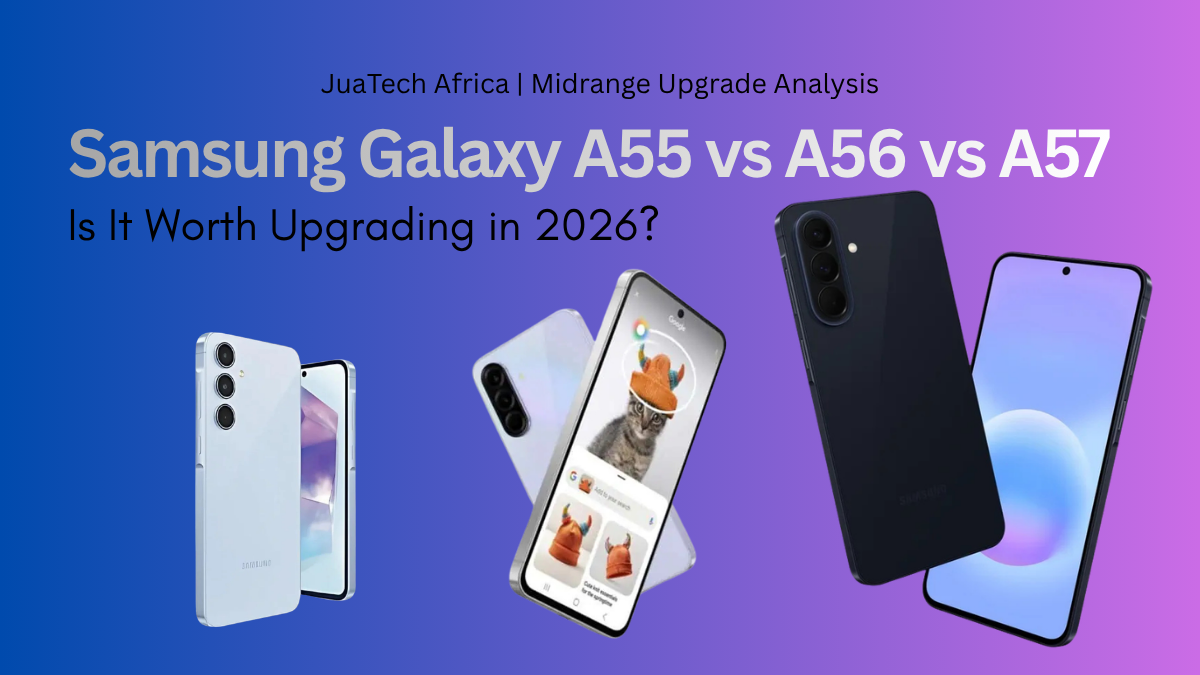
On paper, a newer device should mean a better experience. In reality, Samsung’s A5x series tells a different story. From the Samsung Galaxy A55 to the newly launched Samsung Galaxy A57, progress has been deliberate and incremental. The result is a lineup built on consistency rather than dramatic change.
This creates a critical tension. Upgrading is no longer about what is new, but what is meaningfully different. And for many users, that difference is smaller than expected.
Market Context: Kenya and Africa’s Smartphone Reality
The smartphone market in Kenya and across Africa is evolving fast, but not in the way many global narratives suggest. In 2025, the continent recorded over 80 million smartphone shipments, reflecting double-digit growth driven by rising internet access, mobile-first economies, and a young, digitally active population. Yet beneath this growth lies a defining truth: this is not a premium-driven market. It is a value-driven one.
In the Kenyan smartphone market, price sensitivity remains one of the most powerful forces shaping decisions. The majority of buyers operate within tight budgets, often targeting devices between KES 20,000 and KES 50,000. This is exactly where Samsung A-series devices dominate, particularly the A5x lineup, which sits at the intersection of aspiration and affordability. These are not entry-level compromises, but they are not luxury purchases either. They are calculated investments.
Financing models have further accelerated access. Platforms like M-KOPA have transformed how smartphones are acquired, allowing users to pay in installments rather than up front. This has significantly expanded the addressable market, bringing midrange smartphones to more users who prioritize long-term usability over short-term excitement.
User behavior reflects this environment. Buyers are not chasing the highest benchmarks or the latest experimental features. They are looking for devices that can last two to four years, handle daily multitasking reliably, and deliver consistent battery life under demanding conditions. Performance matters, but stability matters more. Camera quality matters, but consistency matters more.
This is why the midrange segment dominates. It aligns with how people live, work, and spend. And it explains Samsung’s strategy. The A5x series is not designed to win spec wars. It is designed to win trust in a market where every purchase must justify itself over time.
In Africa, this is not a specs market. It is a value market.
The Evolution: From Refinement to Intelligence
Samsung’s A5x lineup has not evolved through dramatic leaps. It has progressed through deliberate, controlled improvement. Each generation builds on a stable foundation, refining performance, efficiency, and user experience. To understand whether an upgrade matters, you have to look beyond what is new and examine what has actually changed over time.
Samsung Galaxy A55: Refinement That Built Trust
The Galaxy A55 established a strong baseline for Samsung’s midrange strategy. It introduced a premium metal frame and glass back, bringing the series closer to flagship-level build quality. Performance is driven by the Exynos 1480 chipset, paired with up to 8GB RAM, delivering reliable multitasking and stable everyday usage. The 6.6-inch Super AMOLED display with a 120Hz refresh rate and peak brightness around 1000 nits ensures strong outdoor visibility. A 5000mAh battery consistently delivers full-day endurance.
What defines the A55 is consistency. It does not chase peak performance. It delivers a dependable experience that holds up over time.
Samsung Galaxy A56: Optimization Over Reinvention
The Galaxy A56 builds directly on this foundation. Instead of introducing major hardware changes, Samsung focuses on optimization. The Exynos 1580 chipset improves efficiency and sustained performance, particularly under load. The display expands to a 6.7-inch AMOLED panel with a 120Hz refresh rate and higher peak brightness, improving clarity and outdoor usability.
Battery capacity remains at 5000mAh, but efficiency gains result in more stable real-world endurance. Charging is where a meaningful upgrade occurs, moving from 25W to 45W wired charging, significantly reducing downtime.
Core elements such as display quality, battery capacity, and design remain consistent. The A56 refines the experience rather than redefining it.
Samsung Galaxy A57: Intelligence Without Hardware Disruption
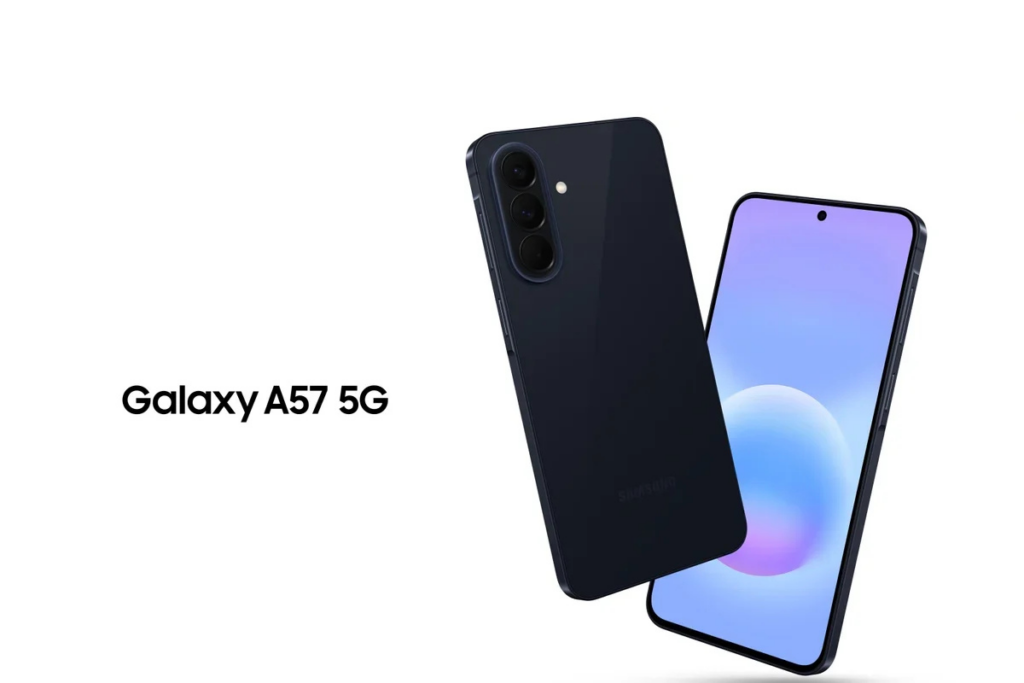
The Galaxy A57 continues this trajectory. Across the mainstream media reviews, the hardware structure remains consistent. The device retains a 5000mAh battery, 45W wired charging, and a 120Hz AMOLED display.
There is no confirmed expansion in camera hardware, no increase in charging speed, and no shift in battery capacity. The progression is not hardware-driven.
The shift is toward intelligence. Improvements focus on software optimization, system efficiency, and AI-driven enhancements to improve everyday usability. This includes better image processing, smarter resource allocation, and a more adaptive user experience. Exynos 1680 is a power package, from the 1+4+4 CPU architecture, 19.6 TOPS, and improvements to narrow the midrange flagship gap.
What Changed, and What Stayed the Same
To understand how this evolution translates into real-world differences, the specifications provide a clear reference point.
Samsung Galaxy A55 vs A56 vs A57: Verified Specs and Upgrade Reality
| Feature | Samsung Galaxy A55 | Samsung Galaxy A56 | Samsung Galaxy A57 |
| Launch | March 2024 | March 2025 | March 2026 |
| Chipset | Exynos 1480 (4 nm) | Exynos 1580 (4 nm) | Exynos 1680 (4nm) |
| CPU / GPU | Up to ~2.75GHz, Xclipse 530 | Up to ~2.9GHz, newer Xclipse GPU | CPU: Octa-core (1×2.9 GHz Cortex-720 & 4×2.6 GHz Cortex-720 & 3×1.95 GHz Cortex-520) GPU: Xclipse 550 |
| Display | 6.6-inch Super AMOLED, 120Hz, ~1000 nits peak | 6.7-inch AMOLED, 120Hz, higher brightness | 6.7-inch Super AMOLED+, 120Hz |
| Battery | 5000mAh | 5000mAh | 5000mAh |
| Charging | 25W wired | 45W wired (confirmed) | 45W wired |
| Rear Camera | 50MP + 12MP + 5MP | Same hardware, improved processing | Same structure |
| Front Camera | 32MP | 12MP (sensor shift) | 12MP |
| Video | 4K @30fps | 4K @30fps | 4K @30fps |
| Build & Protection | Glass + aluminum, IP67 | Glass + aluminum, IP67 | Same build, IP68 |
| Software | Android 14 | Android 15 / One UI 7 | Android 16 / One UI 8.5 (Newer Android with AI features) |
Across the A55, A56, and A57, Samsung maintains a consistent foundation. A 120Hz AMOLED display, a 5000mAh battery, and stable midrange performance define the lineup. What evolves is efficiency, charging speed, software maturity, and the introduction of intelligent features.
This is not slow progress by accident. It is controlled evolution designed to prioritize reliability, longevity, and user trust over short-term excitement.
Performance Deep Dive: Numbers, Stability, and Real-World Limits
Performance is where expectations and reality often diverge. Each new generation promises improvement, but what truly matters is not peak speed. It is how long that performance can be sustained without slowdowns, overheating, or instability. This is where the progression from the Samsung Galaxy A55 to the Samsung Galaxy A56, and toward the Samsung Galaxy A57, becomes clear.
Benchmark Reality: From A55 Stability to A56 Efficiency to A57 Refinement
The Samsung Galaxy A55 5G, powered by the Exynos 1480 (4nm), established a stable performance baseline for Samsung’s midrange. Typical benchmark ranges placed it around:
- Geekbench: ~900–1000 (single-core), ~2600–2800 (multi-core)
- AnTuTu: ~650,000–750,000
It delivers reliable day-to-day performance, handling multitasking, social apps, and media consumption without strain. However, under sustained load, performance tapers as thermal limits are reached.
The Samsung Galaxy A56 5G, running the Exynos 1580 (4nm), builds on this foundation with a clear shift toward efficiency and sustained performance rather than peak gains:
- Geekbench: ~1100–1200 (single-core), ~3000–3300 (multi-core)
- AnTuTu: ~750,000–900,000
In real-world use, the improvement is not about short bursts of speed, but consistency over time. The A56 maintains responsiveness longer, particularly during extended multitasking, gaming sessions, and heavier workloads.
With the official release of the Samsung Galaxy A57 5G, Samsung continues this trajectory — but with a more refined balance between efficiency, thermal control, and real-world stability.
Based on early benchmark positioning and chipset class evolution, the A57 is expected to land around:
- Geekbench: ~1200–1300 (single-core), ~3300–3600 (multi-core)
- AnTuTu: ~850,000–1,000,000
What Actually Changes with A57
The shift with the A57 is subtle but important:
- Smoother sustained performance under load
- Better thermal management, reducing throttling during gaming or multitasking
- More efficient power usage, translating to longer consistent performance
- Improved responsiveness over time, not just at launch of tasks.
Gaming Performance: From Stability to Refined Consistency
The Samsung Galaxy A56 5G improves the gaming experience with better FPS stability, maintaining a consistent 45–60 FPS under similar settings. Frame drops are less frequent, and gameplay feels smoother over longer sessions. However, this is still not a gaming-first device. Extended sessions beyond 20–30 minutes introduce a gradual performance decline due to heat buildup.
With the Samsung Galaxy A57 5G, Samsung refines this further — not through aggressive peak FPS gains, but through better sustained performance and thermal control.
- More stable frame pacing, especially in extended sessions
- Reduced throttling, allowing gameplay to remain smoother for longer
- Improved efficiency, helping maintain performance beyond the 30-minute mark
- Consistent mid-to-high settings gameplay across popular titles
In practical terms, the A57 is capable of sustaining ~50–60 FPS in optimized titles with fewer dips compared to the A56, particularly during longer play sessions.
Thermal Performance: Where the Real Upgrade Happens
Thermal management remains the most meaningful area of progression across Samsung’s midrange — and this is where the differences between generations are most noticeable in real-world use.
The Galaxy A55 tends to reduce performance more noticeably once heat builds up. Under sustained workloads, throttling can be relatively aggressive, leading to sudden drops in performance.
The Galaxy A56 5G improves this behavior with more controlled thermal management. Instead of abrupt slowdowns, performance tapers gradually, resulting in a smoother and more predictable experience during prolonged use.
Peak vs Sustained Performance: The Real Decision Metric
The data lead to a clear conclusion. The A55 delivers stable baseline performance. The A56 improves sustained performance through better efficiency and thermal handling. The A57, based on current information, is expected to refine this further.
For most users, sustained performance matters more than peak numbers. A device that remains consistent over time delivers greater real-world value than one that peaks higher but drops quickly.
Battery and Charging: Built for Daily Survival, Not Spec Sheets
Battery performance in Samsung’s A5x series is less about headline numbers and more about consistency in real-world use. On paper, the capacity remains unchanged across generations, but the experience continues to evolve through improvements in efficiency, thermal control, and charging behavior.
The Samsung Galaxy A55 5G, Samsung Galaxy A56 5G, and now the Samsung Galaxy A57 5G all retain the same 5000mAh battery. This consistency is deliberate. In practical use, it continues to translate to approximately 6 to 8 hours of screen-on time, depending on network conditions, brightness levels, background processes, and application load. For users across Kenya and similar markets, this still comfortably supports a full day of communication, content consumption, and multitasking without constant concern about battery life.
The differences across these generations are defined by efficiency. The A55 delivers dependable endurance, but under heavier or prolonged workloads, power draw becomes less predictable, particularly as thermal pressure increases. The A56 improves on this with a more efficient chipset and better software optimization, resulting in more stable and controlled battery consumption throughout the day. The improvement is not necessarily visible in total screen-on time, but in how consistently the battery performs under varying usage conditions.
With the A57, this progression continues with a stronger emphasis on refinement and stability. Rather than extending battery life in absolute terms, Samsung focuses on sustaining performance efficiency over longer periods. Power draw under multitasking, background activity, and extended sessions is better regulated, leading to a battery experience that feels more predictable and less volatile, especially toward the later hours of the day.
Charging remains the most tangible hardware shift in this lineup. The A55 supports 25W wired charging, which is functional but increasingly behind current expectations. The A56 introduced 45W wired charging, significantly reducing recharge times and improving day-to-day convenience. The A57 retains this 45W standard, focusing on consistency and reliability rather than pushing higher wattage figures.
The conclusion remains unchanged, but more refined. Samsung is not increasing battery capacity. It is improving the efficiency with which that capacity is utilized and maintaining a charging standard that supports modern usage patterns. In real-world terms, battery performance is not defined by numbers on a spec sheet. It is defined by whether the device reliably carries you through your day.
Camera System: Consistency by Design, Not Competition
Samsung’s A5x camera system is defined by restraint. While many competitors chase higher megapixels and more lenses, Samsung has chosen continuity. Across the Samsung Galaxy A55, A56, and A57, the hardware foundation remains largely unchanged. This is not a limitation. It is a deliberate positioning.
Camera Hardware: Stable Across Generations
| Feature | Galaxy A55 | Galaxy A56 | Galaxy A57 |
| Main Camera | 50MP (f/1.8, OIS) | 50MP (f/1.8, OIS) | 50MP (f/1.8, OIS) |
| Ultra-wide | 12MP (f/2.2) | 12MP (f/2.2) | 12MP (f/2.2) |
| Macro | 5MP (f/2.4) | 5MP (f/2.4) | 5MP (f/2.4) |
| Front Camera | 32MP | 12MP (updated sensor) | 12MP |
| Video | 4K at 30fps | 4K at 30fps | 4K at 30fps |
| Stabilization | OIS + EIS | OIS + refined EIS | OIS + EIS |
The consistency is clear. The A56 did not introduce new camera hardware, and the A57 continues with the same structure, according to all available confirmed listings. There is no telephoto lens, no sensor size increase, and no expansion in video capability. The evolution is not physical. It is computational.
Real-World Output: Where It Delivers
In practical use, the system’s strength lies in its reliability. A Samsung A56 camera review consistently points to strong daylight performance. Images are sharp, exposure is balanced, and colors are vivid without appearing artificial. The A56 improves on the A55 through better processing, particularly in skin tones and highlight control.
The A57 builds on this through software refinement. Early indications point to improved image processing and more intelligent scene handling. However, the underlying output remains consistent with the same hardware limitations.
Low-light performance remains average within the segment. Optical image stabilization helps maintain usable shots, but detail retention and noise control do not match more aggressive camera-focused devices. Ultra-wide and macro cameras remain functional, but secondary.
Video performance remains capped at 4K at 30 frames per second. Stabilization is dependable for handheld use, but not advanced.
A57 vs A56 Camera Comparison: What Actually Changes
The difference between the A56 and A57 is not found in sensors or lenses. It is found in processing. The A55 established a reliable baseline. The A56 improved consistency. The A57 extends that through software and early AI integration, without altering the hardware foundation.
Editorial Perspective
Samsung is not competing to lead in camera hardware within this segment. It is prioritizing consistency, predictability, and usability. The result is a system that performs reliably across conditions, even if it does not lead to innovation. Reliable does not mean exceptional.
AI, Software, and Interface Evolution: Where Samsung Is Actually Advancing
Samsung’s progress in the A5x series is not defined by hardware disruption. It is defined by software maturity, interface refinement, and growing intelligence. This is where the real transformation is happening, and it is what determines long-term value.
From Stability to Fluidity: A55 to A56
The Samsung Galaxy A55 established a reliable foundation with One UI on Android 14. It delivered consistency, predictable behavior, and long-term usability. The experience was stable, but largely unchanged in how it interacted with the user.
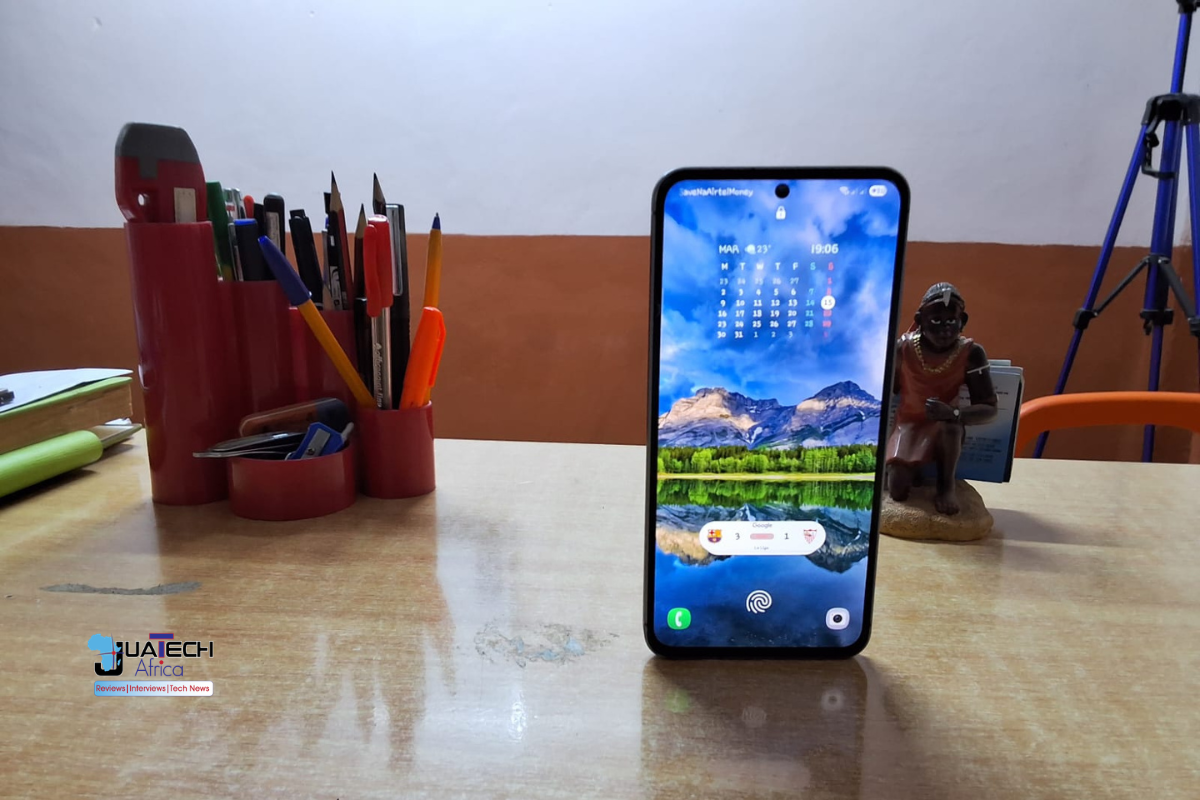
The Samsung Galaxy A56 advances this with Android 15 and a more refined One UI experience. Animations are smoother, transitions are more cohesive, and background processes are better controlled. The system feels tighter and more responsive, especially under sustained use.
Customization remains a core strength. Users can tailor layouts, themes, widgets, and multitasking behavior. Features such as split-screen, floating windows, and advanced notification control make the device adaptable to different workflows. This is practical flexibility, not cosmetic change.
Galaxy A57: One UI 8.5 and the Shift to Intelligent Interaction
The Samsung Galaxy A57 brings the most meaningful shift, not through hardware but through software evolution anchored in the latest One UI development, including One UI 8 progressing toward 8.5. This is where Samsung’s direction becomes clearer.
One UI 8.5 is not about redesign. It is about behavioral intelligence and system awareness. The interface becomes more adaptive, responding to how the device is actually used rather than following fixed patterns.
Key improvements include:
- Context-aware system behavior, where apps and processes adjust based on usage patterns
- Smarter background management, reducing unnecessary power and memory drain
- AI-assisted interaction, including improved text handling, suggestions, and in-app assistance
- Refined multitasking, with smoother transitions and better memory allocation
- Improved notification relevance, prioritizing what matters in real time.
These changes are subtle in isolation, but significant in daily use. The device feels less reactive and more anticipatory.
Longevity as a Software Strategy
Samsung reinforces this with one of the strongest update policies in the segment. The A5x series supports up to six generations of Android OS upgrades and up to six years of security updates.
This means devices like the A56 and A57 are not static. They evolve, gaining newer Android versions such as Android 16 and beyond, along with continued improvements in performance, AI capabilities, and security.
Perspective
- The A55 delivered stability.
- The A56 refined the experience.
- The A57 introduces intelligent interaction.
This progression is deliberate. Samsung is not focused on changing what the device is. It is focused on improving how the device behaves, adapts, and lasts. That is where the real upgrade now lives.
The Good, The Bad, and The Ugly: A55, A56, A57 in Context
This is where the narrative meets reality. Strip away marketing language, and the A5x series reveals a pattern that is both deliberate and defining. Understanding that pattern is what separates a smart decision from an automatic upgrade.
The Good: Stability, Display, Longevity
Across the Samsung Galaxy A55, A56, and A57, stability remains the strongest advantage. These devices deliver a predictable and consistent experience. Apps open reliably, multitasking holds steady, and performance does not fluctuate under normal usage.
Samsung’s AMOLED displays continue to stand out in this segment. With 120Hz refresh rates, high brightness levels, and accurate color reproduction, the viewing experience remains one of the best in the midrange. Outdoor visibility is dependable, and content consumption feels premium.
Longevity is where Samsung leads with confidence. With up to six Android OS upgrades and six years of security updates, these devices are built to remain relevant for years. This is not a short-term purchase. It is a long-term investment that continues to improve.
The Bad: Charging, Performance Ceiling, Camera Limits
Charging improved with the A56, moving from 25W to 45W, but it still does not lead the segment. Competitors are pushing well beyond 60W, offering faster top-ups. In practical terms, this means less flexibility when you need a quick recharge.
Performance is stable, but it has a clear ceiling. The A56 improves efficiency over the A55, but under sustained load, limitations become noticeable. For everyday users, this is sufficient, but power users will begin to feel the constraints during extended gaming or heavy multitasking.
The camera system remains consistent, but limited. The same 50MP main setup continues across generations, with no telephoto lens and no major hardware expansion. Results are reliable in good lighting, but the system does not compete aggressively in low light or advanced photography scenarios.
The Ugly: Incremental Progress Without Urgency
The pattern is clear. Across three generations, hardware changes are controlled, incremental, and, in some areas, minimal.
There is no major leap in camera capability, no aggressive push in charging speed, and no defining feature that forces an upgrade. The Samsung Galaxy A57 continues the same formula rather than redefining it.
Samsung is playing a long-term strategy focused on refinement and user retention. It builds trust, but it also reduces urgency. For many users, especially those on the A56, there is little pressure to upgrade.
Perspective
This is not a weak lineup. It is a calculated one. Samsung is choosing stability over risk, longevity over experimentation, and consistency over spectacle. Whether that is a strength or a limitation depends on what the user values most.
What the A56 Still Does Better
In a market that constantly pushes users toward newer devices, the value of refinement is often overlooked. The Samsung Galaxy A56 represents a point where Samsung’s midrange formula feels balanced and complete. When compared to the newer Samsung Galaxy A57, it becomes clear that progress is not always about moving forward. It is about delivering a dependable experience without compromise.
Performance on the A56 remains one of its strongest advantages. Powered by the Exynos 1580, it delivers stable, predictable performance across daily tasks and extended use. It does not push aggressively, and that restraint results in consistent responsiveness. Applications run smoothly, multitasking remains controlled, and performance declines gradually rather than abruptly under pressure.
Thermal management reinforces this stability. The A56 maintains controlled heat levels, enabling sustained performance without sharp drops in performance. This makes it more reliable during prolonged use compared to devices that prioritize short bursts of speed.
There is also a level of software maturity that stands out. The system is refined, optimized, and consistent in behavior. The A56 does not chase newness. It delivers reliability, proving that newer is not always better.
Samsung’s Strategy: Building Loyalty Over Hype
Samsung’s A5x series is not just a product line. It is a long-term strategy designed to retain users rather than constantly chase new ones. To understand devices like the Samsung Galaxy A55, A56, and A57, you have to look at the ecosystem they are built to support.
Ecosystem Integration: Locking in the Experience
Samsung’s ecosystem is designed to make the device more valuable over time. Integration with Galaxy Buds, Galaxy Watch, and SmartThings allows for seamless connectivity across audio, health tracking, and smart home control. Features such as quick device pairing, synchronized notifications, and cross-device continuity create an experience that extends beyond the phone itself.
This is not accidental. The more devices a user connects, the more cohesive the experience becomes, and the harder it is to leave.
Retention Over Replacement
Samsung’s strategy is not built around forcing upgrades. It is built around reducing the need to switch. Long-term software support, a consistent One UI experience, and incremental hardware refinements ensure users remain satisfied over extended periods.
Instead of creating urgency to upgrade every year, Samsung creates confidence to stay. When users eventually replace their device, they are far more likely to remain within the same ecosystem.
Accessibility: Expanding the User Base
In markets such as Kenya and across Africa, accessibility is a key driver. Financing platforms like M-KOPA allow users to acquire devices through structured installment plans. This lowers the barrier to entry while introducing users to the Samsung ecosystem early.
Over time, this builds familiarity, trust, and brand dependence.
Perspective
Samsung’s strategy is deliberate. It is not designed to create urgency. It is designed to create stability. By focusing on ecosystem integration, long-term software support, and accessible ownership models, Samsung reduces the need for users to look elsewhere. The goal is not to impress in a single cycle, but to remain relevant across multiple years. Samsung is not chasing attention. It is securing retention. Samsung is building loyalty, not excitement.
Upgrade, Hold, or Wait: What Actually Makes Sense
The decision to upgrade is no longer automatic. It is conditional. What matters is not what is new, but what meaningfully improves your experience.
If you are using a device older than the Samsung Galaxy A55, upgrading to the Samsung Galaxy A56 or even the Samsung Galaxy A57 makes practical sense. You gain faster charging with 45W support, improved efficiency, better sustained performance, and significantly longer software support. These are not marginal upgrades. They are improvements you will notice daily in battery behavior, responsiveness, and longevity.
If you already own the Galaxy A56, the equation changes. The device is stable, efficient, and well-optimized. It delivers consistent performance, dependable battery life, and a mature software experience backed by long-term updates. Based on all available information, the Galaxy A57 does not introduce a clear hardware leap in battery, charging, or camera capabilities. The differences are subtle and largely software-driven. In practical terms, your experience will remain largely the same. Holding your A56 is not hesitation. It is a rational, value-driven decision.
Waiting becomes the smarter choice if you are looking for a more meaningful shift. Samsung is clearly moving toward AI-driven interaction and deeper software intelligence, but the transition is still unfolding. The A57 reflects direction rather than transformation. If your current device still performs reliably, patience gives you access to a more defined evolution in the next cycle.
The conclusion is simple. Upgrade when your needs demand it, not when the market suggests it.
Samsung Galaxy A57 vs A56 FAQs: What You Need to Know Before You Upgrade
- Is the Samsung Galaxy A57 better than the Samsung Galaxy A56?
Yes, but the improvement is measured, not transformative. The A57 builds on the A56 with better efficiency, refined software behavior, and deeper AI integration. However, core hardware such as the 5000mAh battery, 45W charging, and camera structure remains largely unchanged. In real-world use, the difference is subtle rather than dramatic.
2. Should I upgrade from the Samsung Galaxy A56?
For most users, no. The A56 already delivers stable performance, efficient power management, fast 45W charging, and long-term software support. The A57 does not introduce a confirmed hardware leap that significantly changes daily usage. Upgrading would offer marginal gains rather than meaningful improvement.
3. If I own the Samsung Galaxy A55, am I missing out or still getting value for money?
You are still getting strong value. The A55 remains a reliable device with stable performance, a quality display, and continued software support. With ongoing Android updates and security patches, it remains relevant for everyday use. What you miss out on is faster 45W charging and improved efficiency introduced in newer models, but the core experience remains dependable. There is no urgent need to upgrade unless you feel clear limitations.
4. How do pricing and availability affect the upgrade decision in Kenya?
Pricing is now a defining factor. Current market positioning shows the Galaxy A56 retailing at around KES 45,000–48,000, depending on configuration and seller. The A55 sits lower, typically in the mid-KES 30,000 range when available, but stock is increasingly limited as newer models take priority.
The A57 enters at a higher price tier globally (KES 60,000), reflecting rising component and memory costs, with early indications of price increases across generations. This has a direct impact on markets like Kenya, where price sensitivity is high.
The reality is clear. As newer models get more expensive, older models like the A55 become harder to find, while the A56 strikes a balance between affordability and modern features. Pricing is no longer just a number. It is part of the upgrade strategy.
5. Is the Samsung Galaxy A56 still worth it in 2026?
Yes. The A56 remains one of the most balanced midrange devices due to its performance stability, refined software experience, and extended update policy of up to six Android OS upgrades and long-term security support. It continues to deliver value well beyond its release cycle.
6. Is the Samsung Galaxy A57 good for gaming?
The A57 is capable, but not built as a gaming-first device. It handles titles like PUBG Mobile and Call of Duty Mobile at medium to high settings with stable frame rates, depending on configuration and thermal conditions. However, sustained gaming sessions will expose performance limits. It is suitable for casual to moderate gaming, not intensive or competitive play.
Bottom Line
Pricing, not just performance, is now shaping upgrade decisions. The A56 sits at the sweet spot. The A57 pushes upward. The A55 fades out of availability, not relevance. And that changes how smart buyers think.
What This All Comes Down To
Across the Samsung Galaxy A55, A56, and A57, one pattern defines everything. Samsung is not reinventing the midrange experience each year. It is refining, stabilizing, and extending its relevance.
That shift changes how these devices should be judged. The difference between generations is no longer about what is added, but what is meaningfully improved. The A56 reaches a point where performance, battery life, charging speed, and software longevity come together in a way that feels complete. The A57 builds on this direction through intelligence and system-level refinement, but without altering the foundation. The A55, despite its age, continues to deliver a dependable experience supported by ongoing updates and consistent performance.
The decision is no longer driven solely by release cycles or specifications. It is shaped by timing, need, and value. When your current device continues to meet your demands, the urgency to upgrade disappears. When it does not, the right move becomes obvious.
In this segment, the advantage does not belong to the newest device. It belongs to the user who understands when change actually matters.
You need more?
Join our WhatsApp channel for real time tech insights that help you make smarter decisions, faster.
Subscribe for deep, no-noise analysis built for users who want clarity, not confusion.
Explore more insights designed to help you choose better, spend smarter and stay ahead.
This is because in today’s world, the smartest upgrade is not the newest device – it’s better judgment.