

Executive Summary
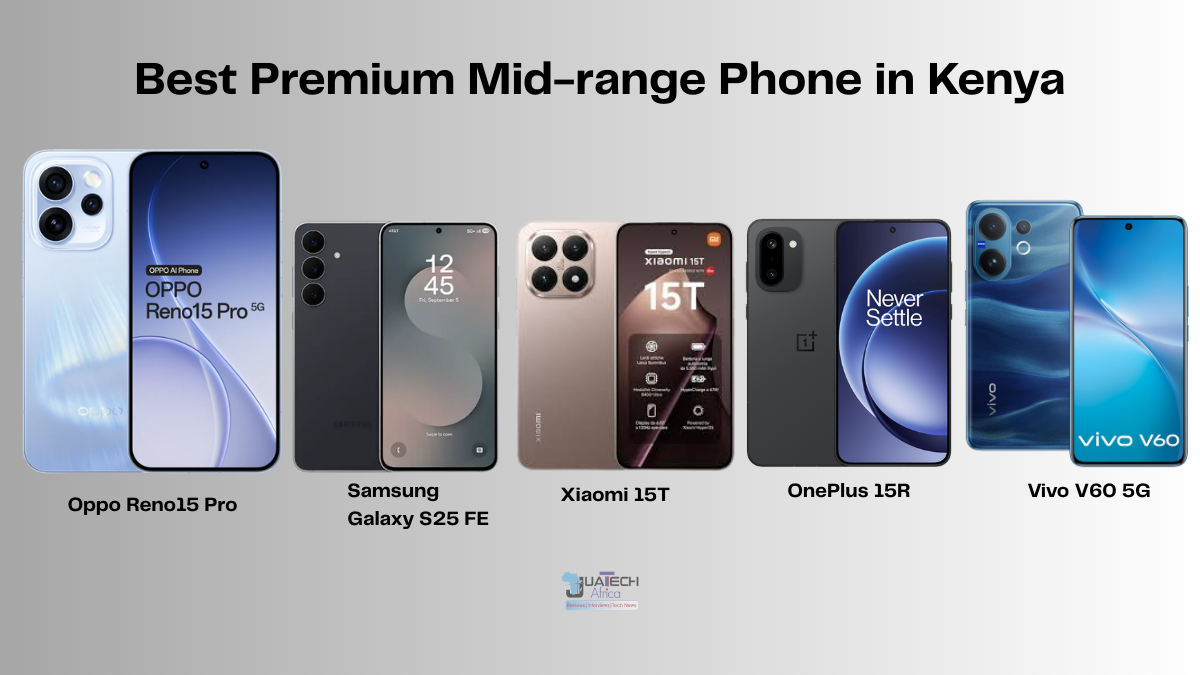
The premium midrange smartphone segment in Kenya has evolved significantly, delivering flagship-grade capability without flagship pricing. The Oppo Reno15 Pro, Samsung Galaxy S25 FE, Xiaomi 15T, OnePlus 15R, and Vivo V60 each represent distinct engineering priorities, ranging from camera leadership and performance strength to battery endurance and long-term software support. Choosing the right device depends on which ownership factors matter most: camera versatility, processor performance, battery reliability, or software longevity.

The Oppo Reno15 Pro establishes itself as the most balanced device overall. Its 200MP primary camera and dedicated telephoto lens deliver true optical flexibility, while its silicon-carbon battery and fast wired and wireless charging provide reliable endurance and charging convenience. The OnePlus 15R delivers the strongest absolute battery endurance and excellent performance, making it ideal for power users. The Xiaomi 15T delivers flagship-tier processor performance at competitive pricing, strengthening its value proposition. The Samsung Galaxy S25 FE offers the longest software support, giving you the longest supported ownership lifespan. The Vivo V60 delivers strong portrait photography capability and ultra-fast charging.
Key recommendations:
- Best overall choice: Oppo Reno15 Pro
- Best camera system: Oppo Reno 15 Pro
- Best performance: Xiaomi 15T and OnePlus 15R
- Best battery endurance: OnePlus 15R
- Best software longevity: Samsung Galaxy S25 FE
- Best performance value: Xiaomi 15T
For most buyers, the Oppo Reno 15 Pro offers the strongest combination of camera performance, battery longevity, and long-term ownership value.
Why the Premium Midrange Smartphone Segment Matters More Than Ever
The premium midrange smartphone segment has become the most strategically important category in the smartphone market. In 2026, buyers no longer need to spend flagship-level prices to access flagship-level capability. Advances in processor efficiency, camera sensor technology, battery engineering, and display quality have elevated premium midrange devices into complete, long-term ownership platforms. As a result, this category now offers the best balance of performance, camera flexibility, and overall value.
At this level, buyer expectations are clear and uncompromising. Camera capability must extend beyond basic photography to include true optical zoom, strong low-light performance, and creative flexibility. Performance must remain stable, not just at launch, but across years of software updates and increasing application demands. Battery reliability must support full-day, heavy use without requiring constant charging. Software support must ensure security, compatibility, and a usable lifespan over the extended ownership period.
The Oppo Reno 15 Pro, Samsung Galaxy S25 FE, Xiaomi 15T, OnePlus 15R, and Vivo V60 are among the most important premium midrange smartphones currently available in Kenya. Each device reflects a distinct engineering priority. Oppo focuses on leadership in camera systems and battery endurance. Samsung prioritizes software longevity and display calibration. Xiaomi and OnePlus emphasize processor performance and system responsiveness. Vivo strengthens portrait photography capability and camera refinement.
Choosing between these devices requires understanding more than specifications alone. It requires clarity on how hardware architecture affects the real ownership experience.
This comparison examines the factors that determine the real value of ownership.
Specification Comparison Table: Core Hardware, Camera Systems, and Ownership Fundamentals
Understanding the differences between the Oppo Reno 15 Pro, Samsung Galaxy S25 FE, Xiaomi 15T, OnePlus 15R, and Vivo V60 begins with examining their core hardware architecture. Specification sheets do more than list components. They reveal each manufacturer’s engineering priorities, including camera system design, processor capability, battery endurance, software longevity, and structural durability. These factors directly determine real-world ownership experience, long-term reliability, and overall value in the premium midrange smartphone segment.
The following comparison table outlines the most critical hardware specifications that influence buyer decision-making in Kenya’s premium smartphone market.
Comparison Table: Best Higher Mid-Price Segment Smartphones
| Device | Oppo Reno15 Pro | Samsung Galaxy S25 FE | Xiaomi 15T | OnePlus 15R | Vivo V60 5G |
| Display | 6.78-inch AMOLED, 120Hz | 6.7-inch Dynamic AMOLED 2X, 120Hz | 6.67-inch AMOLED, 120Hz | 6.83-inch AMOLED, 120Hz | 6.77-inch AMOLED, 120Hz |
| Processor | MediaTek Dimensity 8450 (4nm) | Exynos 2400 | Mediatek Dimensity 8400 Ultra (4 nm) | Snapdragon 8 Gen 5 | Snapdragon 7 Gen 4 (4 nm) |
| Main Camera | 200MP, OIS | 50MP, OIS | 50MP, OIS | 50MP Sony sensor | 50MP Sony sensor |
| Telephoto Camera | 50MP, 3.5x optical zoom, OIS | 8MP telephoto, OIS | Dedicated telephoto camera | No telephoto camera | Dedicated telephoto camera |
| Ultrawide Camera | 50MP ultrawide | 12MP ultrawide | 12MP ultrawide | 8MP ultrawide | 12MP ultrawide |
| Battery Capacity | 6200mAh | 4900 mAh | 5500 mAh | 7400mAh | Si/C Li-Ion 6500 mAh |
| Charging Speed | 80W wired, 13.5W PD, 44W UFCS, 55W PPS
50W wireless Reverse wired Bypass charging |
45W wired, PD, QC2, 65% in 30 min
15W wireless, Qi2 compatible Reverse wireless |
67W wired, PD3.0, 100% in 50 min | 80W wired Ultra-fast charging support | 90W wired, PD
Reverse wired Bypass charging |
| Software | Android 16, ColorOS 16 | Android 16, One UI | Android, HyperOS | Android, OxygenOS | Android, Funtouch OS |
| Water and Dust Resistance | IP69 certified | IP68 certified | IP68 certified | IP rating varies by market | IP rating varies |
| Kenya Price Range | KSh 75,000–90,000 | KSh 90,000–110,000 | KSh 75,000–95,000 | KSh 80,000–100,000 | KSh 70,000–85,000 |
This specification comparison immediately reveals meaningful engineering differences. The Oppo Reno15 Pro prioritizes camera leadership and battery endurance, integrating a 200MP primary sensor, a dedicated 50MP telephoto camera, and the largest battery capacity in this group. Samsung’s Galaxy S25 FE emphasizes software longevity, display calibration, and ecosystem integration. Xiaomi and OnePlus prioritize processor performance and system responsiveness, positioning themselves as performance-driven alternatives. Vivo focuses on balanced camera capabilities, strong portrait photography, and reliable battery performance.
However, specification sheets alone do not determine real-world ownership experience. Processor architecture affects sustained performance, not just benchmark scores. The telephoto camera’s presence affects the flexibility of portrait and zoom photography. Battery capacity influences endurance, but software optimization and processor efficiency determine real daily longevity.
Understanding how these specifications translate into real ownership value requires a deeper analysis of camera systems, performance stability, battery engineering, and software support.
Design and Build Quality: Structural Integrity, Environmental Protection, and Long-Term Durability
Design and build quality directly influence long-term ownership reliability. Beyond aesthetics, structural materials, ingress protection ratings, glass durability, and weight distribution determine how well a smartphone withstands daily handling, accidental drops, and environmental exposure. In the premium midrange segment, manufacturers increasingly deploy flagship-grade materials to improve durability and user confidence.
The Oppo Reno15 Pro delivers the strongest structural protection in this comparison. It features a reinforced aluminum frame and hardened glass, ensuring rigidity under torsional stress and in daily use. Most significantly, the Reno 15 Pro carries IP69 certification, which exceeds the standard IP68 protection found on most competing devices. IP69 certification provides superior resistance to dust ingress, immersion in water, and exposure to high-pressure water. This improves ownership reliability, particularly in unpredictable outdoor environments, during travel, and in extended device lifespan scenarios. This level of protection positions the Reno 15 Pro among the most structurally resilient devices in its category.
The Samsung Galaxy S25 FE upholds Samsung’s reputation for structural consistency and durability. Its Gorilla Glass Victus-class protection on the front and rear improves resistance to scratches and impact damage. Combined with its aluminum frame and IP68 certification, the Galaxy S25 FE offers excellent resistance to water and dust. Samsung’s engineering focuses on predictable durability and consistent structural integrity over the extended life of the product.
The OnePlus 15R emphasizes structural strength and durability through its reinforced frame and solid glass construction. OnePlus devices are known for their tight assembly tolerances and excellent structural rigidity, which reduce flex and improve long-term durability. Its balanced weight distribution improves handling stability, reducing the risk of accidental drops.
The Xiaomi 15T delivers a balanced approach, combining glass protection, aluminum structural reinforcement, and IP68 certification. This ensures reliable durability while maintaining a comfortable weight profile suitable for extended daily usage.
The Vivo V60 prioritizes ergonomic comfort and stability during handling. Its curved design improves grip security, reducing the risk of drops during one-handed operation. While maintaining strong structural integrity, Vivo’s design philosophy emphasizes usability and handling confidence.
Overall, the Oppo Reno15 Pro delivers the highest level of environmental protection and structural durability, while Samsung provides proven structural reliability. OnePlus and Xiaomi maintain strong durability standards, and Vivo excels in ergonomic handling. These differences directly affect ownership confidence, durability, and long-term device reliability.
Display Quality: Color Accuracy, Brightness, and Real-World Viewing Experience
Display quality plays a central role in daily smartphone usability. Every interaction, from reading and messaging to watching videos and editing photos, depends on display clarity, color accuracy, brightness consistency, and responsiveness. In the premium midrange segment, AMOLED display technology has become the standard due to its superior contrast, deep blacks, and power efficiency compared to traditional LCD panels.
Samsung’s Galaxy S25 FE maintains a measurable leadership advantage through its Dynamic AMOLED 2X display. While both AMOLED and Dynamic AMOLED panels use self-emissive pixels for superior contrast and color depth, Samsung’s Dynamic AMOLED technology incorporates more advanced calibration and brightness optimization. This results in more accurate color reproduction, particularly when viewing photos, videos, and HDR content. Samsung’s calibration ensures colors remain natural and balanced, avoiding oversaturation while preserving visual richness. This improves confidence when viewing media, editing images, and performing color-sensitive tasks.
The Oppo Reno15 Pro delivers excellent AMOLED display quality, with strong brightness, vibrant color, and reliable contrast. Its display remains clearly visible under direct sunlight, ensuring usability in outdoor environments such as commuting, navigation, and photography. Oppo’s display tuning prioritizes immersive viewing while maintaining an accurate color balance suitable for daily usage.
The Xiaomi 15T delivers a smooth visual experience thanks to its high-refresh-rate AMOLED panel. Higher refresh rates improve scrolling smoothness, animation fluidity, and responsiveness, particularly when navigating the interface or gaming. This creates a more fluid and responsive user experience.
The OnePlus 15R and Vivo V60 also deliver strong AMOLED display performance. Both devices provide reliable brightness levels, accurate contrast, and consistent visual clarity. Their displays perform well across typical daily usage scenarios, including media consumption, browsing, and productivity tasks.
Overall, Samsung maintains leadership in display calibration accuracy, while Oppo delivers immersive AMOLED performance with excellent brightness and contrast. Xiaomi leads in smoothness, and OnePlus and Vivo maintain reliable display quality. These differences directly influence viewing comfort, media quality, and daily usability.
Camera Comparison: Optical Architecture, Telephoto Capability, and Real-World Imaging Leadership
Camera performance remains the single most influential purchase factor in the premium midrange smartphone segment. Buyers expect their device to replace dedicated cameras for portraits, travel photography, video capture, and everyday documentation. True camera capability is defined not by megapixel count alone, but by sensor size, optical zoom hardware, focal length diversity, and stabilization systems. These factors determine whether a smartphone delivers consistent, high-quality results across varied shooting conditions.
Camera Hardware Architecture: Multi-Focal Systems Define Imaging Capability
The Oppo Reno15 Pro delivers the most structurally complete camera system in this comparison. Its triple-camera configuration integrates a 200MP primary sensor, a 50MP telephoto camera with optical image stabilization and 3.5x true optical zoom, and a 50MP ultrawide camera. This architecture provides full focal length coverage, enabling the device to capture ultrawide landscapes, natural-perspective standard images, and optically magnified zoom shots without relying on digital cropping. The high-resolution primary sensor improves detail retention, dynamic range, and cropping flexibility, while the dedicated telephoto camera ensures distance-capture accuracy.
The Samsung Galaxy S25 FE features a balanced triple-camera system comprising a 50MP primary sensor, an ultrawide camera, and a telephoto lens. Samsung’s camera architecture prioritizes consistency and image processing accuracy. Its telephoto camera offers optical zoom, but its lower resolution and smaller sensor size reduce flexibility compared to the Reno 15 Pro’s higher-resolution telephoto system.
The Xiaomi 15T features a capable triple-camera system that delivers balanced performance across a range of photography scenarios. While it captures strong detail and reliable color reproduction, its camera architecture does not prioritize telephoto resolution or focal-length specialization to the same extent as Oppo’s implementation.
The OnePlus 15R delivers reliable primary camera performance but lacks a dedicated telephoto camera. Without optical zoom hardware, the device relies on digital zoom and sensor cropping. This limits image quality preservation when capturing distant subjects and reduces portrait compression accuracy.
The Vivo V60 emphasizes portrait photography, integrating telephoto hardware and portrait-focused tuning. This improves subject separation and facial rendering accuracy, strengthening its performance in portrait-focused scenarios.
Telephoto Capability and Optical Zoom: Why Optical Hardware Matters
Optical zoom represents a fundamental distinction between true camera systems and digitally simulated zoom. Optical zoom uses dedicated telephoto lenses to magnify the subject without degrading image quality. In contrast, digital zoom enlarges the image by cropping the sensor output, reducing resolution and detail.
The Reno15 Pro’s 50MP telephoto camera delivers true 3.5x optical zoom, enabling it to capture distant subjects while preserving native image quality. This improves portrait compression, wildlife photography, architectural capture, and event photography. Higher telephoto resolution improves cropping flexibility and detail retention, extending creative control.
Samsung’s Galaxy S25 FE and Vivo V60 also feature telephoto cameras, offering optical zoom. However, their lower telephoto resolution limits cropping flexibility compared to the Reno 15 Pro.
The OnePlus 15R’s lack of telephoto hardware significantly limits optical zoom. This limits its effectiveness in distance photography.
Real-World Camera Performance: How Hardware Translates into Daily Photography
These hardware differences directly affect real-world photography outcomes. The Reno15 Pro delivers superior portrait compression due to its dedicated telephoto focal length, improving subject isolation and background separation. Its high-resolution primary sensor captures more detail, improving landscape photography and enabling flexible cropping without significant loss of quality.
Zoom photography performance benefits significantly from optical telephoto hardware. The Reno 15 Pro preserves clarity when capturing distant subjects, while devices that rely on digital zoom suffer from resolution loss.
Daily photography reliability also improves with stronger sensor architecture. High-resolution sensors capture more image data, improving exposure flexibility and post-processing accuracy.
Samsung delivers strong image consistency and reliable exposure control. Vivo delivers strong portrait performance. Xiaomi delivers a balanced performance suitable for general photography. OnePlus delivers reliable primary camera output but lacks optical zoom flexibility.
Based on the camera hardware architecture, optical zoom capability, and focal-length coverage, the Oppo Reno15 Pro delivers the most versatile and technically complete camera system in this comparison.
Performance Comparison: Processor Capability, Efficiency, and Long-Term Reliability
Processor architecture determines how well a smartphone performs not only at launch but throughout its lifespan. It determines gaming stability, multitasking responsiveness, thermal efficiency, and long-term performance sustainability as software and application demands increase. In the premium midrange segment, chipset selection reflects deliberate engineering priorities that balance peak performance, efficiency, and long-term reliability.
Processor Architecture Overview: Snapdragon, Dimensity, and Exynos Positioning
The OnePlus 15R holds a clear architectural advantage by integrating a Snapdragon 8-series processor. Snapdragon 8-series chipsets represent Qualcomm’s flagship-tier silicon, built on advanced fabrication processes with high-performance CPU cores and powerful GPU architectures. Its Snapdragon 8 Gen 5 (3 nm) delivers superior peak performance, faster app loading, and stronger gaming performance. Snapdragon processors are widely recognized for delivering consistent performance stability and efficient thermal management, making them particularly well-suited for demanding workloads.
The Xiaomi 15T integrates a flagship-tier MediaTek Dimensity processor, placing it within the same performance class as Snapdragon 8-series platforms. MediaTek’s flagship Dimensity processors have matured significantly, delivering excellent CPU and GPU performance, efficient power consumption, and strong sustained performance. Specifically, the Mediatek Dimensity 8400 Ultra (4 nm) positions the Xiaomi 15T as one of the strongest performance-focused devices in this comparison.
Samsung’s Galaxy S25 FE uses the Exynos 2400 processor, designed to deliver stable and efficient performance across extended workloads. Samsung’s Exynos architecture prioritizes long-term consistency, thermal stability, and software optimization. Combined with Samsung’s One UI optimization, this ensures reliable system responsiveness over the long term.
The Oppo Reno15 Pro integrates the MediaTek Dimensity 8450 processor, engineered to deliver balanced performance and efficiency. While positioned below flagship-tier processors in raw peak output, the Dimensity 8450 provides strong real-world responsiveness and efficient power management. Oppo’s optimization prioritizes camera processing capability, thermal efficiency, and battery longevity, ensuring consistent performance without excessive power consumption.
The Vivo V60 integrates an almost flagship-class Snapdragon 7 Gen 4 (4 nm), delivering performance suitable for demanding workloads while maintaining strong efficiency.
Real-World Performance Impact: Gaming, Multitasking, and Ownership Longevity
These architectural differences directly affect real-world performance behavior. Snapdragon 8-series processors, as seen in the OnePlus 15R, deliver the strongest gaming performance, maintaining stable frame rates under sustained GPU workloads. This improves gaming reliability, reduces thermal throttling, and ensures smoother gameplay over extended sessions.
The Xiaomi 15T delivers similarly strong performance, handling multitasking, gaming, and demanding applications without performance bottlenecks. Its flagship-tier Dimensity processor ensures strong responsiveness across a wide range of workloads.
Samsung’s Galaxy S25 FE prioritizes long-term stability. While its peak benchmark performance may be slightly lower than that of Snapdragon flagship platforms, its optimized software integration ensures smooth daily performance and reliable multitasking.
The Oppo Reno15 Pro delivers balanced performance optimized for real-world usage. It handles multitasking, camera processing, and application workloads efficiently while maintaining strong battery efficiency. Its performance profile prioritizes ownership stability rather than peak benchmark output.
From a pure performance leadership perspective, the OnePlus 15R and Xiaomi 15T hold the strongest advantage due to their flagship-tier processors. However, the Reno 15 Pro delivers balanced, efficient performance aligned with its camera-centric and endurance-focused engineering priorities, ensuring reliable long-term ownership performance.
Battery and Charging Comparison: Silicon-Carbon Batteries, Ultra-Fast Charging, and Real-World Endurance Leadership
Battery performance is one of the most decisive factors in ownership when choosing the best premium midrange smartphone. It determines how reliably a device supports demanding workloads, how often charging is required, and how well it performs during travel, gaming, photography, and extended daily use. Modern smartphones now combine high-density silicon-carbon batteries, ultra-fast charging, wireless charging, and intelligent power management to improve both endurance and charging convenience.
Battery Capacity and Charging Technology Across All Devices
The OnePlus 15R offers the largest battery capacity in this comparison, featuring a 7400mAh silicon-carbon battery and 80W fast wired charging. Silicon-carbon battery chemistry improves energy density compared to traditional lithium-ion batteries, allowing significantly larger capacity without excessive thickness or weight. This allows the OnePlus 15R to deliver exceptional endurance, often extending beyond a full day of heavy usage and approaching two days under moderate workloads.
The Oppo Reno15 Pro features a 6500mAh silicon-carbon battery and one of the most versatile charging systems available. It supports:
- 80W wired SUPERVOOC fast charging
- 50W wireless charging
- Reverse wired charging
- Bypass charging support
- Multi-standard charging compatibility including Power Delivery (PD), UFCS, and PPS
This charging architecture delivers exceptional flexibility. Ultra-fast wired charging minimizes downtime, while 50W wireless charging enables convenient cable-free charging. Reverse charging allows the device to power accessories such as earbuds. Bypass charging allows the phone to draw power directly from the charger during gaming, reducing heat and improving long-term battery health.
The Vivo V60 integrates a 6500mAh silicon-carbon battery paired with industry-leading 90W wired charging. This delivers both excellent endurance and extremely rapid recharge speeds. Vivo also includes reverse wired charging and bypass charging, improving versatility and preserving battery lifespan during sustained workloads.
The Xiaomi 15T integrates a 5500mAh battery with 67W fast charging and Power Delivery support, enabling a full charge in approximately 50 minutes. This provides reliable full-day endurance under heavy usage.
The Samsung Galaxy S25 FE features a 4900mAh battery with 45W wired charging, wireless charging, and reverse wireless charging. Wireless charging enhances the ecosystem’s convenience by allowing users to charge accessories such as earbuds and smartwatches directly from their phones.
Real-World Endurance and Charging Impact: What This Means for Daily Ownership
These differences directly affect the real ownership experience. The OnePlus 15R delivers the longest absolute endurance thanks to its 7400 mAh battery. This makes it the strongest choice for heavy users, gamers, travelers, and users who prioritize maximum runtime between charges.
The Oppo Reno 15 Pro delivers the most complete and balanced power system. Its 6500mAh silicon-carbon battery provides excellent endurance, while its combination of ultra-fast wired charging, fast wireless charging, reverse charging, and bypass charging delivers unmatched charging flexibility. Wireless charging improves daily convenience, while bypass charging helps protect battery health during gaming and extended use.
The Vivo V60 delivers exceptional endurance and the fastest charging speed in this comparison, making it ideal for users who prioritize rapid charging.
The Xiaomi 15T delivers reliable full-day endurance, making it suitable for demanding daily use.
The Galaxy S25 FE delivers solid endurance while offering superior ecosystem flexibility through wireless and reverse wireless charging.
Battery and Charging Verdict: Endurance Leader vs Most Complete Power System
The OnePlus 15R delivers the longest absolute battery endurance thanks to its industry-leading 7400 mAh silicon-carbon battery.
However, the Oppo Reno15 Pro offers the most complete battery and charging system. Its combination of large silicon-carbon battery capacity, ultra-fast wired charging, fast wireless charging, reverse charging capability, and bypass charging delivers the strongest balance between endurance, charging speed, convenience, and long-term battery health.
For most users, the Oppo Reno15 Pro offers the most reliable and versatile battery and charging experience.
Battery and Charging: Ownership Reliability, Charging Convenience, and Endurance Leadership
Battery performance directly determines how reliably a smartphone supports demanding daily workloads, extended travel, and long-term ownership without interruption. The Oppo Reno15 Pro integrates a 6500mAh silicon-carbon battery, significantly exceeding the traditional 5000mAh standard still used by many competing devices in this segment. Silicon-carbon battery technology improves energy density and efficiency, allowing higher capacity without increasing device thickness or compromising thermal stability. This enables the Reno15 Pro to deliver excellent endurance in heavy-use scenarios, including mobile photography, video streaming, navigation, and sustained multitasking.
Charging capability further strengthens real-world usability. The Reno 15 Pro supports 80W wired charging, 50W wireless charging, reverse wired charging, and bypass charging. Wireless charging improves daily convenience, particularly in home and office environments. Bypass charging provides a meaningful ownership advantage by reducing heat and battery wear during gaming or prolonged use while connected to power. The Vivo V60 delivers the fastest wired charging speed at 90W, enabling extremely rapid recharge cycles. The OnePlus 15R combines 80W fast charging with the largest battery capacity in this comparison at 7400mAh, prioritizing maximum endurance. Samsung’s Galaxy S25 FE integrates slower 45W wired charging but retains wireless and reverse wireless charging, improving ecosystem flexibility.
In real-world use, a larger battery capacity directly reduces charging frequency, improving reliability during travel, outdoor use, and long workdays. Fast charging ensures rapid recovery when charging becomes necessary, minimizing downtime.
The OnePlus 15R delivers the longest absolute battery endurance thanks to its industry-leading 7400 mAh capacity. However, the Oppo Reno15 Pro offers the most complete battery and charging system. Its combination of large silicon-carbon battery capacity, ultra-fast wired charging, fast wireless charging, and battery protection features provides the strongest balance between endurance, charging flexibility, and long-term ownership reliability.
Software Support and Long-Term Ownership: Update Longevity, Security, Reliability, and Ownership Lifespan
Software support directly determines how long a smartphone remains secure, compatible, and reliable. While hardware defines performance at launch, software updates ensure the device continues receiving security patches, new Android features, and performance optimizations. Longer software support extends usable lifespan, improves resale value, and protects users against security vulnerabilities.
Samsung maintains clear leadership in software longevity. The Galaxy S25 FE is guaranteed seven years of Android OS upgrades and security updates, placing it among the longest-supported Android smartphones available today. This extended support ensures the device remains secure and compatible well into the early 2030s. For buyers planning long-term ownership, Samsung’s update policy significantly increases device lifespan and protects long-term usability.
Oppo has strengthened its update commitment significantly in recent generations. Oppo now provides up to five major Android OS updates and up to six years of security updates on supported flagship-class devices, reflecting a major improvement in long-term support. ColorOS itself has matured into a stable, efficient platform, delivering strong system optimization, battery management, and consistent long-term performance.
Xiaomi has also expanded its software support. The Xiaomi 15T series is now eligible for up to seven years of combined Android and security updates, marking a major advancement in Xiaomi’s update policy and bringing it closer to Samsung’s leadership in longevity. HyperOS improves system efficiency, memory management, and hardware integration, ensuring stable performance across extended ownership.
OnePlus continues to deliver one of the most performance-focused Android experiences through OxygenOS. OnePlus devices typically receive four major Android updates and five years of security updates, providing strong long-term reliability. OxygenOS maintains a clean interface and excellent responsiveness, helping preserve performance consistency over time.
Vivo delivers reliable software performance through Funtouch OS, though its update commitment remains more conservative. Vivo typically provides three to four Android OS updates and approximately five years of security updates, ensuring reasonable long-term usability.
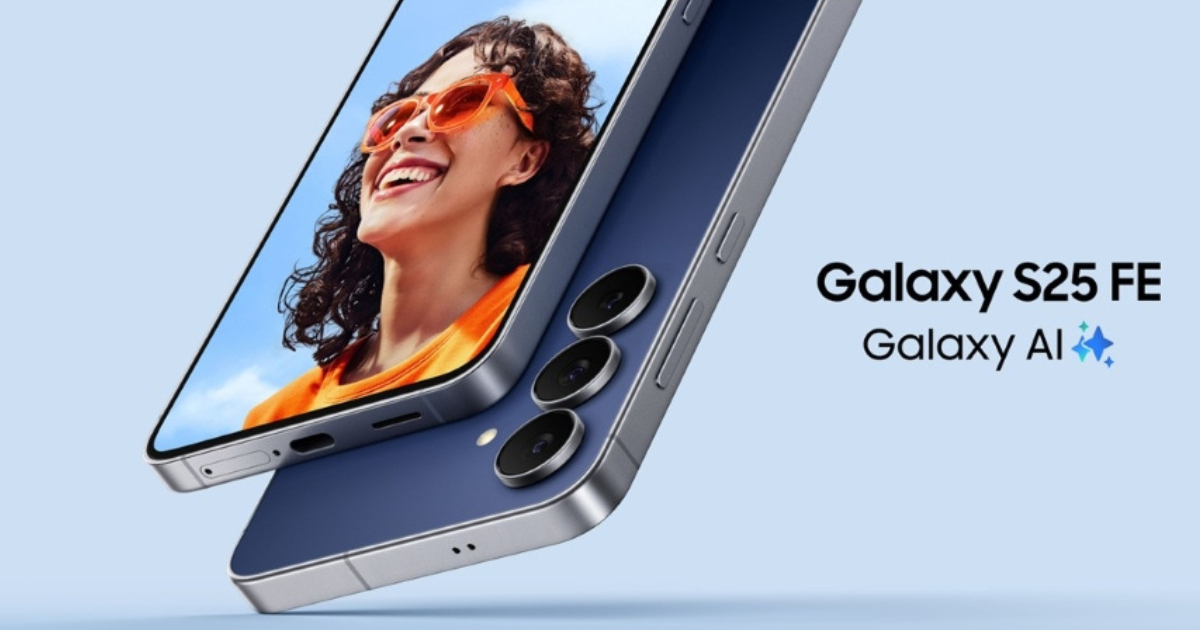
From a long-term ownership perspective, Samsung maintains the strongest software leadership due to its fully guaranteed seven-year update commitment. Xiaomi closely follows, with extended support for newer flagship-tier devices, while Oppo and OnePlus provide strong, reliable update coverage. Vivo delivers stable software performance, though with shorter update durations. Samsung remains the strongest choice for buyers who prioritize the longest ownership lifespan and software longevity.
Pricing and Value in Kenya: Capability, Competitive Positioning, and Real Ownership Value
Pricing remains one of the most decisive factors when choosing the best premium midrange smartphone in Kenya. Buyers in this segment expect flagship-level capability while maintaining strong value relative to hardware performance, camera capability, battery endurance, and software longevity. Current listings across leading Kenyan smartphone retailers place these devices in a competitive range of approximately KES 70,000 to KES 110,000, depending on storage configuration and retailer pricing.
The Oppo Reno15 Pro typically retails between KES 75,000 and KES 90,000, positioning it competitively given its hardware capabilities. Its pricing reflects its advanced camera architecture, including a 200MP primary sensor and a dedicated telephoto camera, as well as its 6500mAh silicon-carbon battery and support for fast wired and wireless charging. This combination delivers strong value to buyers who prioritize camera capability and battery reliability.
The Samsung Galaxy S25 FE is priced between KES 90,000 and KES 110,000, reflecting Samsung’s software leadership and ecosystem integration. Its seven-year software support commitment significantly extends its usable lifespan, improving long-term ownership value despite its higher upfront price.
The Xiaomi 15T typically falls between KES 75,000 and KES 95,000, positioning it as a performance-focused value option. Its flagship-tier processor performance delivers excellent responsiveness, making it particularly attractive for performance-focused buyers.
The OnePlus 15R is priced between KES 80,000 and KES 100,000, delivering exceptional battery capacity and flagship-tier processor performance. Its large silicon-carbon battery and fast-charging capability improve endurance and reliability, strengthening its ownership value.
The Vivo V60 ranges from KES 70,000 to KES 85,000, offering strong camera capabilities, fast charging, and a large battery capacity at competitive prices.
From a value perspective, Xiaomi and OnePlus deliver the strongest performance-per-price advantage, while Samsung delivers the strongest long-term software value. The Oppo Reno 15 Pro delivers the most balanced overall value, combining advanced camera hardware, a large battery capacity, and versatile charging capabilities at competitive pricing in this segment.
Editorial Verdict: Which Premium Midrange Smartphone Should You Buy and Why
After evaluating camera capability, processor performance, battery engineering, software longevity, and pricing in Kenya, each device in this comparison has strengths that align with specific ownership priorities. However, meaningful differences in hardware architecture and long-term ownership reliability ultimately determine which device delivers the strongest overall value.
Best Camera: Oppo Reno15 Pro
The Oppo Reno15 Pro delivers the most complete and versatile camera system in this comparison. Its 200MP primary sensor captures exceptional detail and dynamic range, while its 50MP telephoto camera with true 3.5x optical zoom enables high-quality zoom photography without loss of resolution. This allows accurate portrait compression, improved subject isolation, and superior distance photography. The 50MP ultrawide camera ensures consistent image quality across all focal lengths. Unlike devices that rely heavily on digital zoom, the Reno15 Pro provides true optical flexibility, making it the strongest camera platform for photography, content creation, and long-term imaging reliability.
Best Performance: OnePlus 15R and Xiaomi 15T
The OnePlus 15R and Xiaomi 15T deliver the strongest processor performance thanks to their flagship-tier chipsets. These processors provide faster application loading, superior gaming stability, and greater long-term performance headroom. This advantage ensures smoother multitasking and sustained performance under demanding workloads. For users who prioritize peak performance, gaming capability, and maximum responsiveness, OnePlus and Xiaomi maintain clear leadership.
Best Battery and Charging System: Oppo Reno 15 Pro
The Oppo Reno 15 Pro delivers the most complete power management system. Its 6500mAh silicon-carbon battery provides excellent endurance, while its 80W wired charging, 50W wireless charging, reverse charging capability, and bypass charging support deliver unmatched charging flexibility. This combination improves daily convenience, reduces charging frequency, and protects long-term battery health. These advantages directly improve ownership reliability and usability.
Best Software Longevity: Samsung Galaxy S25 FE
Samsung maintains undisputed leadership in software support. The Galaxy S25 FE receives seven years of Android OS and security updates, ensuring long-term security, compatibility, and system stability. This extended support helps devices last longer and stay usable over time, making Samsung the best choice for buyers who prioritize long-term software reliability.
Final Verdict: Oppo Reno 15 Pro Delivers the Most Complete Ownership Experience
While OnePlus and Xiaomi lead in performance and Samsung in software longevity, the Oppo Reno 15 Pro offers the strongest overall balance across the factors that matter most in real-world ownership. Its camera system provides true optical versatility, its battery architecture ensures reliable endurance, and its charging flexibility improves daily usability and long-term reliability.
For most buyers in Kenya’s premium midrange segment, the Oppo Reno 15 Pro represents the most complete and future-ready choice. It delivers flagship-grade camera capabilities, excellent battery life, versatile charging, and dependable long-term performance, making it the strongest overall premium midrange smartphone in this comparison.