

Executive Summary
The Botswana Innovation Hub represents one of Africa’s most deliberate investments in innovation infrastructure. Established in Gaborone as a purpose-built science and technology park, it was designed to support research institutions, technology companies, and startups operating within a structured ecosystem environment. Its creation reflects Botswana’s long-term strategy to diversify its economy beyond diamond mining and build national technological capability.

Unlike organic ecosystems that emerge gradually, the Botswana Innovation Hub was developed as an intentional structural intervention. It provides physical infrastructure, institutional alignment, and operational continuity necessary for sustained innovation activity. Research institutions, private sector companies, and government stakeholders operate within a shared environment, enabling knowledge exchange, enterprise formation, and technological development.
The hub demonstrates that infrastructure plays a foundational role in ecosystem formation. By providing reliable facilities, institutional support, and operational stability, Botswana has created conditions that attract investment, support research, and enable technology-driven enterprise. This infrastructure strengthens national capacity to participate in the global digital economy.
Botswana’s approach illustrates a broader lesson for Africa’s technology ecosystem development. Sustainable innovation ecosystems require long-term infrastructure investment, institutional coordination, and strategic continuity. The Botswana Innovation Hub provides a clear example of how infrastructure-led ecosystem development can support economic diversification and strengthen technological capability.
In an era where technology increasingly determines economic competitiveness, nations face a fundamental structural choice. They can either participate in the digital economy as consumers of external innovation or deliberately invest in building the infrastructure needed to produce innovation domestically. Botswana confronted this reality with clarity. Recognizing the long-term limitations of an economy anchored primarily in diamond mining, the country began investing in institutional and physical infrastructure to support technological capabilities, research, and innovation-driven enterprise. The Botswana Innovation Hub emerged as one of the most significant outcomes of this strategic shift.
Established on a purpose-built campus in Gaborone, the Botswana Innovation Hub was conceived as a national platform for ecosystem development. Its purpose extended beyond providing office space or research facilities. It was designed to create the structural conditions required for innovation ecosystems to form and mature. By concentrating research institutions, technology companies, startups, and support infrastructure within a single environment, Botswana sought to enable the interactions, knowledge exchange, and operational continuity necessary for sustained technological growth.
This approach reflected a broader understanding that innovation ecosystems do not emerge spontaneously. They require infrastructure, institutional support, and long-term strategic coordination. Without these foundations, entrepreneurial activity remains fragmented and difficult to scale. The Botswana Innovation Hub represented a deliberate effort to establish those foundations. It provided a physical and institutional environment capable of supporting research, attracting investment, and enabling technology-driven enterprise.
At a continental level, the significance of the Botswana Innovation Hub extends beyond national development. It reflects a structural shift in how African countries are approaching ecosystem formation. Increasingly, governments are recognizing that innovation infrastructure plays a decisive role in determining whether technological ecosystems can develop sustainably. Science parks, technology hubs, and innovation districts are becoming essential components of national digital strategies. Botswana’s investment in innovation infrastructure illustrates how physical and institutional environments can support long-term ecosystem growth.
Understanding the Botswana Innovation Hub, therefore, provides insight into a fundamental question shaping Africa’s technological future. How can infrastructure, governance, and strategic investment enable the formation of ecosystems capable of supporting innovation, attracting capital, and sustaining economic diversification? The development of the Botswana Innovation Hub offers a clear example of how these structural elements can be aligned to support national technological capability.
The National Vision Behind Botswana Innovation Hub
A strategic national objective drove the creation of the Botswana Innovation Hub. For decades, Botswana’s economic stability had been closely tied to diamond mining, a sector that provided significant national revenue but limited diversification into knowledge-driven industries. While resource wealth enabled infrastructure development and fiscal stability, it did not inherently create the technological capability required to compete in an increasingly digital global economy. Recognizing this structural constraint, Botswana began pursuing policies to strengthen its capacity for innovation and expand its participation in technology-driven sectors.
The Botswana Innovation Hub was established as a central component of this transition. Its purpose was to create an environment capable of supporting research, enabling the formation of startups, and attracting technology companies operating in emerging industries. By investing in innovation infrastructure, Botswana sought to build domestic technological capability while also positioning itself as a destination for international technology investment. This approach reflected an understanding that ecosystems require both local talent development and global integration.
Institutionally, the hub was designed to function as a bridge between government, academia, and the private sector. Research institutions could operate alongside technology companies. Startups could access infrastructure and institutional support. Government policy could align with ecosystem development objectives. This institutional coordination was essential because ecosystem formation depends on interactions among multiple actors operating within a shared environment. The Botswana Innovation Hub provided the structural platform for this interaction.
At the same time, the hub formed part of Botswana’s broader effort to transition toward a knowledge-based economy. By investing in research infrastructure, supporting technology companies, and enabling innovation-driven enterprise, Botswana sought to reduce its long-term dependence on natural resource extraction. Innovation became a strategic economic asset. Infrastructure became a tool for enabling ecosystem development.
The Botswana Innovation Hub, therefore, represents more than a national infrastructure project. It reflects a deliberate effort to shape the structural conditions required for ecosystem formation. Its creation illustrates how governments can use infrastructure, policy, and institutional coordination to support technological capability and economic diversification. This strategic approach positions innovation infrastructure as a foundational element of long-term ecosystem development.
Physical Infrastructure and Ecosystem Foundations
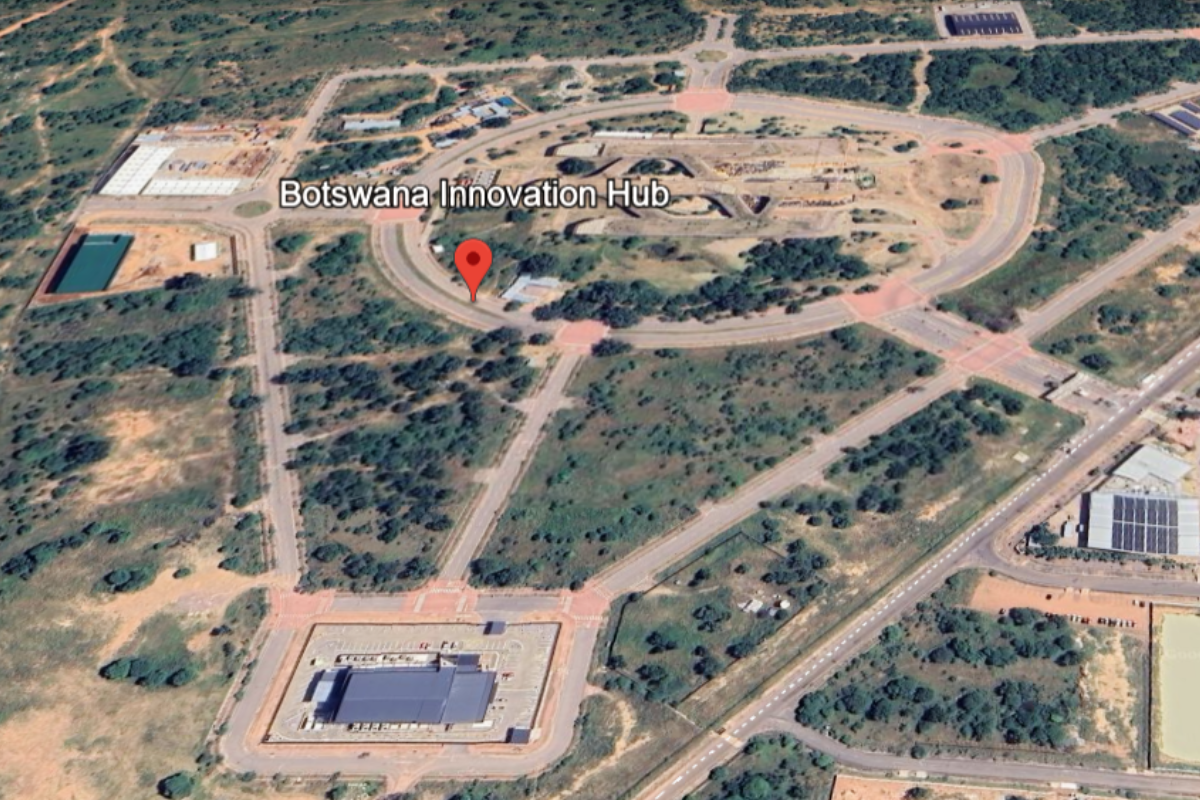
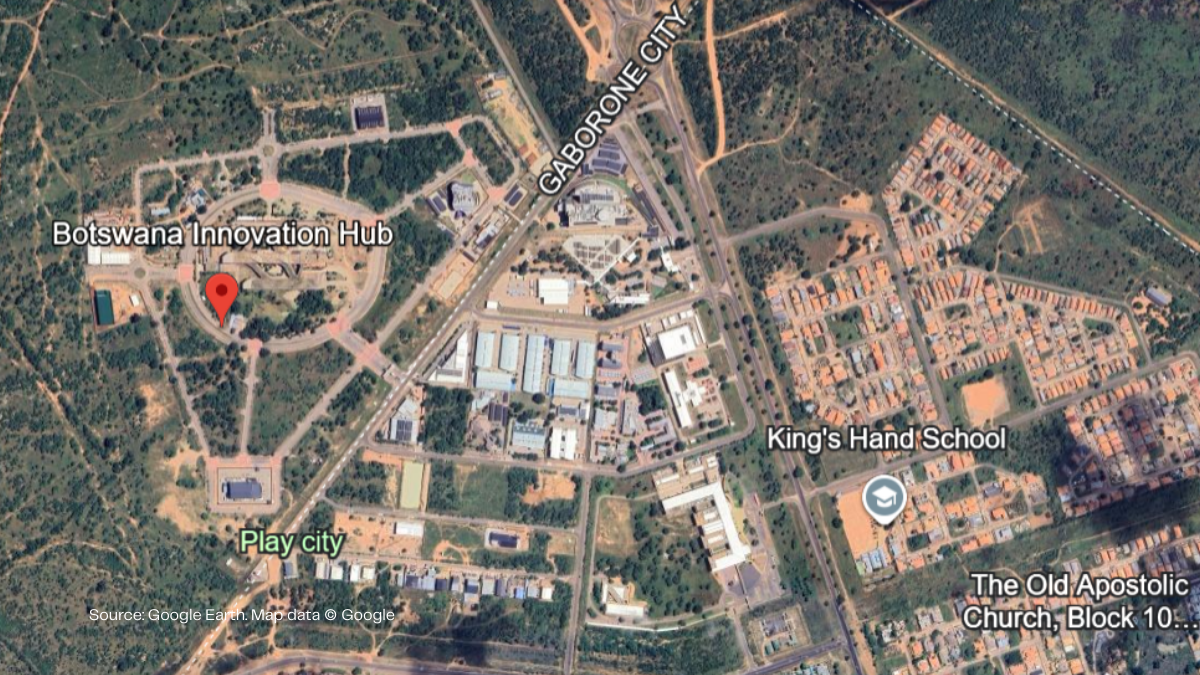
The Botswana Innovation Hub was established as a purpose-built science and technology park, designed to provide the physical infrastructure necessary for sustained innovation activity. Located in Gaborone, the campus was developed to support research institutions, technology companies, and startups in a stable, purpose-designed environment. Its creation reflected a clear strategic understanding. Innovation ecosystems require physical infrastructure capable of supporting technological development over extended periods. Without such infrastructure, innovation activity remains fragmented and difficult to scale.
The hub’s facilities were structured to accommodate organizations engaged in research, product development, and knowledge-driven enterprise. Office environments, research laboratories, and specialized workspaces provide operational capacity for companies and institutions working across sectors such as information technology, digital services, and applied research. These facilities enable organizations to conduct development activities within an environment designed to support experimentation, technical collaboration, and long-term operational continuity. This distinguishes innovation infrastructure from conventional commercial real estate. Innovation hubs are designed not only for occupancy but for ecosystem function.
Supporting infrastructure plays an equally critical role. Reliable telecommunications connectivity, power stability, and secure operational environments form the technical backbone required for a technology-driven enterprise. Research institutions and technology companies depend on uninterrupted infrastructure to conduct development, manage data systems, and operate efficiently. By providing this continuity, the Botswana Innovation Hub reduces operational uncertainty and enables organizations to focus on technological advancement rather than infrastructure limitations. This reliability strengthens the hub’s attractiveness to both domestic and international participants.
Physical proximity between ecosystem actors also contributes to ecosystem formation. When research institutions, startups, and technology companies operate in the same environment, interactions become more frequent, and collaboration becomes more accessible. Knowledge exchange occurs more naturally. Shared access to infrastructure reduces barriers to experimentation and innovation. This clustering dynamic has played a central role in the development of established global innovation ecosystems, where physical concentration of talent and institutions accelerated technological progress. The Botswana Innovation Hub was designed to enable similar structural interaction within Botswana’s national innovation framework.
Infrastructure investment also signals long-term institutional commitment. Innovation ecosystems require sustained support over many years before reaching maturity. By developing a dedicated innovation campus, Botswana demonstrated its commitment to building technological capability as a national priority. Physical infrastructure provides credibility. It reassures investors, research institutions, and technology companies that ecosystem development is supported by stable institutional intent rather than short-term initiative.
The Botswana Innovation Hub, therefore, represents a foundational layer of Botswana’s ecosystem development strategy. It provides the physical environment necessary for research, technological development, and enterprise formation. By establishing infrastructure capable of sustaining innovation, Botswana has created the structural conditions for ecosystem growth.
Institutional Integration and Ecosystem Alignment
The effectiveness of innovation infrastructure depends not only on physical facilities, but on the institutional systems that support and sustain ecosystem activity. The Botswana Innovation Hub was established within a broader national framework to align government policy, academic research, and private-sector participation. This institutional coordination is essential because ecosystems do not function as isolated environments. They depend on structured interaction between multiple actors, each contributing to the development, commercialization, and scaling of innovation.
At the center of this framework is the Botswana government’s long-term commitment to innovation-led economic diversification. The Botswana Innovation Hub operates as a national institution with a mandate to attract technology companies, support research activity, and enable knowledge-driven enterprise. Government involvement provides policy continuity, regulatory stability, and institutional credibility. These factors are critical in reducing uncertainty for organizations considering long-term investment within the ecosystem. Institutional stability signals that innovation development is supported as a strategic national priority.
Academic and research institutions also play a central role in ecosystem alignment. Universities and research organizations contribute to ecosystem formation by producing skilled graduates, conducting scientific research, and supporting technology development. Their presence within or alongside innovation hubs enables knowledge transfer between research and industry. This connection strengthens the ecosystem’s capacity to generate original technological capability rather than relying solely on external innovation. By supporting collaboration between academic institutions and technology companies, the Botswana Innovation Hub contributes to building domestic technological competence.
Private sector participation further reinforces ecosystem functionality. Technology companies operating within the hub benefit from access to infrastructure, institutional support, and proximity to research capability. In turn, their presence contributes to ecosystem development by creating employment, introducing technical expertise, and participating in collaborative innovation activity. This interaction between private enterprise and institutional infrastructure enables ecosystems to move beyond theoretical capability and toward operational productivity.
Institutional coordination also enables ecosystem continuity. Innovation ecosystems develop over extended timeframes, often requiring sustained alignment between infrastructure investment, policy support, and organizational participation. The Botswana Innovation Hub provides a structured institutional environment where these elements can operate in coordination. This continuity strengthens ecosystem stability and increases the likelihood that innovation activity can develop sustainably.
The Botswana Innovation Hub, therefore, represents not only physical infrastructure, but institutional infrastructure. By aligning government policy, academic research, and private sector participation within a single ecosystem framework, Botswana has established the institutional foundations necessary for long-term technological development.
Operational Reality and Ecosystem Activity
The long-term significance of the Botswana Innovation Hub depends not only on its infrastructure or institutional design, but on its ability to support real technological and research activity. Ecosystems become meaningful when infrastructure transitions from static capacity to active operational use. The Botswana Innovation Hub has gradually evolved into an environment where research institutions, technology companies, and innovation-driven enterprises can establish a presence and conduct sustained work. This operational dimension distinguishes ecosystem infrastructure from conceptual development and provides measurable indicators of ecosystem formation.
Organizations operating within the Botswana Innovation Hub span multiple knowledge-driven sectors, including information and communication technology, digital services, and applied research. Their presence reflects the hub’s role as a national platform for technology-oriented enterprises. Companies benefit from access to purpose-built infrastructure, proximity to institutional support, and integration within a structured innovation environment. This enables organizations to conduct research, develop products, and participate in technology-driven economic activity within a stable operational framework.
Research activity represents another important dimension of ecosystem functionality. Innovation hubs play a critical role in supporting research that can translate into commercial and technological outcomes. By providing research institutions with infrastructure and institutional support, the Botswana Innovation Hub strengthens the country’s capacity to generate knowledge-based economic activity. Research conducted in such environments contributes to the development of technological capabilities and supports the gradual formation of domestic innovation capacity.
The hub also contributes to talent development and workforce capability. Technology ecosystems require skilled professionals who can support research, product development, and technical operations. By enabling technology companies and research institutions to operate within Botswana, the Botswana Innovation Hub helps create employment opportunities and supports the development of a technically skilled workforce. Over time, this strengthens the country’s human capital base and contributes to long-term ecosystem resilience.
Equally important is the hub’s role in strengthening Botswana’s attractiveness as a destination for technology investment. Innovation infrastructure signals institutional readiness to support technology-driven enterprise. Companies considering regional expansion evaluate infrastructure reliability, policy stability, and operational continuity. The Botswana Innovation Hub provides these conditions, reducing barriers to entry and enabling organizations to operate within a supportive ecosystem environment.
While ecosystem development remains a gradual process, the Botswana Innovation Hub has established the operational foundations necessary for sustained technological activity. Its infrastructure is in use. Institutions are present. Research and enterprise activity are supported within a structured environment. These operational realities demonstrate that ecosystem formation depends not only on vision and infrastructure, but on sustained institutional and organizational participation.
Structural Analysis: Why Infrastructure Anchors Ecosystem Development
The development of the Botswana Innovation Hub illustrates a fundamental principle of ecosystem formation. Innovation ecosystems do not emerge solely from entrepreneurial ambition or isolated technological activity. They depend on infrastructure that provides continuity, reduces operational uncertainty, and enables sustained interaction between institutions, companies, and talent. Infrastructure functions as the structural foundation upon which ecosystem activity can develop and scale over time.
At its core, infrastructure enables operational stability. Technology companies and research institutions require environments where connectivity, facilities, and institutional support remain consistent. Without these conditions, organizations face operational friction that limits their ability to conduct research, develop products, and expand their activities. The Botswana Innovation Hub reduces this friction by providing a dedicated environment designed specifically for innovation-driven enterprise. This stability enables ecosystem participants to focus on technological development rather than infrastructure constraints.
Infrastructure also strengthens ecosystem credibility. Innovation ecosystems depend on investor confidence and institutional trust. Physical infrastructure signals long-term commitment. It demonstrates that ecosystem development is supported by sustained national investment rather than short-term initiatives. This credibility influences decision-making by companies, research institutions, and investors evaluating whether to participate in an ecosystem. The Botswana Innovation Hub provides this signal of institutional seriousness, strengthening Botswana’s position within the regional technology landscape.
Equally important is the infrastructure’s role in enabling ecosystem interaction. Innovation depends on the exchange of knowledge between researchers, entrepreneurs, and technology organizations. Physical proximity increases the frequency and quality of this interaction. Shared infrastructure enables collaboration, accelerates problem-solving, and supports the transfer of technical knowledge. Over time, this interaction strengthens the ecosystem’s capabilities and contributes to technological maturity. By concentrating ecosystem actors within a shared institutional environment, the Botswana Innovation Hub enables these dynamics to develop.
Infrastructure further supports ecosystem continuity across time. Ecosystem development is not an immediate outcome. It unfolds gradually as infrastructure, institutional alignment, and organizational participation reinforce one another. Without sustained infrastructure, ecosystem activity becomes fragmented and difficult to maintain. The Botswana Innovation Hub provides a stable platform to support this long-term process. Its presence ensures that ecosystem participants can operate within an environment designed for sustained innovation activity.
The Botswana Innovation Hub, therefore, demonstrates that infrastructure is not merely a supporting component of ecosystem development. It is a prerequisite. Infrastructure creates the conditions that enable innovation ecosystems to form, attract participation, and mature. By investing in innovation infrastructure, Botswana has established the structural foundation necessary for long-term technological capability and ecosystem growth.
Lessons for Africa’s Technology Ecosystem Development
The Botswana Innovation Hub provides important lessons for how African countries can approach ecosystem development in a structured and sustainable manner. Its creation demonstrates that innovation ecosystems are not accidental outcomes. They are the result of deliberate infrastructure investment, institutional alignment, and long-term strategic continuity. Understanding these structural requirements is essential for countries seeking to strengthen their participation in the global digital economy.
The first lesson is that infrastructure must precede ecosystem maturity. Innovation cannot scale in environments where organizations lack reliable operational facilities, connectivity, and institutional support. By investing in purpose-built innovation infrastructure, Botswana established the foundational conditions necessary for ecosystem formation. This infrastructure enables research institutions, startups, and technology companies to operate within a stable environment. Without this foundation, ecosystem activity remains fragmented and difficult to sustain.
The second lesson is the importance of institutional continuity. Ecosystem development requires alignment among government policy, infrastructure investment, and private-sector participation. Botswana’s long-term commitment to the Botswana Innovation Hub demonstrates how institutional coordination can strengthen ecosystem credibility and attract sustained participation. This continuity reduces uncertainty and encourages organizations to invest in technological capability within the ecosystem.
The Botswana Innovation Hub also illustrates the importance of strategic patience. Ecosystems do not reach maturity immediately after infrastructure is established. They develop gradually as research activity, enterprise formation, and institutional interaction reinforce one another. Sustained support and operational continuity enable ecosystem capacity to expand over time. Botswana’s approach reflects an understanding that ecosystem development is a long-term process rather than a short-term initiative.
Finally, the hub highlights the role of infrastructure in enabling economic diversification. By investing in innovation infrastructure, Botswana has created pathways for technology-driven enterprise beyond traditional resource-based industries. This strengthens national resilience and expands participation in knowledge-driven sectors. As African countries continue pursuing digital economic growth, Botswana’s experience demonstrates how infrastructure, institutional alignment, and long-term strategic commitment can enable ecosystem formation and technological capability development.
Botswana Innovation Hub and Africa’s Ecosystem Future
The Botswana Innovation Hub represents a deliberate effort to shape the structural foundations of a national technology ecosystem. Its development reflects an understanding that ecosystem formation depends not only on entrepreneurial ambition but on infrastructure, institutional alignment, and sustained strategic commitment. By investing in purpose-built innovation infrastructure, Botswana has positioned itself to strengthen technological capabilities, attract knowledge-driven enterprises, and participate more actively in the global digital economy.
Its significance extends beyond Botswana itself. Across Africa, countries are increasingly recognizing the importance of establishing environments that support innovation and technological development. As digital technologies reshape economic systems, infrastructure has become a critical determinant of ecosystem viability. Innovation hubs, science parks, and technology districts are emerging as strategic tools for enabling ecosystem growth. The Botswana Innovation Hub provides a clear example of how such infrastructure can contribute to long-term technological capacity.
At the same time, the hub illustrates the gradual nature of ecosystem development. Infrastructure creates possibilities, but ecosystem maturity depends on sustained participation by research institutions, technology companies, and entrepreneurs. Over time, these participants contribute to knowledge creation, enterprise formation, and technological advancement. The Botswana Innovation Hub provides the structural platform where these processes can unfold. Its continued operation strengthens Botswana’s ability to cultivate domestic technological capability and integrate into global innovation networks.
More broadly, the Botswana Innovation Hub reflects a shift in how technological development is being approached across Africa. Increasingly, ecosystem formation is being understood as a structural process that requires coordinated investment, infrastructure readiness, and institutional continuity. Countries that invest in these foundations strengthen their capacity to participate in technology-driven economic transformation.
The Botswana Innovation Hub, therefore, stands as an example of infrastructure-led ecosystem development. It demonstrates how long-term investment in innovation infrastructure can enable ecosystem formation, support economic diversification, and strengthen national technological capability. Its trajectory provides insight into how African countries can build the structural conditions necessary for sustained participation in the global technology landscape.