

JuaTech Africa
TRENDING
No Result
View All Result
  • Explore
    • Buying Guides
      • Smartphones
      • Tablets & Productivity
      • Wearables
      • Audio
      • Accessories
    • Creator Hub
      • Creator Phones
      • Creator Audio
      • Creatives Growth Strategy
      • Creator Business
    • About Us
      • Founder’s Letter: The Vision Behind JuaTech Africa
      • Mission & Vision | JuaTech Africa
      • Editorial Policy
      • Advisory
      • Work with Us
      • Contact Us
  • Intelligence
    • JuaTech Africa Intelligence
    • Brand Intelligence
    • Market Intelligence
    • Mobile Imaging Intelligence
    • Industry Intelligence
    • Market Signals
    • Analytica
    • Artificial Intelligence
    • Digital Assets Intelligence
  • Reviews
    • Smartphones
    • Tablets
    • Audio
    • Wearables
    • Accessories
  • Tech Decoded
    • Core Technology
    • Device Hardware
    • Software & Platforms
    • Connectivity & Networks
    • AI & Emerging Technology
    • Buying, Safety & Integrity
    • Tech Guides & How-To
    • Product Strategy & Value Analysis
  • Ecosystems
    • Mobile Ecosystems
    • African Tech Ecosystem
    • Company Ecosystems
    • Platform Ecosystems
SUBSCRIBE
  • Explore
    • Buying Guides
      • Smartphones
      • Tablets & Productivity
      • Wearables
      • Audio
      • Accessories
    • Creator Hub
      • Creator Phones
      • Creator Audio
      • Creatives Growth Strategy
      • Creator Business
    • About Us
      • Founder’s Letter: The Vision Behind JuaTech Africa
      • Mission & Vision | JuaTech Africa
      • Editorial Policy
      • Advisory
      • Work with Us
      • Contact Us
  • Intelligence
    • JuaTech Africa Intelligence
    • Brand Intelligence
    • Market Intelligence
    • Mobile Imaging Intelligence
    • Industry Intelligence
    • Market Signals
    • Analytica
    • Artificial Intelligence
    • Digital Assets Intelligence
  • Reviews
    • Smartphones
    • Tablets
    • Audio
    • Wearables
    • Accessories
  • Tech Decoded
    • Core Technology
    • Device Hardware
    • Software & Platforms
    • Connectivity & Networks
    • AI & Emerging Technology
    • Buying, Safety & Integrity
    • Tech Guides & How-To
    • Product Strategy & Value Analysis
  • Ecosystems
    • Mobile Ecosystems
    • African Tech Ecosystem
    • Company Ecosystems
    • Platform Ecosystems
No Result
View All Result
JuaTech Africa
No Result
View All Result
Home Market Intelligence

Safaricom’s Innovation Bottleneck: Pricing Power, API Control, and Market Access Risk

Examining how platform pricing, API restrictions, and ecosystem control may be limiting innovation and competition in Kenya’s telecom market

Lewis Wafula by Lewis Wafula
February 24, 2026
in Market Intelligence
Reading Time: 9 mins read
0
Safaricom’s Innovation Bottleneck: Pricing, Access, and the API Squeeze
0
SHARES
103
VIEWS
Share on FacebookShare on Twitter

From Ethiopia’s crucible to Kenya’s innovation crossroads, Safaricom now faces a defining moment.

In Safaricom’s Innovation Bottleneck: Pricing, Access, and the API Squeeze, we arrive at a defining moment for Kenya’s most powerful telecom operator.

Strategic Marketing by Alpha Brands Consulting

In Part 8 of this series, we examined Safaricom’s expansion into Ethiopia—a bold but turbulent venture shaped by regulatory opacity, infrastructure gaps, and nationalistic resistance. That chapter exposed a deeper strategic truth: scale without sustained innovation is fragile. Ethiopia tested Safaricom’s resilience under pressure. Kenya, however, now tests something more fundamental—its relevance in a rapidly platform-driven digital economy.

At home, Safaricom’s dominance is no longer being challenged primarily by competitors, regulation, or capital constraints. Instead, the pressure is internal. Despite commanding infrastructure, an iconic brand, and strong financials, the company faces a growing innovation bottleneck—one rooted in pricing rigidity, limited access to digital services, and increasing friction within its developer and API ecosystem.

These are not isolated operational issues. They are strategic pressure points shaping how developers build, how SMEs scale, and how inclusive Kenya’s digital economy can become. From Safaricom API pricing and access thresholds to M-Pesa integration constraints, the current model raises a critical question: will Safaricom evolve into a true platform enabler, or remain a transaction-first incumbent in an ecosystem that increasingly rewards openness, affordability, and developer trust?

This chapter unpacks the three pillars defining Safaricom’s innovation challenge:

  • The pricing dilemma — balancing ARPU growth against affordability in a cost-sensitive market

  • The access gap — underserved users, SMEs, and the informal economy

  • The API squeeze — developer friction, platform rigidity, and innovation drag

Together, these forces form a crucible of transformation—one that could unlock inclusive innovation across Kenya or quietly throttle the next wave of digital growth.

Jump Ahead

Toggle
  •  Safaricom’s Pricing Dilemma: ARPU Growth vs Affordability in Kenya
    • Pricing Comparison Snapshot
    • Strategic Insight
  • The API Squeeze — Developer Friction in Safaricom’s Platform Economy
    • Key Frictions Developers Face
    • Global Benchmark Comparison
    • Strategic Insights
  • The Competitive Squeeze: How Airtel, Telkom, and Regional Players Pressure Safaricom
    • Competitive Moves
    • Risk Matrix
    • Strategic Insight
  • Platform or Pipeline: Safaricom’s Defining Choice for Kenya’s Digital Economy
    • Strategic Levers for Transformation
  • Who Pays the Price: What Safaricom’s Choices Mean for Builders and Innovators
  • Up Next: Part 10 — Building With or Without Safaricom
    • A Strategist’s Decision Matrix: A two-axis framework for founders, plus risks, rewards, and real-world case studies.

 Safaricom’s Pricing Dilemma: ARPU Growth vs Affordability in Kenya

Safaricom’s business model has long prioritized high Average Revenue Per User (ARPU), a metric that reflects its premium positioning. As of FY2025, Safaricom’s blended ARPU stood at approximately KES 620 per month, with M-PESA contributing nearly 45% of service revenue. This places Safaricom among Africa’s most profitable telcos—but also among the least affordable for low-income users.

The tension is stark. Over 60% of Kenyans live on less than KES 300 per day, according to the Kenya National Bureau of Statistics. Youth unemployment remains high, and informal work dominates income streams. Meanwhile, SMEs—representing 98% of Kenyan businesses—operate on razor-thin margins. For these segments, Safaricom’s pricing feels exclusionary.

Pricing Comparison Snapshot

Provider Daily Bundle Price Extras
Safaricom 500MB KES 100 —
Airtel 2GB KES 100 —
Telkom 5GB + WhatsApp KES 100 Unlimited WhatsApp

The perception of value is shifting, and Safaricom’s premium pricing risks alienating the very users it seeks to serve.

Strategic Insight

To remain relevant, Safaricom must pivot from ARPU maximization to lifetime value optimization. This means:

  • Designing tiered pricing models for youth, SMEs, and rural users
  • Offering usage-based loyalty rewards
  • Embracing freemium models for public-good services like health, education, and civic platforms

The telco that prices for inclusion will own the next billion transactions—not just in Kenya, but across the region.

The API Squeeze — Developer Friction in Safaricom’s Platform Economy

Safaricom’s APIs—especially the M-PESA Daraja suite—are powerful, but their usability remains a point of contention. While the company has made strides in documentation and sandboxing, developer sentiment is still lukewarm.

Key Frictions Developers Face

  • Onboarding delays: 2–4 weeks for production access
  • Fragmented documentation: unclear endpoints, inconsistent error handling
  • High transaction costs: KES 0.50–1.00 per API call
  • Limited support: sparse forums, slow live assistance

This friction has consequences. Kenya’s developer ecosystem is vibrant, but many builders find themselves working around Safaricom rather than with it. The lack of seamless integration stifles experimentation in fintech, e-commerce, and civic tech.

Global Benchmark Comparison

Platform Onboarding Sandbox Startup Pricing Community Support
Safaricom 2–4 weeks Partial None Limited
Stripe Instant Full Free tier Robust
Flutterwave 1–2 days Full Startup tier Active
Twilio Instant Full Free tier Extensive

To unlock innovation, Safaricom must re-imagine its API strategy.

Strategic Insights

Safaricom must evolve into a developer-first platform by:

  • Enabling instant sandbox access and automated onboarding
  • Launching transparent pricing dashboards
  • Creating startup acceleration programs with subsidized API calls
  • Investing in community-driven documentation and support

The telco that empowers builders will shape the future of Kenya’s digital economy.

The Competitive Squeeze: How Airtel, Telkom, and Regional Players Pressure Safaricom

While Safaricom defends its market share, rivals are attacking on three fronts: price, agility, and regional expansion.

Airtel Kenya, the second biggest Telco company in Kenya.

Competitive Moves

  • Airtel Kenya: Offers 2GB daily bundles for KES 100, launched eSIMs ahead of Safaricom, and zero-rated education platforms.
  • Telkom Kenya: Targets underserved users with Madaraka bundles (5GB + unlimited WhatsApp), and partners with public sector initiatives.
  • Ethio Telecom: Backed by Ethiopia’s government, expanding infrastructure rapidly, and positioning itself as a regional challenger.

Risk Matrix

Threat Vector Airtel Telkom Ethio Telecom
Pricing ✅ ✅ ❌
Innovation Agility ✅ ✅ ✅
Regional Expansion ❌ ❌ ✅
Developer Ecosystem ✅ ❌ ❌

Safaricom’s moat—built on infrastructure and brand—may erode if it doesn’t match the affordability and innovation of its challengers.

Strategic Insight

To stay ahead, Safaricom must:

  • Embrace modular bundling (youth packs, SME kits, regional roaming)
  • Invest in cross-border interoperability
  • Build developer-first ecosystems to lock in innovation

The telco that adapts faster will outpace the price war and win the loyalty war.

Reality Check
Kenya’s next wave of innovation will not come from corporates—it will come from startups, SMEs, and developers building at the edges. Platforms that price innovation as a premium product risk excluding the very ecosystem that sustains long-term growth.

Platform or Pipeline: Safaricom’s Defining Choice for Kenya’s Digital Economy

Safaricom’s next frontier isn’t 5G or Ethiopia—it’s trust, access, and innovation at scale. To thrive, the telco must reframe its role from extractive incumbent to inclusive enabler.

Strategic Levers for Transformation

  • Zero-rated APIs for public-good services (SHA, eCitizen, education portals)
  • Startup acceleration programs with subsidized access and mentorship
  • Transparent pricing dashboards for data, voice, and fintech rails
  • Open API playgrounds with instant sandboxing and community support

This isn’t just a technical shift—it’s a cultural one. Safaricom must move from control to collaboration, from monetization to empowerment. Its rails are powerful, but power without access is stagnation. The telco that democratizes its infrastructure will not only scale—it will lead.

Who Pays the Price: What Safaricom’s Choices Mean for Builders and Innovators

If you’re building in Kenya’s digital economy, the questions are clear:

  • Are you pricing for inclusion or extraction?
  • Are your APIs empowering or gatekeeping?
  • Are you building with Safaricom—or despite it?

The bottleneck is real. But so is the opportunity. Safaricom has the tools, the reach, and the brand equity to unlock inclusive innovation. What it needs now is strategic will.

Up Next: Part 10 — Building With or Without Safaricom

A Strategist’s Decision Matrix: A two-axis framework for founders, plus risks, rewards, and real-world case studies.

Comprehensively, we have looked at Part 9: Safaricom’s Innovation Bottleneck: Pricing, Access, and the API Squeeze. In Part 10, we’ll equip founders, developers, and strategists with a decision matrix to evaluate whether to build on Safaricom’s rails—or chart an independent path. We’ll unpack:

  • The risks of dependency
  • The rewards of interoperability
  • Case studies from fintech, e-commerce, and public service

Stay tuned. The next chapter could define your next move. Sign up for our Weekly Newsletter and Social Media Community for fresh updates and deep engagements on Mobile Tech and tech affairs around Kenya and Africa.

Safaricom Deep Dive Series | Previous (Part 8) | Next (Part 10).

Tags: digital ecosystem KenyaKenya telecom industrymobile money ecosystem Kenyaplatform economics AfricaSafaricom API strategySafaricom ecosystemSafaricom market powerSafaricom pricing strategySafaricom Strategytelecom innovation Kenyatelecom market intelligencetelecom market Kenya
ShareTweet
Strategic marketing and positioning by Alpha Brands Consulting Strategic marketing and positioning by Alpha Brands Consulting Strategic marketing and positioning by Alpha Brands Consulting
Previous Post

A look at the smartphones currently capturing the most attention among Kenyan buyers, based on market visibility, buyer interest, and device relevance.

Next Post

Exynos 2600 vs Snapdragon 8 Elite Gen 5: Performance, Efficiency, and Real-World Impact

Lewis Wafula

Lewis Wafula

Tech Analyst | Reviewer | Founder of JuaTech Africa Tech analyst and founder of JuaTech Africa, delivering practical smartphone reviews, mobile tech insights, and digital solutions for professionals and businesses in Africa. Explore the latest insights on JuaTech Africa or get in touch for collaboration and consulting. Connect with Lewis.

Related Posts

Safaricom M-Pesa retail infrastructure integrated into Kenya’s digital economy
Market Intelligence

Safaricom at the Crossroads: Will Platform Power Accelerate or Constrain Africa’s Startup Future?

February 26, 2026
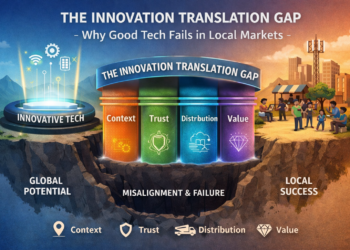
The Innovation Translation Gap impacting Africa's Mobile Tecnology Spark
Market Intelligence

Innovation vs Adoption: Why Global Technology Strategies Fail in African Markets

February 23, 2026
Kenya's Mobile Economy 2025
Market Intelligence

Kenya’s Mobile Economy in 2025: The Numbers, the Winners, and What the Data Signals Next

December 16, 2025
Kenya Smartphone Prices Set for Another Increase in 2026
Market Intelligence

Why Smartphone Prices Are Rising in Kenya: Market Forces and Buyer Impact (2026)

February 23, 2026
Safaricom Data Stewardship Privacy, Power, and Public Trust
Market Intelligence

The Data Question: Privacy, Surveillance, and Corporate Control

February 24, 2026
Safaricom Connectivity Gap in Kenya
Market Intelligence

The Safaricom Connectivity Gap: Market Leadership and Infrastructure Access Inequality

February 24, 2026
Next Post
Exynos 2600 vs Snapdragon Elite 5 Gen

Exynos 2600 vs Snapdragon 8 Elite Gen 5: Performance, Efficiency, and Real-World Impact

Leave a Reply Cancel reply

Your email address will not be published. Required fields are marked *

About the Founder

Lewis Wafula, Founder of JuaTech Africa

Lewis Wafula

Founder, JuaTech Africa

Helping Africans make smarter technology decisions through trusted reviews, buying guides, creator technology insights, and market intelligence.

Connect on LinkedIn

JuaTech Africa Intelligence

Independent research and market intelligence exploring the trends, technologies, and market forces shaping Africa's digital future.

📊 Flagship Research
  • 2025 Brand Performance Report
  • Q1 2026 Market Report
🧠 Research Areas
  • Analytica
  • Market Intelligence
  • AI Intelligence
Explore Intelligence

Join the JuaTech Intelligence Circle

Signal over noise. Get trusted reviews, market intelligence, buying guidance, and emerging technology insights shaping Africa's digital future.

Get Free Access

Essential Buyer Guides

Ultimate Smartphone Buying Guide Kenya 2025

The Ultimate Smartphone Buying Guide for Kenya (2026): How to Choose the Right Phone with Confidence

June 9, 2026
Best phones under KES 30,000 in Kenya 2026 including Samsung Galaxy A26, POCO M6 Pro, Tecno Camon 50, Infinix Note 40 and Oppo A60

Best Phones Under KES 30,000 in Kenya (2026): Smart Picks That Deliver Real Value

June 22, 2026
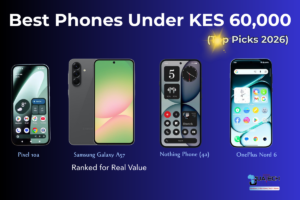
Best phones under 60000 Kenya 2026 including Samsung Galaxy A57, OnePlus Nord 6, Google Pixel 10a and Nothing Phone 4a comparison

Best Phone Under KES 60,000 (2026): 7 Phones That Actually Deliver Value Before You Spend Your Money

June 23, 2026
Battery Kings for power outages in Africa – editorial smartphone battery guide

Battery Kings: Best Smartphones for Power Outages, Value, and Daily Life in Africa

May 25, 2026
Best premium midrange smartphones in Kenya 2026 comparison featuring Samsung Galaxy A57, Vivo V70, Xiaomi Note 15 Pro Plus, Oppo Reno15 Pro and Nothing Phone 4a Pro

Best Premium Midrange Smartphones in Kenya (2026): Samsung, Redmi, HONOR, Pixel and More

May 25, 2026
Samsung Galaxy Z Fold8, Galaxy Z Fold8 Ultra and the Samsung Galaxy Z Fold8 Series showcased in JuaTech Africa's in-depth product review.

Samsung Galaxy Z Fold8 Review: Is This the Most Complete Foldable Smartphone Yet?

July 28, 2026

Tech Decoded

Beyond specifications and marketing claims. Deep analysis of the technologies, strategies, and emerging trends shaping how we build, buy, and use technology.

⚙️ Technology Explained

Breaking down complex technologies, specifications, and concepts into practical understanding.

💡 Product Strategy & Value Analysis

Understanding why products exist, how they are positioned, and the value they deliver.

🤖 AI & Emerging Technology

Exploring the technologies reshaping devices, industries, and digital experiences.

Explore Tech Decoded

Editor's Pick

Smartphone processors 2026 comparison showing Snapdragon, MediaTek Dimensity 9500 and Apple A19 Pro chips with flagship phones

Best Smartphone Processor 2026: Snapdragon vs Dimensity vs Apple What Actually Matters

April 24, 2026
MediaTek Dimensity 9500

Dimensity 9500 Unleashed: MediaTek’s 3nm Powerhouse Redefines Flagship Performance in 2025

June 19, 2026
HONOR smartphone naming explained showing X Series, Number Series and Magic Series lineup hierarchy for Kenyan buyers

HONOR Smartphone Naming Explained (2026 Kenya Master Guide)

Infinix Note Edge vs Samsung Galaxy A36 5G

Infinix Note Edge vs Samsung Galaxy A36 5G: Which Makes More Sense for Daily Use?

February 22, 2026

Work With JuaTech Africa

Reach technology consumers, creators, and decision-makers through trusted reviews, market intelligence, sponsored campaigns, and strategic partnerships.

Explore Opportunities

Helping You Choose Right

Insight | Clarity | Better Tech Decisions

  • JuaTech Africa Intelligence
  • Tech Reviews
  • Ecosystems Intelligence Hub
  • About Us

Connect With Us

  • About Us
  • Editorial Policy
  • Disclaimer
  • Our Services
  • Advertise
  • Newsletter
  • Contact Us
  • Media Kit

© 2026 JuaTech Africa. All rights reserved. Built for tech intelligence in Africa.

No Result
View All Result
  • Explore
    • Buying Guides
      • Smartphones
      • Tablets & Productivity
      • Wearables
      • Audio
      • Accessories
    • Creator Hub
      • Creator Phones
      • Creator Audio
      • Creatives Growth Strategy
      • Creator Business
    • About Us
      • Founder’s Letter: The Vision Behind JuaTech Africa
      • Mission & Vision | JuaTech Africa
      • Editorial Policy
      • Advisory
      • Work with Us
      • Contact Us
  • Intelligence
    • JuaTech Africa Intelligence
    • Brand Intelligence
    • Market Intelligence
    • Mobile Imaging Intelligence
    • Industry Intelligence
    • Market Signals
    • Analytica
    • Artificial Intelligence
    • Digital Assets Intelligence
  • Reviews
    • Smartphones
    • Tablets
    • Audio
    • Wearables
    • Accessories
  • Tech Decoded
    • Core Technology
    • Device Hardware
    • Software & Platforms
    • Connectivity & Networks
    • AI & Emerging Technology
    • Buying, Safety & Integrity
    • Tech Guides & How-To
    • Product Strategy & Value Analysis
  • Ecosystems
    • Mobile Ecosystems
    • African Tech Ecosystem
    • Company Ecosystems
    • Platform Ecosystems

© 2026 JuaTech Africa. All rights reserved. Built for tech intelligence in Africa.

JuaTech Africa

Typically replies within minutes

Any questions related to Safaricom’s Innovation Bottleneck: Pricing Power, API Control, and Market Access Risk?

WhatsApp Us

Online | Privacy policy

WhatsApp us