

JuaTech Africa
TRENDING
No Result
View All Result
  • Explore
    • Buying Guides
      • Smartphones
      • Tablets & Productivity
      • Wearables
      • Audio
      • Accessories
    • Creator Hub
      • Creator Phones
      • Creator Audio
      • Creatives Growth Strategy
      • Creator Business
    • About Us
      • Founder’s Letter: The Vision Behind JuaTech Africa
      • Mission & Vision | JuaTech Africa
      • Editorial Policy
      • Advisory
      • Work with Us
      • Contact Us
  • Intelligence
    • JuaTech Africa Intelligence
    • Brand Intelligence
    • Market Intelligence
    • Mobile Imaging Intelligence
    • Industry Intelligence
    • Market Signals
    • Analytica
    • Artificial Intelligence
    • Digital Assets Intelligence
  • Reviews
    • Smartphones
    • Tablets
    • Audio
    • Wearables
    • Accessories
  • Tech Decoded
    • Core Technology
    • Device Hardware
    • Software & Platforms
    • Connectivity & Networks
    • AI & Emerging Technology
    • Buying, Safety & Integrity
    • Tech Guides & How-To
    • Product Strategy & Value Analysis
  • Ecosystems
    • Mobile Ecosystems
    • African Tech Ecosystem
    • Company Ecosystems
    • Platform Ecosystems
SUBSCRIBE
  • Explore
    • Buying Guides
      • Smartphones
      • Tablets & Productivity
      • Wearables
      • Audio
      • Accessories
    • Creator Hub
      • Creator Phones
      • Creator Audio
      • Creatives Growth Strategy
      • Creator Business
    • About Us
      • Founder’s Letter: The Vision Behind JuaTech Africa
      • Mission & Vision | JuaTech Africa
      • Editorial Policy
      • Advisory
      • Work with Us
      • Contact Us
  • Intelligence
    • JuaTech Africa Intelligence
    • Brand Intelligence
    • Market Intelligence
    • Mobile Imaging Intelligence
    • Industry Intelligence
    • Market Signals
    • Analytica
    • Artificial Intelligence
    • Digital Assets Intelligence
  • Reviews
    • Smartphones
    • Tablets
    • Audio
    • Wearables
    • Accessories
  • Tech Decoded
    • Core Technology
    • Device Hardware
    • Software & Platforms
    • Connectivity & Networks
    • AI & Emerging Technology
    • Buying, Safety & Integrity
    • Tech Guides & How-To
    • Product Strategy & Value Analysis
  • Ecosystems
    • Mobile Ecosystems
    • African Tech Ecosystem
    • Company Ecosystems
    • Platform Ecosystems
No Result
View All Result
JuaTech Africa
No Result
View All Result
Home Market Intelligence

Safaricom at the Crossroads: Will Platform Power Accelerate or Constrain Africa’s Startup Future?

A Market Intelligence analysis examining Safaricom’s structural role in Africa’s digital economy and its impact on startup scalability, platform dependency, and long-term innovation.

Lewis Wafula by Lewis Wafula
February 26, 2026
in Market Intelligence
Reading Time: 4 mins read
0
Safaricom M-Pesa retail infrastructure integrated into Kenya’s digital economy

Safaricom retail and M-Pesa infrastructure integrated into everyday commerce in Kenya. Image by JuaTech Africa.

0
SHARES
35
VIEWS
Share on FacebookShare on Twitter

Jump Ahead

Toggle
  • The Platform That Built a Digital Economy
  • Africa’s Startup Expansion Has Raised the Stakes
  • Safaricom as Enabler: Infrastructure That Accelerates Innovation
    • Immediate Access to Market Scale
    • Institutional Investment in Start–up Growth
    • Platform Modernization: Daraja 3.0 and Fintech 2.0
  • Safaricom as Gatekeeper: Platform Dominance and Economic Dependency
    • Transaction Costs Remain a Core Friction Point
    • Market Concentration Creates Platform Dependency
  • The Dual Reality: Catalyst and Constraint
  • Strategic Implications for Builders, Investors, and Policymakers
    • For Builders
    • For Investors
    • For Policymakers
  • Intelligence Verdict: Safaricom’s Strategic Choices Will Shape Africa’s Innovation Trajectory

The Platform That Built a Digital Economy

In 2007, Safaricom launched M-Pesa, a mobile money service that fundamentally reshaped Kenya’s financial system and became one of the most studied digital inclusion models in the world. What began as a simple mobile transfer tool evolved into the backbone of East Africa’s digital economy.

Nearly two decades later, M-Pesa processes over $300 billion in annual transaction value and serves more than 50 million users across Africa, according to Safaricom and Vodafone Group reports. Its infrastructure enables millions of individuals and businesses to transact without relying on traditional banking systems.

Strategic Marketing by Alpha Brands Consulting

Safaricom is no longer simply a telecom operator. It has become foundational digital infrastructure.

For startups, this infrastructure provides immediate access to customers, payments, and distribution at a national scale. For the broader economy, it enables commerce, financial access, and digital entrepreneurship.

Yet as Africa enters 2026, a structural question has emerged: Will Safaricom serve as the platform that accelerates Africa’s next generation of unicorns – or evolve into a gatekeeper that controls the cost and pace of innovation?

The answer will shape the trajectory of Africa’s startup ecosystem.

Africa’s Startup Expansion Has Raised the Stakes

Africa’s startup ecosystem has expanded dramatically over the past decade. From fewer than 50 venture-backed startups in 2015, the continent surpassed 1,000 funded startups by 2025, according to industry tracking from Partech, Briter Bridges, and Africa: The Big Deal.

Venture capital inflows have accelerated alongside this growth. In 2025, startup funding surpassed $6 billion mark, reflecting growing global confidence in Africa’s digital economy.

Fintech remains the dominant sector, with companies such as Flutterwave, Chipper Cash, and Andela demonstrating Africa’s ability to build globally competitive technology companies.

Safaricom sits at the center of this expansion.

Its infrastructure enables startups to acquire customers, process payments, and scale services efficiently. But its pricing structures, integration frameworks, and platform dominance also shape the economic viability of those startups.

This dual role makes Safaricom one of the most consequential infrastructure platforms in Africa’s innovation ecosystem.

Safaricom as Enabler: Infrastructure That Accelerates Innovation

Safaricom’s contribution to Africa’s startup ecosystem is both structural and measurable.

Immediate Access to Market Scale

M-Pesa provides startups with instant integration into a trusted financial ecosystem. This allows companies to onboard users, collect payments, and build transaction-based business models without developing independent financial infrastructure.

This dramatically reduces market entry barriers.

In markets without mobile money penetration, startups must build or integrate costly payment infrastructure. In Kenya, Safaricom provides this capability by default.

Institutional Investment in Start–up Growth

Safaricom has also invested directly in startup development. Its Spark Accelerator Program, launched in partnership with M-Pesa Africa, Sumitomo Corporation, and iHub, selected start-ups such as FlexPay, Leta.AI, and DigiTax from over 200 applicants in 2025.

These programs provide capital access, mentorship, and ecosystem support.

This signals Safaricom’s recognition that startup growth strengthens the broader digital economy.

Platform Modernization: Daraja 3.0 and Fintech 2.0

Safaricom has also modernized its infrastructure through the launch of Fintech 2.0, its next-generation core financial services platform, and Daraja 3.0, the latest version of its developer API framework.

These upgrades aim to improve integration reliability, expand developer access, and enable faster service deployment for startups and partners.

From a technical standpoint, these developments represent a significant step toward improving ecosystem accessibility.

However, infrastructure modernization alone does not resolve all structural friction.

Safaricom as Gatekeeper: Platform Dominance and Economic Dependency

While Safaricom enables startup growth, its dominant platform position introduces structural constraints.

Transaction Costs Remain a Core Friction Point

Transaction fees, which can range from approximately 1 to 4% depending on transaction size, directly affect startup economics. For startups operating on thin margins, these fees materially reduce profitability.

Despite improvements in integration through Fintech 2.0 and Daraja 3.0, the economic cost of transactions – not technical integration – remains the primary structural friction point.

This is particularly significant for high-volume, low-margin business models.

Market Concentration Creates Platform Dependency

Safaricom controls over 60% of Kenya’s mobile subscriber market, according to reports from the Communications Authority of Kenya. Its dominance in mobile money is even more pronounced.

For many startups, M-Pesa integration is not optional. It is essential for market viability.

This creates structural dependency. Changes to platform pricing, integration policies, or ecosystem access can materially affect startup operations.

This dynamic mirrors platform dependency risks observed globally across dominant digital ecosystems.

The Dual Reality: Catalyst and Constraint

Safaricom embodies a dual structural role.

It has accelerated digital commerce, enabled financial inclusion, and supported startup growth. Without its infrastructure, Kenya’s startup ecosystem would likely have evolved far more slowly.

At the same time, its platform dominance concentrates economic and operational leverage within a single ecosystem.

This creates a structural tension:

  • Safaricom enables innovation
  • But startups remain dependent on Safaricom’s platform economics

This tension is not inherently negative. It reflects the natural evolution of dominant infrastructure platforms.

The strategic question is how Safaricom manages that position in the future.

Strategic Implications for Builders, Investors, and Policymakers

For Builders

Startups must balance platform integration with strategic independence. Diversifying integrations across mobile money providers such as Airtel Money and MTN Mobile Money reduces dependency risk and improves long-term resilience.

Platform reliance accelerates early growth but increases structural vulnerability.

For Investors

Safaricom’s platform position shapes the economics and scalability of its start-up unit. Understanding platform dependency risk is essential for evaluating startup sustainability and investment potential.

Infrastructure stability supports startup growth. Infrastructure concentration introduces systemic risk.

For Policymakers

Regulators face the challenge of preserving infrastructure stability while encouraging competition and interoperability.

Safaricom’s success has strengthened Kenya’s digital economy. Ensuring that infrastructure remains accessible and innovation-friendly will be critical to sustaining long-term ecosystem growth.

Intelligence Verdict: Safaricom’s Strategic Choices Will Shape Africa’s Innovation Trajectory

Safaricom has built one of the most successful digital infrastructure platforms in emerging markets. Its mobile money ecosystem has enabled financial inclusion, empowered startups, and accelerated digital commerce.

Its investments in Fintech 2.0 and Daraja 3.0 demonstrate a clear commitment to modernizing its infrastructure and improving ecosystem accessibility.

However, platform leadership brings structural responsibility.

Transaction economics, ecosystem openness, and platform governance will determine whether Safaricom’s dominance continues to accelerate innovation – or introduces structural friction that slows startup growth.

Safaricom stands at a strategic inflection point.

It can reinforce its position as Africa’s most important digital infrastructure platform by aligning platform economics with ecosystem growth.

Or it risks creating structural constraints that limit the very innovation its infrastructure helped enable.

The outcome will shape Africa’s startup ecosystem for the next decade.

Access the Master Guide on Safaricom and read the entire series: 1-11

 

Tags: Africa startup ecosystemDaraja APIDigital Economy Kenyafintech infrastructure AfricaM-Pesa ecosystemplatform economics AfricaSafaricom Fintech 2.0Safaricom Strategystartup market intelligencetelecom market Kenya
ShareTweet
Strategic marketing and positioning by Alpha Brands Consulting Strategic marketing and positioning by Alpha Brands Consulting Strategic marketing and positioning by Alpha Brands Consulting
Previous Post

JuaTech Africa Intelligence Report: Kenya Mobile Technology Structural Power Report 2025

Next Post

Samsung Galaxy S26 Series Launches with Snapdragon 8 Elite Gen 5 and Smarter Galaxy AI Features

Lewis Wafula

Lewis Wafula

Tech Analyst | Reviewer | Founder of JuaTech Africa Tech analyst and founder of JuaTech Africa, delivering practical smartphone reviews, mobile tech insights, and digital solutions for professionals and businesses in Africa. Explore the latest insights on JuaTech Africa or get in touch for collaboration and consulting. Connect with Lewis.

Related Posts

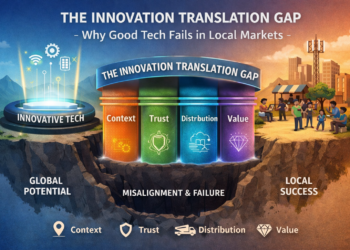
The Innovation Translation Gap impacting Africa's Mobile Tecnology Spark
Market Intelligence

Innovation vs Adoption: Why Global Technology Strategies Fail in African Markets

February 23, 2026
Kenya's Mobile Economy 2025
Market Intelligence

Kenya’s Mobile Economy in 2025: The Numbers, the Winners, and What the Data Signals Next

December 16, 2025
Kenya Smartphone Prices Set for Another Increase in 2026
Market Intelligence

Why Smartphone Prices Are Rising in Kenya: Market Forces and Buyer Impact (2026)

February 23, 2026
Safaricom’s Innovation Bottleneck: Pricing, Access, and the API Squeeze
Market Intelligence

Safaricom’s Innovation Bottleneck: Pricing Power, API Control, and Market Access Risk

February 24, 2026
Safaricom Data Stewardship Privacy, Power, and Public Trust
Market Intelligence

The Data Question: Privacy, Surveillance, and Corporate Control

February 24, 2026
Safaricom Connectivity Gap in Kenya
Market Intelligence

The Safaricom Connectivity Gap: Market Leadership and Infrastructure Access Inequality

February 24, 2026
Next Post
Samsung Galaxy S26 series official lineup showing S26, S26+ and S26 Ultra

Samsung Galaxy S26 Series Launches with Snapdragon 8 Elite Gen 5 and Smarter Galaxy AI Features

Leave a Reply Cancel reply

Your email address will not be published. Required fields are marked *

About the Founder

Lewis Wafula, Founder of JuaTech Africa

Lewis Wafula

Founder, JuaTech Africa

Helping Africans make smarter technology decisions through trusted reviews, buying guides, creator technology insights, and market intelligence.

Connect on LinkedIn

JuaTech Africa Intelligence

Independent research and market intelligence exploring the trends, technologies, and market forces shaping Africa's digital future.

📊 Flagship Research
  • 2025 Brand Performance Report
  • Q1 2026 Market Report
🧠 Research Areas
  • Analytica
  • Market Intelligence
  • AI Intelligence
Explore Intelligence

Join the JuaTech Intelligence Circle

Signal over noise. Get trusted reviews, market intelligence, buying guidance, and emerging technology insights shaping Africa's digital future.

Get Free Access

Essential Buyer Guides

Ultimate Smartphone Buying Guide Kenya 2025

The Ultimate Smartphone Buying Guide for Kenya (2026): How to Choose the Right Phone with Confidence

June 9, 2026
Best phones under KES 30,000 in Kenya 2026 including Samsung Galaxy A26, POCO M6 Pro, Tecno Camon 50, Infinix Note 40 and Oppo A60

Best Phones Under KES 30,000 in Kenya (2026): Smart Picks That Deliver Real Value

June 22, 2026
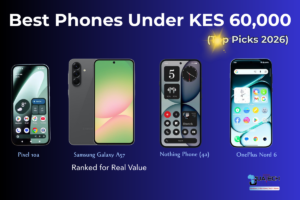
Best phones under 60000 Kenya 2026 including Samsung Galaxy A57, OnePlus Nord 6, Google Pixel 10a and Nothing Phone 4a comparison

Best Phone Under KES 60,000 (2026): 7 Phones That Actually Deliver Value Before You Spend Your Money

June 23, 2026
Battery Kings for power outages in Africa – editorial smartphone battery guide

Battery Kings: Best Smartphones for Power Outages, Value, and Daily Life in Africa

May 25, 2026
Best premium midrange smartphones in Kenya 2026 comparison featuring Samsung Galaxy A57, Vivo V70, Xiaomi Note 15 Pro Plus, Oppo Reno15 Pro and Nothing Phone 4a Pro

Best Premium Midrange Smartphones in Kenya (2026): Samsung, Redmi, HONOR, Pixel and More

May 25, 2026
Samsung Galaxy Z Fold8, Galaxy Z Fold8 Ultra and the Samsung Galaxy Z Fold8 Series showcased in JuaTech Africa's in-depth product review.

Samsung Galaxy Z Fold8 Review: Is This the Most Complete Foldable Smartphone Yet?

July 28, 2026

Tech Decoded

Beyond specifications and marketing claims. Deep analysis of the technologies, strategies, and emerging trends shaping how we build, buy, and use technology.

⚙️ Technology Explained

Breaking down complex technologies, specifications, and concepts into practical understanding.

💡 Product Strategy & Value Analysis

Understanding why products exist, how they are positioned, and the value they deliver.

🤖 AI & Emerging Technology

Exploring the technologies reshaping devices, industries, and digital experiences.

Explore Tech Decoded

Editor's Pick

Smartphone processors 2026 comparison showing Snapdragon, MediaTek Dimensity 9500 and Apple A19 Pro chips with flagship phones

Best Smartphone Processor 2026: Snapdragon vs Dimensity vs Apple What Actually Matters

April 24, 2026
MediaTek Dimensity 9500

Dimensity 9500 Unleashed: MediaTek’s 3nm Powerhouse Redefines Flagship Performance in 2025

June 19, 2026
HONOR smartphone naming explained showing X Series, Number Series and Magic Series lineup hierarchy for Kenyan buyers

HONOR Smartphone Naming Explained (2026 Kenya Master Guide)

Infinix Note Edge vs Samsung Galaxy A36 5G

Infinix Note Edge vs Samsung Galaxy A36 5G: Which Makes More Sense for Daily Use?

February 22, 2026

Work With JuaTech Africa

Reach technology consumers, creators, and decision-makers through trusted reviews, market intelligence, sponsored campaigns, and strategic partnerships.

Explore Opportunities

Helping You Choose Right

Insight | Clarity | Better Tech Decisions

  • JuaTech Africa Intelligence
  • Tech Reviews
  • Ecosystems Intelligence Hub
  • About Us

Connect With Us

  • About Us
  • Editorial Policy
  • Disclaimer
  • Our Services
  • Advertise
  • Newsletter
  • Contact Us
  • Media Kit

© 2026 JuaTech Africa. All rights reserved. Built for tech intelligence in Africa.

No Result
View All Result
  • Explore
    • Buying Guides
      • Smartphones
      • Tablets & Productivity
      • Wearables
      • Audio
      • Accessories
    • Creator Hub
      • Creator Phones
      • Creator Audio
      • Creatives Growth Strategy
      • Creator Business
    • About Us
      • Founder’s Letter: The Vision Behind JuaTech Africa
      • Mission & Vision | JuaTech Africa
      • Editorial Policy
      • Advisory
      • Work with Us
      • Contact Us
  • Intelligence
    • JuaTech Africa Intelligence
    • Brand Intelligence
    • Market Intelligence
    • Mobile Imaging Intelligence
    • Industry Intelligence
    • Market Signals
    • Analytica
    • Artificial Intelligence
    • Digital Assets Intelligence
  • Reviews
    • Smartphones
    • Tablets
    • Audio
    • Wearables
    • Accessories
  • Tech Decoded
    • Core Technology
    • Device Hardware
    • Software & Platforms
    • Connectivity & Networks
    • AI & Emerging Technology
    • Buying, Safety & Integrity
    • Tech Guides & How-To
    • Product Strategy & Value Analysis
  • Ecosystems
    • Mobile Ecosystems
    • African Tech Ecosystem
    • Company Ecosystems
    • Platform Ecosystems

© 2026 JuaTech Africa. All rights reserved. Built for tech intelligence in Africa.

JuaTech Africa

Typically replies within minutes

Any questions related to Safaricom at the Crossroads: Will Platform Power Accelerate or Constrain Africa’s Startup Future??

WhatsApp Us

Online | Privacy policy

WhatsApp us